

Archive | On Screen RSS feed for this section
Six Men On A Leaky Boat: The Disappeared (2012)
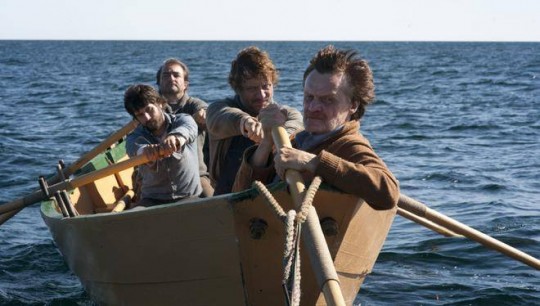
Adam Clarke can’t tell you how tempted he was to review this Disappeared from 2008 as a childish prank.
I missed Shandi Mitchell’s The Disappeared when it made the rounds of film festivals last year, but caught it with the public when it premiered last weekend. The film opens with six men–Gib (Ryan Doucette), Mannie (the outrageous Okona himself, Billy Campbell), Gerald (Brian Downey, national treasure), Pete (Shawn Doyle), Merv (Gary Levert) and Dickie (Neil Matheson)–attempt to row back to land in two dories after their fishing boat sinks. As the planned four-day trek back to dry land takes longer than expected, tensions flare up. After a while, the characters become so lost in themselves that the rise and fall of the sun and the moon loses all meaning in the fog-ridden journey across the Atlantic Ocean.
As they row towards home, the men try to keep their minds focused on the task at hand. Some major concerns become harder to ignore and the questions on these men’s minds could reduce them to fatal in-fighting. Is the Captain letting his emotions get the better of him? Did Dickie’s incompetence really sink the ship? Is Mannie showing signs of infection from an injury he sustained from the accident?
Having once spent half a year in a leaking vessel with members of Split Enz, I understand just how tense a situation like this can be.
The Disappeared is a terrific film without a trace of fat on it. Throughout the 90 minute film, emotions remain unexpressed, backstories are doled out in sparse detail in minor conversation. I was impressed with writer-director Mitchell’s restraint. A novice screenwriter would’ve wasted a half-hour on showing the characters before the ship sank or even depicting the accident that brings the crew to their desperate situation. The Disappeared is the rare film that doesn’t have an ounce of storytelling fat on it. Mitchell’s visual style is like her writing: she never loses focus. This film impresses throughout.
One false move in casting would’ve destroyed a drama like this and the actors are all excellent. Much praise has been given to Shawn Doyle, who has the flashiest role as the cynical, hard-drinking, chain-smoking Pete. Pete’s always harping; aiming barbs at Dickie for being young, Merv for his religion and misogyny and even Gerald, his captain, over some questionable decision. The Disappeared is an ensemble piece, but Doyle effortlessly plays a hard ticket without ever stumbling into cliche.
The highlight for me was Newfoundland actor Brian Downey. Brilliantly cast as Captain Gerald, the actor’s understated performance is a far cry from his bumbling role on Lexx or his scenery-chewing turns in The Adventure Of Faustus Bidgood and Hobo With A Shotgun. Downey usually steals a film with his barely-controlled intensity, regardless of the role. In The Disappeared, he underplays Gerald beautifully. Gerald may be an old skipper with his emotions weighed down, but his quiet demeanor betrays strength and a certain ferocity.
Trapped with nothing but the sea and themselves, the men in The Disappeared are occasionally frail, occasionally ugly and always human. This is the film you should be seeing upon your next trip to the cinema.
Positively 4th Season: Archer
Mon, Apr 15, 2013
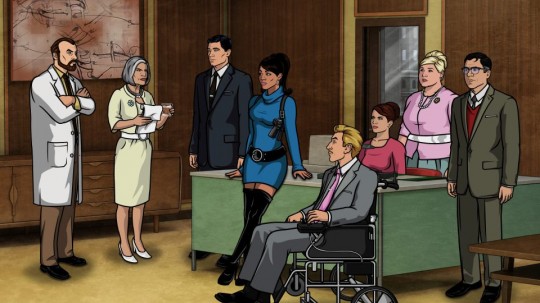
Adam Clarke‘s fourth season was hampered by focusing too strongly on Riley and The Initiative.
Unlike Community, Archer enters its fourth season without any behind-the-scenes hitches. Yet, this season of the spy comedy was the first where I began shifting in my seat. This year’s Archer is the weakest to date, stumbling badly out of the gate before regaining momentum later in the season.
If Archer is one thing at its best, it’s tight. The jokes, callbacks and plotlines build to an inspired madness. This season began comparatively loose, however. Take the season premiere, in which Sterling (H. Jon Benjamin) wakes up on the set of Bob’s Burgers, so to speak. The story that followed didn’t tie in to Burgers in the slightest and the pay-off, something Archer regularly excels at, was entirely absent. It was a bunch of stuff that happened that didn’t hang together very well.
The following episode didn’t fare much better as it just seemed to be a 20 minute gay joke without any twists or particularly inventive plotting. In “The Wind Cries Mary”, Archer is reunited with an ex-ISIS agent (played by Timothy Olyphant) who everyone thinks is gay for Sterling Archer. Can you guess what the punchline is?
The low point of the season and the series is “Live and Let Dine”, which existed largely as a vehicle for Anthony Bourdain. Last year’s “The Man From Jupiter” got a fair bit of mileage out of guest star Burt Reynolds (as himself). The series had already been peppered with Reynolds references (most notably Sterling’s obsession with Gator) and, while far from the best episode of season three, “Jupiter” did have a great sequence where Sterling kidnaps Reynolds and pitches his idea for a follow-up to Gator.
“Dine” is one of the few episodes of Archer that can actually be disregarded as a waste of time. Nearly every joke is a play on Bourdain’s dickish persona or recycling previous character quirks. Pam’s fish fighting is another variation on last season’s “Tokyo Drift” and Cheryl’s love of “elegant dinner parties” is a rehash of last season’s brilliant “Lo Scandalo”. Only Malory’s new husband Ron, easily the best part of Archer‘s new season, generated any laughs with his habit of bringing soda crackers to operas and fancy eateries.
The best episode this season, despite strong contenders like “Legs” and “Midnight Ron”, was “Once Bitten”. “Once Bitten” returned to one of the series’ most interesting threads–the identity of Sterling’s father–while giving some much needed limelight to the rest of the characters. Though she’s not the focus of the episode, Cheryl easily stole it in the handful of scenes she was in, starting with her priceless imitation of an AT-AT Walker. “Bitten” added some more strokes to the already complicated and surreal canvas that is Cheryl Tunt’s fractured mind. She’s already been so funny with her checkered history with mental institutions, pyromania and her rich family. That she may have a more lucid personality lying around in her subconscious, one that gets under Lana’s skin with a vicious little monologue, will prove great fodder for future stories.
Archer‘s fourth season, while still funny, has been a little rockier than it was in previous years. Archer works best when its characters are in legitimate danger and the previous three seasons effortlessly balanced hijinks with spy-jinks. But where was the danger or the interesting guest characters here? We used to have some fairly interesting guest characters on the show, such as Bryan Cranston’s crazed Commander Drake, Ron Perlman’s no-nonsense Cuban agent, and the double act of incompetent assassins, Mannfred & Uta (Rene Auberjonois and Kat Cressida). This season we’ve had an interminable guest spot from Anthony Bourdain, sure, but even potentially great guests like Jon Hamm and John Roberts had little to do. Archer used to excel at giving quirky backstories to its side characters, but this season brought them on solely for good publicity.
I wished they had developed the supporting and guest characters more this season. Some of the best moments of the show have been day-to-day interactions with the ISIS team, namely their goofing off in the office during “Skorpio” and the “Heart of Archness” storyline. Atypical stories like visiting Cheryl’s mansion or holing up for a fake dinner party at Malory’s place used to bring out the best from creator Adam Reed and his writers. “Lo Scandalo” actually told an interesting murder mystery that developed not only the backstory of Malory Archer and the looming question of Sterling’s father, but gave a bit of insight into the prime minister sitting dead in her living room and his past relationship with her. That’s precisely the kind of layered writing that’s been absent from Archer virtually all this season.
I don’t think Archer‘s gone completely lost its charm, but I hope this kind of sloppy storytelling isn’t a trend for season five.
Monkey Shines (1988)
Fri, Apr 12, 2013
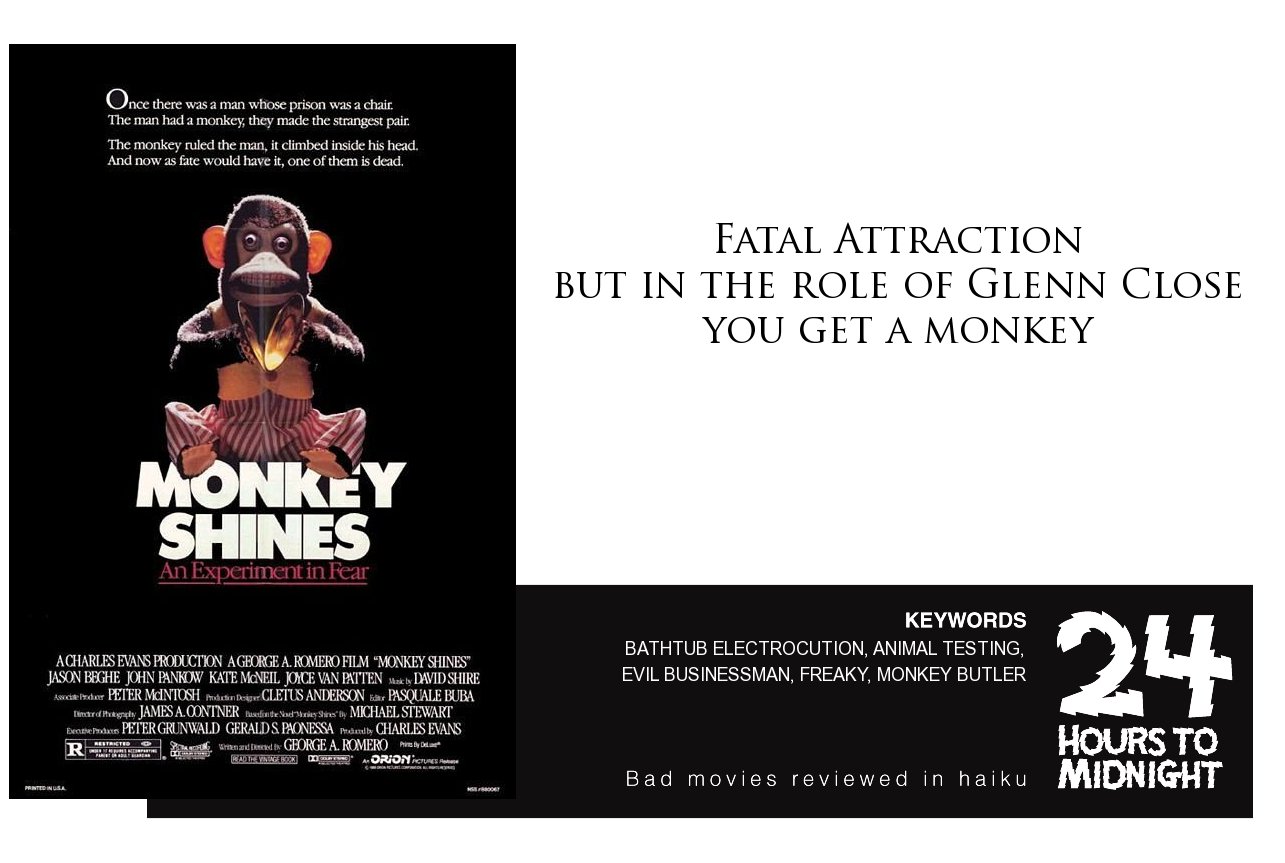
As a kid, I was terrified of Monkey Shines (1988). I never saw it, but the VHS sleeve, with that clockwork monkey with the clashing cymbals freaked me the eff out. Now, with the maturity and steely will of a movie blogger, and having tackled the nightmare fuel that was Dr. Giggles and found it eye-rollingly terrible, I was ready for Monkey Shines.
Monkey Shines isn’t about evil wind-up chimps or bloodthirsty gorillas, but the story of a quadriplegic man and his helper monkey. Throughout the script, you could replace “helper monkey” with “obsessed ex-wife” or “tempting ingenue”, and the movie plays out the exact same way. Well, maybe they’d nix the scene where she poops in a slipper, but you get the idea.
The movie is full of angsty adult situations (infidelity, divorce, parental meddling), a strangely sweet romance, and lively paraplegic sex (not played for laughs, thank god). It’s sort of a thriller, but sometimes a straight-up horror. The tonal confusion may have something to do with the fact this was zombie guru George Romero’s first commercial film, and studio notes famously sunk most of his ambitions.
Still, the movie holds together. Filling out the margins of the movie are Stanley Tucci as a romantic rival and John Pankow (Cousin Ira from Mad About You) as the lead’s best pal and the local rebel geneticist. You’ve also got a greedy, hand-wringing businessman that wants to weaponize monkeys, just in case you forgot it was filmed in 1988.
Monkey Shines also carries a geek pedigree: the screeches of the monkey are provided by Frank Welker (Scooby-Doo, Megatron, Dr. Claw, and about a thousand other cartoon voices). Welker also provided the voice of Suchi, the adorable monkey companion of Captain Planet and the Planeteers. Creepy.
The Unoriginal Dead: Evil Dead (2013)
Sun, Apr 7, 2013
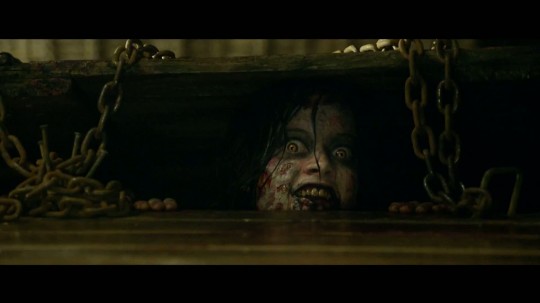
Performing stand-up in Japan, Adam Clarke is often billed as “Captain Supermarket”.
Fede Alvarez’s 2013 remake of Sam Raimi’s Evil Dead can proudly boast that it’s the single best remake of all the remakes of classic 70′s and 80′s horror that’ve haunted cinemas in recent years. Given that the only competition in that category comes from the likes of Rob Zombie’s Halloween films (and their director’s cuts), 2006′s The Hills Have Eyes, 2009′s Friday The 13th, 2010′s A Nightmare On Elm Street and the 3-D Piranhas, besting this glut of derivatives is the textbook definition of an easy feat. I may as well give myself a prize for “Best Jogger In My House” because I can outrun the jar of mayonnaise gently resting in my fridge.
The new Evil Dead begins with something completely fresh. A young woman (Phoenix Connolly) is tied down in the basement of a familiar cabin. Under the supervision of the friendly neighborhood Log Lady (Sian Davis) and some onlooking mutant-people, the girl’s father (Jim McLarty) struggles to set her on fire. Between the girl’s begging and the father’s calm explanation of why he has to torch her alive, Evil Dead is in uncertain and decidedly creepy territory. It seems like we’ll finally have a recent remake that actually understands why John Carpenter’s The Thing and David Cronenberg’s The Fly succeeded: if you want a remake to work, you have to give the audience something they haven’t seen before.
Immediately after the credits, we’ve got a new group of college students at the cabin. This time, they’re a largely estranged group of friends, lover and family uniting to help Mia (Jane Levy) overcome her smack habit. In the cabin, Mia’s brother David (Shiloh Fernandez) and childhood friend Eric (Lou Taylor Pucci) find the Book of the Dead. Despite several written warnings on the pages of the cursed book, Eric reads part of it aloud for some reason. Cue Mia getting raped in the woods by the woods and becoming possessed by an ancient demon. Soon, all Hell is unleashed and no one escapes unmutilated. Credits.
Did they really have to redo the tree rape scene from the original? The scene Sam Raimi apologized for in subsequent interviews after The Evil Dead?
This plague of horror remakes wouldn’t be so awful if every one of them didn’t clumsily reference their source material. Freddy Krueger in 2010 has to say “I’m your boyfriend now, Nancy” even if it makes no sense in its new context and loses all of its power. Same with Dr Loomis going on about Michael Myers’ evil in the Rob Zombie Halloweens despite all evidence to the contrary. Fede Alvarez struggles under the weight of expectations for an Evil Dead remake. The film stops for clever referential touches (I particularly liked the subtle inclusion of Bob Dorian’s tape recorder voice from the original film), but goes overboard with them.
That brings us back to the infamous tree rape sequence. In the original film, this misguided scene at least fit with the overall tone of Sam Raimi’s The Evil Dead. Raimi’s film was going to shock you with fantastical violence and horror in a way that you never thought possible. Given that the demons in the woods want to humiliate, torture and mutilate their host-victims, the sequence makes sense in that context. That brutal scene happens to the only developed character in that film, Cheryl (Ellen Sandweiss), and is still powerful and revolting to see the film’s one real character struggle to not have their dignity stolen away.
By contrast, Mia is raped in the woods because it’s a remake and the original had a tree rape scene, so there ya go. I’m not sure whose genius idea it was to include it in the new Evil Dead, but director Fede Alvarez seems exceptionally uncomfortable with it and tries to get it over with as quickly as possible. The original film’s version was a bizarre scene whose inclusion made sense in an already bizarre, gruesome, gratuitous and over-the-top film. Alvarez is chained to audience expectations, which makes the scene so offensively unnecessary.
Of course, the real problem with remaking Evil Dead faithfully is that we’ve already experienced endless variations on its basic plot. Whether it’s Raimi’s own quasi-remake in Evil Dead II, the moronic Cabin Fever or the clever Cabin In The Woods, we don’t need a remake of The Evil Dead to be a valentine to its source material. Other people have done that. You’re better off watching Alvarez’s short films on his youtube channel instead of shilling out ten bucks for his Evil Dead.
This Evil Dead is rife with problems. The film stupidly abandons the intriguing idea that the demons are manifestations of Mia’s drug withdrawal, intensifying her family history of mental illness. I wish the film had maybe explored the idea that people are compelled to read from the book of the dead because it possesses some unnatural will of its own. I wish the Deadites’ dialogue hadn’t been rewritten by Captain Howdy (the demon that possessed Regan in The Exorcist) without realizing that those scenes were disturbing coming from an innocent child. This is the film’s worst sin, as demons talking about fucking and incest is laughable and obvious nearly forty years after The Exorcist
Praise must be given, however, for Fede Alvarez overall. He’s got a knack for creating atmosphere, he makes the violence suitably over-the-top and painful, and he gives the film a few neat visuals. Alvarez does a fine job with the material, but I feel like he was on assignment to reference the original films. I wish that his film wasn’t so obligated to have tree rapes, a woman in the cellar (like the first two Evil Deads!) or characters losing their hands (because that happened once in Evil Dead II!). It’s so antithetical to the spirit of the original films to do something so predictable.
Roller Boogie (1979)
Tue, Apr 2, 2013
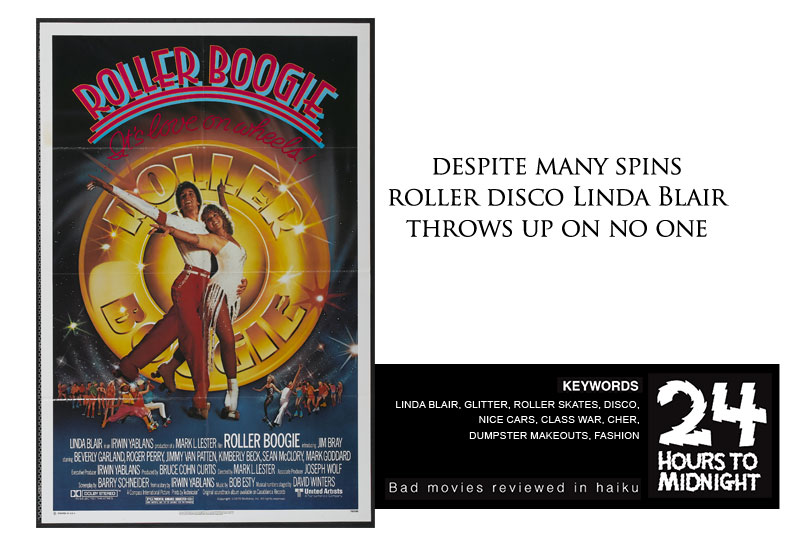
Starring real-life rollerskating champ Jim Bray and an all grown-up Linda Blair (The Exorcist), Roller Boogie is a glitter coated glimpse into the roller disco fad of the late 70s and early 80s. Genius flautist and wanna-be roller girl Terry Barkley (Blair) meets up with the best skater on the boardwalk, Bobby James (Bray). Bobby James is instantly smitten with Terry but she, being from Beverly Hills, brushes him off. Later, Bobby James makes a bet with his friend that he can get Terry to dance with him at the local roller disco, Jammers. While she at first plays hard to get, after watching his moves, she decides to ask him to teach her how to dance on wheels.
Kind of like a way less serious version of Dirty Dancing with roller skates, Roller Boogie is really entertaining with an amazing soundtrack and roller disco dance moves and fashions that will kind of blow your mind.
Also really good is this Cher video from the soundtrack:
Blisters In The Sun: Spring Breakers (2013) & The Call (2013)
Tue, Apr 2, 2013
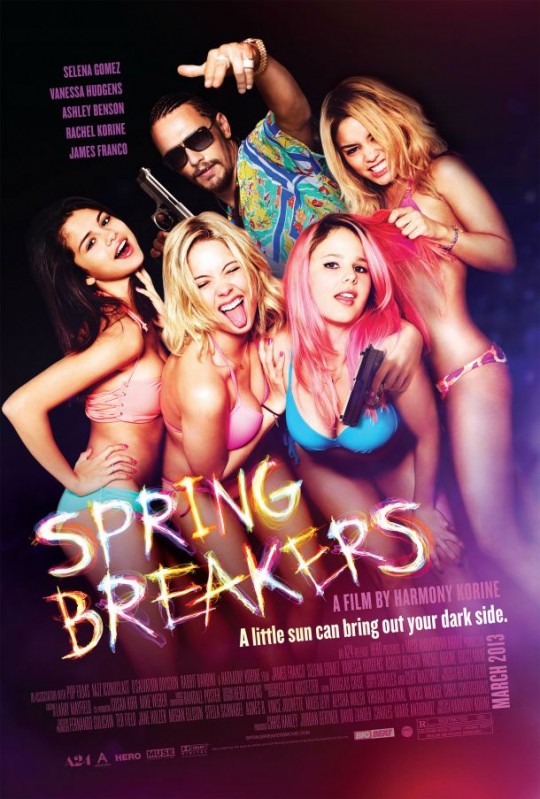
Adam Clarke never thought he’d wish any film had more James Franco in it.
Spring Break. Spring Brea-ea-ea-eak! Spring breeeeeeeeak. Forever.
- Audio clip played every 2 minutes in this film
I suspect Harmony Korine’s Spring Breakers was made to be so enticing that we’d press our heads against the screen like James Woods did in Videodrome. But it’s not seductive. It’s shit.
With the absence of titillation, the film was likely designated a satire in post-production in much the same way Tommy Wiseau’s The Room tried to pass itself off as a comedy when it proved to be as intellectually taxing as a roll of Life Savers. This is a game writer-director Korine’s been playing for a long time. More on that in a moment. For now, this is the record of a man who saw Spring Breakers and survived.
I thought it unusual that Spring Breakers had a trailer for itself before it was shown. A really long trailer. A really long, boring trailer. Twenty minutes into Spring Breakers, I realized that the film had already started and the entire story was going to be this disjointed. You’ll have to forgive my confusion, as I felt like I was watching a series of trailers edited from the same 15 minutes of footage. I got the impression that I was watching a feature-length marketing campaign for a film that never showed.
Spring Breakers follows four girls, almost none are actually named. The Good Girl (Selena Gomez) is named Faith because she’s a churchgoer and it wouldn’t be clever satire if she didn’t have an obvious name, would it? Her and her three friends–let’s call them Cheerleader, So-and-So and What’s-Her-Face — all love talking about giving blowjobs and posing sexually for no one but the camera they’re not supposed to be aware of. If it weren’t for Faith’s prudishness, these girls would be interchangeable nothings. Harmony Korine’s characters are all written to emphasize the things he cares most about: sex and violence. These aren’t girls, they’re vaginas with guns.
Cheerleader, So-and-So and What’s-Her-Face rob a chicken shack and tell Faith of their misdeeds. Since Faith is a sheltered Jesus freak, she does what any small town girl with no life experience would do: She gets high with her criminal friends (but not before posing seductively for no one but the crotch-shot-loving camera) and heads off for Spring Break.
Spring Break!
The girls party hard while So-and-So splits off and tells boys that she won’t have sex with them as she takes all her clothes off and drinks herself into oblivion. Before this date rape in progress can go any further, the girls are arrested for, I dunno, having gone wild.
The four are taken to jail, but are soon bailed out by a Florida rapper named Alien (James Franco). Alien’s got it all: drugs, money, a modestly successful rap career and deep love for Al Pacino’s Scarface. Surely this will set up a potential conflict with Faith? She may be a two-dimensional character, but that’s still two more dimensions than her friends have.
Nope. Faith immediately leaves her friends and Alien to return home. She’s never seen again in the film. Cue endless scenes of James Franco talking about Spring Break and a finale inspired by Scarface. Credits.
So, Spring Break is stupid, right? Only morons like it, right? If that’s all the insight you want from the event that gave us the creepy “Girls Gone Wild” and more sex crimes than even Richard Belzer and Ice-T could keep up with, Spring Breakers is for you.
This isn’t a movie. This is a prank. Lurid shots of nubile teens writhing around and saying “no” (but really meaning “yes”) are passed off as a scathing look at our culture. The joke’s on us, friends. Spring Breakers is a satire for the stupid. Despite the flesh on display, the only one who’s really naked is the emperor himself, Harmony Korine.
Korine, who made a name for himself with his script for Kids and as writer-director of Gummo, has never had anything to say. His films have a sneering, detached irony that show no empathy or understanding of the events they’re trying to expose or satirize. He’s as fascinated by outsiders as John Waters but has none of the skill or the humour to create stories about them. In this respect, Spring Breakers is his greatest triumph, because it is his emptiest film to date. It’s the full Harmony Korine experience.
I hated this movie. The phrase “spring break” is repeated so often that you’ll feel like you’re being conditioned. Scenes and dialogue in this film are repeatedly endlessly until “spring break” becomes a mantra. (I kept imagining a Prisoner episode where Number Two goes to increasingly elaborate lengths to make Number Six enjoy spring break and show his tits. Spring break? Spring break. Spring break? 5! 5! 5! 5! 5! 5!)
…but what does it mean?
Nothing. April fool’s! The joke’s on you if you thought there was any depth or humour in Spring Breakers. All we learn is that Harmony Korine has so little imagination left in him that he just repeats the same brain-dead characters obssessed with self-destruction and the same leering, creepy sex scenes that characterized his screenplay for Kids.
Kids was defended against accusations for being more than an exploitation picture, but there’s no counterargument for Spring Breakers. Unlike some critics, I don’t have a problem with a fun, exploitation b-movie. Hell, if Roger Corman had produced a film about sociopathic and terminally dumb teens who rob a chicken shack so they can re-enact the opening sequence to E’s Wild On, it’d probably be insane fun. Korine’s film is just a dull plotless wander down the road to nowhere. If Breakers ever had a script, it never got past a few handwritten jot notes in Harmony Korine’s Moleskine.
Korine’s film did give me a bit of hope for James Franco though. After providing one of the many embarrassing performances in Oz: The Great And Powerful, Franco proves endearingly weird as Alien. Alien’s a cliché brought to life by the weird and appropriately creepy enthusiasm that Franco brings to the role. As much as his performance art prankstering and half-assed acting have grated me lately, Spring Breakers isn’t a total bore when he’s on screen. That’s a minor miracle given that all he does is say “Spring Break” over and over again, like some Tequila-swilling parrot.
Spring Break! These are two enchanted words sure to bring back The Old Ones written about in the Cthulhu mythos. Just picture Yog Sothoth in a bikini and you’re there. It’s spring break in Hell. They say in great darkness even Girls Gone Wild may die. Spring Br–
Sorry, the movie broke me.
404 – rest of review not found.
Moving on, let’s turn our attentions towards a director with talent. Brad Anderson’s (Session 9, Transsiberian, The Machinist) latest. Halle Berry stars in the WWE-produced thriller, The Call.
Spring Break!
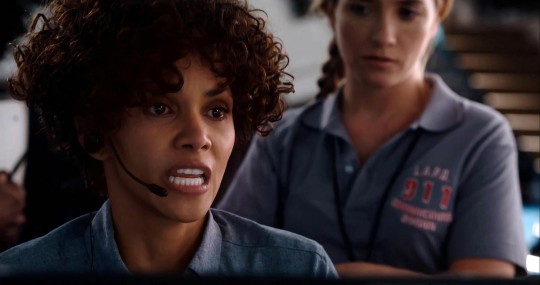
Halle Berry is a practical, but not infallible 9-1-1 operator with a ridiculous haircut. She projects a restrained, no-nonsense attitude, which you would have too if you had hair that looked like a basket of curly fries. The hairdo is not her only mistake: she causes the death of one of her callers when she redials their number after an attempted home invasion. When the panicked girl answers the phone, the unfriendly neighbourhood rapist-murderer (Michael Eklund) kills her, strips her and leaves her in a field.
Berry is then taken off active duty and assigned to training new operators in the Hive. The Hive is the nickname for the entire centre while call after call is taken amid the buzzing of phone drones trying to quickly log their callers’ emergencies on their computers. The centre gets a call from a young girl (Abigail Breslin) who’s been kidnapped and is trying to report the crime from the back of the perpetrator’s trunk. The operator can’t handle the session, so it’s up to Berry to take the call. Sure enough, this is the latest victim of the man who murdered the girl in the opening sequence.
Take a guess at how much time passes between the sequences described in the previous two paragraphs. If you chose “at least a month”, you’d be absolutely wrong. There’s about a day between Berry’s botched call and her relieving another agent to handle the shenanigans of our kidnap-crazy villain.
The Call asks us to not just suspend our disbelief but to toss it out the airlock and bomb it from space, just to be sure. It’s frustrating too, because the first half-hour of the film suggests how good the film would be if it simply stayed put. The best scenes of the film are all early on, from the opening credits which play over a series of 9-1-1 calls to the scenes in the Hive. This could have worked if it was simply Berry in the centre and an unseen Abigail Breslin on the other end of the line. The more we leave the centre, the more the film unravels. As anyone who has seen Pontypool can tell you, a modern thriller can work with nothing more than one set and a series of phone calls.
The Call decides to go completely out the window the moment the story would have logically ended. A series of contrivances and inept storytelling leads to our killer evading the police despite killing two men in broad daylight. It’s possible for daylight murders to go unnoticed, but not when one of the victims is, say, set on fire at a gas station.
If the film wanted to be silly, the filmmakers should have had the decency to replace Halle Berry and Michael Eklund with Dwayne “The Rock” Johnson and The Iron Sheik, respectively. Don’t tell me those names wouldn’t return a WWE phone call.
Poor Michael Eklund is stuck playing a thoroughly unthreatening goofball with a penchant for rocking out to his 80s mixtape. Why? I think it has less to do with his age or backstory and more to do with the fact that the production team watched the “would you fuck me?” scene from Silence Of The Lambs once too many. That Eklund looks less like a rapist-murderer and more like the love-child of Jason Bateman and Alan Rickman doesn’t help.
It all ends with a one-on-one showdown between Berry and Eklund because Hollywood thinks audiences are too dumb to accept a 9-1-1 operator who does her job and leaves policing to, say, the police. The final scene is a weird mix of Saw and I Spit On Your Grave that seems to have been imported from another movie. There was a smart short film or telemovie to be made from The Call, but the film takes a left turn towards cat-and-mouse and slasher cliches from which it never recovers.
I hate to say it guys, but this WWE production is just loud and dumb. Who’d'a thunk it? Is nothing sacred? SPRING BREAK.
The Original Dead
Thu, Mar 28, 2013
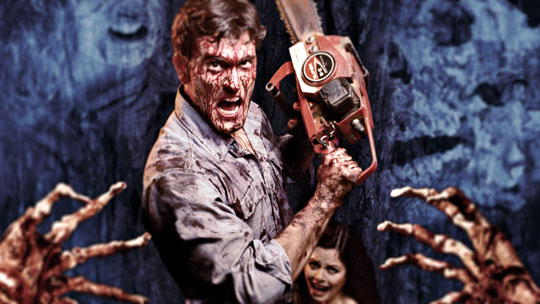
Before this year’s Evil Dead, there was 1981’s The Evil Dead. Adam Clarke sings the song of Sam Raimi’s horror classic.
The plot was nonexistent, the budget was low, and the critics were less than kind. In spite of it all, though, Sam Raimi’s The Evil Dead has become one of the most enduring horror films of all time.
Though the Evil Dead trilogy ended in 1992 with Army of Darkness, Evil Dead has never really disappeared. The 1981 horror film became a pop culture phenomenon resulting in two sequels, an upcoming remake, countless home video re-issues, a still-growing fanbase, a popular stage musical, video games, and comic books.
So how exactly did a film with creaky acting and ropey special effects earn such a firm place in the hearts so many filmgoers?
Rewatching it, the film is an incredible showcase for its star — and I don’t mean Bruce Campbell, who displays little of the charm or charisma that has since made him a b-movie icon — I’m talking about Sam Raimi’s camera.
Raimi’s camera zips, spins and crashes into everything. It switches from slanted 60s Batman angles to rampaging POV shots to quirky close-ups of eyes and feet. There’s even an upside-down shot that crawls up Bruce Campbell’s back and ends up as a right-side-up close-up of his face, all done in a single take. His groundbreaking camera techniques and inventive use of sound are the entire point of the film.
Contemporary reviews for the film were right that there’s little depth to The Evil Dead. But they were missing the point. The movie isn’t a story so much as an 85-minute audition tape for Raimi to command the kind of budgets he does today. His films aren’t steeped in subtext like John Carpenter’s or Wes Craven’s. Raimi specifically made this as a means of outdoing the competition. There’s a reason the heroes find an incongruously-placed, torn poster for Craven’s The Hills Have Eyes in the rustic cabin. This is Raimi’s visual equivalent of a diss track, daring all others to top the madness he put on screen.
The Evil Dead is sometimes remembered, incorrectly, as a comedy. While its two sequels were loaded with quips and slapstick, Evil Dead plays it straight. Aside from one scene where a demon apologizes to a victim before attacking him, this movie barely cracks a smile.
The Evil Dead has no more story than “five kids enter a cabin in the woods and are attacked by “Deadite” demons, but its parade of putrefying corpses is still remarkably fresh. That said, I don’t think it’s aged as well as other classic horror films from the 80s, partly because Raimi is now a widely-imitated director. There wouldn’t be a Peter Jackson or a Robert Rodriguez if they hadn’t rode his coattails by aping Raimi’s style, and the popular Raimi-produced Xena: Warrior Princess and Hercules: The Legendary Journeys television series used his films as a visual blueprint.
Some of The Evil Dead’s appeal is lost because the remastered version on DVD isn’t the movie people remember. Unlike Suspiria, The Evil Dead’s strength wasn’t its vivid cinematography or special effects. This low-budget shocker looks best on a grimy VHS tape, a medium that obscures any special effects shortcomings. On DVD, the film is clearer than ever, and that actually makes it look worse. On VHS, no one noticed that the full moon was added to exterior shots in post-production. On DVD, though, it’s impossible not to notice the giant picture frame-like space that separates the moon in these shots. Tom Sullivan’s imaginative make-up shrivels up under the bright lights of digital remastering.
The Evil Dead still holds up as a showcase for its director’s visual quirks, while the sequels really show off star Bruce Campbell’s swaggering charm and Raimi’s external influences, including The Three Stooges and Ray Harryhausen, animator behind 1941’s Mighty Joe Young and 1963’s Jason and the Argonauts.
Raimi’s Evil Dead films conjure up a kind of rubberized reality where anything is possible, and the switch from horror to comedy after this first film was a perfect choice for Raimi to show off his skills. 1987’s Evil Dead II might be the most bonkers comedy ever filmed, and Army of Darkness was definitely the film with the most bootlegged alternate versions available on the VHS black market (Back in the 90s I had eight different copies of the film, including a version from Japan where it was retitled Captain Supermarket). With Army of Darkness’ one-liners, Evil Dead II’s Pee-wee’s Playhouse mentality and the first film’s feverish, exhuberant style, The Evil Dead series is going to be beckoning horror fans for decades to come.
Evil Dead, the 2013 remake, will hit Empire Theatres in early April.
Cinema Binge: The Incredible Burt Wonderstone (2013), The Hobbit (2012) and No-Name Die Hard.
Tue, Mar 26, 2013
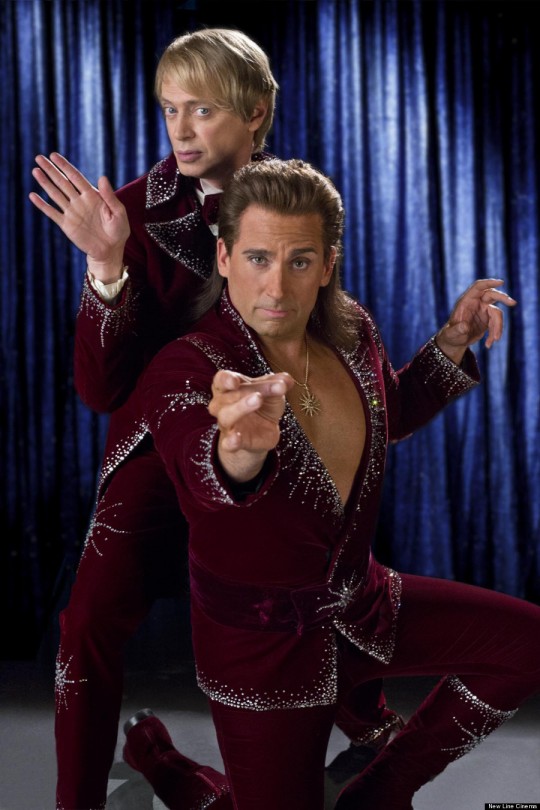
This week: Adam Clarke supports magic, makes elf confessions and offers Die Hard rip-off suggestions.
The Incredible Burt Wonderstone is a comedy that’s bombing so badly it might as well have been titled “Flaming Dogshit Minstrel Show”. On the surface, it’s a journeyman comedy about a guy who gets famous, acts like a dick and eventually learns that not being a dick wins you friends and Olivia Wilde. But on a deeper level… …No, it’s a formulaic comedy with a few nice gags and strong performances.
In the film, bullied boy Burt grows up to be dingus magician Steve Carell. Fame having gone to his head, Burt Wonderstone’s behaviour gets in the way of his only friendship (with his onstage partner Steve Buscemi) and the woman he sorta loves (Olivia Wilde). Soon, his Vegas show is cancelled when it can’t compete with the more extreme acts of street magician Steve Gray (Jim Carrey, of The Number 23 fame). When his jerkass ways leave him with nothing, Wonderstone reaches out to his childhood idol (Alan Arkin) and learns humility in the process.
Ordinarily I hate films about magic that use CGI in place of actual magic tricks, but this movie has different aims than The Illusionist. Carell, Buscemi and Wilde are enjoyable in their stock roles and manage to make the moldy plot structure seem fresher than it is. The real highlights of the film are the appearances by a man named Rance. Rance is played by Alan Arkin, who is exactly the person you want to play a curmudgeonly ex-magician. An early sequence, in which a young Burt watches Rance’s how-to VHS tape, is easily the movie’s best moment. His scenes are like a bridge to another, better movie.
Wonderstone‘s a thoroughly undemanding script livened up by some nice performances. Even Jim Carrey, so irritating when misused onscreen, is perfect for his role as Not Criss Angel. Yes, the movie seems to think the term “brain rapist” is much, much funnier than it actually is, as it’s repeated constantly, but I have a feeling this film will have a decent life on cable. The only thing incredible about Wonderstone is that it’s not as bad as its marketing suggests.
It’s no Hot Fuzz, but I’ll take it in the age of Identity Thief.
Moving on, this week saw the release of “Die Hard in the White House” film Olympus Has Fallen, so you know what that means…
It’s time for me to talk about the 1997 Patrick Stewart-Vincent Kartheiser vehicle, Masterminds!
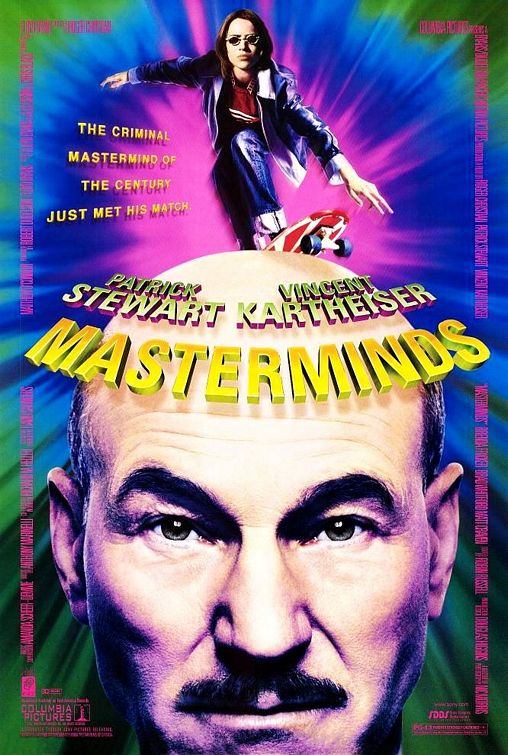
WTF?
Look at that poster. It’s like Go-Gurt commercial expelled technicolour diarrhea on and around Patrick Stewart’s head. Believe it or not, that previous sentence pertains to the denouement of Masterminds.
Masterminds is Die Hard in a school. Just as John McClane had to thwart terrorists at the Nakatomi Plaza, our unbearable hero, Ozzie (Vincent Kartheiser, an actor who’s been mostly bearable, post-Angel) thwarts terrorists at a prep school. Ozzie’s a genius and a hacker. Since we’re told the former and it’s 1997, it’d be safe to assume the latter. Nonetheless, the opening scene shows Ozzie infiltrating a security system, an act which resembles dicking around in a lame Doom mod rather than hacking. One assumes the director just saw Hackers before filming began and thought, “yeah, I get what this whole hacking is about with the kids these days.”
Masterminds is directed by Roger Christian, who would later direct Battlefield Earth in hope of making humanity forget Masterminds. It’s got all the trappings of your average Die Hard rip-off and, like most of those rip-offs, fails to deliver. Yet the results are mesmerizingly bad even for the Die Hard rip-off subgenre.
The best performance in the film is care of Annabelle Gurwitch, then fresh from Dinner & A Movie, as Ozzie’s mom. No one else escapes unscathed from Masterminds. This film could be used as proof that even the seemingly untouchable Patrick Stewart, as Masterminds‘ very poor substitute for Hans Gruber, can be the worst actor in a movie.
You feel Stewart’s pain to a certain degree. Not every actor can be like David Warner and maintain dignity in films with “Ooze” in the title. By the end of Masterminds, the iconic Stewart is in a go-kart covered in raw sewage. In a way, it’s no different than acting in a go-kart beside Brent Spiner in Star Trek: Nemesis.
Alas, unlike Olympus, Masterminds has disappeared from the public eye. Don’t worry, though. It’s not too late to sign a petition to release the film that’s so bad it was never released on DVD.
I’m not going to see Olympus Has Fallen. Are you nuts? Instead, I offer the following suggestions for Hollywood’s next Die Hard rip-off. These things write themselves, so I expect a WGA card and story credit:
[*]Die Hard in Vatican Square
[*]Die Hard in a Minivan
[*]Die Hard in a Werewolf in a Girl’s Sorority
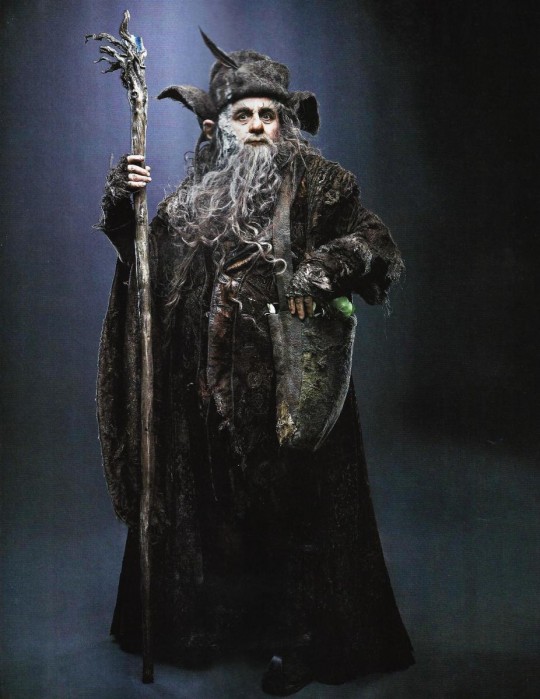
Speaking of things too slim to adapt into a full screenplay, The Hobbit hit DVD shelves this month. Despite some drubbings from fans, it’s a likable little romp. I’m actually looking forward to the two future instalments.
First, it’s confession time: I’ve never been an elf guy. I like sword and sorcery films, but the idea of a three hour elf movie didn’t thrill me. I enjoyed The Hobbit for the same reason I wasn’t that invested in the The Lord Of The Rings films. These movies aren’t taking it very seriously. There’s a much-needed sense of whimsy on display here. If you’re going to make a movie about magical wizards and the friendship of a race of overeating dwarf people, you might as well have some damn fun with it. The Hobbit is a less epic story than the Rings trilogy, but it’s a much more enjoyable one.
There’s an excellent cast assembled here, including the majority of The Lord Of The Rings cast and even Dame Edna Everage. My own favourite Doctor Who and one-time Bilbo Baggins candidate, Sylvester McCoy, is terrific as an animal-loving wizard covered in birdshit. Sure, people complained about Elijah Wood’s literal walk-on cameo, but Frodo’s not an interesting character, so I enjoyed his minimal appearance. I’d like to think Wood walked off camera and straight to the set of Wilfred or the upcoming remake of William Lustig’s Maniac.
There may be multiple endings, as per Peter Jackson’s earlier Middle Earth films, but that expectation works to this film’s advantage. The predictable scene in which Bilbo (Martin Freeman) rejoins the quest and brings the movie to a close is interrupted by the film’s best scene: the escape from the king of the goblins (Barry Humphries). Humphries is great and the scene results in the movie’s best action set piece, but what really won me over was the king’s tiny goblin messenger twirling about in the air via a system of ropes. I could watch that tiny goblin messenger scurrying to and fro for an entire three hour movie of his own. That guy’s the best.
This first part of The Hobbit is available on DVD now, but is sure to be re-released in a 10 hour version any month now. Still, it’s not a bad start to a film trilogy I was immensely skeptical about.
Positively 4th Season: The Return of Community
Tue, Mar 19, 2013
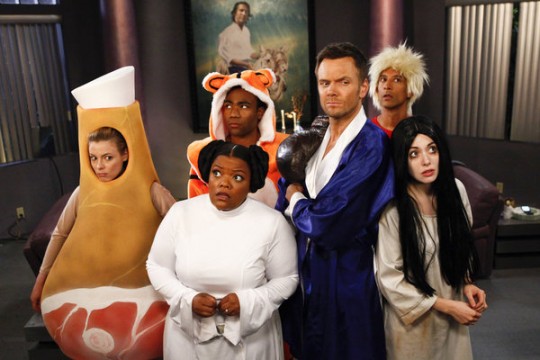
The Great Gazoo was added to Adam Clarke‘s fourth season as a naked grab for ratings.
Oh, Community. Without you the internet may very well perish. The show’s cult following has ballooned into Tumblrs, fanfic, live-tweeting, a fan-made web series based on the fictional “Inspector Spacetime”, the quasi-religious following of creator Dan Harmon (who earned a special place in my heart back when he brought us House of Cosbys via his Channel 101) and even an art exhibition.
Community fans fell in love with the show’s singular voice, its impressive ensemble cast, ambitious scripts, lovable characters and its sometimes spectacular visuals (courtesy of directors like the Russo brothers, Tristam Shapeero and Broken Lizard’s Jay Chandrasekhar).
But now dismissive reviews are popping up that cite the current season feeling “like fanfic”.
Let’s put the pin in that stupidity balloon. Most TV and long-running film series are officially licensed fanfic. We need look no further than Star Trek for this. Star Trek beget a film series, The Next Generation and Deep Space 9, etc. All of that was glorified fanfic, often written by fans like Ron Moore (the recent Battlestar Galactica). The rest was written by non-fans willing to explore and invent within this popular fictional world by taking their assignments seriously, as Harve Bennett, Nicholas Meyer, J.J. Abrams and others have done in the Trek film series. (And, no, I’m not defending fanfic because my Star Trek slash fic, “A Most Illogical Boner”, won the awards for Fic of the Year and Grossest Use of Mayonnaise in a Slash awards over at fictionalcharactersexlives.biz.)
TV and film series do this all the time and the results work more often than not. BBC’s Sherlock is fanfic. Most Doctor Who is fanfic. Bond films are fanfic. Let’s not get confused.
That said, Community really has lost the magic this year. I wouldn’t call it terrible, but the results have been uninspiring. I’ve largely been tuning in not because of any strong laughs — though there tends to be at least one or two good lines per episode — but because I’m invested in these characters.
Community has, with the exception of one episode, been strictly mediocre this year. While the later episodes are stronger than the first three to air this year, season four is missing something and, curiously, it isn’t Dan Harmon.
If anything the showrunners and writing staff are worshipping Harmon blindly and are painfully trying to create a show that feels like his Community. Unfortunately, Community doesn’t have a formula you can replicate easily. Just look at the past three seasons and how wildly different they are in style, scope and tone. Season one is grounded and perfectly balances the mundanity of going to community college with wilder antics and a surprising sweetness. Season two, my favourite year of the show, opened up the show’s world with increasingly ambitious storylines without losing sight of the show’s heart. Season three sacrificed characterization for jokes and dropped strong individual stories in favor of convoluted arcs. It was also one of the most refreshingly unpredictable shows on the air.
Season four’s been pretty funny in places. Last week’s episode had some great lines and the resolution to the “Jeff’s Dad” story resulted in the season’s best episode. It also demonstrated that what the show really needs to do is to stop catering to its audience with contrived, third-wall breaking quips and smug references to itself. If anything, the show’s current incarnation shows that this version of Community is at its best when it allows the stories to breathe for a little drama.
If the show evolved into a dramedy, it’d be quite different, but Community should feel different. Judging by the inconsistency of season three, Harmon’s vision had run its course. What the show needs is new jokes and fresh ideas instead of reminders that Garrett said “crisis alert” once and that foosball enthusiasts went to Greendale Community College once.
The weakest episodes this season — “Paranormal Parentage” and “Conventions of Space and Time” — would’ve likely been the highlights of a season four under Harmon. But the episodes feel simultaneously rushed and boring as they zip along to ensure each of the cast has something to do while simultaneously leaving any of those stories undeveloped.
The dynamics have changed a little bit this year, and I’m fine with that. The show’s less of an ensemble and seems more centered on Jeff Winger as the show’s lead. Abed is the disturbed Abed from season three, only a little nicer. Jeff’s no longer emotionally vacant as he was in season three. Britta’s simultaneously become slightly more competent and less argumentative. Troy’s regressed back a season or two (but it’s not the first time). Shirley and Dean Pelton, fortunately, the same. The writers don’t have a clue what to do with Annie and Pierce.
Hell, even the Troy-Britta pairing, which was so promising in season three, is off. Gillian Jacobs and Donald Glover have somehow lost all the sexual tension. When we see these two in bed together at the beginning of the third episode of this season, it looks less like post-coital bliss and more like two friends having a weird underwear party.
The future of the show, if there’s going to be one, can be glimpsed in the A-plot of “Cooperative Escapism in Familial Relations”. This is the strongest of Community‘s fourth season episodes to date. Just as the highlight of “Paranormal Parentage” was the Britta-Jeff bickering over Jeff’s daddy issues, an episode centering around those issues with Britta in tow is bound to succeed. It’s the best of the first five episodes and, as “Paranormal Parentage” hinted at, the real strengths of this new Community might be its dramatic overtones.
Recent episodes of the show have been awkward, rushed and not very funny. Many of the ideas and jokes present in its script were underdeveloped and, if they were fleshed out at all, they must be on the cutting room floor somewhere awaiting a special edition DVD release. “Escapism” is also a bit rushed, but the meeting between Jeff and William Winger (guest star James Brolin) was worth it. There conversation was tense, occasionally dark without being melodramatic and, most importantly, funny. Jeff’s scar, the moments where he actually seems to be bonding with his dad despite himself and a funny closing scene where Jeff and his half-brother hug it out are all classic Community.
Less successful was the b-plot which had Troy, Abed, Pierce and Annie suffering through Thanksgiving at Shirley’s house. Abed, Shirley and Pierce have been shuffled into the background the most this season, although difficulties with Chevy Chase necessitate his diminished presence. Like most episodes this season, there’s a sense of too much going on. The writers have been so concerned with passing this show off as the Community we know and love that the scripts continuously seem to be getting away from them, resulting in stories that they either lack satisfactory pay-offs (Abed’s fantasy land in the season premiere) or they’re whittled down to such a bare minimum that the ending doesn’t satisfy (Gilbert in “Parentage”, the Greendale seven improving the campus in “Alternative”). “Escapism” feels like a tightly scripted episode that got whittled down, which is why the b-plot is such a non-starter.
This episode would work better as a two-parter or a movie (though we’d need six seasons before that happened). That Shirley invited the gang to help her deal with her troublesome in-laws is a potentially great story, as is the twist that they would end up hiding from Pierce. Unfortunately, it disobeys the first rule of storytelling: show, don’t tell. We barely see her interacting with her family since the story wrongfully sides with the rest of the study group when it should be about her. Abed’s Shawshank narration was a funny idea that never amounted to anything and it’s a bit too familiar after Abed’s chicken finger narration and his documentaries in previous years.
The characters in the b-story were all over the map. Troy showed little of the maturation he’d shown in past years (a recurring problem this year). Same with Annie who, in an out of character moment, tries to feign sickness to escape Thanksgiving dinner. Really? Annie’s the first person who’d suck it up and help Shirley. By contrast, this episode gave Pierce his first great moment of the season with one simple line. After Abed nixes his escape plan, he retorts “I bet you would like it if it involved Star Wars, dick!” Where has this Pierce been hiding all year? I haven’t seen him so wonderfully venomous since season two.
I think the show can be fixed since none of the episodes have been awful, just mediocre and shallow. Yet, we know this team should be able to produce a great show given the handful of good jokes there have been and their brilliant “October 19th” sketch before the new season premiered. They gave us a pleasantly unexpected, two-person Beverly Hills, 90210 reunion just a few weeks ago. So, why does the show feel the need to cater to its fanbase when the results play more like a collection of deleted scenes than an actual episode?
I want to like you, Community. Stop making it so damn hard. Stop sucking up to your dwindling following because it’s turned this show into a bad imitation of itself. Community could be fine without Dan Harmon. It just needs to keep its relationship with its fans the way it should be: one-sided.
Starrbooty (2007)
Tue, Mar 19, 2013
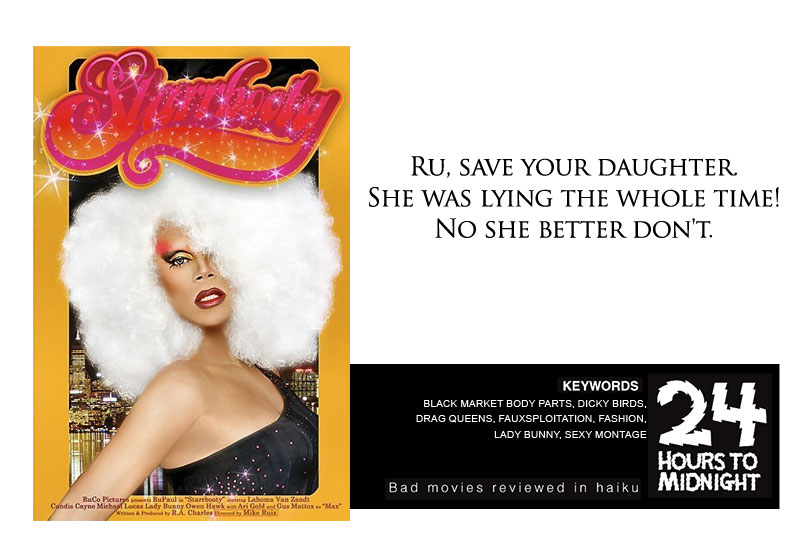
Let it be known: We love RuPaul. Well, we love RuPaul’s Drag Race and its glorious send-up of outrageous reality television tropes. When we heard of Starrbooty, touted as a riff on blaxpoitation and sexploitation films of the 60s and 70s, we just assumed RuPaul wouldn’t disappoint.
We did not, however, have any idea exactly what we were getting into.
RuPaul stars as the titular superspy/supermodel of the world in this fourth in a series of low-budget productions. (The first three were produced in the 80s with a budget of $100 and sold out of shopping carts outside of gay bars.) While this sounds exactly like the kind of b-movie gold we gravitate towards, what surprised us was how pornographic the whole thing was. Starrbooty’s sister/daughter/whatever is kidnapped by a cabal of black market drag queens and held hostage. Starrbooty infiltrates the circle by becoming a prostitute, and literally sleeps her way into the inner circle.
Actually, “sleep” puts it way too mildly. One scene in particular, in which Starrbooty tortures a man’s erect genitalia (upon his request) with her high heel, left us reeling. We’ll never be able to look at RuPaul’s shoe line (available at Heels.com) the same way again.
If you can look past the penises (seriously, there are a lot), this is a silly gay romp of the highest order. Mike Ruiz, celebrity photographer and frequent reality television judge, directed the whole thing. RuPaul (as R.A. Charles) wrote it. So pour yourself an Absolut cocktail and settle in for something completely #Rudiculous.
Oz: The Great & Powerful (2013) or Army of Darkness II
Mon, Mar 11, 2013
Here’s three sad souls,
Oh me, oh my.
No brain
No heart
He’s much too shy.
But never fear, you three!
There’s a wizard you can see…
Thanks a lot, Sam Raimi. Now every NTV kid has that theme tune stuck in their head.
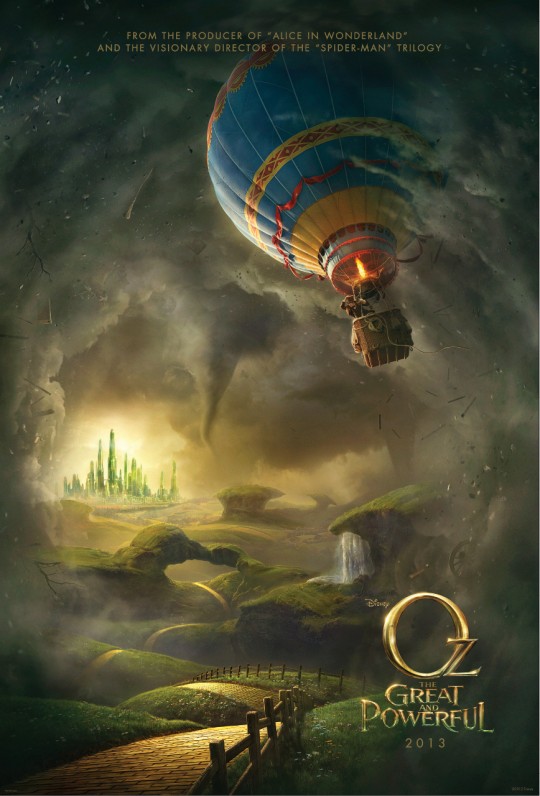
Oz: The Great & Powerful tells the story of how a third-rate magician named Oscar (CHUD poet laureate James Franco) becomes “the man behind the curtain” from MGM’s 1939 film. During a magic show in Kansas, a crippled girl asks Oscar to make her walk again in a scene that is unwisely not played for laughs. Soon, Oscar finds himself on the run from yokels demanding a refund. During the ruckus, Oscar is sucked up by a hurricane and ends up in Oz. There, he’ll defeat evil witches in order to fulfill his destiny as Oz’s rightful ruler — despite being a hacky magician.
Speaking of hacky, let me just quote the script as Oscar realizes his place in the wonderful land of Oz: “I may not be the wizard you wanted, but I just might be the wizard you need.”
(I had to have my secretary write that quote out from my notes because thinking about it would result in me spraying my laptop with a pulpy jet stream of vomit.)
Oz is a bad, bad, bad movie. I’d had some cockeyed hope that director Sam Raimi would turn it around — until one specific scene. One single scene.
I saw a dwarf do a flip…
And it was computer-generated.
Little people exist. Backflips exist. Both are easy to film. Why spend the millions of dollars to have a CGI dwarf double rotate in mid-air as though he were on a character selection screen in a mid-90′s tournament fighting game?
The stupidity doesn’t end there friends. There’s more:
Surprisingly, this film is a remake. Not of any of the previous Frank Baum Oz material (on which Jezebel has an interesting piece.) No, it’s a remake of Army of Darkness. Disney shilled out billions of dollars so Sam Raimi could direct a family-friendly remake of his 1993 cult hit that cost 20 bucks to make.
The plot of both films is the same: Smarmy, womanizing asshole leaves an already cartoonish version of the real world and gets sucked away into another time and place (Oz/King Arthur’s court). There, he immediately overcomes a threat using the tools of his world (magic scares away a CGI lion in Oz, a chainsaw chews up pit creatures in Darkness). This act earns him the respect of an innocent (Embeth Davidtz in Darkness, Mila Kunis in Oz) who’s lost a relative during the recent troubles in this crazy kingdom and believes Our Asshole to be the Chosen One foretold to banish evil from this land. They sleep together almost instantly. He knows he’s no hero and is playing along for selfish ends (a desire to go home in Darkness, a desire for riches in Oz). Later, our asshole hero is asked to fetch an object that could defeat the evil plaguing the kingdom (a magic wand/a magic book), but his failure to do so results in him being chased by creatures in a graveyard (flying baboons/slapstick skeleton hands). Betrayed, his love interest will transform into the hideous creature who ultimately leads an army (of darkness) against him. So, our asshole hero uses explosive powder and any other knowledge to train a bunch of nobodies to fight a supernatural army. It all ends with the hero finding a new romantic partner to kiss faster than you can say “Shop smart. Shop S-Mart”.
Of course, there’s numerous problems with Raimi’s new film drawing so heavily on one of his most enduring films. Unlike Liam Neeson in Darkman, James Franco is a poor Bruce Campbell substitute. He’s all smarm and no charm. Second, Mila Kunis is heinous in this. Kunis has been great before, but her performance in that direct-to-video American Psycho sequel was even better than this. Come to think of it, most of the cast does poorly, even Bruce Campbell himself. Despite getting prominent billing in the opening credits, Campbell’s relegated to a scene or two and mostly stands around in unconvincing makeup that makes him look like Frank Zappa.
And the makeup is atrocious. One of the few times I chuckled at this film is when we see Rachel Weisz’s witch character’s true face. Instead of a hideous demon, as was the intent, she just looks like Richard Butler from The Psychedelic Furs.
The makeup and visuals were far more impressive in Army of Darkness, a film that had less than 1/3 of Oz‘s budget. Just watch the haunted windmill sequence from any of the myriad versions of Darkness. There’s more skewed angles than an episode of the 60′s Batman, silly jokes and a sense of atmosphere. Despite the production’s limitations, Raimi infused the proceedings with style, personality and impressive visuals, three areas where Oz lacks.
When Disney acquired the rights to Frank Baum’s Oz material, it should’ve started a successful franchise. Since Return To Oz proved to be less than a Blockbuster, it has more or less been collecting dust; the rights presumably tossed in the same freezer that (allegedly) houses Ol’ Walt. Disney did nothing with the property after the flop of Return save an unfortunate made-for-TV Muppet remake with Ashanti in 2004.
Who could possibly save Oz from a fate worse than pre-2012 Muppets? Sam Raimi seemed like the right man for this job.
Raimi’s a gifted visual storyteller, but I wish this opportunity had been given to the Sam Raimi of the 80s and mid 90s than the Raimi of today. Unlike Peter Jackson, who’s retained a lot of his quirky visual style for films that don’t feature zombies, puke-loving aliens and puppet rabbits with AIDS, Sam Raimi’s been deliberately toning it down for a while. That approach only worked for A Simple Plan. The Sam Raimi who paid homage to spaghetti westerns in The Quick & The Dead and the Three Stooges in the fascinatingly uneven Crimewave is a far more interesting filmmaker than the man who offered the sub-Grindhouse nothing that was Drag Me To Hell.
Aside from a few fan-pleasing nods to his earlier style, like the Darkman footage in Spiderman or the unexpected chainsaw sequence in its sequel, Raimi’s been holding himself back. Sometimes the results are as brilliant as A Simple Plan, but they usually feel anonymous like For Love Of The Game (yes, that’s not a typo) and Spiderman 3. Drag Me To Hell felt more like the imitative work of a Raimi protege than the inspired lunacy of the man himself.
Sam Raimi moved away from his groundbreaking visual trickery for a few reasons. Filmmakers have been imitating Raimi for some time, either in Raimi-produced efforts like Hercules: The Legendary Journeys or in the works of admirers like Peter Jackson and Robert Rodriguez. Also, Raimi’s undoubtedly leery of becoming a caricature of himself like Tim Burton. Burton, after all, re-did Alice In Wonderland for Disney a few years back and that was even worse than Oz.
Oh, and this film’s produced by Joe Roth, the Wonderland remake guy. I guess we were in good hands from the start!
Oz is Hollywood spectacle at its worst. The Hobbit or even 2009′s Star Trek doled out lavish spectacle at an even pace that complimented their stories instead of smothering them, but this is Raimi giving us two hours of technicolour diarrhea. Arguing that this film is supposed to be lavish and over-the-top and incoherent misses the point. I enjoyed The Hobbit and Star Trek because some thought was put into the scope and style of the story onscreen. Saying those superior special effects-laden blockbusters are of the same mold as Oz is like asking “why eat a brownie when I can just eat a bag of refined sugar?”
Eyes in Movies
Wed, Mar 6, 2013
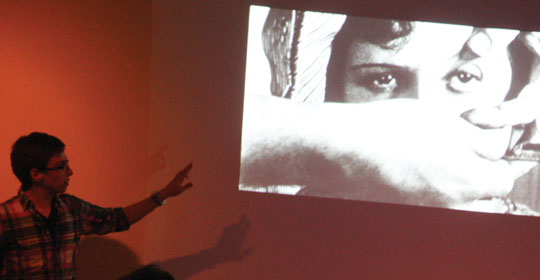
Photo by April White
A native of Wolseley, Saskatchewan, Jonathan Petrychyn is currently completing graduate studies at Memorial University after completing an undergraduate in Film Studies. As part of the Words in Edgewise series at the Eastern Edge Gallery, he did a presentation on eyes in cinema in February. Petrychyn recently chatted with Adam Clarke about that presentation, which you can watch online below.
So, why do a presentation on eyes?
I wanted to see how many pictures I could get of eyes from various films and spend 20 seconds talking about each one. Later, that concept expanded to spectatorship and the concept of vision in general. I used The Ring since the cursed video is like an eye. I talked about Alfred Hitchcock’s Rear Window, since you can’t talk about eyes in film without talking about Rear Window. Also, Un Chien Andalou, [by Luis Buñuel and artist Salvador Dalí] from 1926 where the eye gets sliced with a razor blade.
Rear Window and Un Chien Andalou both represent in this very broad, airy-fairy, very metaphorical way, the governing ways we approach vision and perception in cinema. Andalou splits the eye which to me speaks to that idea of split vision and the camera’s vision, the spectator’s vision and the character’s vision. All the ideas Laura Mulvey goes on about in her seminal, widely-anthologized article from ‘75, “Visual Pleasure & Narrative Cinema.” Then in Rear Window, that whole film is a metaphor for cinema. James Stewart is sitting there, staring out his window and he is imposing narrative on random events. That’s Hitchcock’s metaphor for cinema. I feel that, when people go to the movies, that’s what happens. This process of negotiating between their vision, the camera’s vision, the projector’s vision, the character’s vision… all these different ways of looking and you’re stuck here in your chair. You can’t move. Well, you can, but etiquette suggests that you shouldn’t.
Beautiful Creatures (2013)
Mon, Mar 4, 2013
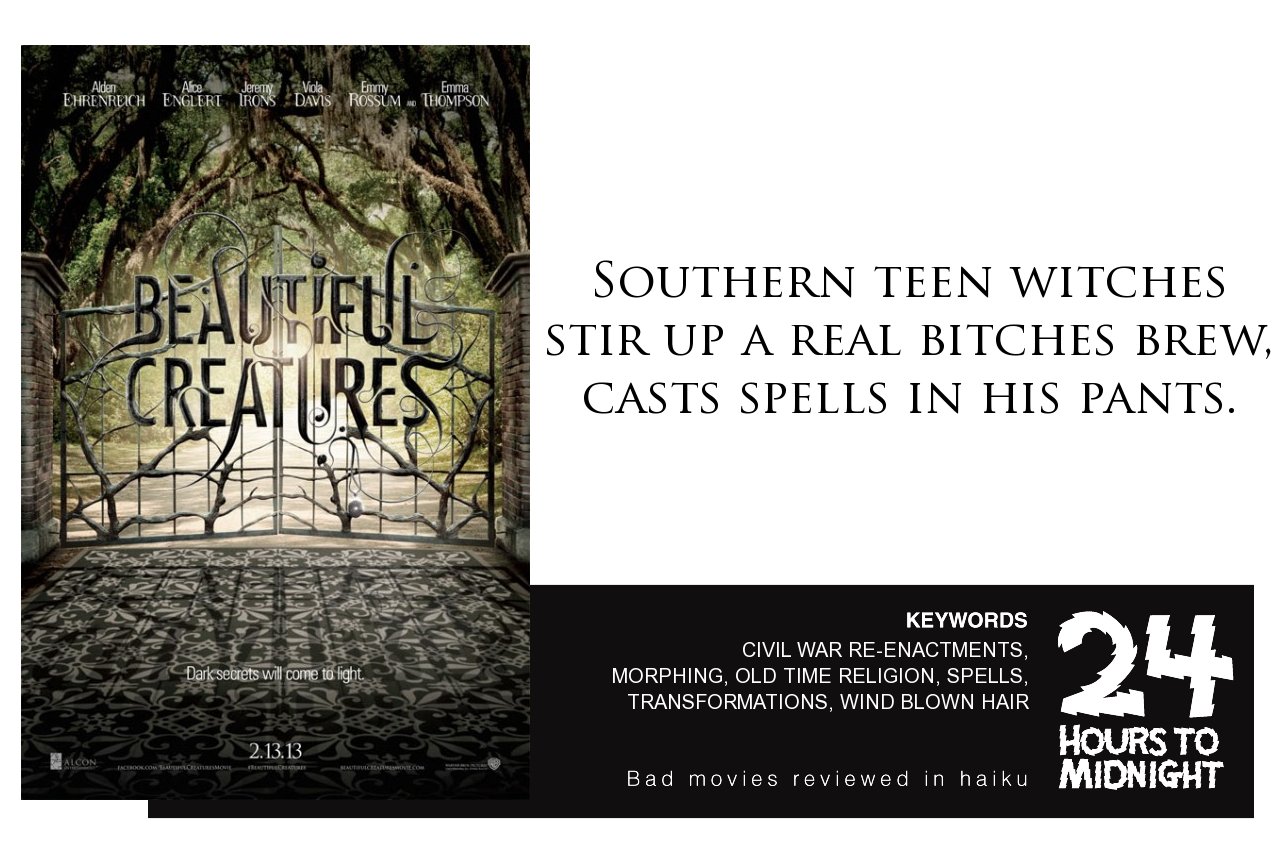
Beautiful Creatures owes a lot to Twilight. The book on which the film is based was published in 2009, a year after Twilight became a best-seller among tweens and your aunt. Easy-reading supernatural smut is nothing new, but their authors didn’t get handed multi-picture movie deals five years ago, so it’s hard to talk about BC without talking about how it stacks up against its sparkly predecessor. Luckily for audiences, Beautiful Creatures chooses to explore outside of the “star-crossed teens with supernatural superpowers” blueprint as often as it decides to colour inside the lines.
Consideration #1 – THE CAST
First off, the actors that make up BC’s teen cast are capable of acting like believable teens. It helps that many of the actors are actual teens, not “90210″ teens. The adult cast is full of happy surprises like Jeremy Irons, Viola Davis, and Emma Thompson. Advantage: Beautiful Creatures, mostly because nobody looks embarrassed to be there.
Consideration #2 – THE LEADS
Thankfully, the plot of BC follows the male lead (Alden Ehrenreich), who manages to remain compelling and motivated, while allowing the the female lead (Alice Englert) to retain Bella Swan’s age-appropriate sullen sookiness. Advantage: Beautiful Creatures, though I retain the right to revisit this if the female lead attempts suicide in the sequel when her boyfriend skips town.
Consideration #3 – THE FANTASY ELEMENT
The supernatural aspect of BC brings in a needlessly complicated system of witchcraft and prophecies to replace Twilight‘s narratively convenient sparkly vampires. Way less fun. Advantage: Twilight.
Consideration #4 – THE SMUT FACTOR
Speaking of way less fun: superpowered immortals that wait ’til they’re married before they get down? Please. Advantage: Beautiful Creatures. On the hood of a car, no less!
Consideration #5 – THE VISUALS
A big win for BC is the styling, which brings big Southern Gothic flair to replace Twilight‘s Washington state gloom. Advantage: Beautiful Creatures, though both director’s clearly haven’t met a scene they didn’t want to tint blue.
The Result
Though BC manages to occasionally outmanoeuvre Twilight, it’s still an adaptation of a middling YA novel, and even when there are flashes of innovation, it’s still a Twilight clone. And being that it’s not as deeply flawed as Twilight, it’s just not as much fun to watch with snark in your heart.
Identity Thief (2013)
Mon, Mar 4, 2013
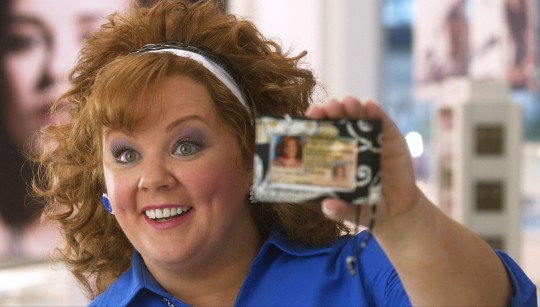
Adam Clarke accuses buddy comedy of noise pollution. Film at 11.
Denver accountant Sandy (Jason Bateman) nearly loses his job when the police bust him. Trouble is, all the charges originate from Florida, which Sandy’s never set foot in. He’s just another victim of a woman who stole his name and social security number. She’s Diane (Melissa McCarthy), an expert identity thief.
Since there’s too much red tape to bring McCarthy to justice by conventional means, Sandy heads to Florida to lure Diane back to Denver and get her to confess her ill deeds.
Mayhem ensues!
You know a film won’t be terribly good when the most interesting thing about it is that decrepit critic Rex Reed took potshots at Melissa McCarthy’s waistline. I’ve come to expect catty, ball-less jokes from Reed, so I wasn’t too surprised. Or at least I wasn’t as soon as I collected myself from the shock of discovering that Reed is still, mostly, alive.
Forgetting the grade school-level insults from a sub-Gene Shalit dinosaur like Reed, Identity Thief just isn’t very good. It should be good. Melissa McCarthy ought to be a star and her performance rises above the material. Jason Bateman is a capable co-star, though I am sick him playing every role as Michael Bluth (you even did that in Paul, Bateman, and that was a million years ago). Seth Gordon directed The King Of Kong, so he knows how to make a compelling movie. Finally, the last premise of the film could make a solid comedy.
What happened? A lot of Identity Thief‘s problems have to do with the inflated budget.
The reason we’re seeing more and more of these loud comedies–which manage to produce an exciting trailer and little else–is because there’s too much money spent. If producers are shilling out a hefty budget, they want that movie to be big. With Identity Thief‘s estimated cost of $35 million, we have a simple story loaded with elaborate car chases and padded with familiar faces (Jon Favreau, Robert Patrick, John Cho) who’re given nothing to do but get paid. I mean, I’m glad the T-1000 got a decent craft services meal, but why get him at all for a nothing part?
In my review of Mama, I griped about modern horror films consisting of nothing but LOUD NOISES. For Hollywood horror films, it’s the “age of (SKRREEEE) sound effects (KLONG) getting in the (BLARMP) way of atmosphere”. For Hollywood comedies, the problem is that every joke is as loud and broad as possible. There’s no room for little things like wit, clever dialogue or even a lousy idea or two. All this movie finds funny/interesting are car chases and people getting punched in the throat. It’s draining to sit through nearly two hours of it.
Silliness and broad strokes can be hilarious. One need look no further than This Is Spinal Tap, Sleeper or Pee-wee’s Big Adventure for proof of that. Those films knew that you can’t have jokes at the same level all the time. Everyone remembers speakers that go to 11, Woody Allen as Mr. Butlertron and Pee-wee’s bicycle face-plant. But those films also have quiet little jokes and changes in tone to keep things varied and interesting. Pee-Wee’s Big Adventure wouldn’t be what it is without the sudden claymation horror of Large Marge. Same with Sleeper‘s notes about the health benefits of hot fudge and tobacco and Spinal Tap‘s on-camera interviews. Those aforementioned scenes from these films form funny connective tissue around the bigger laughs in each.
Identity Thief‘s got nothing like this. It’s loud all the time and is basically like a bad sitcom. Bateman is a petulant hot house flower in nearly every scene (save one). McCarthy is crass and annoying in nearly every scene (save one). There’s no characterization; only a checklist of tedious, empty zaniness. It just seems like a set up for next week’s wacky adventure.
Why is it such a mess? Surely the talent involved…
Waitaminute! Screenwriter Craig Mazin wrote/co-wrote Scary Movie sequels, the Wayans-Spade vehicle Senseless and is currently writing Hangover 3: Season Of The Witch. This is a guy who specializes in broad laughs and zero nuance. So much for that mystery… still, do people like these movies or are they just an excuse to get out of the rain?
It’s not entirely Mazin’s fault, to be fair. I wouldn’t be surprised if Identity Thief was written uncredited by a team of “punch up” artists. Punch ups are a process in which writers/comedians load a dead screenplay with jokes. A process since immortalized by Patton Oswalt on his album, “Werewolves and Lollipops”. The reason comedies are subjected to this, this perfect example of too many cooks spoiling a broth, is because films are given too much money in Hollywood.
Identity Thief‘s not a terrible movie. It’s far from the worst movie I’ve seen in the past few weeks. I only wish it hadn’t confused jokes, story and character development with throat punching, gunshot wounds and car crashes. It may have an original premise, but this Melissa McCarthy vehicle has all the freshness of the Cannonball Run sequel it practically is. The only oversize aspect of the film Rex Reed or anyone else should be mocking is the film’s budget.
Stoner FM (2013)
Mon, Feb 25, 2013
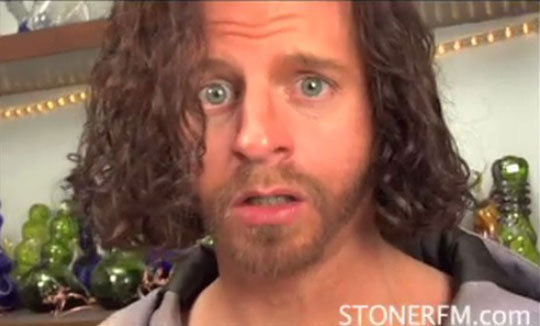
Extra! Extra! Adam Clarke hates Scotch eggs, this movie.
That was atrocious.
Well, I guess my review can’t be that short. So, if I am to be St. John’s only “film cricket” (cf. Homer Simpson), I might as well write this properly.
But first, let me tell you a horror story. I was on vacation in England not too long ago. I was provided with a lunch at the residence where I was staying, so I brought it with me as I explored London on my first day. I opened my lunch bag, then took a bite out of what I thought was a gigantic, delicious falafel.
I recoiled violently. I discovered that the English don’t believe in the dishes of my people, but they do believe in hard-boiled eggs covered in F-grade McNugget batter. I was in a state of nigh-Lovecraftian madness.
I had taken a bite out of a Scotch egg.
(They say that if you go to Buckingham Palace during the changing of the guard, you can still hear the screams of a Newfoundland hobo…)
I’ve had this experience at the movies before. Scotch egg film. You go in expecting entertainment and bite into the rancid not-falafel of hard-boiled mediocrity.
Stoner FM is not, however, a Scotch egg film. It wasn’t worse than I thought it would be, it was exactly as bad as I thought it would be.
Okay, there’s exactly one decent joke in the film. This occurs when the film’s villain, Richard Fa’Got (Get it? HE’S GAY), says to our hero, “we’ll settle this like men… with badminton!”
Since that thoroughly okay joke was spoiled by bad delivery, my conscience won’t be pricked by regurgitating it here.
So, what’s the plot of the film? Even the movie’s not quite sure. The basic conflict is between cousins Fa’Got (Kent Brown) and Jack (Donny Love). Jack inherits the highly profitable Mount Zen and wants to keep it open as a ski resort. Fa’Got, always clad in pink, wants to develop the land and is in cahoots with a cowboy-hat wearing capitalist (Greg Malone, delivering a performance that could kindly be described as “shitting the bed”) and a dwarf terrorist named Ali Ka Boom Boom (played by Danny Santuccione in a turban and what appear to be …blackface).
When Fa’Got (is it funny now? The movie sure thinks so) wastes time and money while he has sex with a cockatoo (there’s three scenes of this), Ka Boom Boom sends two terrorists (played by Brown and Love in blackface) to blow up Jack. 80+ minutes of jokes about gays, women and ethnic groups ensue.
Okay, enough of that.
This movie is awful. So awful that it made me re-evaluate the worst films that I’ve seen. It made me re-evaluate YouTube clips, because I realized the “Newfoundlander Vs.” series has never been as bad as Stoner FM.
Out of curiosity, I clicked the Facebook event for the film’s premiere and got an eyeful. Lots of raging comments. Lots of stupid banter from both those supporting the film and those out to damn it. Since those comments will inevitably come to the comments section of this review, let’s address some of them right now just to get that out of the way:
“You’re just jealous! You wish you had a movie. What have you done?” Etc., etc.
This is the default reaction to criticism of any local production, and it’s easily the dumbest. Let me be perfectly clear: I don’t want to be in your movie or show. The reason I think your work is awful is the reason I don’t dream of working with you. Deal with it.
Also, I do have my own work. I regularly do stand-up gigs, I’ve had short stories published, and I’ve published non-fiction in The Scope, The Telegram and Newfoundland Quarterly. No sour grapes here.
“But Adam, it’s totally a B movie comedy. It’s supposed to be offensive.”
First, stop using the phrase “B movie“. You don’t know what that means. Second, I have no problem with boundary-pushing comedy and no critic is automatically against it. I love South Park, Re-Animator and the comedy team of Tim & Eric to list a few paragons of bad taste. I even found things to enjoy in Street Trash, which was a black comedy that prided itself on its murder and rape jokes.
Want to know what the difference is between, say, the racism themed sketches on Chappelle’s Show and the racist content of Stoner FM? One was made with a satirical aim and the other thinks anything non-white is by default hilarious. Jokes about racism can be funny, but Stoner FM feels like it was made by Pierce Hawthorne, Chevy Chase’s bigoted character from Community.
The actors are largely helpless here. When it comes to Stoner FM‘s character of the overweight, sex-crazed Beulah (Deb Janewoman), I was reminded of Ken Jeong in The Hangover. Jeong once spoke about how his nude scenes in that film were empowering, as they may have been for Janewoman. However, audiences laughed at Jeong because he was a tiny naked man (as was the intention) and the joke about Beulah is that large naked women are gross.
Don’t believe me? When Beulah climaxes during an unfortunate sex/rape scene, squealing pigs are dubbed in place of the actress’ voice. Like Jeong, if Janewoman got something out of this, I’m thrilled. That said, the filmmakers did this so audiences could laugh at you.
Karl Wells is here playing a relative of Brown’s character. Which also makes him a member of the Fa’Got family. I’m not kidding. Shame on you, Karl Wells, for playing a dumb, childish and homophobic joke in an unfunny movie.
The worst offender in this non-entity is Mary Sexton. Now, she didn’t write or direct this movie, but when cast as a Korean character, she gleefully played it cross-eyed (ugh), wearing a straw hat (wow) and delivering all her lines with gusto. What were her lines, you ask? Why, “ching-chong wing-wong”, of course. (Come back, Rosie O’Donnell! All is forgiven!) I don’t care how much pressure the crew put on you or how much money you got: You don’t agree to play an Asian person by doing this offensive, centuries-old schtick.
I don’t want to sound like I think you’re racist, but screw it: Kent Brown and Donny Love, you’re racist. As much time and effort as it took to film this, you could’ve at least spent half a minute on the creative end. This shit is offensive and, no, it’s not a good thing in this case.
Ever hear of a George Carlin track called “Rape Can Be Funny“? Carlin tackles an unfunny subject initially with a not-great joke (involving Porky Pig as an assault victim) to make a larger satirical point about the “blame the victim” mentality towards sexual assault. That’s funny. And a little offensive. For the right reasons.
But that kind of writing requires thought. And the closest thing this script had to any thought was when its writers saw the “Asspen” episode of South Park and said “we can do that!”
In conclusion, Stoner FM‘s about as funny as Sophie’s Choice.
Stoner FM is playing regularly at Empire Studio 12 at the Avalon Mall until February 28


Thu, Apr 25, 2013
Adam Clarke