

Archive | On Screen RSS feed for this section
The Chamber Of Infinite Derp
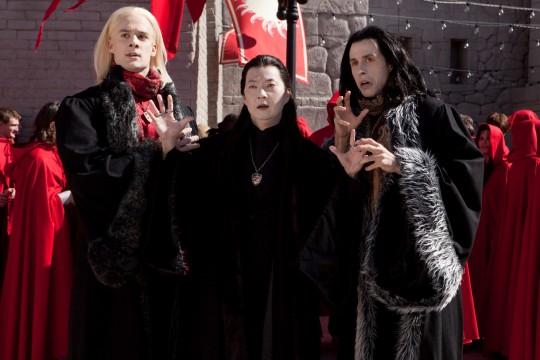
Adam Clarke went to Vampires Suck to observe its audience. The end result? An inexplicable desire to hurl slabs of concrete at humanity’s collective face.
It is my deep shame that I was a Friedberg/Seltzer virgin until last weekend. While other film critics had already taken one or more of the comedy team’s efforts to proms and underneath the bleachers, I was a mere wallflower denying myself the seductive wiles of Meet The Spartans, Date Movie, Epic Movie and/or Disaster Movie.
Well, I may be in my late twenties, but the moment has arrived. I watched Vampires Suck, the latest offering from the most evil men in the world this side of Robert Mugabe. Just to give you an idea of what I got into, seeing a Seltzer/Friedberg comedy is about as sound as self-performed eye surgery or going to China to re-enact the Tiananmen Square protest with Legos.
Writers Jason Friedberg and Andy Seltzer have been steadily penning comedies since co-writing Spy Hard and Scary Movie (both were completed with a group of other writers). When the latter proved to be worryingly successful at the box office, Friedberg and Seltzer went on to don directing and producing hats for a string of comedies, not unlike the Coen brothers but with the collective intelligence and quick wit of a fish-eyed drunkard with his hand down your pants. I’d managed to avoid the duo for fourteen years*, but I couldn’t resist the urge to see their latest offering for three reasons:
1) Vampires are ideal for parody. Hell, get a friend to read Twilight aloud and you’ll be in fits for hours. Doubly so if you can get Scope alumnus Michael Collins.
2) I really want to see what kind of audience appreciates these kinds of movies and if there’s anything they have to offer as successful comedy writers.
3) I had a looming deadline and hadn’t written a single word.
Having seen the film, I can safely say that I will never, ever see another Seltzer/Friedberg film for as long as I live. At only 90+ minutes, the film still manages to feel like an especially bad Rob Schneider vehicle. Remember those South Park trailer parodies that described Schneider’s laugh-free films through a series of “derp derpy-derp dee tiddly tum dee tumper too”? Vampires Suck is derp to the Nth degree. It’s an infinite chamber of derp. A yawning chasm of derpy derp derp derp.
As the title helpfully shovels into our skulls, Vampires Suck is a fast-paced spoof of Twilight that’s done in the style of Zucker-Abrams-Zucker comedies (Airplane, Kentucky Fried Movie, The Naked Gun: From The Files Of Police Squad!). Or rather, it wishes it was a peak era ZAZ-style spoof, but its myriad cutaway gags are so stale that even the writers of the punishingly unfunny Cleveland Show wouldn’t raise an eyebrow at it, much less a smile.
Twitchy, mopey Becca (Jenn Proske) has recently moved to the sleepy Washington hamlet of Sporks (Get it? Like Forks, Washington in Twilight? Geddit? DO YOU?). Despite a frosty welcome from her new classmates, Becca soon spots Edward (Matt Lanter), a glittery vampire who’s scared of sex. When Edward dumps Becca for reasons too convoluted to regurgitate, she’s forced to save him from a villainous vampire trio headed by the naked Asian man from The Hangover (star of The Hangover and the upcoming Hangover 2: They Still Right Drunk, Wha?).
What saddened me was the sight of a couple of legitimately funny people in Suck. Diedrich Bader (Office Space, The Drew Carey Show) and national treasure Dave Foley attempt to class up the proceedings presumably because they each had a boat payment due that week. With Party Down cancelled, it’s getting harder and harder for notable comic actors to get a decent TV spot, so I sympathize. Foley escapes his cameo with dignity intact, but Bader is left drowning in a sea of gags so puerile that even the folks at Troma would consider them to be too first draft.
As for the quality of jokes on display, the film is reminiscent of The Royal Canadian Air Farce in that it’s parody is so broad and rock-stupid that I can’t even tell when the jokes are happening. Most of them consist of characters getting brutally assaulted because the filmmakers can’t think of anything funny to do with them. Moustaches are ripped off, bodies dismembered, fingers spurt geysers of blood and an infant is crushed with a bowling ball. Neither I nor the audience laughed during any of the above, but a large percentage of the crowd thought the scenes with men dancing and kissing each other were a scream. Really warms your heart to know that gay panic is alive and well, doesn’t it?
Suck has a script that is mostly recycled gags when it isn’t name-checking celebrities without a punchline, beating people up or getting a few laughs out of homophobic CHUDs. Half of the film consists of jokes stolen from The Simpsons, the ZAZ comedies, dozens of late night talk shows and just about every negative review of the Twilight books and films. Even the title is a second-hand pun, which makes Jason Friedberg and Andy Seltzer the cinematic equivalents of Nick Madson** but with fewer redeeming qualities. It’s as though the writers raided a hack comedian’s garage sale while managing to stay well within their budget. No doubt the latest brainchild of the comedy duo will tackle such ripe topics as Star Wars, the quality of airline peanuts and that one Summer we all couldn’t stop doing the Bartman.
I’d wanted to see a surprisingly successful comedy duo in their element with the attempt to understand why they appeal to some people. Near as I can tell, the only explanation is that if you openly defecate on the lowest common denominator, you’ll soon attain wealth and power beyond your wildest dreams.
Tempted to have a giggle at Twilight? Do yourselves a favour and sit down with one of Stephanie Myers books or film adaptations. Enjoy their Melrose Place-level incoherence and insanity. Me, I’ll be sitting in the corner, bashing my skull with a trowel and weeping for humanity. Goodnight!
*I saw Spy Hard in theatres. Breathe for me, Woodward.
**Madson, as the linked video demonstrates, was the joke thief who cribbed material from Patton Oswalt, Louis C.K. and David Cross then passed it off as his own earlier this year.
No Talking, Just Headroom
Tue, Aug 17, 2010

Adam Clarke was disappointed by the newly-released Max Headroom DVDs because Skeletor hurt his feelings.
Nostalgia can be a very dangerous thing.
I once had tremendously fond memories of He-Man And The Masters Of The Universe. I was captivated by murky recollections of an evil sorcerer with a skull for a head threatening humanity with an army of grotesques atop a great castle in his shadow realm. He-Man, in my mind, was a dark cartoon that would not shy away from pulpy thrills.
When I was twelve, I dug out a box of old VHS’ full of He-Man episodes taped off NTV. I don’t think I could have been more excited unless the tape had nipples on it (again, I was twelve).
When the first tape began with a shot of Castle Greyskull, I felt a chill. Monsters and mutants were everywhere, each doubtlessly plotting to dismember He-Man. Then, a hush falls over the monsters as Skeletor, the granddaddy of badness himself, rises from his throne and announces his latest scheme.
“We’re going to cancel the circus,” he says.
Yes, the despot of a sci-fi medieval Hell was going to get his nemesis once and for all by cancelling the circus. Just like Idi Amin did. No, wait. That was genocide. My bad.
What? Had my childhood lied? I’m afraid so. He-Man wasn’t a stylized piece of ultra-violence, but a colourfully idiotic diversion starring an ensemble cast of barely-animated hunks of plastic. Not unlike Desperate Housewives…
Ever since that disappointment, I’ve become exceedingly leary of re-watching fuzzily-remembered films and series I enjoyed in the past. Sure, there are plenty of TV relics that still stand the test of time, but my He-Man experience loomed strongly in my mind when I picked up the newly-released Max Headroom: The Complete Series DVDs.
Headroom, if you recall, was a much-buzzed about piece of visual trickery. The character was supposed to be the first entirely computer generated TV personality, but was actually Canadian actor Matt Frewer under pounds of latex. When the pseudo-CGI character made his debut in the 1985 telemovie Max Headroom: 20 Minutes Into The Future, it turned out to be something of a hit. Soon Max was all over the place, introducing music videos, recording novelty jingles, hosting a chat show and hawking New Coke to a bewildered public. A TV series that picked up where the telemovie left off premiered in 1987 and was cancelled the following year. Despite such blips as an infamous PBS station hijacking involving a Headroom impersonator and the promised Max Headroom For President film, the character had vanished from the public consciousness.
Now, in the Summer of 2010, Max Headroom’s back! Yes, those wonderful Pog-like pieces of data storage we call DVDs now have Max’s glory days forever lazered into them. The results are something of a mixed bag.
First off, the title is something of a misnomer, as this set doesn’t feature the UK telefilm nor any of Max’s iconic pop culture appearances. Instead, we have a decent set that collects all 14 episodes of the US series.
Secondly, Max Headroom himself is absent from all of the special features. Yes, despite interviews in which the show’s creators and staff credit Headroom for inventing all that we hold dear, Matt Frewer is nowhere to be found. Sure, we have to make allowances for scheduling conflicts, but a few words with the man whose facial tics, quirky voice and improvised one-liners made the character such a success. He would’ve brought some much needed levity as the disc’s subjects race to see who can give themselves the biggest pat on the back.
As for the series proper, each episode takes place “20 Minutes Into The Future”. The setting is a bombed-out American city that’s home to several of the major TV Networks. Televisions are everywhere, as it’s now illegal to turn them off. TV execs and advertizing agencies hold all the power. It’s up to crusading TV reporter Edison Carter (Matt Frewer) to keep the public informed despite hour after hour of mindless fare like fatal sports, addictive game shows and the long-running soap opera “Porky’s Landing”.
Carter’s hard-hitting reports are a regular thorn in the sides of his employers at Network 23, but his ratings are high enough so that they let him live. That is until somebody comes up with the bright idea of murdering Carter and replacing him with an easy-to-manage digital facsimile. Mayhem ensues as the TV journo unexpectedly recovers from a near-fatal attack, while his computer generated double is even harder to placate than Carter was in meatspace.
So, with his employer having put a hit on him, what does the intrepid Carter do? He goes straight back to work, meeting the digital duplicate named Max Headroom and exposing ruthless network head Ned Grossberg (Charles Rocket) as the real villain behind-the-scenes. With order restored at Network 23, Carter teams up with his sexy producer Theora (Amanda Pays), his neurotic editor Murray (Jeffrey Tambor), a nerdy whizkid Bryce (Chris Young) and Carter’s stuttering, wise-cracking, online duplicate to solve crimes each and every week!
If I sound unimpressed by Headroom, it’s because the He-Man-effect has struck again. Despite some neat concepts, surprisingly effective special effects and a decent cast, the series never coheres into anything. When I first watched Max Headroom, the series rewarded me for getting its pop culture references and sci-fi satire. Having seen the series after more than a decade, the whole series is nearly derailed by its own laziness.
Is Edison Carter actually reaching anyone? Is Max merely his id or are they both expressions of each other? Why is a romantic tension written between Edison and Theora, if it’s only going to be written out the following season? Why did they insist on filming that creepy scene where he non-chalantly sniffs Theora’s hair upon first meeting her? How does this TV-based political system work, exactly? Is Murray a bumbling oaf in over his head or a genuinely good “old hand” reporter? If the porn version of Max Headroom is the busty Maxine Headroom, is her alter-ego known as Edison Twinz? These questions and many others will be raised and summarily dismissed at nearly every opportunity in the series.
The prime offender for lazy characterization is, surprisingly, Max. Even in his own show, the poor pseudo-sprite is sidelined in the bulk of the episodes in favour of his human pals. Despite the promising idea of an emotionally distant newsman having his id run rampant on global television without a censor, Max Headroom is mostly written as a child-like version of Edison Carter after the first few episodes. Is there a greater indignity than going from the lead in a series to its Scrappy Doo in a matter of weeks? Worse still, when Carter and Headroom do end up discussing the nature of identity and their predicament, it’s in the weakest episode the series has to offer (“Neurostim”) and is never brought up again.
There are a handful of great stories here and some even benefit from strong characterization. The obvious highlights involve Carter running into a former colleague whose destruction he and Murray may have caused (“Dream Thieves”), subliminal ads that cause the obese and elderly to explode (“Blipverts”), Carter illegally trying to supply lower-class children with PayTV education tapes (“Lessons”), a religious cult that promises immortality through videotape (“Deities”) and Carter having his identity erased when he runs afoul of a corrupt security company (“Security Systems”).
Niggles like this aside, it was nice to see the series again, albeit mostly for nostalgia. Max Headroom‘s a curious series, as it always seems to be on the verge of greatness without ever reaching it. Even though the aforementioned episodes are really quite good, the show stumbles a few too many times in its two short seasons for me to fully recommend it. It’s not a series that was “brilliant but cancelled” so much as “clever and justly forgotten”.
DVD Pick – “Night Thoughts”
Wed, Aug 11, 2010
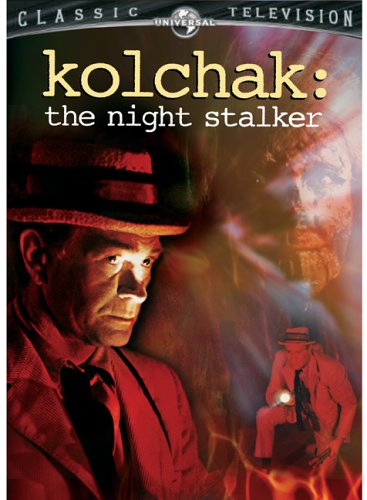
Adam Clarke knows that Darren McGavin was not a real reporter, but played one on TV.
Too often we complain about what isn’t on DVD. Rather than join in the whining brigade (there’s always time for that later), I feel obliged to point out that one of my favourite series is readily available in a DVD set: Kolchak: The Night Stalker.
I’ve written about my fondness about the Carl Kolchak character before in the first annual Blogowe’en here at The Scope. To summarize, Kolchak (Darren McGavin) is down-on-his-luck reporter who dresses in rumpled seersucker suits and is seldom taken seriously. Kolchak’s generally seen as someone who never lived up to his early promise and is barely holding on to a job. In the original 1972 The Night Stalker telemovie reviewed here two years ago, he becomes convinced that a Las Vegas serial killer he’s tracking is actually a vampire. The hang-dogged reporter’s pursuit of the truth nearly kills him. By the film’s ending, the reporter doubtlessly wished it had.
Several years and one follow-up telemovie later (1973′s uneven The Night Strangler), Kolchak had segued into his own weekly series. Now, he’d be hunting down a different monster each week while in his new digs at the Independent News Service in Chicago. It’d be the same thing week in, week out barring an episode where he meets a Werewolf on a cruise ship Boat or the one where he returns to Las Vegas to fight another vampire. In the meantime, impatient police officials and even untrustworthy military goons would cover up Kolchak’s findings before he could tell the press. Each week, poor Carl Kolchak would sit at his typewriter by the episode’s end and wonder “who’d believe it?” before tossing his findings in a trash bin.
Sounds repetitive, doesn’t it? Yes? Just a little bit? Repetitive, I mean. Yes, it’s quite repetitive. This town is a part of us all. A part of us all. A part of us all.
Sorry, I just had a strange interlude. Kolchak’s a formulaic series that more or less implodes halfway through it’s 21 episode run. The decline in quality between the first and second half of the season is so sudden, one could forgive viewers for mistaking most of the latter episodes as being shot without a script. Or a budget. Because of a dare. With Satan.
Yet, the charisma of McGavin and his inimitable sleazy, yet likeable performance really makes the show. All the episodes are watchable because of his impeccable delivery, characterization and sharp comic timing. Similarly, his relationship with long-suffering editor Tony Vincenzo (Simon Oakland, the sole other holdover from the two telemovies) is dynamic and engaging. Just when you think these two do nothing but shout at each other, Kolchak will convince Vincenzo about the importance of a story by talking about ice cream.
No, seriously. Kolchak convinces his editor to cover a story about a killer robot by implying that the government is stealing Vincenzo’s ice cream. I wouldn’t lie to you about these things, Scope readers.
Adding to the show’s mix of pulp horror and tongue-in-cheek humour were some snappy scripts courtesy of writer/script editor David Chase (best known as the creator of The Sopranos), Jimmy Sangster (screenwriter of many classic Hammer horror films) and Robert Zemeckis and Bob Gale (the Back To The Future trilogy, Who Framed Roger Rabbit?). The best episodes feature appearances by Jack The Ripper, a zombie, Doppelgangers, a satanic senator, a swamp moss creature, a Native American predator that feeds on electricity and even a headless motorcyclist. Granted, only 12 of the 21 episodes are worth a damn, but I urge you to check out this vividly entertaining and influential series.
Though it only lasted a single season, Kolchak‘s impact can be felt through such cult hits as The X-Files and Supernatural. The former featured McGavin in a couple of guest appearances, while the latter was originally conceived as having a reporter or pair of reporters as protagonists. Ironically, Supernatural hit the airwaves the same time as an ill-fated Kolchak remake debuted to dismal ratings on ABC. Despite being run by a former X-Files scribe, the remake was a dud. Though its flaws are numerous, its greatest offense was replacing McGavin’s quick-witted, schlubby Kolchak with a boring, brooding Kolchak played by Stuart Townsend.
Picture on the DVD set is fairly crisp, as is the sound barring a few minor, but noticeable drop-outs in two episodes. The better episodes of Kolchak should go over well with the X-Files and Supernatural crowds. I wish I could prove to you how great the set is but, well…who’d believe it?
Expendable Cinema: Stallone in Rhinestone
Fri, Aug 6, 2010
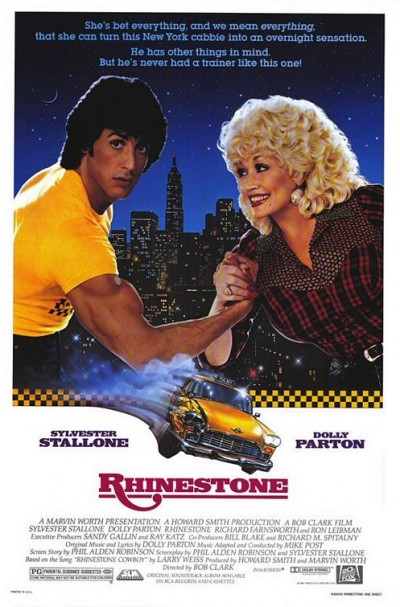
Adam Clarke would rather watch Sylvester Stallone’s inevitable sequel to Over The Top than The Expendables. That or any Arnold Schwarzennegger vehicle…
Many of my friends are looking forward to The Expendables and I can’t for the life of me figure out why. Firstly, you have a plot that sounds like a rip-off a Predator minus the alien and the armwrestling. Presumably the homo-eroticism will remain intact. If not, what’s the point?
Next, you’ve got a film that was designed to bring all the 80′s action stars under one story, but who’ve they got? Sylvester Stallone and Dolph Lundgren? Cameos from Arnold Schwarzennegger and Bruce Willis? Feh! Even Jean-Claude Van Damme turned down the script, and he was in Knock Off.
Granted, it’s nice seeing Mickey Rourke get work, but this film’s not going to be 1/10 as fun as his scenes with Sam Rockwell in Iron Man 2.
Face it, we all want Arnie back making action movies. We want his flat, imitable voice tossing off one-liners like in Commando where he said “let off some steam” after impaling his nemesis on a steel pipe that blows steam out of his massive wound. Or that movie where he dropped a museum on a vaguely British terrorist and said “now museum, now you don’t!” Or that film where he threw the Nazi scientist into the cage of a ravenous panda before uttering the immortal bon mots, “prepare for panda-monium!”
Get to the chopper!
Even by the lenient standards mostly dull standards of recent action movies, Sylvester Stallone does not interest me. I’m not interested in The Expendables because it won’t come close to topping the insanity of Schwarzennegger’s 80′s heyday. Even Stallone in his prime couldn’t do that.
What I will recommend is for you to all watch Rhinestone, an often painful comedy based on “Rhinestone Cowboy”. Yes, you read that right, it’s a film based on a novelty song. Oh, and Stallone plays a country singer…who falls in love with Dolly Parton.
Director Bob Clark (whose career ranged from A Christmas Story and Black Christmas to Baby Geniuses and Superbabies: Baby Geniuses II) performed an impossible feat: he eclipsed the natural likeability and charisma of Dolly Parton. Here Parton plays a country singer who bets a sleazy club owner that she could turn anyone into a country star. This bid begins all in Dolly’s hopes of being let of her contract with said sleazy man, but should she fail, she owes him the kind of Dollywood ride that money can’t buy. Well, who should walk through the door but a brain-dead Brooklynite who pays the bills as a kee-razy cab driver. With a few weeks or maybe a month (or was it 48 hours, complete with digital read-out clock?), to turn Stallone’s character into the next, um, Dolly Parton. The mismatched pair head down to her hometown and rock out with Richard Farnsworth (I’m not kidding). It all builds up to a climax where Stallone, now clad in a rhinestone jumpsuit, heads out on horseback to pummel Dolly’s manager.
Clark’s film is characterized by being wholly unfunny, constantly blaring awful music and showcasing an awkward script that appears to have been created as some kind of bridge between Dolly Parton, D.C. Cab enthusiasts and Stallone’s desire to poke fun at his Rocky image. The end result is truly awful with the low point being the awe-sinspiringly awful scene where Stallone plays “Tutti Frutti” on a church organ.
Brace yourselves. Find the DVD or one of its sporadic airings on TV and surrender to the sweet, cinemasochistic pain of Rhinestone. I guarantee you’ll have more fun with that than The Expendables. In the meantime, I’ll be watching Schwarzennegger ham it up in Batman & Robin. You should join me. It will be ice to see you.
Dream Sequins
Sun, Aug 1, 2010
With the recent release of director Christopher Nolan’s dream-based film Inception, Adam Clarke discusses his favourite depictions of dreams in the movies.
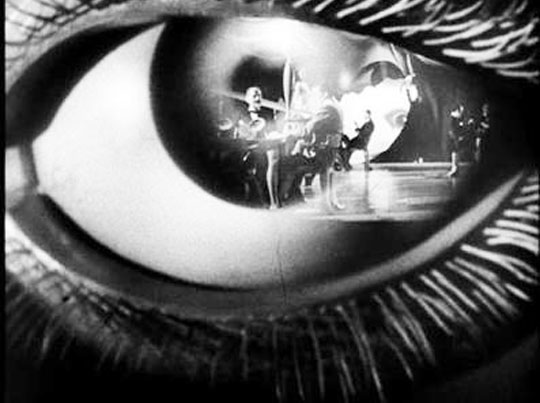
Spellbound (1945)
Before David Lynch made well-dressed dwarfs and card-playing his regular Saturday night thing with Twin Peaks, Alfred Hitchcock pulled out all the stops for weird dream sequences in Spellbound. How? Well, he enlisted none other than Salvador Dali to design a dream that would be suitably weird, but nonetheless reveal key elements to drive the film’s plot. The dream itself is gorgeous: a slew of gigantic eyes transfixed on Gregory Peck as he plays a game of cards before being chased by a pair of wings that fly of their own volition and a faceless man holding a giant, distorted wheel. It’s one of the most striking set-pieces ever filmed and I wish that Hitchcock and Dali had simply abandoned the script in favor of ninety minutes of concentrated surrealism.
Sadly, the film returns to reality, which this sequence alludes to with symbolism, clues and Big Important Meanings. But the dream, which plays out like a rejected opening credits sequence for The Twilight Zone, is worth the price of rental alone.
•••
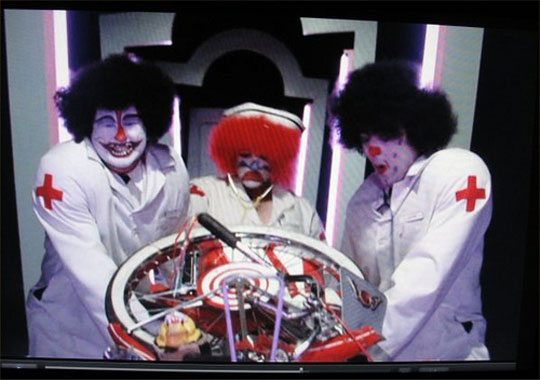
Pee-Wee’s Big Adventure (1985)
Pee-Wee Herman is one of the most enduring characters from my childhood. The Pee-Wee’s Playhouse TV series is one of the most inspired, sweet and thoroughly bonkers programs ever devised and Pee-Wee’s Big Adventure is one of the funniest comedies of all time. It’s easily the best film Tim Burton ever made, working with a hilarious script by Reubens, Michael Varhol and Phil Hartman and a brilliant, chaotic score by Danny Elfman. The story, revolving around Pee-Wee’s quest for his stolen bike, is just a clothesline for one-off characters and moments of inspired strangeness. The film also offers a master class for dream sequences with terrific moments involving clowns in surgical garb and fire-breathing dinosaurs (both of whom hate bicycles!) Fortunately, unlike Spellbound, the rest of the film is demented enough to hold its own against these hilarious asides.
•••
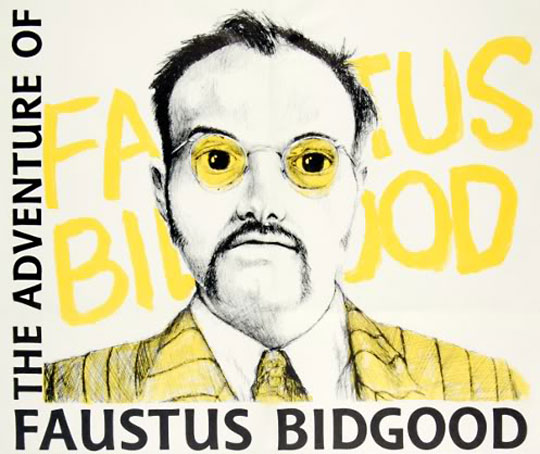
The Adventure Of Faustus Bidgood (1986)
Let’s look at things from Faustus’ perspective. You live a boring, bureaucratic life. You were clearly destined to be the one true premier of Newfoundland. Yes, such is the case of Faustus Bidgood (played by Newfoundland’s greatest treasure, Andy Jones). Bidgood’s a dim, deranged and mumbly clerk who works for the board of education and answers to the equally unhinged Fred Bonia-Coombs (Brian Downey, star of Lexx and the upcoming feature Hobo With A Shotgun). But, in his mind, at least, Bidgood is cock of the walk, earning Newfoundland’s independence and seducing Mary Walsh with an act of seductive nose-picking.
•••
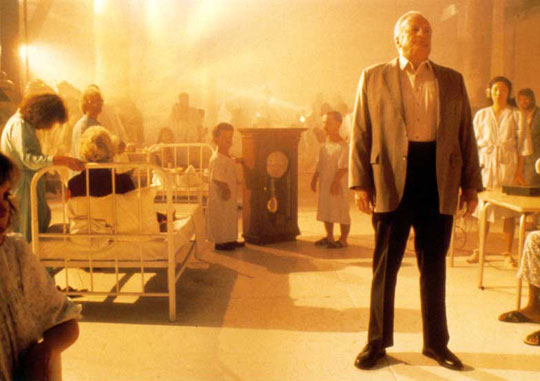
The Exorcist III (1991)
I don’t think there’s a more underrated film then Exorcist III and it all comes down to its title. You know you’ve seen it at the video store or scoffed at a handful of copies of it in the DVD bargain bin at Dominion. It’s based on Exorcist author William Peter Blatty’s novel, Legion, which was the original title of his screenplay (no relation to the garbage Legion film that came out this year). Exorcist III was Blatty’s second film as writer-director and both it and his earlier The Ninth Configuration are damn near perfect. Moody, funny, literate and eminently quotable, Blatty’s the sort of writer you wish was far more prolific, as nearly everything he’s written is astoundingly good and his films are gorgeously composed.
Exorcist III contains a spectacular sequence that offers an eerie, unique take on the afterlife as Lt Kinderman (George C. Scott) dreams of an afterlife that’s equal part hospital, train station and dining hall. There, he sees an ailing friend (Ed Flanders) surrounded by angels and jazz musicians. Also, both Fabio and Samuel L. Jackson have cameos as an angel and a dead man trying to contact the living via radio signals. Fabio was probably hoping to make amends with that pigeon that flew into his eye. Nonetheless, it’s a depressing, haunting and very, very funny scene in a overlooked gem of a movie.
Please accept this application to your evil organization of villainy
Mon, Jul 26, 2010
Adam Clarke is still bitter over messing up his HYDRA entrance exam.
I never wanted to be the villain. My childhood heroes were Mr. Spock, Sherlock Holmes, Spider-Man and the Ghostbusters… all intelligent, capable characters with strong senses of humour, strength and individuality. Villains, despite their odd mix of cool detachment and malevolent chuckling, never appealed to me. I couldn’t understand why some of my classmates would rather pretend to be Lex Luthor than Superman. Remember, the reason Lex Luthor hates Superman is because Supes somehow made him bald. One can only assume that if there was a villain named Hobo whose sole special abilities were to hurl urine-soaked pants at pedestrians and weep uncontrollably each night outside the Peter Easton Pub, the kids in school would have jumped all over it.
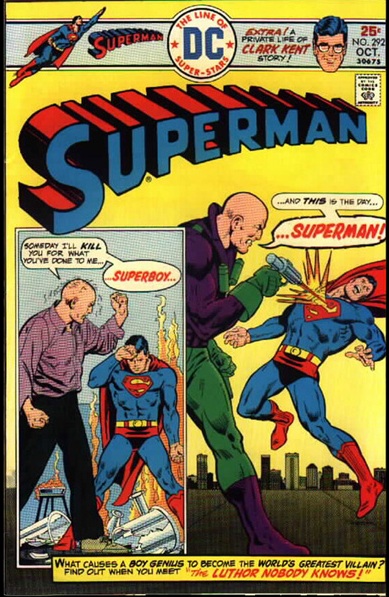
Superman made me bald. I must KILL him! Correction: I must invent Rogaine, then kill him.
That’s all changed now, friends. I get it. I finally do. I don’t want to be a piddly little scientist or a misfit with delusions of godhood. No, the greatest villains have always been the leaders or higher-ups in the conspiracies which, unbeknownst to us, affect us in countless ways. I’d like to join just such an organization because I have what it takes to be among their ranks.
Yes, I’m sure there are temp positions, but I don’t want to work my way up through S.P.E.C.T.R.E by removing all the cat hairs from Blofeld‘s voluminous collection of Nehru jackets. I shouldn’t have to work in the mail room for the albino monks who try to foil Tom Hanks and his stupid haircut at every turn. No, I’ve got what it takes to be in the big leagues. I know the secret of supervillainery: not making any damn sense whatsoever.
Here are a couple of my favourite examples…
Buffy, The Vampire Slayer
There are loads of poorly thought-out plots that clutter Buffy, The Vampire Slayers‘s seven year run. By the show’s final season, one had the impression that the main villain’s motives were chosen at random from a hat full of plot twists written down on Post-Its.
Yet, my favourite nonsensical plot came from the show’s best villain and arguably its best season. After some foreshadowing the previous year, the mayor of the fictional town of Sunnydale, California uses his considerable influence with local and demonic politics to carry out his master plan.
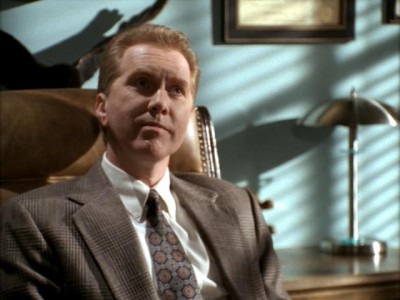
Though unseen in this screencap, Wilkins is consulting the “Baldrick Book Of Cunning Plans” for his brilliant scheme
Now, you may say I’m cheating right off the bat, as Mayor Wilkins wasn’t out to reward anybody but himself. I never entirely got that from Harry Groener’s warm and very funny portrayal of the character who seemed to relish working with his sidekicks and fellow demons. You get the sense that, had he been successful and time had allowed, his flunkies would’ve had some lovely pensions before being devoured.
His scheme: Wilkins yearns to become a pure demon and completes a series of occult rituals to do so. The end result, after a brief time where he is completely immortal, Mayor Wilkins becomes a giant Snake Monster that looks like a rejected creature design from the video game Slaughterhouse. Said monster is killed after about ten seconds of deeply unimpressive screen time.
Why it doesn’t make sense: One of the many rituals he completes makes him immortal. So, you know, why not just attain immortality and keep fiddling with spells so that you can keep said amazing powers. At least there’s a valuable lesson for the budding young evil geniuses out there: if you’re a villainous mastermind and you have a choice between immortality and becoming an easily-killed Snake Monster, always choose immortality!
The Prisoner (1967)
Their scheme: Somewhere in England is a mock society known only as The Village. It was devised and overseen by person or persons unknown, but is overseen by a revolving group of villains all known as Number Two. The Number Twos answer to higher authorities who supervise the progress of each Number Two. For the purposes of this article, these higher authorities a shall henceforth be known as The Village People.
Together the mass of Number Twos and the Village People have kidnapped the man they call Number Six. Six is the man The Village People think might be the one true individual who can properly lead them and presumably run The Village. All he needs is a little coaxing and by “coaxing” they mean torture and by “a little”, they mean “months”.
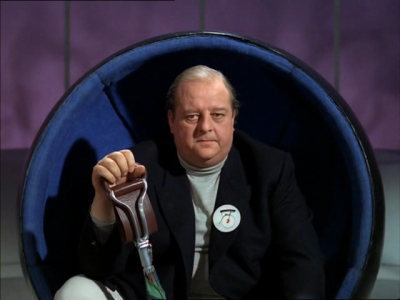
Number Twos are elected based on style…
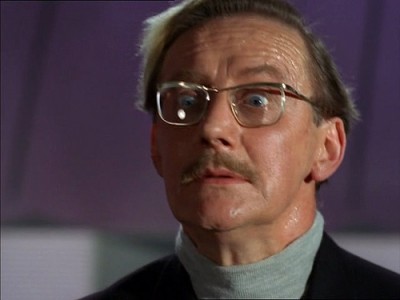
…grace…
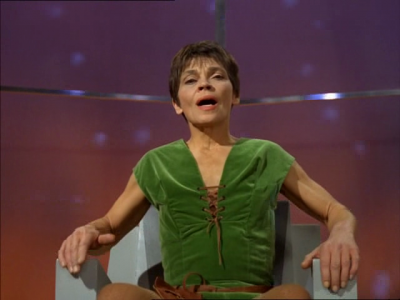
…and don’t forget the swimsuit competition.
Why it doesn’t make sense: So, the best person to run a covert group of shadowy figures is the man WHO HATES ALL OF YOU?
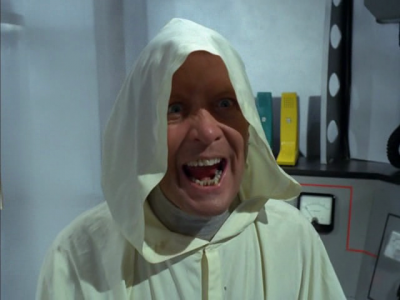
I like the cut of your jib, son…
By day one, Number Six plots innumerable attempts to escape The Village, alert the outside world of his existence, destroy it, outwit and humiliate his captors all while snarling at and occasionally punching those that get in his way.
Naturally, you want to keep this fire-brand’s free spiritedness and individuality. The best ways to do this? Well, drugging and brainwashing mostly.
Yes, Number Six has his veins pumped full of so many chemicals that it’s a wonder they didn’t just settle for electing Ozzy Osbourne as their leader. I guess if he’s a genius before he’d drugged, he’ll be ten times as smart after a year’s worth of chloroforming.
When that doesn’t work, more unorthodox methods are used, like pretending to be cowboys. The SLA used that same technique on Patty Hearst and look at how well that turned out.
The X-Files
Who could forget the kings of all convoluted plans? Yes, everything wrong with the world can be credited to a shadowy organization devoted to keeping Americans in the dark while carrying out mind-control experiments, human cloning and creating a poisonous breed of super-bees!
Their scheme: Aliens have contacted Earth with the express purpose of enslaving us. However, they also want to make human-alien hybrids. What this group of shadowy figures do is make a Faustian deal with the devil. They’ll develop the alien-human hybrids for the aliens who may or may not be an oil-based lubricant, sure, but they’re doing it for the greater good. With time they’ll create a vaccine for the alien disease to protect themselves and maybe the rest of humanity, too (if they’ve been good). In the interim, they steal children and clone them, hypnotize people into becoming murderers via television signals, implant mechanical chips that give people cancer somehow and kidnap Gillian Anderson. A lot.
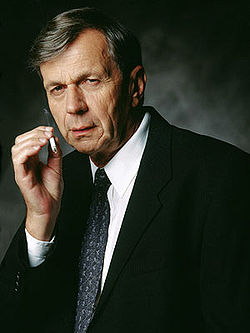
EVIL!
Why it doesn’t make sense: To quote Nicholas Cage, “NOT THE BEES!” Also, everything else.
I think I could really fit in with that sort of thing. If that fails and I don’t get a position in one of the conspiracy-driven consortiums, I’d like to apply myself to the sciences… the EVIL sciences. Yes, I’d like to use the power of science to increase my head and brain to such a size that I’d need a special rocket device with mechanical limbs attached to mess with my enemies. I’d dub myself A.D.A.M. or Arial Doombot Armoured for Maiming.
See you in the funny pages.
Fatboy, Slim Laughs
Mon, Jul 19, 2010
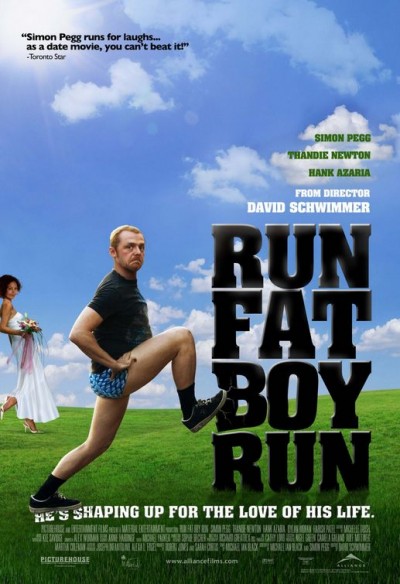
In anticipation for Scott Pilgrim Vs. The World Adam Clarke watches a film that’s almost as tedious as running. (Trust us, it makes sense…)
The team of Edgar Wright, Simon Pegg and Nick Frost have crafted some of the best comedies in recent memory: Shaun Of The Dead, Hot Fuzz and the Spaced TV series. Yet, with Wright venturing on his own with the upcoming Scott Pilgrim Vs. The World, will he be doing himself a disservice by splitting away from his funny collaborators? We need look no further than Pegg’s solo outing Run, Fatboy! Run!
What is the appeal in stories where whingers who stand up their potential spouses at the altar get to fall in love? Seriously, are we so diseased as a race that we see the quirky charm in dumping someone in front of all their friends and family? Am I a crank, stick in the mud or prattling jackanape for not digging that?
Run, Fatboy, Run! is yet another rom-com that uses this plot device and, while not a very good movie, is pleasant enough simply because Simon Pegg is not Julia Roberts. In fact, my enjoyment of many films is tied to their lack of Julia Roberts. But that’s another post for another time…
The film deals with Dennis Doyle (Pegg) who, five years ago, ran out on Libby (Thandie Newton, seen here embodying blandness) on their wedding day while she was pregnant with his child. Libby has now begun dating Whit (Hank Azaria), an upscale marathon runner. Honestly, no one sees these things for intricate plotting, so i’m going to stop there. All you need to know is that Pegg, with the help of his zany best friend and his zany landlord–sigh, already this movie has far too much zany–is going to run the same marathon as Whit to show that he can commit to something in his life and maybe win back Libby in the process.
I went to see this bit of fluff because a date movie with Simon Pegg is infinitely better than being dragged off to see 27 Dresses or The Other Boleyn Girl. I stand by that decision (is there a mainstream actress less charming than Katherine Heigl right now? Aside from Julia Roberts, I mean), but the foreknowledge of Pegg doing a rewrite of an existing screenplay lead to an inevitable disappointment. The film is lazily directed and the script exhibits all the tropes of really lazy writing:
[*] Inconsistent characters (Hank Azaria and Harish Patel seem to be playing different people with the same name in every scene)
[*] An old lady swearing (KOMEDY!)
[*] A TV comic actor rehashing some small screen material for a walk-on cameo (David Walliams, rehashing a bit from Little Britain)
[*] A Magic Negro Stereotype (here a Magic Indian who buys sneakers)
[*] A comedic ethnic minority (the aforementioned Patel who hates Pegg when he’s not being magic)
[*] True Love ™ taking years to come to fruition
[*] A romantic rival who is a douchebag that the woman of Our Hero’s dreams will dump at the end of the film (Azaria when his character randomly turns into a CHUD)
[*] Said CHUD failing publicly for the ultimate comeuppance
Luckily, the movie was not a complete waste of the five bucks I paid for it. The training montage (which served as the film’s teaser) is still funny and there are a few gags and one-liners here and there that coax a giggle. Pegg is an incredibly charming and funny actor as always and is never taken down by crass material such as falling down a flight of stairs, having to spit out a mouth full of crackers, unwillingly glimpsing another man’s junk (shock! horror!) or, in a zany misunderstanding, appear to be having sex with a mannequin in the film’s most groan-inducing scene. Similarly, Dylan Moran (as a compulsive gambler) and Hank Azaria is surprisingly good.
Other than that, it’s slim pickings. Unless there’s nothing else to rent, I wouldn’t recommend it. It’s okay and never an out-and-out terrible film, but the whole thing’s so generic and fluffy it could practically be coffee commercial.
Who loves Rick Mercer?
Fri, Jul 16, 2010

Pretty much everyone.
His legendary political rants on This Hour Has 22 Minutes comprised the first of his two bestselling books, Streeters, and inspired MUN’s Rant Like Rick contest. He got George Bush to open up about his deep respect for Canada’s Prime Minister “Jean Poutine.” He charmed his way into a Paul Martin-guided tour of 24 Sussex Drive, had a sleepover with Stephen Harper, and made snow angels with Ed Broadbent on his popular weekly show, The Rick Mercer Report.
He earned a special place in the heart of my brother Dave, a soldier in the Canadian Armed Forces, when he braved Christmas in Kabul and, according to Dave, was the “only celebrity not to complain the whole time.” Heck, even the right-wingers love him: He was recently approached by Sun TV News, Canada’s potential answer to Fox News, to join them on their quest to provide a new alternative to “the same old CBC.”
On July 14th, Mercer came back to St. John’s for an RCA fundraiser for the LSPU Hall, the place where it all began for him. I caught up with him to ask him about his history with the Hall, and prod him about some of those adventures.
by Sarah Smellie
So you are here to do a fund raiser for the LSPU hall and you have quite a history with the LSPU hall and the RCA. Care to tell us a bit about that?
Well, I certainly do have a big history with the LSPU hall and in fact when I look back at it, in many ways it was my home for many years. It really was a second home. I first walked through the doors when I was in high school and I had a comedy troupe called Corey and Wade’s Playhouse, along with Ashley Billard and Andrew Younghusband (who hosts Canada’s Worst Driver), of course and Christine Taylor. Sean Panting was in that group as a musician. We were the proverbial rag-tag group of people who wanted to create theatre and shows and comedy shows and music and all this stuff, but we really had no idea what we were doing. We certainly had no resources at all, so the resource centre for the arts seemed like a good start. We walked in through the door and they helped us out, they gave us space, they gave us access to various props and equipment that they had available. They provided promotional expertise, and they just helped us in so many ways. Looking back, it’s one of those situations where it’s almost parental. Why in God’s name would those people do that? But that’s what they do, and they helped us as emerging artists and we were there for years.
It was our second home, like I said. I think that that has paid off. So many of those people that were around at that time continued on and had good careers in the arts, both in Newfoundland and the rest of the country. So that’s why I’m doing this benefit show. The Resource Center for the Arts also produced a collective that we all wrote, so it was my first professional job as a professional performer. In fact, I still have the photocopied check, it meant that much to me.
Have you seen the new renovations?
I haven’t seen the new renovations, but I’m so excited because of course twenty years ago it needed to be renovated, so this was a huge event and it was imperative that it happened. Lots of people put in a lot of hard work obviously and it’s just very important. I think people can take the LSPU Hall for granted, but it’s such an important part of the downtown, it’s such an important part of the Newfoundland identity, and it’s been responsible for so many great artists.
You look at people like Robert Chafe who is respected as one of the greatest playwrights of his generation in Canada. He came out of RCA, and that was long after I went through there. Jillian Kieley, who works all over the world now, all over Canada at Stratford and all these places, came through the LSPU hall. A vibrant arts community is so much of what Newfoundland always has been, yet like any community it needs help and needs to be nurtured. The LSPU hall is an important part of that. Even talking to — there’s a young film maker who’s in Toronto now going to school and he does background performing on my show sometimes — Steven Dunn. He’s a much younger person than I am, and to hear him talk about the LSPU hall, how important it is to his age group and that artistic community as well, it just proves that it’s a resource that’s constantly providing support and it’s important.
Do you have any fond memories or particular fond memories about its previous state of disrepair?
Oh, well, you know, I thought the LSPU hall was the greatest place on earth of course because it was so welcoming and so incredible. It was only after I started touring the country as a professional actor that I realized that there was no such thing as a theatre anywhere in the country where there was one dressing room for all actors with one toilet and actually no place to change, because it was essentially a closet. At the time you go, “that’s the charm of the LSPU hall.” Charming that there was a $100 shower from Kent stuck in the corner of an open room and everyone changed in. But at the time I was enamoured by its charm. Even then I realized something had to be done.
So you’re doing shows of your Adventures in Canadian Television. Your own show, I was wondering if I could ask you about that. Your own show seems to tackle softer public interest kind of stories primarily rather than follow a Daily Show with Jon Stewart prototype. Why did you choose to go that route with your show?
“Why did I choose not to do someone else’s show?”
Well no, why did you choose to sort of stick with more softer stories?
Well, it’s not that it’s softer stories. My show, the Mercer Report is, basically, when we designed the show we wanted something that allowed me to do everything that I like to do, or that I like to think that I might be good at. One of those things is travelling around the country… It could be hanging out with David Suzuki or it could be hanging out with an oyster fisherman in Prince Edward Island… That’s part of the show. Part of the show is a travelogue, exploring different parts of the country and different festivals in the country. It’s something that I’m very proud of, and that’s what it is.
Another part of the show is political commentary, which I do every week. I manage to do that and almost every week I get a nasty letter from someone in the PMO or a nasty letter from someone in the opposition office, or someone is upset at me, or some staffer is drunk-dialing me. As long as that continues to happen I am very comfortable with my political commentary.
Then I also do sketches where I fall down and hit my head. There’s been a long legacy of that in comedy and I’m happy to do it. So in television when you create a show, part of the business is that people always ask you why you’re not doing something else. I’m sure people ask the creators of the Republic of Doyle, why are you doing that, why aren’t you doing something else? Because this is what I’m doing.
Sun News, Sun TV News recently approached you to be a part of their new network. Were you surprised by that?
Well, yes and no. I’ve been very fortunate over the years because I’m an independent producer and the Mercer Report is an independent production. We operate on a year-to-year contract with the CBC. Certainly, other networks have expressed interest in us moving, but as a start-up conservative television network, it was certainly a surprise for Sun to approach me, because I’m not a conservative. And very rarely am I accused of it. Occasionally, I suppose, I have been, I’ve been accused of everything. But I was surprised but it wasn’t something I seriously considered is the short answer.
And you eventually said no?
Yeah, I told them that no. Never say never though! I suppose I could hit my head and become head injured and wake up tomorrow and want to be on the Sun News television network, but I don’t see it happening in the near future.
What are you expecting from that network? What do you think it’s going to be? How do you think it’s going to be received?
I think it’s going to be a lot of talk. News is expensive and they know that, and I don’t think that they’re in the business of spending any money on news, so they’ll have opinion. I know what the business model is: The business model is to take right wing talk radio and move it to television and create people like Glenn Beck in Canada. That’s the business model. Now, whether that works, I have no idea. It depends how angry people are. It taps into an anger, and that’s where a lot of conservatism comes from. We live in a country where the conservative’s plan for the future involves building more prisons. You never hear them talk about building more schools. That’s not on the agenda. Build more prisons is the solution.
Yes. Do you think that other news networks in Canada will respond in any way?
Most certainly. It depends actually on lots of different things. This is a little inside baseball, but running cable news is really about your place on the dial. That’s how you make money. What Sun TV has to do to succeed is get must-carry status. The CRTC has said they’re not giving anyone must-carry status for many, many years, don’t even bother applying. They’re applying anyway. So the feeling is at Sun TV that the CRTC will probably say no because they’ve made it known that none can get this. The cabinet will overrule the CRTC and grant them must-carry status, which means that if Sun TV is packaged along with, say, ESPN and you happen to be a sports fan and you want to watch ESPN, the cost of doing that be to subsidize Sun TV. Then they don’t care if you watch.
Oh my God.
For free market ideologues, it actually flies in the face of the free market, because essentially it’s like a tax.
Yeah.
It’s like basically taxing people. If you look at, just look at even the existing news networks – CBC and NewsNet. The advertisers are the Alpaca Farmers of Canada and gadgets that expand your closet space. No one is making money off advertising in cable news, and Sun TV knows that’s not where they’re going to make their money. They’re going to make their money off of cable subscribers who pay for it whether they want it or not. So it won’t matter who watches.
What if they really did bring a Canadian Glenn Beck? Who would it be and how would people react?
It would be Ezra Levant. That’s who it’s going to be. Ezra Levant is going to be their big, opinion based talk afternoon or evening show. Ezra’s an angry young man who’s angry about a lot of things and thinks that a lot of things in Canada are broken. Maybe people will listen to him, I have no idea.
Huh!
It’s interesting, Newfoundland is one of the places in the country where call-in shows –- in Newfoundland they’re called call-in shows, in the rest of the country they’re called talk radio — they reign supreme. Newfoundlanders sit around and listen for the entertainment factor. Quite often, when the person that you disagree with the most, who’s a regular caller, calls in, that’s when you turn up the radio. So it doesn’t necessarily mean that people are agreeing with conservative points of view, but sometimes people pay attention for an entertainment factor as well.
Local filmmaker Stephen Dunn has a chance to win a TIFF Emerging Filmmaker award
Tue, Jul 13, 2010

Stephen Dunn is a Newfoundland filmmaker who’s been garnering all kinds of attention for his acceptance into the Toronto Film Festival Talent Lab, and Swallowed, the film that he made as part of the prestigious Talent Lab’s Emerging Filmmakers Competition. Talent Lab participants were given a camera, $500, and three months to complete a film whose main theme was water. The best five were chosen, Swallowed among them, to be whittled down to a winner via public vote and an official jury.
Elling Lien caught up with Stephen Dunn to talk about the Talent Lab, Swallowed, and keeping actresses warm in Newfoundland’s December waters.
(By the way: You can check out the TIFF Emerging Filmmakers Competition, and vote for your favorite here.)
So the Toronto International Film Festival (TIFF) Talent Lab, it was a huge success?
Oh my God, it was amazing. I was pretty blown away by everything that happened. Then, as soon as it ended, we just got to work on the film. I had no idea when we started the lab that there was some sort of competition involved, but this was the first year they organized the Emerging Filmmakers Competition.
Yeah, it must have been strange to have been suddenly competing against one another after all that bonding.
Yeah, it was like, why do we have to compete when we’re here? We just met each other and now there’s this sense of competition. But there actually wasn’t any, I’m actually friends with everyone I met and keep in regular contact with them. But it’s just kind of hilarious that there would actually be a competition for something like that. Anyway, whatever, it’s all fine.
Scrambling for thousands of dollars in prizes… So tell me about the film timeline, after the Talent Lab.
The Talent Lab was in September. That ended, and then I gave myself a break and started doing school and all that. Then I started working on the film in October. I was given until February to do it, and I started in right away. I knew. We were given the requirements that it needed to be based on a theme of water. And that was super important. The first thing that came to my head with the thought of water was movement and flowing and stuff like that. Because of that, I decided to do the opposite of what my initial thought was. I wanted to represent something that was stagnant, and so I chose the story about the woman recycling her tears in a bathtub. So then I wrote the poem over two weeks or so, in October. Then I met Simon Amati. He’s this incredible musician on YouTube. …We met and I was working on the poem, so I was like, “Maybe I should ask him. That would bring this production to the next level.” I was originally just going to have the poem, and I wanted to infuse it with music because I love his style. He’s so spontaneous and erratic almost with his haunting choral music. He layers himself. Almost all of that music is just him in his bedroom.
So you hadn’t started shooting or anything?
Nope. We didn’t start shooting until early December. …I knew I wanted to shoot it at home, obviously. There was no way I wasn’t going to shoot this water based film in Newfoundland. I had to take advantage of our dramatic landscape.

Photo by Mark Bennett
Where did you shoot it?
It was Salmon Cove, in Conception Bay North. Yeah, and the town of Salmon Cove was incredible. The very first blizzard of the winter happened the week I got home. It prevented Meghan Greely from getting in, who was our actress.
You made her get in the water. How the heck did you convince her to do that?
Oh, I know, that poor girl! I know, I’m the worst to my actors. I make them, like, get eaten by crocodiles, and swim in the Atlantic during the winter. But we actually could not get into the beach because of the blizzard. We couldn’t get our vehicles in. I went with Mom the day before the shoot just to see if it was possible and then I had a mild panic attack because the beach was completely inaccessible. We got stuck and got some locals to pull us out. They suggested that we talk to the municipal office, and they ended up plowing the entire area right down to the beach for us so that we could shoot. Incredible! Salmon Cove was so helpful.
And poor old Meghan…
How did she cope?
I had her wearing hip waders underneath her outfit. And she was also wearing a wetsuit with hot packs and all this stuff.
And you had a marine expert?
Yeah, well, sort of. Andrew Renninger who actually was also an actor: he played the husband to the hand. He’s a sailor so we had to have every sort of precaution in order to maintain her safety.
So you had to be out in a boat as well, right?
No actually, Mark Bennett, myself and Duncan O’Connor all were wearing really high hip waders and we got right in.
You were all in the water?!
We all got in the water. Oh yeah. I didn’t need to but I got in anyway, I was making my actors do it. And yeah, of course the camera operators had to get in. Mark Bennett actually was strapped into a glide cam. I had to rent a glide cam from Toronto because the only one in Newfoundland was in Brazil for some reason. So I had to rent this piece of equipment, and we had to take it into the ocean. It’s safe though. We actually busted our camera though. I don’t know if you remember the shot in the film where the wave is actually covering the screen, but that was the last shot we took on the day in the ocean. Mark Bennett was just getting some footage, and put the camera in a fishbowl and covered the top. The wave actually knocked the cover off and the camera was there, floating in the water. He just whipped out the memory chip out and ran with it. The camera was busted but the footage was saved. We had to buy a new camera.
Oh no. This was a camera they gave you?
Yeah, they gave us this really low quality… Well, not low quality, but just a very basic consumer camera. It actually turned out a lot more beautiful than I had anticipated it would look.

Photo by Mark Bennett
You can check out the TIFF Emerging Filmmakers Competition, and vote for your favorite here.
Shyamalan: Let’s twist again, like we did last summer
Tue, Jul 6, 2010
Adam Clarke Offers You The Steps To Success, The M. Night Shyamalan Way!
Having studied the films of M. Night Shyamalan, it’s clear that this is a man with focus and a clear career path. Now, for the benefit of aspiring filmmakers everywhere, I’ve boiled down these key steps to success in a format that’s easy-to-follow and fun for the whole family!
Step 1: Break through with your second feature film (hint: it’s about an extra sense!) that’s fairly charming and well-acted. Assume the film is successful not because of these factors, but rather a clumsily telegraphed twist that doesn’t bear thinking about. This will set the tone for the rest of your undoubtedly successful career…
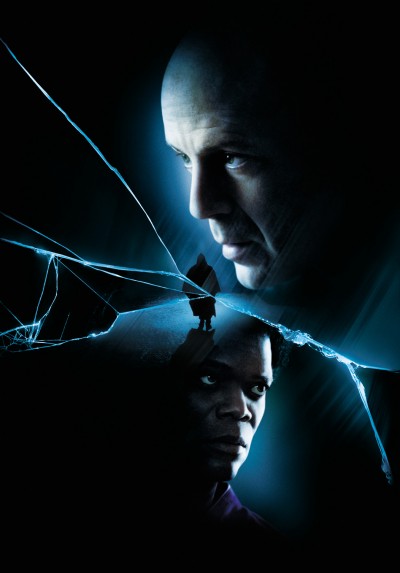
Step 2: Make a superhero movie where all of the action happens offscreen and make “the main characters are like comic book heroes and villains” a twist ending rather than the central focus of your movie. “But Mr. Shyamalan, perhaps when audiences are less enthused about this film, maybe you should attempt another tactic?”
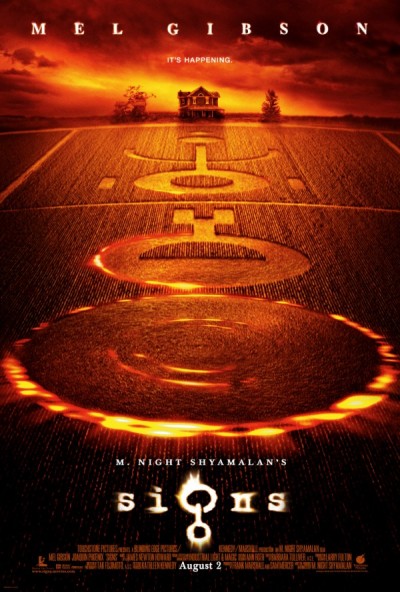
Step 3: A thousand times no! You should make an alien invasion film with a tedious “straw-man atheist is convinced of God’s existence” trope grafted on. Many people love this one, citing a handful of tense scenes. You know better, of course, because your third-act reveal was brilliant and that’s what packs the theatres! What was the twist of Signs again, you ask? It essentially boils down to Mel Gibson discovering that gawd killed his wife in order to remind him about baseball bats. Yes, sports equipment vs. aliens is in Lard’s plan.
Step 4: Your alien-invasion film is a huge success, but critics point out that your plot makes about as much sense as an episode of Yo Gabba Gabba! What do they know? You’re gonna make a film with a twist so big, it will blow their minds. Like, what if there was this olde-timey Village with antiquated things like hand-washed clothes, superstitious townsfolk and Adrien Brody being a box office draw? Pretty freaky, right? It gets better. It turns out that it wasn’t an olde-timey village at all, but it was contemporary Earth all along! Damn them to Hell!
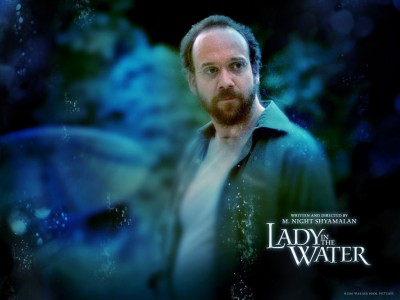
Step 5: Aaaaaand that film more or less has you run out of town by pitchfork-wielding moviegoers because of latest film’s twist ending. You’re consoled by reminding yourself that the same thing happened to Rod Serling during The Twilight Zone (it didn’t). But that’s okay. Someone at Disney thinks your continued employment is a good choice, as long as you have a strong idea for your next film. You sign a deal first-hand promising them a twist-free film (hey, you’ve got kids to think about, and pitchforks hurt!) with a big name attached. You get Paul Giamatti who, while a brilliant actor, is not afraid to slum for money. Then, you assure all involved that the script will be ready well before shooting while you spend all the money on trunk-loads of caviar and have Go-gurt tubes delivered straight to your door and lovingly squeezed into your mouth by tomboyish script girls (allegedly). As your advance runs out and the producers get antsy, you tap out a script in an hour and ask your kids if it sounds okay. Box office poison ensues!
Step 6: You get drunk with a former boy-band singer and tell him how there’s a great movie to be made about evil trees (allegedly). 6 months later, you’ve made The Happening.

Step 7: Okay, you’re down, but not out. Quickly jumping on the popularity of something else, you assure investors and producers that you can deliver a blockbuster if you adapt someone else’s story. They’ll give you money, but only on the condition that you say “what a twist!” like that puppet version of you would say on Robot Chicken. You comply, but not without shedding a tear each time you’re asked to do so.
And what do you end up filming? Easy, you spend the equivalent of the GNP of Luxembourg on a movie about an amazing prodigy whose super power is throwing gusts of wind at foes. You make sure that all of the goodies from the multi-racial cartoon are white if they have speaking roles and Asian/Inuit if they don’t. The baddies are all Indian because if there’s one thing Joe Public likes, it’s the notion of hot-blooded foreigners who are out to purge white people of their specialness.
The execs look nervous, especially since the actor playing your villain looks drunk and sad. You assure them that it’s all part of the Yin-and-Yang, Push-and-Pull, Rub-and-Tug of the circle of life. With the penny-pinchers sated, you film the script to its glorious climax in which a group of extras defeat the villain while the protagonist is nobly hiding in a cave. Our pacifist hero learns the lesson all non-violent heroes learn from film and TV: always pretend to take the moral high ground because someone else will do your dirty work for you.
When the film is released, everyone hates you. Even Roger Ebert, whose been a pussycat about movies as his life tragically grows shorter, hates you. No, hate is not strong enough a word. He holds you responsible for stealing two hours of his life, spitting on him in his twilight years and teaching him nothing but sadness. I’m paraphrasing his review there, but you catch my meaning.
Step 8: Pencil in a meeting with investors this weekend and ask: “What do you think about a deceased Haley Joel Osment teaching his son life lessons from beyond the grave. Presented for The Midnight Society (FYI, your producers like to be called The Midnight Society) is a tale I call…The Sixth Sense 2: Ghost Dad!”).
And there you have it! If you follow these simple instructions, you, too, will find success in the film industry among those who hold the purse-strings. Or… (cue dramatic music) did you?
Mega-Corporation Requires Tears, Gets Them
Thu, Jul 1, 2010
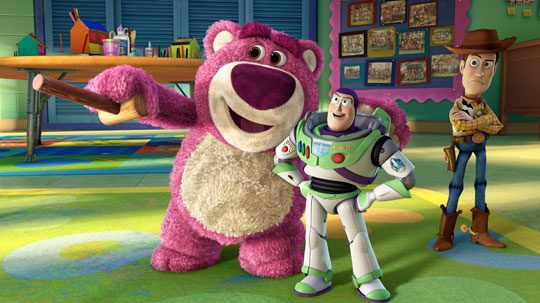
Step one: Follow your heart and make a great movie. Step two: Ignore test audiences. Step three: ???? Step four: Profit!
By Adam Clarke
Ever wonder why so much Hollywood product is about as unique as a slice of Wonderbread while Pixar continues to make memorable films? A large part of their success is that they don’t listen to you. That’s because they know you’re horrible!
North American films are regularly screened privately in front of test audiences before receiving a wide release. These test audiences of fifty or so random people (heretofore known as CHUDs) scrawl their opinions on comment cards. Films are subsequently re-shot or re-edited based on their reactions and then released to the public.
I once participated in a test screening for a film called Mambo Italiano. The version screened to myself and the rest of the CHUDs was a badly-paced, stupid comedy that made you feel sorry for all involved. When the film was released in theatres, it had been miraculously transformed into a slightly different badly-paced, stupid comedy that made you feel sorry for all involved. My suggestion to add an accident-prone, jive-talking robot named Azztar to Mambo had fallen on deaf ears.
As crazy as it sounds, film studios have been doing this for decades and it never works. Just look at last year’s The Wolfman, which was re-cut, re-scored and had new footage shot only to be reviled by critics and audiences upon release.
Pixar, as a rule, shuns this process and it shows. The acclaimed studio mass-produces each and every one of their blockbusters with love. Sure, Pixar’s a Giant Company owned by an Evil Computer Genius, but I defy you to tell me that films like The Incredibles, Wall-E and Up weren’t created by people who cared. If anything, the gang at Pixar care too much, as evidenced by the fact that I can barely get through one of their movies without getting all misty-eyed. That damn Luxo Lamp mascot of theirs is an emotional dictator who brings you to your knees before commanding you to “weep before Luxo!”
•••
The studio’s latest release, Toy Story 3, is a welcome return of the plastic figurines who graced the past two movies. Part of the reason that return is welcome is because this film is a sequel rather than another damned remake. Mostly, however, it’s because Pixar has a largely unbeatable track record at this point, so they can more or less coast on their legacy if they wanted to. If Pixar produced a film called Poo On A Stick In Heatwave, it would make $70 million on its opening weekend from audience goodwill alone. I’m fairly certain that was the case with Cars.
Toy Story 3 begins as Woody the cowboy (voiced by Tom Hanks), Rex the dinosaur (voiced by Wallace Shawn), spaceman Buzz Lightyear (voiced by Grunt-Bot 5000) and all of the other toys steal their owner’s cell phone. If Andy (voiced by John Morris) finds all of his old toys, he’ll want to play with them, right? Except Andy is now getting ready for college and is stuck with the chore of clearing all of his old toys out of his room before he leaves. Struck by sentimental pangs, Andy elects to take Woody with him, leaving the other toys safe in the attic so they don’t get sold or thrown away.
A series of coincidences too convoluted to recap results in all of the toys being dropped off at Sunnyside Daycare. Woody is hostile to remaining there and sets off to return home while the rest are welcomed by the Sunnyside toys. Unfortunately, Sunnyside is ruled with cotton fist by a bitter toy bear (voice by Ned Beatty). Can Woody rescue the gang? Will he be able to return to Andy in time? Would it matter if he did?
Toy Story 3 is a superbly-made film that’s heartbreaking, funny and, at times, legitimately suspenseful. That’s the kind of film that can be made when you don’t have to please randomly selected people off the street. While other studios continue to release boring, downright embarrassing films that cater to the CHUDs with cards, Pixar succeeds without influence from burnt-out execs and thoughtless marketing chotches. Toy Story 3 deserves all the praise it’s sure to get from audiences.
Also, the title character from My Neighbor Totoro appears in the film, which more or less made my week. What more could you ask for?
Sean Connery’s five most embarrassing films
Sat, Jun 26, 2010
“Please Say ‘Never’ Again,” says Adam Clarke.
It has been announced that Sean Connery is coming out of retirement.
That’s right, rather than let his career go out with a whimper, he’s returning for one last shot at greatness as the voice of the title character in the animated film Sir Billi.
Behold, the trailer:
Makes you feel like your whole soul needs a shower, doesn’t it?
But Sean Connery has given us plenty to cringe throughout his career. The man’s dignity seems easily bought. Why else would an actor who didn’t understand the script for the first Matrix commit to the gloriously weird Zardoz? For those who missed that film’s many late-night airings on Space, Zardoz is the one where Connery worships a flying stone head (that vomits guns!) while alternately wearing a red diaper and a wedding dress.
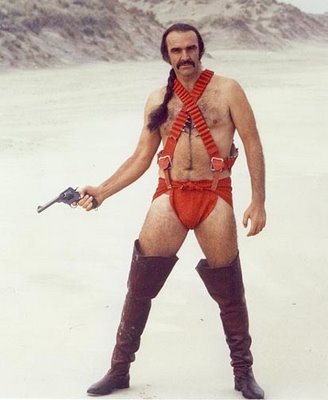
Not pictured: dignity.
But because it’s so gloriously silly, I wouldn’t consider Zardoz a bad film.
But these are…
5. Finding Forrester (2000)
What happens? When the young Jamal (Rob Brown) is discovered to have genuine writing talent, he discovers an unlikely mentor in the form of Salinger-For-Dummies, William Forrester (Connery). At first an inconvenience to the aged Forrester, Jamal soon becomes a dear friend and soon they teach each other how to laugh about love… again.
Why it’s more embarrasing than Zardoz: Writer-director Gus Van Sant goes to the easiest possible route for melodrama. Namely, by having the embittered Professor Crawford (F. Murray Abraham) bull-headedly refuse to accept that Jamal is capable of writing. To get an idea Abraham’s character, enclosed here is a segment of dialogue from the shooting script:
JAMAL: I’d really like to be a writer someday.
CRAWFORD: RRRRAAAARRRRRGHHHH! NEVER! I SPIT ON THE DREAMS OF YOUTH. I’M RACIST AND I HATE KITTENS.
Their conflicts make Dead Poets Society look subtle.
But, none get off worse than Connery. Mainstream critics loved his conversations with Jamal, but mainstream critics also liked Splice, so they’re clearly worthless. Yes, full of such bon mots as “Women will sleep with you if you write a book…even a bad one,” Connery’s Forrester is a twee cliché that only exists in movies. He’s hermetic, sure, but he’s never socially awkward, never unpleasant to the eyes nor does he ever stop cracking jokes.
Absolute low point: Five simple words.
4. Highlander II (1991)
What happens in it? Warrior Ramirez (Connery) comes back from the dead to join former immortal, Connor McCloud (Christopher Lambert) to stop alien invaders and save the ozone!
Why it’s more embarrasing than Zardoz: You read the plot synopsis, right? At least, Zardoz was charmingly inane. In this case, there’s never a moment where you have any idea what’s happening in the film. There’s a scene where the villain castrates John C.McGinley (Dr Cox of Scrubs fame) with his bare hands. Oh, and apparently the immortals of the Highlander series are aliens from Zest, a planet known for its inhablitants’ peerless complexions.
I’m sorry, that’s Zeist. A planet known for its inhabitants’ overacting.
Absolute low point: Connery hits on a woman when he miraculously returns from the dead, reminding her that “dark-haired ladies like to sit on men’s faces”. Shudder.
3. League Of Extraordinary Gentlemen (2003)
What happens in it? Allan Quatermain, Tom Sawyer, Mina Harker, Dr. Jekyll, Captain Nemo and an invisible man team up to stop a madman from taking over the world.
Why it’s more embarrasing than Zardoz: Due to copyright, the film’s invisible man is not *the* Invisible Man, but a silly facsimile thereof. When the characters discover the identity of the villain, it makes less sense then anything else in the film. Sean Connery’s Quatermain gets a Big Important Death Scene only to be resurrected by a witch doctor. Oh and, um, Tom Sawyer wouldn’t have been alive in the film’s timeline.
Absolute low point: Sean Connery, as an aging pulp hero, has a scene when an old lion wanders into a cave and stares at Sean Connery. The two share a moment as if this former hero and aging predator have something. Director Stephen Norrington, are you attempting a metaphor? I have no place for that kind of text-enriching sublety in my potential blockbuster, mister.
2. Never Say Never Again (1983)
What happens? James Bond is back, except older and less charismatic. Yay?
Why it’s more embarrasing than Zardoz: You know Asylum, that company that releases sound-alike direct-to-video titles such as Transmorphers, Allan Quatermain & The Temple Of Skulls and a Sherlock Holmes movie where someone who isn’t Robert Downey Jr apparently fights a dinosaur? Well, Warner Bros released this limp attempt at jump-starting a new Bond franchise while an “official” Bond film (Octopussy) was just finishing its run in theatres.

Cover design by a 5-year old who has never read Sherlock Holmes.
Yes, it was a legal (it’s a long story). Granted, a story about James Bond’s last case from the perspective of an older, more vulnerable, battle-scarred version of the character is a great idea. Unfortunately, Connery has aged, but Bond hasn’t. Yes, despite being middle-aged, Connery is improbably depicted as the same go-getter he was in 1963. Connery is clearly bored of quipping his way through murder and espionage. On the former glories embarrassment scale, his presence here is roughly equivalent to those KFC ads with the rapping cartoon of Colonel Sanders.
Absolute low point: From the stiff action scenes to a slumming Rowan Atkinson providing Inspector Gadget-like comic relief as an incompetent MI6 operative, there’s plenty of shame to go around. The fact that Never Say Never Again is worse than the combined lowpoints Die Another Day and A View To A Kill is its greatest indignity.
1. The Avengers (1998)
What happens in it? Connery’s a madman who uses the weather to take over the world. Apparently, his army of robot bees couldn’t accomplish this. Only Ralph Fiennes and Uma Thurman can stop him!
Why it’s more embarrasing than Zardoz: Worse than the sight of Catherine Zeta-Jones yearning to be atop his dessicating, beef-jerky, near-corpse in Entrapment, here we have Sean Connery as a man who controls the weather, arranges for secret meetings while dressed as a teddy bear and makes weather-related puns that even Arnold Schwarzennegger complained. Worse still, the orginal ITV series, The Avengers, is brilliant, and it’s depressing to see its name tarnished on a Batman & Robin scale.
Absolute low point:They saved the direst for last, as the film ends with an anticlimatic fight between Connery and the two Avengers. Fiennes fights Connery in a giant, transparent dome that looks like the bubble shield from Sonic The Hedgehog 3. Then, when the fight is at its bleakest, Connery is randomly struck by lightning and flies off into the heavens. It’s as if he looked to God and said, “I’ve hammed enough for today. Get me out of here,” before being whisked away to a better life.
Bonus Embarrassment: OK Connery/Operation Double 007/Operation Kid Brother (1967)
What happens?When his “famous spy brother” is indisposed, hypnotist Neil Connery (Connery’s younger brother, playing himself) is called to action. Thrill! As he uses hypnotism to…uh…I got nothin’
Why it’s more embarrasing than Zardoz:When a film is made because you can’t afford James Bond-era Sean Connery, but you can get his non-union kid brother, you’re on pretty shaky ground.
Absolute low point:The fact that they could afford Connery’s Bond co-stars Bernard Lee and Lois Maxwell, which proves that each of them were one missed boat payment away from doing kids birthday parties.
Our Nickel Film Fest picks for Friday
Fri, Jun 25, 2010
Jill Butler and Adam Clarke go through their favourites films from the Friday evening lineups.

Debt
Directed by Mike Weiss
There’s an old saying that goes, “Find a penny, pick it up and all the day you have good luck.” But where does all this good luck come from? In Debt, a stop-motion short from Mike Weiss, these questions are put to the test from the point of view of an untalkative moppet with the hair and fashion sense of a Midwich Cuckoo. When this kid collects a penny, your luck’s run out. The main reason to go to film festivals, be it Sundance, TIFF or the Nickel, is for the unexpected gems that pop up out of nowhere. Weiss, an animator who cut his teeth on stop-motion shows like Rick & Steve and Celebrity Deathmatch, employs an unpredictably nasty sense of humour that is far and away the highlight of this year’s Nickel. AC
•••
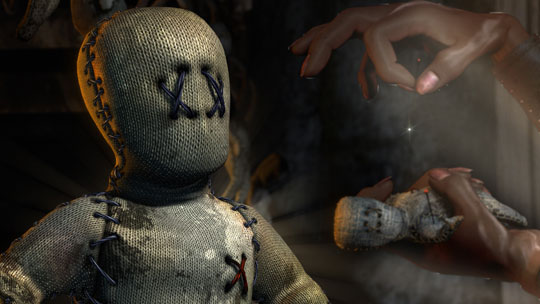
Sebastian’s Voodoo
Dir. Joaquin Baldwin
Were you ever creeped out by those Robaxacet ads where an ever-suffering marionette is stabbed repeatedly with pins? If so, get ready to add more nightmare fuel to your subconscious with Sebastian’s Voodoo, a memorably creepy piece about a brave voodoo doll that rebels against his creator. With its vivid designs and lush soundtrack, Voodoo recalls the recent Tim Burton-produced 9, except it pulls off its story with greater coherence, depth, and a much shorter running time. AC
•••
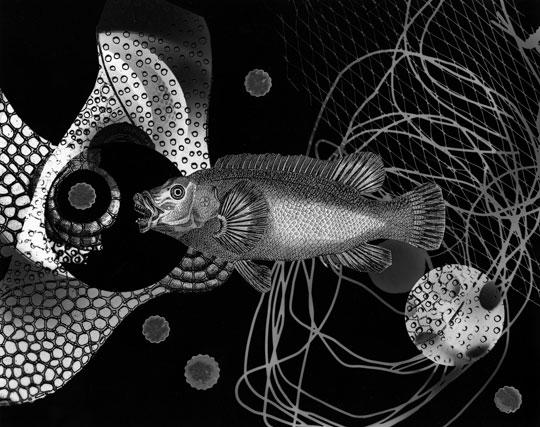
The Chambered Nautilus
Dir. Vanessa Woods
In the mold of Terry Gilliam’s Monty Python toons (minus the cheeky tone), this 16mm animated short makes terrific use of limited movement and colour, offering a strange undersea point of view. Woods’ film is a smooth blend of 19th century image cut-outs and stark backgrounds woven together in a brilliant, dreamy montage. With its eerie black and white look, ambient sounds, and striking visuals, The Chambered Nautilus almost plays like an animated version of the infamous Ring video. Warning: The Nickel Film Festival is not responsible for any patrons who die seven days after viewing this short. AC
•••

Envirometer
Dir. Danny Robashkin
A simplified parable of two societies fighting for survival. The “Envirometer” of the title is just what it sounds like: a cartoon meter broadcasting the balance between nature-friendly practices, like recycling and tree-planting, and industry’s pursuit of wealth and livelihood. In that sense, Envirometer has all the moral ambiguity of an episode of The Raccoons, but with enough whimsy to sell the showdown. With splashy, hilariously suggestive animation, Envirometer is a strange, thoroughly entertaining meditation on whether we’ll ever bring balance to the planet. JB
•••
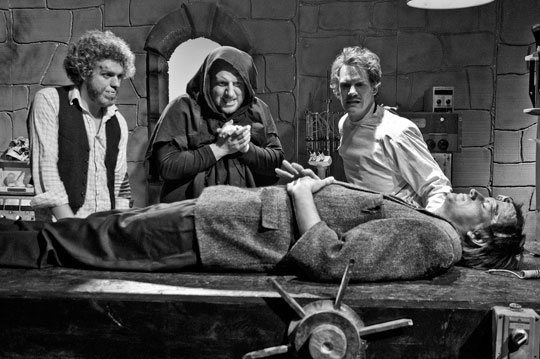
Best Served
Dir. Jordan Canning
Locked away in a non-descript evil castle, a mad scientist plots to bring his evil creation to life — but, like most newly-weaned offspring, all the little monster wants is a date. So begins one of the stranger entries into our family genre, the Jordan Canning-directed music video for local heroes the Pathological Lovers (who star, respectively, as a mad scientist, his eviiiil assistant, a werewolf and the aforementioned lovesick Monster). In a pitch-perfect mash up of the monster flick meets John Hughes, this video is a satisfying balance of campy and self-aware pomp. JB
•••
The deets
Friday Evening Screening 1
Fri Jun 25 7:30pm – 9:30pm LSPU Hall $14.00
Back to Your Heart – Jeremy Rice (4 min)
This Is Not a Corkscrew – Hamish Lambert (2 min)
Magnitude of the Continental Divides – Christopher Coleman (6 min)
Debt – Mike Weiss (14 min)
The Chambered Nautilus – Vanessa Woods (4 min)
Vive La Rose – Bruce Alcock (5 min)
The Escape of RGB255 – Andrew Coll (4 min)
Envirometer – Danny Robashkin (5 min)
The Penalty Kick – Carlo Ghioni (15 min)
Sebastian’s Voodoo – Joaquin Baldwin (4 min)
The Empress – Lyle Pisio (9 min)
The Village That Raised A Child – Stephen Dunn (3 min)
The Painter of Skies – Jorge Morasi Valle (20 min)
Friday Evening Screening 2
Fri Jun 25 9:30pm – 11:30pm LSPU Hall $11.00
Best Served – Jordan Canning (8 min)
In the Key of Evil – Kelly McLeod (12 min)
DemiUrge Emesis – Aurelio Voltaire (3 min)
Soap – Dusty Mancinelli (15 min)
Escape from Death Planet – James Cadden (7 min)
Black Clouds – Christian Sparkes (10 min)
The Music of Eric Zann – Jared Skolnick (38 min)
Blood Shed – Jason Shipley (15 min)
Our Nickel Film Fest picks for Wednesday
Wed, Jun 23, 2010
Here are some of our favourites showing tonight.

An Affair with Dolls
Dir. Hans Montelius
From the first frame, you know something’s not right: a strangely dressed woman is left alone in an expensive apartment to play with her dolls. At first, the play is endearingly childlike – the first blushes of a relationship acted through Barbie dolls can seem both unnervingly human and relentlessly alien. Before long, it’s anxiously clear that this dollhouse isn’t a welcoming one. The soundtrack, with its pushy chords and telegraphing of key emotional moments, is the only real misstep in this truly disturbing look at the breakdown of one woman’s morality in the name of love. JB
•••

Bollywood Beckons
Dir. Sophie Ann Rooney
When Neeru, a young Canadian girl, finds herself facing an arranged marriage (and with it, her ruined dreams of Bollywood fame) she escapes into colourful, vividly imagined musical numbers that predict her possible futures. As a genre, Bollywood is a world unto itself, with precise laws for its cinematic universe, and what makes this short film so fun is the clever, inventive ways this Canadian-made film sends up those rules. The lush production values, along with a valiant effort to lovingly imitate the intricate Bollywood form, contrast so starkly with the bland suburban reality that you can’t blame the girl for aiming her sights high. JB
•••
Three-Fifty
Dir. Maurice Chauvet
It’s the kind of little white lie we all pull: a man returns a movie late, and lamely tries to dodge the fee. But what he falls into is an existential crisis that grows more incredulous and humorous by the frame, as he discovers the video store’s database holds more than his mailing address. It’s Kafka by way of Charlie Kaufman, as the meaningless bureaucracies of everyday life are pulled into the light, producing a surreal, witty take on modern life. JB
•••
The deets
Wednesday Evening Screening 1
Wed Jun 23 7:30pm – 9:30pm LSPU Hall $14.00
Sketchy Jerome – Roger Maunder (5 min)
How Eunice Got Her Baby – Ana Valine (16 min)
Bollywood Beckons – Sophie Ann Rooney (16 min)
From My Parish – Tony Donoghue (7 min)
Three Fifty – Maurice Chauvet (9 min)
An Affair With Dolls – Hans Montelius (11 min)
Weather People – Justin Simms (30 min)
Wednesday Evening Screening 2
Wed Jun 23 9:30pm – 11:30pm LSPU Hall $11.00
It’s All About George – Roy Lecane, Don Field (4 min)
Sweet Pickle – Lois Brown (11 min)
Barry’s Song – Ben Krolick (2 min)
At Home By Myself With You – Kris Booth (85 min)
Tuesday’s Nickel Film Fest picks
Tue, Jun 22, 2010
Here are some of our favourites showing tonight — opening night!
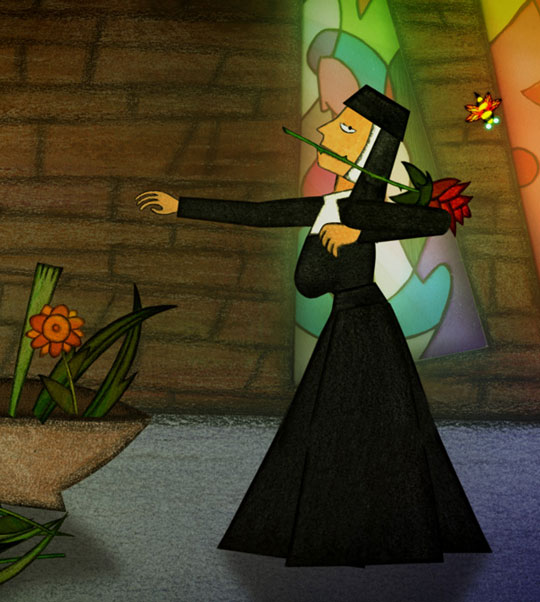
Father and Sister
Dir. Soyeon Kim
Father and Sister is a quirky animated short that depicts a Catholic priest and a nun driven to sin by bees! Yes, a bumblebee attaches itself to a young nun, causing the priest to catch her in some semi-provocative positions as she writhes in agony. Wait, lust in the church? NEVER! AC
•••

Trolls
Dir. Brianne Nord-Stewart
This short film from Brianne Nord-Stewart captures how mystifying the nuances of adult existence must seem to children: Billy and Genevieve are left to entertain themselves while their caretakers “play”, and in the absence of any plausible explanation, the kids come up with their own elaborate game of point-gathering for weird, abstractly “adult” behaviours. It pits everyday sexual politics against the unflinchingly truthful worldview of children, and to its credit, nails the groan-inducing things kids say when they don’t understand the words they’ve learned on the playground. Guaranteed: you will giggle uncomfortably, but in a good way. JB
•••
Pawnshop
Dir. Andrew Bush
In this short, a man tries to buy his girl an engagement ring, but can’t seem to get past the existential meandering of the shop’s owners, making a great case for online shopping. The film never really cashes in on the promise of its premise – two mean old men second-guessing every customer that walks into the shop? That is comedy gold. But in the end, Pawn Shop lands on a brief, heart-warming moral about the perks of staying true to your own mind, even if you haven’t made it up yet. Fans of sketch comedy troupe Picnicface may recognize the director: Andrew Bush is one of its members. JB
•••
The deets
Tuesday Evening Screening
Jun 22 7:30pm – 9:30pm LSPU Hall $14
Nan Vs. Nature (4 min)
Down to the Wood (7 min)
Pawnshop (6 min)
Father and Sister (5 min)
The Miracle (29 min)
Loop Loop (5 min)
The Wednesday’s (14 min)
Trolls (7 min)
Quiet at Dawn (15 min)
Opening night reception directly follows the Tuesday evening screening.


Tue, Aug 24, 2010
Adam Clarke