

Adam Clarke Offers You The Steps To Success, The M. Night Shyamalan Way!
Having studied the films of M. Night Shyamalan, it’s clear that this is a man with focus and a clear career path. Now, for the benefit of aspiring filmmakers everywhere, I’ve boiled down these key steps to success in a format that’s easy-to-follow and fun for the whole family!
Step 1: Break through with your second feature film (hint: it’s about an extra sense!) that’s fairly charming and well-acted. Assume the film is successful not because of these factors, but rather a clumsily telegraphed twist that doesn’t bear thinking about. This will set the tone for the rest of your undoubtedly successful career…

Step 2: Make a superhero movie where all of the action happens offscreen and make “the main characters are like comic book heroes and villains” a twist ending rather than the central focus of your movie. “But Mr. Shyamalan, perhaps when audiences are less enthused about this film, maybe you should attempt another tactic?”
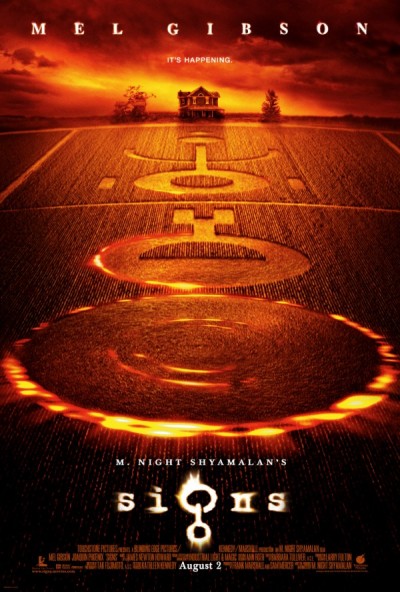
Step 3: A thousand times no! You should make an alien invasion film with a tedious “straw-man atheist is convinced of God’s existence” trope grafted on. Many people love this one, citing a handful of tense scenes. You know better, of course, because your third-act reveal was brilliant and that’s what packs the theatres! What was the twist of Signs again, you ask? It essentially boils down to Mel Gibson discovering that gawd killed his wife in order to remind him about baseball bats. Yes, sports equipment vs. aliens is in Lard’s plan.
Step 4: Your alien-invasion film is a huge success, but critics point out that your plot makes about as much sense as an episode of Yo Gabba Gabba! What do they know? You’re gonna make a film with a twist so big, it will blow their minds. Like, what if there was this olde-timey Village with antiquated things like hand-washed clothes, superstitious townsfolk and Adrien Brody being a box office draw? Pretty freaky, right? It gets better. It turns out that it wasn’t an olde-timey village at all, but it was contemporary Earth all along! Damn them to Hell!
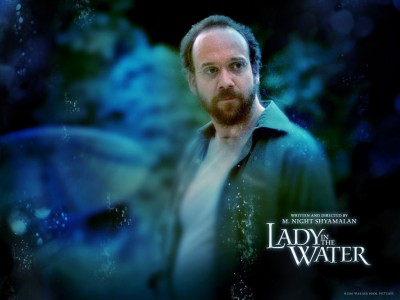
Step 5: Aaaaaand that film more or less has you run out of town by pitchfork-wielding moviegoers because of latest film’s twist ending. You’re consoled by reminding yourself that the same thing happened to Rod Serling during The Twilight Zone (it didn’t). But that’s okay. Someone at Disney thinks your continued employment is a good choice, as long as you have a strong idea for your next film. You sign a deal first-hand promising them a twist-free film (hey, you’ve got kids to think about, and pitchforks hurt!) with a big name attached. You get Paul Giamatti who, while a brilliant actor, is not afraid to slum for money. Then, you assure all involved that the script will be ready well before shooting while you spend all the money on trunk-loads of caviar and have Go-gurt tubes delivered straight to your door and lovingly squeezed into your mouth by tomboyish script girls (allegedly). As your advance runs out and the producers get antsy, you tap out a script in an hour and ask your kids if it sounds okay. Box office poison ensues!
Step 6: You get drunk with a former boy-band singer and tell him how there’s a great movie to be made about evil trees (allegedly). 6 months later, you’ve made The Happening.

Step 7: Okay, you’re down, but not out. Quickly jumping on the popularity of something else, you assure investors and producers that you can deliver a blockbuster if you adapt someone else’s story. They’ll give you money, but only on the condition that you say “what a twist!” like that puppet version of you would say on Robot Chicken. You comply, but not without shedding a tear each time you’re asked to do so.
And what do you end up filming? Easy, you spend the equivalent of the GNP of Luxembourg on a movie about an amazing prodigy whose super power is throwing gusts of wind at foes. You make sure that all of the goodies from the multi-racial cartoon are white if they have speaking roles and Asian/Inuit if they don’t. The baddies are all Indian because if there’s one thing Joe Public likes, it’s the notion of hot-blooded foreigners who are out to purge white people of their specialness.
The execs look nervous, especially since the actor playing your villain looks drunk and sad. You assure them that it’s all part of the Yin-and-Yang, Push-and-Pull, Rub-and-Tug of the circle of life. With the penny-pinchers sated, you film the script to its glorious climax in which a group of extras defeat the villain while the protagonist is nobly hiding in a cave. Our pacifist hero learns the lesson all non-violent heroes learn from film and TV: always pretend to take the moral high ground because someone else will do your dirty work for you.
When the film is released, everyone hates you. Even Roger Ebert, whose been a pussycat about movies as his life tragically grows shorter, hates you. No, hate is not strong enough a word. He holds you responsible for stealing two hours of his life, spitting on him in his twilight years and teaching him nothing but sadness. I’m paraphrasing his review there, but you catch my meaning.
Step 8: Pencil in a meeting with investors this weekend and ask: “What do you think about a deceased Haley Joel Osment teaching his son life lessons from beyond the grave. Presented for The Midnight Society (FYI, your producers like to be called The Midnight Society) is a tale I call…The Sixth Sense 2: Ghost Dad!”).
And there you have it! If you follow these simple instructions, you, too, will find success in the film industry among those who hold the purse-strings. Or… (cue dramatic music) did you?






July 6th, 2010 at 3:47 pm
This is the funniest thing I have read in months. Accurate, too. Loved the paraphrase from Ebert!
July 11th, 2010 at 3:21 pm
seconded. hilarious!
July 11th, 2010 at 5:21 pm
You like me! You really, really like me!