

Archive | On Screen RSS feed for this section
Why you gonna call?
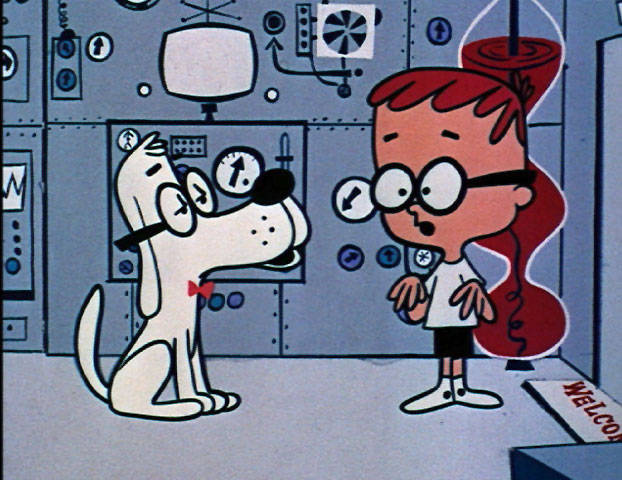
These days, Dan Aykroyd must be living in a Peabody’s Improbable History segment from Rocky & Bullwinke, imagining himself as the wisened dog, Mr. Peabody, and the rest of the world as his boy, Sherman.
You remember Sherman, don’t you? That’s how he sees us, the filmgoers. Cheery, gullible, bespectecled ginger kids eagerly asking “where we gonna go today, Mr. Aykroyd?”
With that question, the pendulous drooping chin of the Aykroyd-dog waddles with delight. “The same place we always go, dear boy: 15 years ago,” he replies.
“Are we going to relive your days on such critically-acclaimed hits as that show where you acted like a PBS telethon host for the supernatural, begging viewers to call in with their real stories of alien abductions and spooky ghosts or that other show where you a rockin’ priest who sometimes crossed over with Home Improvement?” we ask.
“No, dear child. We’re going to go back in time and, ahem, scare up some money.”
Then the Canadian actor springs to life and asjusts the co-ordinates on his Wayback Machine. His beady eyes beam with the desperation seen only in washed-up comic actors who haven’t been funny in more than two decades. Fifteen of which, he’s been telling anyone who would listen about the prospect of Ghostbusters III. Apparently, Santa finally responded to Aykroyd’s Christmas wish because–whether it’s Bill Murray’s recent appearance in full costume at the Scream Awards last month or the news that the writers of Year One have turned in a draft so awful that Aykroyd has to rewrite it to appease Murray–people are talking about Ghostbusters III.
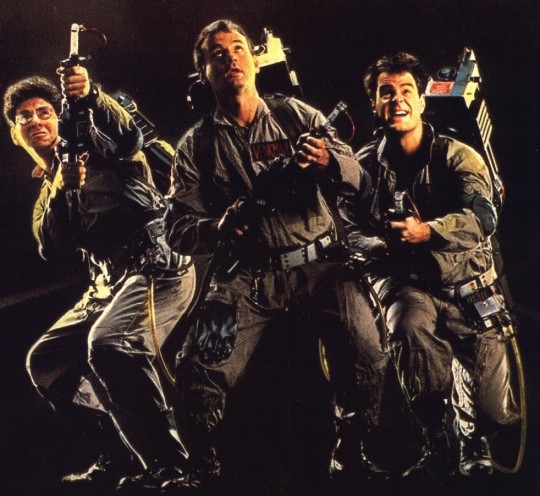
While Aykroyd will talk to anybody about the project and has done for years (seriously, he called me four times when he found out I was writing about this on The Scope, even though I didn’t tell anybody and my number’s unlisted), now he’s being taken seriously. While there’s a certain nostalgic allure in the prospect of seeing Aykroyd, Murray, Harold Ramis and Ernie Hudson don their gear again, nostalgia is for collectors and cover bands. This sequel is a terrible idea for a number of reasons.
Here are the reasons this sequel is a terrible idea:
1. We’ve already had an awful sequel to the 1984 comedy. It came out in 1989, remember? It had the boys in grey overcome all meanness in the world by convincing New Yorkers to smile more, which is exactly the sort of plot that makes you wish all involved had their faces immediately kicked in.
2. We’ve already had a Ghostbusters reunion in the form of the 2009 video game, in which our slumming actors reprised their roles in exhuastive cutscenes with professionalism (save Bill Murray who sounded like he was swimming in Vicodin) but absolutely no charm. And when the actors weren’t smugly reciting their wink-wink, “remember when we said this twenty years ago” dialogue, you were left in a game that was about as fun as watching a dog drown and deserved a trip to that fabled landfill with Atari’s E.T. game.
3. The plot of the film is a passing of the torch story, in which we’re introduced to a new group of Ghostbusters to replace the funny ones we like. You know, they’re replacing the iconic, memorable characters with newer, younger characters who’ll be fighting for screentime and give the audience an excuse to take a bathroom break whenever their onscreen.
4. If the above sounds familiar to you, it was already the basis of a cartoon series called Extreme Ghostbusters. After the first cartoon, The Real Ghostbusters came to an end in 1991, this new series began in 1997. In it, the character were aged and mostly written out in favour of exciting, ‘edgy’ twenty-somethings who could only be identified by their tokenism. This was the series where the Ghostbusters consisted of a girl in goth makeup, a black guy voiced by Carlton from Fresh Prince, a Hispanic guy and a Ghostbuster in a wheelchair. While I’m all for destroying stereotypes, there’s something inherently laughable about an action hero who says “I’ll get the wheelchair access!” each and every week. Extreme Ghostbusters was about as good as it sounds and ended the year it began.
5. While I’m on record as preferring unasked for sequels to unasked for remakes, I think Ghostbusters has more to offer if it was remade rather than sequelized. No not remade for cinema, but for television. Instead of slavishly rewriting/referencing the first film with a cast of A-list stars with no chemistry (which a big-budget remake would most assuredly do), the best chance of renewing interest in the show is casting a cast of working TV actors and unknowns to reprise the main roles. CGI effects required for proton guns and armies of ghosts can be easily achieved on a TV budget these days and the new actors and TV format would, if done well, allow the writers and actors a great deal of freedom to play with the characters and bring in audiences again. If they could develop a dynamic as strong as that of the original film with the kind of creativity fueling the plots of The Real Ghostbusters at its best, you’d have something worth watching.
Come on, Dan Aykroyd. If you need the money that badly, why not just endorse a drink or create another garish tribute chain store to the music claim to love. Leave Ghostbusters, please?
SJIWFF 2010: Closing Night
Mon, Nov 1, 2010
Writer and photographer Shannon Webb-Campbell will be reporting from the St. John’s International Women’s Film Festival from October 26h to the 30th. Find festival information at www.womensfilmfestival.com.

Swallowed promo photo by Mark Bennett
For the past five days film goers relished in being 21. With over 70 films screened, the St. John’s International Women’s Film Festival entertained locals and out of towners. There were after parties, workshops, guest speakers and an all around sense of community.
One of the international filmmakers was so inspired by the activities she ran down to the parlour to get the hour glass figure film strip festival logo tattooed on the back of her neck.
“I’d like to think at 21 we are tat-worthy,” said Noreen Golfman, chair of the SJIWFF’s board of directors.
Saturday’s night closing gala began with director and writer Stephen Dunn’s short film, Swallowed, talk of this year’s Toronto International Film Festival. Dunn took home $15,000 from TIFF to help fund his next project. While Swallowed was created on a budget of only $500; the film is a stunning adaptation of a poem about a woman grieving the loss of her husband who was swallowed by a whale. All eyes are Dunn to see what comes next.
Swallowed set the tone for somewhat melancholic depiction of the human spirit, the festival’s closing documentary, The Man of a Thousand Songs. Director William D. MacGillivray’s film portrays the turbulence and triumph of Newfoundland legend, Ron Hynes. The skilful production work of Terry Greenlaw and Jordan Canning make sthis story come to life.
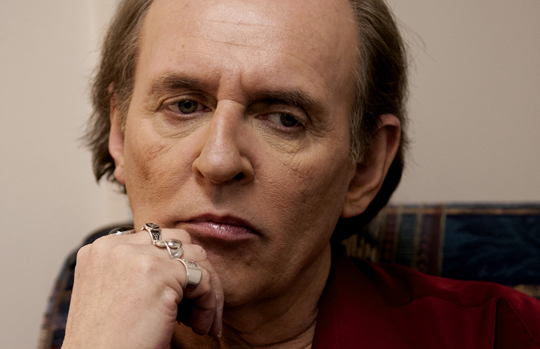
Photo by Kent-Nason
As a daughter of two Newfoundlanders, Hynes’ classic “Sonny’s Dream” has been apart of my life since the very beginning. On the first week of grade one the teacher put on the record player, out came “Sonny’s Dream” crackling through the speakers while us kids sat in a circle cross-legged. I was the only student in my elementary school in Oshawa who knew every single word.
Hynes’ describes how a song touches the soul, it pull something out of us, something we’ll remember forever more. As an islander, originally from Ferryland, Hynes considers himself blessed to be born into a song writing history over 500 years old. The fact that he never scampered off to Los Angeles when he could brought a whole other element to his craft, he became the Newfoundland man of song.
His nephew writer Joel Thomas Hynes doesn’t shy away from telling it like it is. With family comes criticism, past hurts and concern. Much like his uncle, both Hynes men have been through their fair share of drug abuse and addiction. With heavy lines beneath their eyes, they both seem filled with weariness and longing, a sense of incurable sorrow thematically found within their work.
Amelia Curran even makes an appearance. The backstage footage of Hynes and Curran, with her Steve-O-Reno’s coffee in hand at CBC studios in Halifax, is a tender moment of two singers –a “young lady” and an “old man”– forever bonded together through their pursuit of song. Their duet of “The St. John’s Waltz,” was a beautiful homage to the old romance of this city. Only in St. John’s would the audience enveloped in the darkness of the theatre sing-along during the chorus, pride swelling in their voices.
Hynes writes songs his heart, songs of his city. In many ways he seems uncomfortable in his own skin, perhaps a lingering effect of the cocaine years. Throughout the film he refers to himself in third person, Ron Hynes this, Ron Hynes that. The Man of a Thousand Songs is a narrative of resilience and home. For better or for worse, at the end of the day all Newfoundlander’s wish they were back home dancing to the St. John’s Waltz. I bet they’d, too, like to be 21 all over again.
SJIWFF 2010: Eclectic Shorts and Year of the Carnivore
Sat, Oct 30, 2010
Writer and photographer Shannon Webb-Campbell will be reporting from the St. John’s International Women’s Film Festival from October 26h to the 30th. Find festival information at www.womensfilmfestival.com.
Friday night’s Eclectic Shorts began with a dramatic tale, Unearthing the Pen, the story of a Uganda boy’s desire to learn. Director and producer Carol Salter’s 12 minute short revolves around the mythology of tribal elders who in colonial wars buried a pen. The young boy’s spirit is hindered by the curse placed on the written word. Unearthing the Pen values freedom and the right to an education.
How Eunice Got Her Baby, narrated by Gordon Pinsent, pays homage to the bad girls, circa 90s Courtney Love style. Director Ana Valine’s vision is well executed, despite the plot being a bit tough for some to swallow. It’s a story of a starry dreamer and a hard luck life. Sometimes what we want isn’t all it’s cracked up to be. It’s hard not to find the irony when Jill Barber’s “All My Dreams,” plays during the credits. Some love affairs aren’t for the faint of heart.
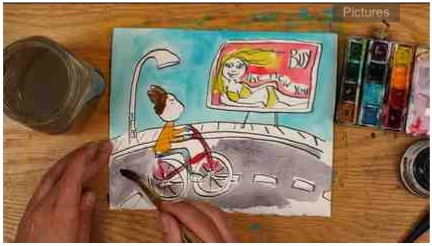
Flawed
Festival darling Andrea Dorfman is one of the most whimsical, endearing and honest filmmakers around. Flawed illustrates the human condition – the fears we all harbour and the awkwardness of real life love stories. Dorfman’s beautiful illustrations and postcard heart-scrawl is magical. The world needs more of Andrea Dorfman’s work.
Tabitha’s Aquarium is quirky and dark. Tag team director and writer combo Margaret Laney and Jason Klein invested their all into this one. Lead character Tabitha is a dark, somewhat estranged character who finds her vocation in taxidermy fish. Her boss is a fellow odd ball; the two somehow tumble into a peculiar romance.
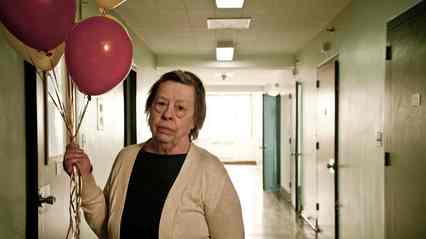
Rhonda's Party
The balloons are blown, the cake’s arrived and the band is on their way. The only trouble is the guest of honour passed away in her sleep the night before her 100th birthday party. Despite the context, Rhonda’s Party isn’t sad, it’s absolutely charming. Director Ashley McKenzie’s got a rich visual eye, while the story is a flawless first time script for writer Christine Comeau.
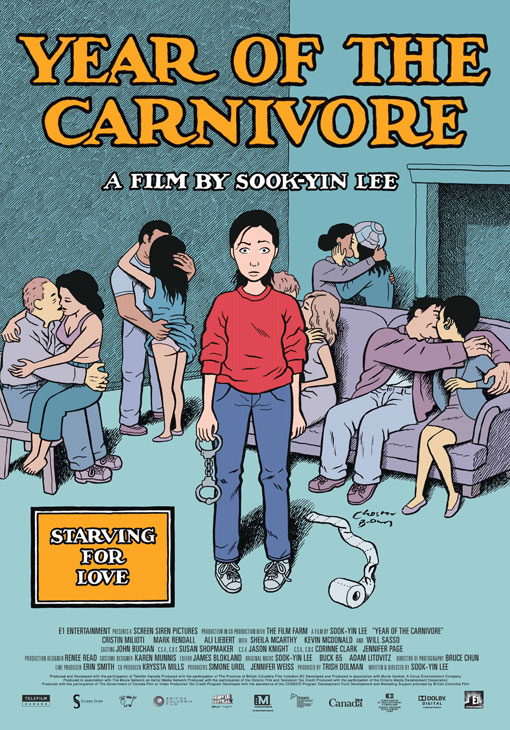
Year of the Carnivore
Sook-Yin Lee’s debut feature Year of the Carnivore, is a fearless take on sexuality and first love. While many of the reviews fixated on Lee’s edginess, this film is a welcomed depiction of life as a quirky girl finding her way in the world. Perhaps a mainstream audience might find aspect of the film shocking, but most people in there 20-somethings could see snippets of themselves.
At the heart of the story is a coming of age narrative interlaced with the underbelly of sexuality. If there was a manual it wouldn’t be nearly as fun. Head slung over a toilet bowl, Sammy drunkenly confesses her love to musician friend Eugene. They spent the night together and he declares her bad in bed, the relationship deemed platonic.
Sammy Smalls is on a mission, a quest for experience. She finds herself in some pretty bizarre yet hilarious situations. There is a naivety to Sammy’s approach, demanding blow job tips from shoplifters and bedding with the married couple she babysits for. Finally, she figures it out: she’s got to get down and dirty with herself. Sammy finds her mojo rubbing up against her pillows, the wall and making out with 70s floral wallpaper.
It’s a story of family, loss and falling for your best friend. Despite all of life’s twists and turns, in the end it’s not about how you do it, it’s who you do it with. Not to mention the film features a killer soundtrack, combing the masterminds of Sook-Yin Lee, Buck 65 and Adam Litovitz. Hands down, Year of the Carnivore is indie film of the year.
More info at www.womensfilmfestival.com
SJIWFF 2010: Indie Film Icon Christine Vachon
Fri, Oct 29, 2010
Writer and photographer Shannon Webb-Campbell will be reporting from the St. John’s International Women’s Film Festival from October 26h to the 30th. Find festival information at www.womensfilmfestival.com.
It’s not every morning you get to hang out with indie filmmaker Christine Vachon. As the producer behind Academy Award winner Boys Don’t Cry, creepy comic thriller One Hour Photo, queer iconic film Hedwig and the Angry Inch, Kids, Happiness, Chelsea Walls, I Shot Andy Warhol, lesbian flick Go Fish, Velvet Goldmine, Party Monster, SAFE and more, Vachon is an art star in her self. She single-handedly saved my angst-ridden suburban teenage soul.
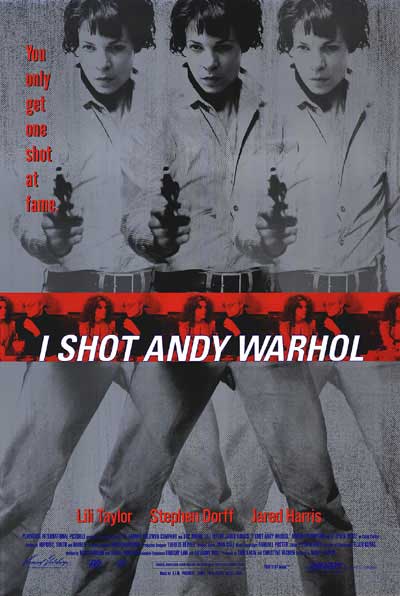
Bang, bang goes the pop art star
“In my twenty years making independent films they have been declared dead three times already,” says Vachon. “I’ve been to that funeral.”
Film is an expensive form of an expression. In its purest form it is storytelling, everything boils down to plot and a good writer. Vachon started making shorts two decades ago and hasn’t stopped working in the business. With no formal training, she got into the New York Film scene early on and has carved out a route of her own.
With signature black lace up boots and jeans, Vachon is unabashedly honest, candid and utterly charming. At the end of the day she is the first to call herself an optimist. Perhaps it’s what pulls her through.
When asked her take on why women struggle in the industry, she lays it out: children. As a mother herself, Vachon knows there is an exception to every rule. Over the past 20 years the film world has grown leaps and bounds, women are now taking on lead roles, directing and producing. Sure, it’s still tough, but Vachon knows all life requires resilience. We’re getting there.
Vachon’s company Killer Films has put out some of the industry’s best, including: I’m Not There, starring Christian Bale and Cate Blanchette Savage Grace, starring Julianne Moore, An American Crime, featuring Catherine Keener and Ellen Page and Then She Found Me, the directorial debut of Helen Hunt, featuring Bette Middler and Matthew Broderick.
For those of us lucky enough find ourselves in LSPU Hall yesterday, Vachon treated viewers to a sneak peek of her latest film, Dirty Girl. Think Mean Girls with more grit. Watch out.
SJIWFF 2010: International Shorts
Fri, Oct 29, 2010
Writer and photographer Shannon Webb-Campbell will be reporting from the St. John’s International Women’s Film Festival from October 26h to the 30th. Find festival information at www.womensfilmfestival.com.
Every time I climb the steps up to LSPU Hall, I fall in love with St. John’s all over again. Last night was no exception. To get a taste of life beyond the island, Thursday’s screening of the International Shorts 2 transported viewers to Poland, Sweden and the United States.

To Katarina on her 40th birthday
Director and writer Jenifer Malmqvist’s Birthday made its way from Sundance to Newfoundland, and lucky us. With beautiful cinematography, Birthday is a story of a lesbian couple, their daughter and their pursuit to have another child. Monumental life events stir deep emotions buried within us. Katarina’s 40th birthday celebration is no exception.
As a narrative Birthday relays a tale of two women trying to get pregnant, though it goes beyond a queer bent. There’s the intensity of a long term partnership, the dynamics of family and parenthood. It’s a story of love, loss and celebration, a universal tale of humanness and the deep roots of connection.
Esther and Me, directed, produced and written by Lisa Geduldig, makes growing into an eccentric old lady seem glamorous. Technically the footage is raw, but the story is superb.
Filmmaker Lisa Geduldig never expected a soul mate friendship with Esther Weintrub, an 80-something year old woman from Winnipeg who lived in a nursing home.
Part whimsical, part daring, Esther and Me is a film that makes you want go home and call your Nan. Perhaps even visit that eccentric old Aunt you haven’t seen in years. Every one of us carries a story; desperate for a listener. Some of us like to tell it wearing jewellery and red lipstick, even in a hospital bed. Careful though, this one’s a tearjerker.

Bolivian women wrestlers, Fighting Cholitas
Malgorzata Lupina’s Fighting Colita is a survivor story. It’s a film about the fighter within. As a group of Bolivian female lucha libre wrestlers, their braided hair, bowler hats and multilayered skirts prove anything that can be done wearing a dress. The documentary goes ringside and beyond, featuring the story of one resilient woman who found her strength in the ring, leaving behind an abusive husband and the passion to give her son a fighting chance.
SJIWFF 2010: Day Two
Thu, Oct 28, 2010
Writer and photographer Shannon Webb-Campbell will be reporting from the St. John’s International Women’s Film Festival from October 26h to the 30th. Find festival information at www.womensfilmfestival.com.
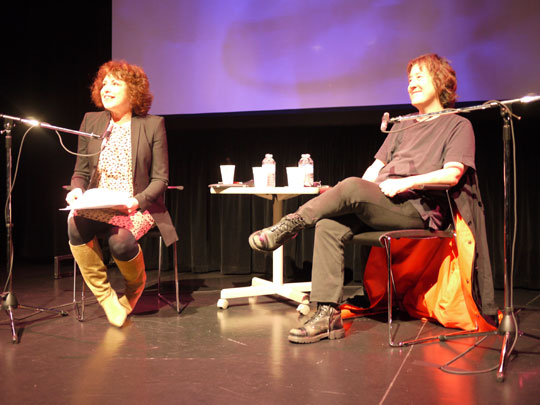
Noreen Golfman and Christine Vachon
It seemed apt to skip off work early to catch the afternoon screening of Proceed and Be Bold!
Written, directed and produced by Laura Zinger, the documentary relays a story of radical letterpress printer Amos Paul Kennedy Junior’s passionate drive to create art at all costs.
While the film tackles racism, art, academia and the resurgence of letterpress printing, it’s a tale for anyone who has a dream. As a character Kennedy is wildly creative and pure of heart. He’s been wandering around the festival decked out in his signature jean overalls and light pink dress shirt. He is as wildly creative and pure of heart as the film portrays.
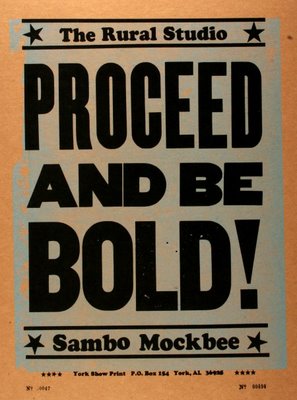
Amos Paul Kennedy Jr. calls himself a "lowly negro printer," but he's a far cry from lowly
Kennedy’s posters feature slogans like: “Coffee Makes You Black,” “Man Builds No Structure That Outlives A Book,” “Fuck You! I’ll Fuck Myself,” “Digital Art Is Dead,” “Coffee Made Me Queer,” “Pig Out, Die Early! and my personal favourite, “A Room Without Books Is Like A Body Without Soul.”
Chicago’s Zinger is the poster girl for entrepreneurialism. Proceed and Be Bold! is her first full-length documentary. She’s in the midst of three others while founding 20k Films.
With over 100 people wishing they bought their tickets in advance, the Canadian Shorts screened to a packed house at LSPU Hall last night. Director Brianne Nord-Stewarts’ Trolls was side-splitting funny. Two kids try to understand their sexuality by figuring out how Flange A fits into Slot B (‘a front bum’). It’s a wonder any of us ever figured it out.
Hometown girl, now Halifax-transplant, Eva Madden-Hagen’s film What Remains was a stunning portrait of generational love. As a portrait of marriage, the film showcases a relationship between a grandmother and a granddaughter and the various stages of love – for better and for worse.
Written by the award-winning script writer Wanda Nolan, Four Sisters is a film on family and women. It’s a comic short that aptly portrays the dynamics of sisters and the words that go unsaid. The universality of this film comes to life beautifully with the skills of Dana Warren.
Brad, written and directed by Emily Bridger, echoes shows like The Office and Jpod with a St. John’s flair. It’s for anyone who has sat through corporate spiel and wondered what exactly possessed the speaker to take on such a position.
Jacqueline Hynes’ film Cardboard Juncton was the darkest screened. While it was heartbreaking and filled with tension, young actress Julia Kennedy Kelly stars as Leia. Her performance could very well make her the next Heather Matarazo.

Wanda Nolan and Noreen Golfman
SJIWFF 2010: Opening night
Wed, Oct 27, 2010
Writer and photographer Shannon Webb-Campbell will be reporting from the St. John’s International Women’s Film Festival from October 26h to the 30th. Find festival information at www.womensfilmfestival.com.

Wait, is that my hubcap?
Last night’s atmosphere would have made Mary Poppins proud. The Arts and Culture Centre was transformed into the 21st St. John’s Women’s Film Festival opening eve, and Newfoundland welcomed international filmmakers to the City of Legends beneath upside-down umbrellas hung from the ceiling.
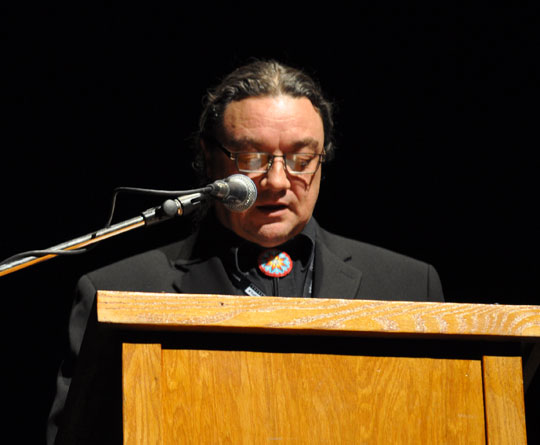
Jerry Evans
Jerry Evans’ short Red Orchre opened the festival. His visual collage of memories and photographs of Mi’kmaq culture in Newfoundland combines the essence of the festival: storytelling. All films build from a good story.
Despite the original program, Jordan Canning and Jody Richardson’s Not Over Easy screened instead of Ana Valine’s How Eunice Got Her Baby, since rescheduled for Friday’s Eclectic Shorts. Not Over Easy’s very yolky love affair gone askew will change viewers’ thoughts on an almost empty egg carton forevermore.
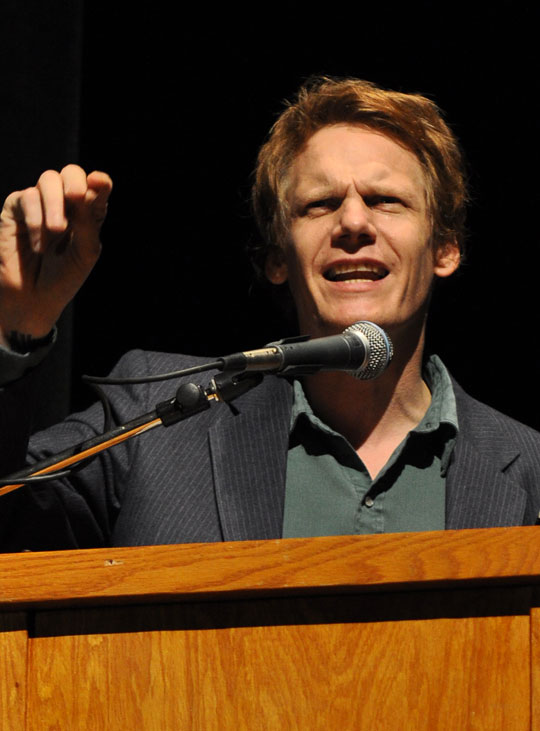
Jody Richardson
Unfortunately the man of the hour, Gordon Pinsent, was unable to make it to the screening of Still Rowdy After All These Years. He apologized via video from a bistro in Toronto in typical Pinsent fashion: dry, humorous and unabashedly charming.
Don’t believe me? Ask the waitress who nearly tongued him in the intro. We’re all family here, says Pinsent, closing his apologetic farewell with a cut to the chef, noting he’s from Newfoundland.
Pinsent is a man of the silver screen, almost godlike and mythical in these parts. Doran’s film depicts a legacy of one of the greats; a timeless documentary of the province’s finest.
Working icons: Ron Hynes
Fri, Oct 1, 2010
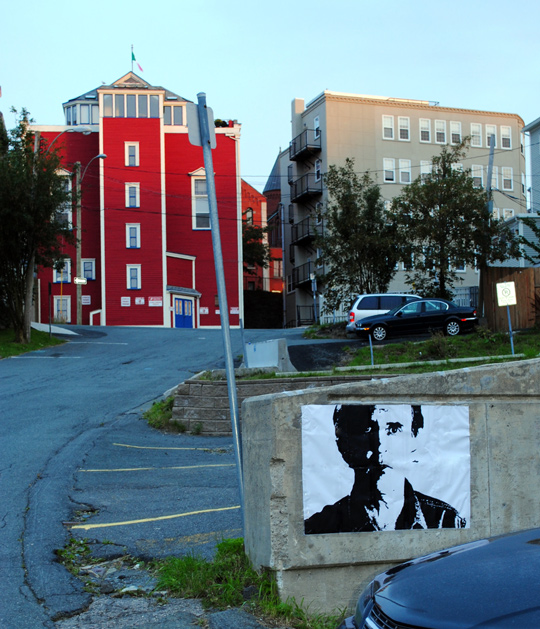
This month, two documentaries will examine the lives of two Newfoundland artists whose dedication to their work has brought joy to their audiences, but, occasionally, pain to themselves and their families. Why do they do it? What’s it like having a camera focused so closely on their private lives?
Interviews and photos by Elling Lien
Ron Hynes
…has a new CD, Stealing Genius, hitting stores October 12. Written while he was on a writing sabbatical in Woody Point, the record takes inspiration from the work of Newfoundland poets and authors.
…is the subject of a documentary by Newfoundland filmmaker William (Bill) MacGillivray, The Man of a Thousand Songs will close this year’s Women’s Film Festival on October 30. In the film, Ron talks about his thirty-five years on the road, his failed relationships, battles with his alter ego (ominously called ‘The Man’), his near death from drug overdose, and his recovery.
So when were you first approached by Bill to do a documentary about your life?
Oh, it was a couple of years ago. More than a couple of years ago now. I actually wasn’t that thrilled about the idea. I didn’t think it was such a great idea, you know. I’d already done a documentary over in Ireland with Mary Sexton’s Rink Rat Productions done by Rosemary House. We went over there to do that documentary on me and I thought I had kind of talked enough about my life.
But Bill has different ideas. He had another approach that he wanted to use. So between the jigs and the reels, with my schedule and his schedule, we had to do it piecemeal. We had to do it whenever I was available. Whenever I was in Halifax or in St. John’s or in Toronto, whenever we could pull it together, we’d find time and get a crew and get it done.
How did he first pitch the idea to you?
Well, basically he was just saying “We’d like to do a documentary on you.” I don’t know. I’ve never really thought I was that interesting a person. I think that people like the songs. I’ve never thought I was that interesting a guy, so when somebody comes to you and says, “Listen, we’d like to do a documentary film on you,” you just kind of go, “What for?”
Well, people want to know where the songs are coming from.
Well that’s actually my favorite thing about the film, is how the editor did such a good job of connecting the dots between the anecdotes and the stories and the songs.
So you’re sitting there, you have a camera on you and you’re told to reveal your past and your secrets. How does that feel?
Well, you feel like really naked. You really, really do. But after a while, Bill was really good to work with. We—Christ—we shot thirty-four hours of film footage. For a ninety-minute documentary, we shot a lot. And after a while it got easier, and I was just able to relax with it and open up and talk about stuff that I normally never would. It was a small crew, and it’s a very intimate situation. It’s only when it hits the silver screen that it looms rather large. [laugh] But you do, really, initially, you just feel really naked.
Have you been to any of the screenings?
I’ve been going to some of the screenings. We premiered at the Toronto International Film Festival a couple of weeks ago, and it was all adrenalin and media and photographs and interviews and my children were there and my girlfriend was there. [laugh] My kids were worried about what I was going to say about them on the film, and I’m worried about what they’re gonna think about the film. I couldn’t even really watch the bloody film because there was so much pressure surrounding me, so I was able to go on the second day, wear just a T-shirt and a pair of jeans and be invisible in the audience. To just watch the film.
It’s hard for me to detach myself from it, and it’s hard to be objective. I’ve never liked myself on film or on television or you know over the years when the Wonderful Grand Band used to be on TV, I could never watch the shows, because I would always second guess myself. “Oh don’t say that,” or “Don’t look that way,” “Don’t turn like that,” “Don’t wear that shirt ever again!”
But with this film, at the end of the day, I’m really pleased. I’m pleased with the work and I think that Billy and Terry did an incredible job. I think the crew did an incredible job. The editor (Andrew MacCormack) especially did a wonderful job. I’m more than pleased with the results.
Everybody seems to be making a big fuss over the fact that it’s me in the film, but it’s a Bill MacGillivray film about me. At the end of the day it’s his film. It’s not mine. It’s his work. I’m just the subject. So I’m able to remove myself from it and I’m really happy for them because they work really, really hard for this and it seems to be paying off.
Do you have a favourite part of the film?
I think my favorite part was my nephew Joel Hynes’ contribution. He connected a lot of dots. He was able to say a lot of things about myself that I wasn’t able to say.
My favorite part of the film was him.
It was really affecting.
It really was, yeah.
And I love when he said, “Even if nobody knows who the man of a thousand songs is,” he says, “when Ron Hynes walks in a room, or he walks down the aisle of a plane everybody’s going ‘who the f*%k is this guy and what the f*%k does he do?’”
Between this film and your new record you’ve got a lot of things going for you these days.
Yeah. On the one hand I feel swamped and on the other hand I feel like, I don’t know, like I woke up to a brand new life suddenly. I didn’t expect to.
I just got off the phone with Gordon Pinsent, who also has a documentary about his life in the festival. He told me to tell you he’s a fan.
I’ll tell you two interesting things that I have in common with Gordon Pinsent. We are the only male artists from Newfoundland to ever win a Genie: I won one for best song in the film Secret Nation, called “Final Breath” and Gordon won [three acting Genies, most recently Best Actor for the feature Away From Her.]
And the only female who won a Genie here is Mary Lewis, who won for When Ponds Freeze Over some years back.
The other interesting thing about that I have in common with Gordon—you’re going to laugh when you hear this—is that at one point we were both instructors for the Arthur Murray School of Dance.
What??
Absolutely true. [laugh] That is an absolute truth. For a brief period in my life when I was in Victoria, BC, I needed a job and it was the only job available. I was on the street, I was hungry. I couldn’t get a gig for love or money out there, so I went and answered this ad and ended up being a young trainee ballroom dance instructor for a few months. I just made enough money to get the hell out of there, but apparently he worked there as a serious instructor for some time. That’s a little known anecdote about Mr. Pinsent’s and my career. At one point we both worked for the Arthur Murray School of Dance. [laughter]
I didn’t know you could ballroom dance.
Yeah I can’t. [laugh] I can’t. I didn’t know what I was doing then and I don’t know what I am doing now. What is that Leonard Cohen song? “…And the white man dancing?”
So for this record, Stealing Genius, you say much of it was inspired by local writers. How did that happen?
A lot of it has to do with my involvement for the past few years with the Writers at Woody Point Festival, so I became more and more acquainted with all the poets and writers and the novelists here in the province, people like Stan Dragland and Randall Maggs and Des Walsh, and the late and great Al Pittman… Donna Morrissey, Michael Crummey… It was really exciting to be able to just go into all of that work and write some songs based on them all. It was a different approach for me. It’s like I’m really stepping out of myself all together.
So what was the process like?
I was given a house up at Woody Point in September of 2008 by Dianne Martin, who’s the editor for Random House Publishing, and her partner David Stromberg. I just wasn’t getting the writing done at home. The phone was ringing, the TV was on, the dog was barking, people were dropping by. I wasn’t get the work done.
I went through a really, really long period where I hardly did anything and I was starting to suffer from it, so I was talking to Dianne about this and she said, “Why don’t you just take the house after the Writers at Woody Point is over? Take the house for the whole month of September and just get the work done.”
I just read Randall Maggs’ Sawchuck Poems, and I had one song called “House”, which was based on a work by Stan Dragland called Stormy Weather. That was the only piece I had. So I thought, you know, I was thinking of writing something bases on Randall’s book about Terry Sawchuk and the whole thing just opened up for me: “Why not go to all the writers? Why not just go into all of the work that’s available here and go spend thirty days in isolation. Read like a son of a bitch, write like a son of a bitch.”
I really, really worked hard. I was out of bed at six o’ clock in the morning, wrote till ten thirty, had lunch, wrote until six o’ clock in the evening, had dinner, wrote until ten thirty at night, went to bed, got up at six o’clock in the morning. And I just did that for thirty two days and wrote this record.
It was a great process. It was really fun. It was fun to do and it was a real labour of love and I am really proud of this work. I think it’s my best work to date.
Working icons: Gordon Pinsent
Fri, Oct 1, 2010

This month, two documentaries will examine the lives of two Newfoundland artists whose dedication to their work has brought joy to their audiences, but, occasionally, pain to themselves and their families. Why do they do it? What’s it like having a camera focused so closely on their private lives?
Interviews and photos by Elling Lien
Gordon Pinsent
…has written the play Easy Down Easy, directed by Mary Walsh and accompanying the grand opening of the LSPU Hall on October 5th.
…is the subject of a film about his life by Barbara Doran (director of Love and Savagery) entitled Still Rowdy After All These Years, which will be showing October 26 at the Women’s Film Festival. It tells the story of the charismatic actor’s beginnings in Grand Falls (being ‘blessed’ by Bob Hope) to his work today.
So, my first official question is pretty ridiculous: What’s it like being a Newfoundland icon?
[laugh] A Newfoundland icon! I’m not sure. Every time I hear the word “icon” I figure something’s going to fall off the mantle, you know?
You are very respected here in Newfoundland, I mean. When you appeared on the Republic of Doyle, for example, that little part, people were talking about it everywhere. I don’t think I heard a negative word said about you.
Even though that part was of a villain? [laugh] It’s a lovely feeling. I get a way better feeling out of a smaller part than I do when I’m doing a lead and shouldering so much of the weight, you know? It’s a very good feeling to come in, go to work for a few weeks, have a good and interesting role to play, meet wonderful people, and have a terrific time with the crew. It certainly makes you look as though the reason why you got into the business. You know, it has that same feeling to it.
I enjoy it immensely, and St. John’s is of course, you know, you get it. Every time I land I feel at home. So I mean it couldn’t be a better atmosphere in which to work, you know?
So tell me about Easy Down Easy, the play you wrote.
There’s no sense in getting into the finest possible detail of it, but basically it’s about a sign-post in our lives. That we really don’t lose our backgrounds. We don’t lose our mistakes, our errors. We live with them, we learn by them and from them. Basically, it is that as a story of eventual self-tribulations and self-forgiveness.
It’s just a marvelous story between three people on stage. Mysteries and memories from the past, and having to deal with those in the happiness in the present.
There was the scene at the beginning of the documentary where you were pushed over a railing and it was muddy and cold. Sometimes the work behind-the-scenes isn’t very glamourous. What is it that’s keeping you working? What keeps the passion there?
The fact that it’s different, not the same thing. I remember going to work earlier on in my life and realizing that I might have to settle down to a particular kind of work that I didn’t want to spend my life at. I was so lucky to find something that I wanted to do for the rest of my life. That’s the beauty of the arts, because they’re all about creating, and you never stop creating. When they put me in the box, I’m going to bring a pen and scratch out something on the underside of the lid. There’s always something. Always something to say, always something to do. You are that way until you stop breathing, so might as well keep at it. Otherwise it’s not very interesting. The later part of life can be very dull, in fact, depending on what you’re involved in. This has always been a very dynamic way of existing. It really demands the best of you. I like this kind of activity, being able to sit down and create something that nobody’s seen. It’s a wonderful sense of achievement, even though nothing may ever come of it. But it’s yours, it’s all yours.
When you set out to work as an actor, you had no idea that you were going to be able to make a go of it. In the film it talks about your first marriage, which broke up. And I couldn’t help but notice a connection with the play—not being able to run away from yourself, or from your past.
Well, I think it would be a fairly uninteresting, uneventful life if things stayed on an even plane. I think being in an unchangeable situation you don’t discover much of anything, much less about yourself. You have to see things as they go along. They are there. They’re in us. You know, we have a source in ourselves to go to when we want to open it up and enlarge our existence. That happens by, probably, through an adventurous nature where you want to lead a different kind of life than what might be expected.
I found out fairly early that I was not the best at manual labour. I was also mechanically un-inclined, so instead of all that I went for the other, the arts. Then I would have been really dead wrong if that didn’t work. I don’t know if there would have been a place for me.
I didn’t go to drama school. I didn’t have the money to do the wonderful schools in England. A lot of people did that. That was the way to go. I didn’t have that, so I had to go with whatever assets I had.
Another person in town who has had that kind of impulse is Ron Hynes—and there’s another documentary in the same film festival this year about him.
Yes, that’s The Man of a Thousand Songs.
For these interviews I wanted to concentrate on you and Ron because you both have had some times in life where your artistic passion took over. Where you chose it in place of a more stable life…
I would say we’re lucky to have had a checkered past. In the checkered past, if you haven’t done absolutely dirt to people, if you’ve been a fairly decent individual, you just happen to make mistakes, what it does is it adds layers to you. With more and more layers, that gives you a greater inventory of places to go to when you’re writing and you’re creating. Even as an individual, it adds. It’s a plus. Otherwise, can you imagine?
I remember when I started I was a painter at one time, and I still do some. I’d go around and I think, “I’ll touch up that painting.” That was one I had done years and years ago, but my wife said, “Don’t touch it. That was you then.”
And it was. It was me then. That’s how I felt like wielding the brush at that time.
There’s a marvelous thing about looking back. Yes, sometimes, sadly, since my wife past, I can look back think, I want that particular day back. I want that week back. I want to do something that I had never done. I want to take her somewhere where she’d never been. That kind of regret.
But things worked out well. We got on famously and stuff. It’s been a very worthwhile trip for just about everybody involved. It’s not seen in any sort of unseemly way. It’s seen in very good light. Because what you’ve done is you’ve learned from it, and it’s your book of life. The place in your own private place. If you’ve handled it okay. It’s all been okay. It’s been very good. I mean regrets are going to be there. She said if you start fixing up your paintings, if you start trying to perfect in that false way of life, you’re going to end up with a very thin book. You’ve got to have a bigger book than that.
Snowboarding crew hits St. John’s
Thu, Sep 30, 2010
Sometimes there are benefits to being the first province with snow each year.
The People Crew, a snowboarding crew based out of B.C., arrived in Newfoundland last year just moments after the white stuff fell to hit the hills. Well, actually, they seemed to spend more time hitting the snowy stairs, railings, and ramps of the downtown.
They’re known for their snowboarding videos, in which they jet off to various places around the world to exploit their geography for snowboarding stunts. St. John’s, Newfoundland was the first stop last year for members Simon Chamberlain, Joe Sexton, Jeremy Jones, Seth Hout, and J.P. Walkerand. They were collecting footage for their latest video, Cheers!, which premiered at the beginning of September. And, yes, the Newfoundland footage is in there.
Ballistic owner Jon Loder had the pleasure of helping out.
“I got to videotape them myself with my iPhone,” he says. “Their videos are huge. When Cheers! is out, there’ll be people coming here from all over.”
“For now, until they release the DVD, the photos from the shoot are going to be published in different magazines around the world,” he says.
There’s no release date for the DVD yet, but Loder expect they’ll have it down at Ballistic by the end of October, at the latest. Plans are in the works for the Newfoundland premier screening of Cheers! before the DVD goes on sale. In the meantime you can watch the teaser above.
Reality and fantasy: CBC fall season docs
Tue, Sep 21, 2010
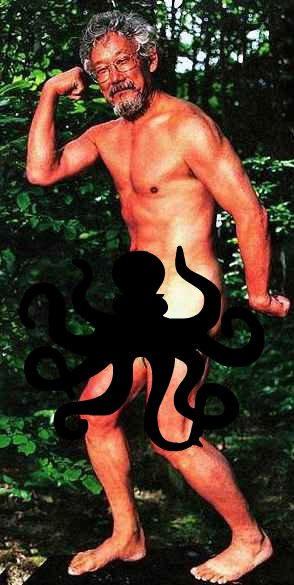
David Suzuki, seen here from his little-seen feature film, La Blue Suzuki.
The fall season has begun. It’s time for television to take our minds off the unimaginable hopelessness us plebes wallow in every day. Sure our sofas are stained with vomit and we’re poor and miserable, but I hear Global has a show about a cop with multiple personalities. Hooray! Maybe there’s a chance they’ll greenlight my newest script, also about a cop with multiple personalities. It’s called “The Three”…
The present TV season is an unpromising crop of new series premieres alongside returning shows the kids like, like that one about horrible ad men, Joshua Jackson facing supernatural threats on a poor man’s X-Files and that sitcom with Bob Saget narration.
But the TV landscape isn’t all fantasy. Over at the Mothercorp, they counter prime time escapism with a series of documentaries airing in the coming weeks.
The return of the long-running The Nature Of Things — presented, as always, by David Suzuki — is a welcome one. The seventy-four year old conservationist and his series, now in its 50th year, are Canadian institutions that have aged fairly gracefully. Suzuki is like the grandfather you wished you had: knowledgeable, enthusiastic and genial. That is, when he’s not ranting about space aliens, as per this bit of narration that opens the episode:
“These aliens have no skeleton,” Suzuki says ominously in the opening of the season premiere. “Just a soft elastic body that can change colour at will. They have three hearts, nine brains and massively strong arms that never stop moving. Does it have the super-brain of extra-terrestrial?”
Is he talking about the Cthulhu?
Well, close. The Things season premiere, Aliens Of The Deep, which airs this Thursday (CBC 8:30pm), offers a fascinating look at octopi. Er, octopuses. Or something. The Nature of Things crew filmed several instances of octopus contact and research, highlighting just what intelligent creatures they are. The best sequence shows a group of scientists who test the octopuses problem-solving abilities by offering them tightly-sealed jars and tiny flasks with live crabs inside. In both cases, the octopuses will remove screw-caps or sliver through the narrow tube of the flask to feast on crab meat. It’s impressive, educational and kind of nightmarish.
However, the documentary tries a little too hard to be sensational. The soundtrack is pretty dire, consisting of horror stingers when an octopus inevitably munches on a pitiful crab. Similarly, Suzuki’s narration clings to the whole alien angle a little too firmly, long enough to make it awkward. An assertion that swimming with an octopus is “truly a close encounter of the third kind” (it isn’t) or that octopuses can turn invisible (they can’t, they’re just skilled at camouflage) or remarking that cephalopods “won’t be taking over the world soon… or will they?”
Yes, we get it, Suzuki. You want to spice up your documentary. Isn’t it enough that octopuses are bizarre and wonderful and full of mystery? You might as well do a doc on squirrel that suggests their beady eyes hold the secrets of the universe and that one day they’ll enslave humanity for our superior nut-gathering abilities?
…
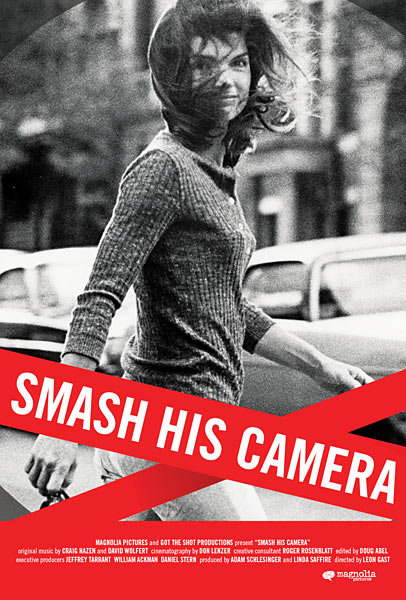
Another documentary that piqued my interest is airing on the CBC News Network as part of The Passionate Eye: Smash His Camera (Sunday, September 26 at 11:30pm), an HBO-produced documentary that follows notorious paparazzo Ron Galella.
Ron Galella has photographed some of the most famous people in America and was famously taken to court by Jackie Onassis. Galella’s photos are now seen as pop art and one fan of his opines that he’s a visionary in the world of paparazzi photos. Critics liken him to a stalker exploiting the first-amendment to harass celebrities. These accusations are hard to deny when the buffoonish and unapologetically slimy Galella sneaks his way in to a school recital to sell photos of Onassis’ pre-pubescent son to the tabloids.
While hardly an evil man, the attempts at humanizing Ron Galella don’t remove any of his scuzzy edges. Yes, he had the good sense of humour to don a helmet after Marlon Brando punched his teeth in. It’s also kinda funny to watch him prancing about in an Evil Knievelish outfit with images of cameras sewn on it, but it doesn’t excuse the fact that he harasses people for a living. Galella’s job is so worthless that I hate to use a term like “parasitic” to describe it lest I besmirch the good name of the Australian paralysis tick.
Fortunately, it would seem his critics have the last laugh. Ron Galella’s work, despite pretentions of artistic value, is gone unrecognized by a young woman in his gallery in a later scene that’s juxtaposed with Brad Pitt and Angelie Jolie getting attacked by Galella and dozens of his younger peers at a film premiere. Galella’s work is that of endless harassment and aggravation that offered him a bit of cash and made him an obscure footnote in pop culture. If there were any justice, he’d be the first one the squirrels send into the nut labour camps when they take over.
Or will they?
Lessons bad movies have taught me
Wed, Sep 15, 2010
The best place to learn about life, the universe and everything is at the movies! Hollywood has always been both our patient teacher and nursemaid and we have sucked the knowledge from its considerable teats! While some films are clear-cut in the lessons they impart–Megaforce’s controversial pro flying motorcycle stance, for instance–the wires sometimes get crossed, as per these particularly unfortunate examples.
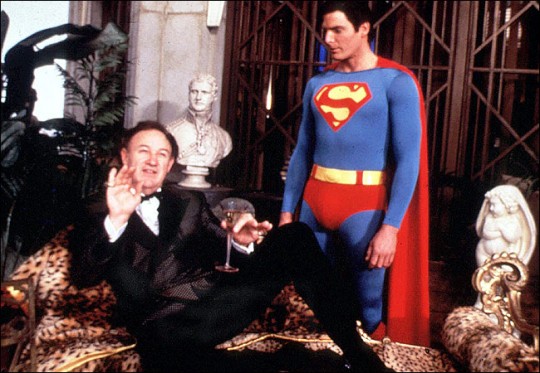
Superman IV: The Quest For Peace
If you’ve ever caught one of the Superman films on cable, chances are it was different. If that channel was TBS, it was definitely this one. In this 1987 outing, Superman (played by Christopher Reeve) has had enough of the looming nuclear threat facing the world and has a three-step plan to deal with it. Step 1: chuck all nuclear weaponry in the world into the sun. Step 2: ?. Step 3: World peace.
The niggle in his plan, as always, Lex Luthor (played by Gene Hackman). Inspired by the impish ad campaign in which strangers have their mundane coffees replaced by Folger’s Crystals, Luthor hijacks the missiles slated for solar hurling and added a secret ingredient: Superman’s DNA. The end result? Nuclear Man (played by a WWF Wrestling Buddy with Gene Hackman’s voice dubbed in), a lump of muscle and cheap lightning fx that obeys Luthor’s every whim. Downside: Nuclear Man is solar-powered, meaning he can be defeated by so much as tossing a blanket on him.
Intended Message: Nukes are bad
Actual Message: With a lot of nuclear warheads and just a smidge of Kryptonian DNA, we could be waited on hand and foot by an army of solar-powered slaves in muscle shirts! Think of all the manual labour we could avoid when, capitalizing on the trademark Luthor genius, North America finally decides to get a few pyramids. We’ll have supermen to build them and we can put all sorts of crazy crap in there, like slot machines or a revolving buffet or something. And, when all is said done, they can sing us to sleep with the dulcet tones of Gene Hackman. Just be sure to bring a sun lamp.
True cinemasochists owe it to themselves to pick the film up on DVD, as it contains deleted scenes of a second Nuclear Man tormenting the Man Of Steel. Well, technically he’s the first Nuclear Man. It’s complicated.
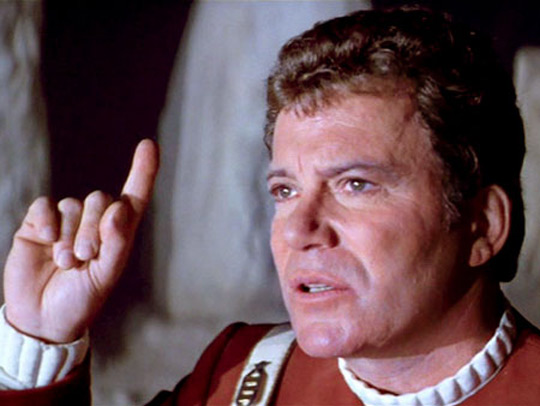
Star Trek V: The Final Frontier
The late eighties housed a lot of disappointing sequels, as the further adventures of an aging Rocky, an aging Karate Kid and dozens of aging boogeymen were ushered into theatres. Yet, like the aforementioned Superman film, this is a gold standard for good-bad cinema. Here we meet Spock’s long-lost brother who was never mentioned before or since (played by a fatter version of Mystery Science Theatre 3000’s Kevin Murphy) kidnaps the Enterprise crew, converts them to his religion and sends them to the heart of the universe where they hope to find the true god. Curiously enough, they actually find God, who doesn’t take kindly to questioning from a certain, hairpiece-sporting starship captain. Both Sybok and God die in the fracas, but the Enterprise crew escape unscathed barring a sense of collectively lost dignity. In a touching coda, Spock, Bones and Kirk pontificate the search for God, the meaning of life and sing “Row Your Boat”.
Intended Message: God can’t be found externally. It lies in the human (or Vulcan or Klingon) heart.
Actual Message: William Shatner is the one true God. He travelled to the centre of the damn universe and punched God in his stupid face. Shatner was the only one brave enough and hammy enough to stand up to the old, bearded man in the sky (er, in space) and it was his cleverness and a lucky shot from a certain Vulcan that caused God’s head to explode like he was in Scanners. Rumour has it that the shooting script had a scene where Shatner then viciously tore the heart out of the floating-head deity and screamed and gained its power and courage thricefold.
Oh, and when in doubt, always ask “what does God need with a starship?” It got me out of jury duty once. The power of that phrase is without limit.
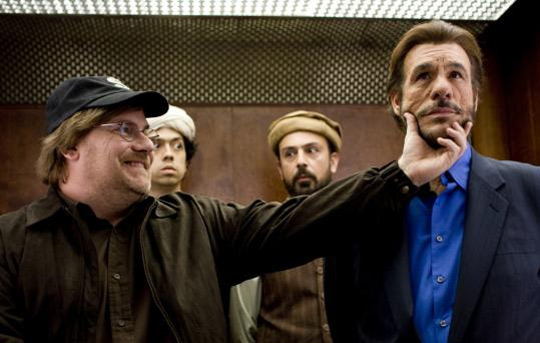
An American Carol
When a Michael Moore stand-in (played by a Chris Farley stand-in) begins a campaign to abolish the fourth of July, he is visited by patriotic ghosts from the past (and Bill O’Reilly) that show him the true glory of the American right-wing. Ghosts like Gen. George S. Patton and noted arch-conservative John F. Kennedy.
Intended Message: Left-wingers are killing America! If you just go with the flow, support the troops and git the letter R done, you too can make a real difference if you just shut up once in a while.
Actual Message: Barring the Freemason-bashing commonly housed on the website, The Scope is an apolitical outfit. However, doesn’t it seem a touch odd that a character will only appreciate “the land of the free” by doing what others tell you? Yes, because if there’s anyone who can teach us about keeping our heads down and following the rules, it’s the ghosts of the people who changed history (and Bill O’Reilly).
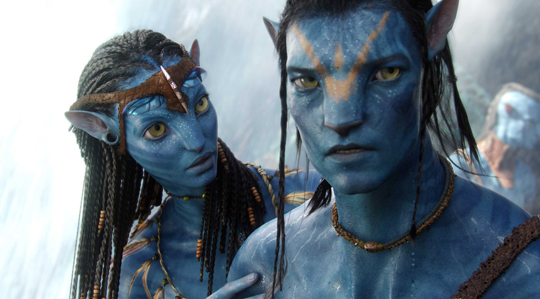
Avatar
You know the plot of this one by now. Corporate baddies run afoul of woodland cat-creatures native to the planet who look like a cross between King from Tekken and Squishington from Bump In The Night. Only the ex-soldier who betrayed them to The Man has the power to save them.
Intended Message: Respect the Earth! Change your ways! The power is yours! GO PLANET.
Actual Message: Appreciate and respect the beauty of the Earth by immersing yourself forever in an electricity-guzzling device that allows you to pretend to be a blue cat person. That won’t leave a footprint on the planet. Also, Avatar action figures our available from the gift shop. Please enjoy your 3-D disposable glasses and your Big Gulp. Recycling is not available at this theatre.
Ahh, films. I keep watching the damn things because I know that they’ll eventually provide me with the key to the univers. Now, if you’ll excuse me, I’m going to re-acquaint myself with my favourite meditation on a peace-loving man’s war against the elements and himself: Roadhouse with the late Patrick Swayze.
Fail whale
Sat, Sep 11, 2010
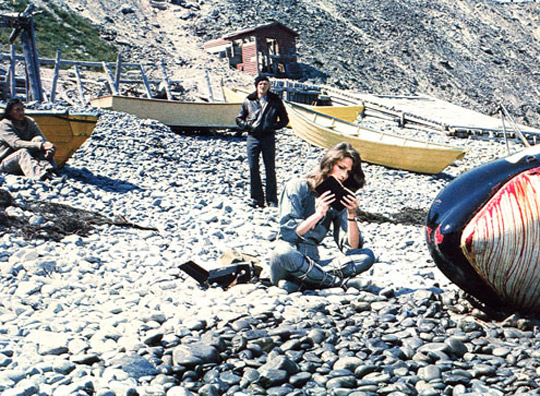
Orcas. Killer whales. They’re in our waters. They’re dominating our news.
Maybe you don’t think they’re so bad. Think again, citizens. It’s not just the minke whales these superficially cuddlesome, undersea pandas are after. Oh no. They want us. They want to feast on our flesh. And what’s more, they want not just to take our lives, but our way of life.
Be vigilant, citizens. Soon the orcas will be taking our jobs and living in our overpriced apartments. Maybe there’s an orca in your neighbourhood right now working at a nearby grocery store. Maybe one made you a sandwich today, bedecked in a blue shirt and matching hat.
Like Glenn Beck, that bastion of sensible journalism, I’m only hypothesizing. Trying to get in their heads. Asking questions.
What better way to have those questions answered than to sit down and watch Orca, the 1977 sea-mammal-gone-amok flick shot in our very own Petty Harbour. While a pessimist would dismiss the film as a rip-off of Jaws, an optimist would recognize it as the inspiration for Jaws IV: The Revenge. Ahh, the circle of life. When franchises run out of ideas, even the most ridiculous rip-offs get ripped off.
Anyhoo, the plot of this semi-topical depiction of cetacean slaughter is standard revenge flick territory. Captain Nolan, an Irish-American fisherman played by Richard Harris, gets it in his head that catching an orca whale is the best possible choice to make in this life. Despite the fact that an orca rescues a hapless chump from a shark attack right before Nolan’s very eyes in the first five minutes of the film, he’s convinced it’s the right thing to do.
Nolan soon butts heads with marine biologist Dr. Rachel Bedford (Charlotte Rampling) who reasons that orcas may be more intelligent than man. After all, according to SCIENCE, an orca’s song contains “15 million pieces of information,” she says. “The Bible only contains four million.”
As she says, if we could speak like them, a simple human phrase like ‘How are you?’ would be meaningless. “What we call language,” she says, “they might call unnecessary or redundant or… retarded.”
Having chosen his folly, Nolan sails off with a crew consisting of what appears to be a latter-day George Carlin, a block of wood with a blond wig tacked to it, and a generic bearded actor. Naturally, things go awry in the most gruesome manner possible. Nolan grazes the male orca in his sights and harpoons its pregnant mate. Upon reeling the dying creature up to his boat, Nolan discovers that the whale was pregnant when an unborn whale fetus lands on the deck of his boat. (!!!)
With the cocky fisherman having thoughtlessly destroyed all it held dear, the whale apparently vows revenge and chases him back to Petty Harbour. There, the creature destroys Nolan’s house, bites off Bo Derek’s leg, and sinks every boat at the dock… save his. Now Nolan must sail out to face the orca on its own turf, using only a rifle, a single harpoon and his few functioning brain cells. It ends about as badly as any fight between a slumming character actor and an animatronic whale possibly could. Roll credits!
Orca is a textbook example of “so-bad-it’s-good” cinema. Orca fails to come across as a bleak tragedy for many reasons, but the greatest is that Harris’ titular opponent is far too adorable. No matter how good the lead actor you have starring in your Man vs. Beast exploitation flick, he or she is going to look ridiculous fighting a cute animal. Donald Pleasence vs. a giraffe? Funny. Robert Duvall vs. a red panda? Funny. Daniel Day-Lewis vs. a basket of mewling kittens? Hilarious.
Yes, I know that orcas have munched on the occasional overzealous Marineland trainer. But they are still adorable.
All attempts to garner sympathy for Richard Harris’ Nolan fall completely flat. His character is just an obnoxious oaf. That he raises the ire of a whale which then terrorizes the folks of Petty Harbour and kills several of his crew doesn’t seem to phase him much. Even with the heavy-handed attempts to reveal his tragic life story, you won’t once feel like Nolan is worth your emotional attachment. This only adds to the film’s heavy laugh factor.
Same goes for the presence of the undeniably talented Charlotte Rampling. Her pseudo-scientific bafflegab is made all the more ridiculous by her prim delivery, which makes her sound like the voice of a sex line for misbehaving nanny fetishists. The character of Dr. Bedford is just another in the long line of b-movie scientists who, because of their gender, are coldly intellectual and just want to be wuvved by the pig-headed male lead. Blech.
So, while the typically minke-biased conventional media urge readers not to get too close to killer whales on the prowl, why not follow our advice and spend 90 minutes getting to know Orca? It’s got it all. There are shots of happy orcas frolicking in the effervescent waters like a couple of black ice cubes in a sea of ginger ale… Famed Italian composer Ennio Morricone wrote the music for the soundtrack (even though it’s pretty obvious he didn’t watch any of the film.) Most importantly, Orca is very, very funny, despite the intentions of all involved.
Party Down: Not on an obscure channel any more!
Tue, Sep 7, 2010

Party Down reminded Adam Clarke that he doesn’t have Herbie: Fully Loaded on DVD and Blu-Ray. Point: Guttenberg.
“Most actors aren’t bright, so you have to keep it simple”
- Henry Pollard
Party Down was a workplace sitcom with a perfect gimmick. Party Down, a catering company in L.A., was home to a small group of dreamers who saw their dreams of success repeatedly dashed before their very eyes. So, as the characters either wallowed in misery or deluded themselves about their chances of making it in Hollywood, each episode had a unique setting as the Party Down crew worked a variety of events such as a Young Republican convention, a rich brat’s overpriced sweet sixteen party and a star-studded (well, George Takei was there) gay wedding.
In the first season, we’re introduced to Henry Pollard (Adam Scott, who I always think of as David’s Boring Other Boyfriend on Six Feet Under), an actor who’s burned out after one bad audition too many. After appearing in a series of catchphrase-heavy beer commercials, his career has dried up and now he’s returned to his former day job at Party Down. His co-worker of old, Ron Donald (Ken Marino), is a reformed party animal who now serves as the crew’s gullible and sweetly pathetic team leader. Joining them are flighty, washed-up bit player Constance Carmell (Glee’s Jane Lynch), embittered wannabe writer Roman (Adventureland’s Martin Starr) and Kyle (Ryan Hansen), the poor man’s Owen Wilson. Getting Henry’s attention is aspiring comedian Casey Klein (Lizzie West, the only actor who kept their dignity in Cloverfield), who is refreshingly down-to-earth despite being reduced to comedy gigs on cruise ships. Later in the series, Constance leaves Party Down and is replaced by her insane roommate Bobbi St. Brown (a never-better Jennifer Coolidge) for two episodes and awkward stage mom Lydia (a surprisingly funny Megan Mullaly) for the rest of the series.
Each episode of the series withdraws laughs from the well of human misery. During a private function in episode one, Casey’s marriage crumbles to its breaking point, Henry is repeatedly humiliated by his beer-shilling past and the hostess’ hen-pecked husband alienates nearly everyone with a rant on boring suburban life and getting his dick out. That first episode offers only a hint of the ennui the Party Down caterers will be privy to, as later episodes see them waiting on Russian mobsters, a non-starter orgy and Steve Guttenburg. The characters only grow more bitter from that point on, but the show retains a certain optimism and charm throughout. Both Henry and Casey are so likable that their romance is engaging, unlike just about every other fictional couple on TV who you want to blind with an icepick just so they can’t make goo-eyes at each other for eternity.
There are plenty of opportunities for Party Down to become another toothless Hollywood satire that seems to be too in love with the place to step on anyone’s toes. Luckily, the series neatly dove-tails predictability by not really being about Hollywood, but why the characters are living there. While Constance, Kyle, Roman and Casey are all eager for their big break, most of their catering gigs are as far removed from celebrity as possible. The series is reminiscent of the brilliant Newsradio, which offered the perfect antidote to punchline-driven smarm-coms like Friends with relatively complex comic personalities and an utter disinterest in schmaltz, faux glamorousness or boring will-they-or-won’t-they dynamics. Just as Newsradio had boyish Dave and neurotic Lisa hopping into bed by episode 2, the Henry-Casey pairing happens early and develops into a bittersweet on-again off-again affair that remains interesting until the show’s finale.
Yes, Party Down only lasted two ten-episode seasons, but its compactness is actually perfect. The characters develop quickly and the brief episode orders prevent any filler from leaking into the scripts. The catering gigs range from the realistic to the surreal, which buoys the comedic misery that gives the series its edge. While Casey and Henry both make excellent straightmen and provide the show’s few moments of sweetness, the rest of the cast are as grotesque an ensemble for a comedy series since The Young Ones. The other regulars consist of idiots like Ron and Kyle, flakes like Lydia, Constance and Bobbi St. Brown. And then there’s Roman…
I love Roman. Despite his cynical sense of humour and love of Repo Man, Roman proves to be about as cuddly as Robert Mugabe. Whereas most series will offer patronizing portrayals of geeks as misunderstood man-children (The Big Bang Theory), Martin’s know-it-all attitude and nerdy obsessiveness sabotage his every action and irritate all but the dumbest. By contrast, there’s a real pathos in the episode in which Ron caters his own high school reunion which neither impresses his classmates nor his former crush. Similarly, it’s easy to root for Henry and Casey as they try to conquer their career and relationship woes. Yet Roman is just repulsive. He’s needy, childish and all the other less-flattering characteristics you see in us nerds. Even when he’s disguised as a Marilyn Manson-esque rock star (“Jackal Onassis Backstage Party”) or getting hit on by a porn star (“Sin Say Shun Awards After Party”), he’s still one of the most alienating of human beings and I dearly love how horrible he is.
Back when it aired on a channel I’d never heard of, Party Down was often pegged as one of the bleakest shows on television, which highlights the contradictions of its existence. Not only was this brilliant comedy one of the most depressing half-hours you could spend in front of the box, but it seemed like viewers would rather commit seppuku than watch the damn thing despite it being produced by the likes Rob Thomas (Veronica Mars) and Paul Rudd (star of Grown Ups and Anchorman). Well, it’s not on an obscure channel anymore and the whole thing is rather easy to catch now that season one is on DVD. Meanwhile, shiny discs containing the show’s second season hit stores on September 28. Give this soon-to-be cult classic series a look. It can’t be any worse than your last audition.
Macho Men or The Ballad Of Big McLargeHuge
Tue, Aug 31, 2010
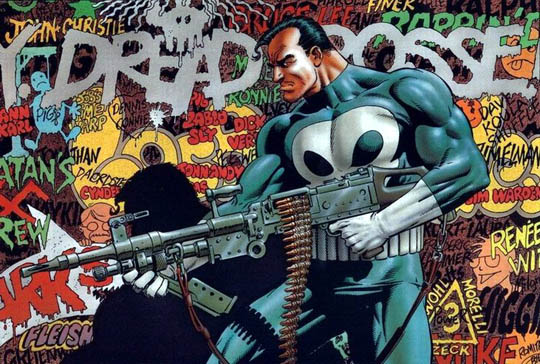
Remember that issue of The Punisher when he took out some blood-thirsty mobsters in a gruesome manner? Or those other few hundred where the exact same thing happened? You know? When Frank Castle was all, like, ”I’m the Punisher and you’re dead, scum!” and they were all, like, “URGH!” and the bullets were all, like, “pew-pew-pew-pew!”?
Good times.
We each fall for different archetypes in our fiction and the gun-toting, say-nothing psychopath with more bullets than brain power that seems to be a favourite in action cinema. That’s why the Iron Man films are so enjoyable. Robert Downey Jr’s Tony Stark is played with an intelligence and lightness of touch that elevates the film above the synthetic grittiness of films like Watchmen and Terminator: Salvation.

Action and adventure films tend to eschew charm for forced grayness and sobriety. The cold-hearted cipher as action hero is a cliche that’s so prevalent now that not one, but two of the fake trailers from 2007’s Grindhouse are being expanded to full-length send-ups of vigilante movies. As I write this, Robert Rodriguez’s Machete is soon heading to cinemas, while Halifax natives Jason Eisner and Rob Cotterill (the duo behind the brilliant horror spoof, Treevenge) are filming a full-length version of Hobo With A Shotgun.
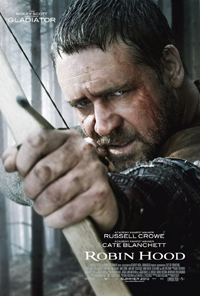
The plague of macho men has gotten so bad that even stories that have no business with a taciturn lead character have been retrofitted, as seen in Ridley Scott’s Robin Hood, out on DVD this month. Hood’s a bone-dry, tedious affair that’s about as visually compelling as one of those ceramic frogs your Nan keeps dish sponges in. Russell Crowe plays the titular, once-suave bandit with a perpetual scowl that doesn’t make him seem like a troubled soul so much as a petulant adolescent girl whose had her cell phone privileges revoked. Oh, and I must have dead ears, mate, because Crowe’s accent sounds more Irish than English to me.
The plot of this non-epic revolves around Robin Hood (nee Longstride), the Magna Carta and how he eventually forms a group of jolly bandits. Well, they’re sort of jolly. Well, Alan Doyle seems happy at any rate. Probably because he wasn’t burdened with a single acting lesson before filming began.
There isn’t a single moment of excitement or fun to be had in Hood, which is the point of the character, isn’t it? You don’t make a Superman film only to have him mope about his domestic troubles for 90 minutes. Okay, you do if you’re Bryan Singer (director of Superman Returns)… But that’s the problem with Hood’s attempt at making self-consciously “adult” cinema out of its pulpy subject matter. It’s naive to confuse cynicism with intelligence, and a film where Maid Marion threatens to castrate our hero when they first meet is as cynical as it gets. Now, maybe Arnold Schwarzenegger can make that sort of thing seem charming, but that’s because he’d be dropping puns all over the place and screaming like a monkey. Russell Crowe’s a petulant bore who hasn’t delivered a decent performance since A Beautiful Mind.
Gritty, lone wolf action films are boring. The Dark Knight, Casino Royale or even the original Dirty Harry are the exceptions that prove the rule when held up to the likes of Hood or Taken. At this point, I’d even settle for a Death Wish remake. With five films spanning twenty years, the Death Wish series follows Paul Kersey (Charles Bronson), a former milquetoast who goes on a supposedly justifiable killing spree whenever his friends or family are assaulted (an inevitability within the first twenty minutes of any Death Wish). The first two of these films are dumb and ugly all over like the worst modern action films. Fortunately, as we wait for Machete and Hobo, I urge you to pick up Death Wish III on DVD.
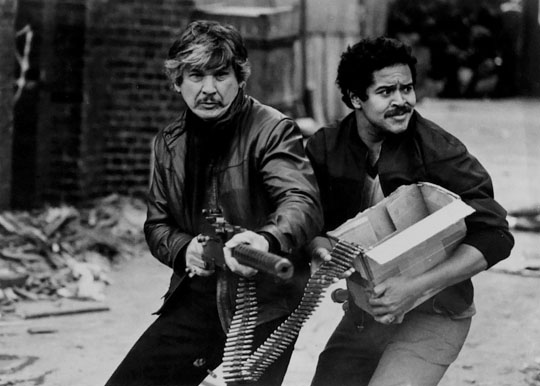
It’s just as dumb and ugly as the rest, but it’s at this precise moment in the five-film series that it goes off the deep end. With such high points as Kersey getting a standing ovation for killing a purse-snatcher and the traumatic death of a man simply called The Giggler, Death Wish III is precisely the kind of action film I can get behind because I can’t stop laughing at it. Surely this is the perfect time to point and laugh at mumbly guys who shoot first and can’t even string enough words to ask questions later.


Fri, Nov 5, 2010
Adam Clarke