

If you’re looking for our review of Annabel, click here.
From the press release: “In 1968, into the beautiful, spare environment of remote coastal Labrador, a mysterious child is born: a baby who appears to be neither fully boy nor girl, but both at once. Only three people are privy to the secret — the baby’s parents, Jacinta and Treadway, and a trusted neighbour, Thomasina. Together the adults make a difficult decision: to raise the child as a boy named Wayne. But as Wayne grows to adulthood within the hyper-masculine hunting culture of his father, his shadow-self — a girl he thinks of as Annabel — is never entirely extinguished, and indeed is secretly nurtured by the women in his life.”
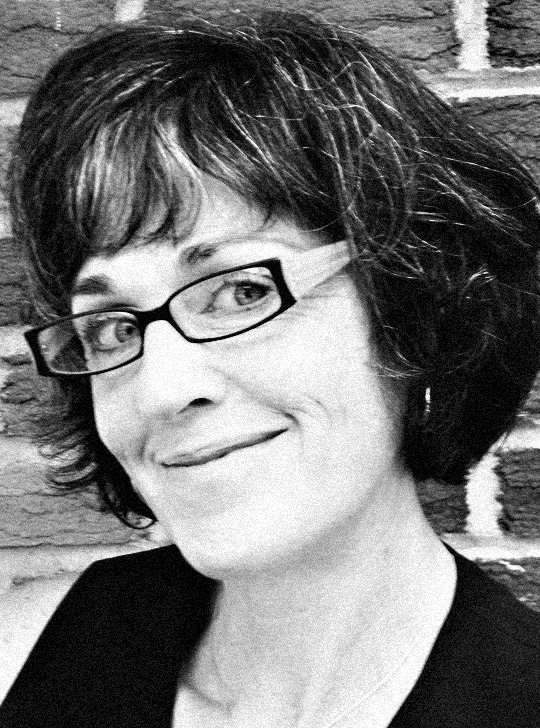
Elling Lien spoke with Kathleen Winter, author of Annabel.
Your decision to write about Wayne, you said you had written a short story about another intersex person? How did you make the decision to write a novel around the subject?
Well, when I got into the story I realized that being intersex is different from being anything else on the gender spectrum. It’s different than being transgender, it’s different from being gay or lesbian, it’s different from all these things because it’s still secret and hidden and invisible even to the person themselves, as we find out in many, many cases. At least it was in 1968 when Wayne was born. I’d come to find out it still is and I find that idea of hidden, underground scenes within a person really compelling for some reason, it’s why I wanted to explore it more. The question of gender and what it is I also find really compelling. There’s a section in the novel where someone who’s from St. John’s is looking at men and women and how they appear on the surface. It’s almost a surrealistic section and it’s not very long. It talks about the chasm between people who are placed at both extremes of what we call male and female. The idea of someone walking the tightrope between that and having that territory in between, I just find fascinating. I think we’re all in the territory in between. I think the spectrum ends are really social concepts, so I just find that whole question really, really compelling.
It comes down to millimeters. Medically, it comes down to millimeters, at birth.
Yeah. Many, many people who are intersex never live a life of acknowledging it, it’s kept a secret. Even if they find out themselves, they have to go through all kinds of difficulty to maintain the semblance of one end of the spectrum, and they still live as male or female. It’s only beginning now that some children when they’re born, and normally they have doctors with the parents –- there’s quite a lot written about allowing the ambiguity to exist until the child grows old enough to decide. It’s more in theory now than in practice because I think even a couple of weeks ago I’m hearing this happened to a person I know and it’s the same thing that happened to Wayne. Theoretically, in our minds and in our ideas, as a society we’re embracing ambiguity and duality but in practice we’re still afraid of it.
The Globe and Mail interview mentioned that John Metcalfe didn’t like the short story. It seems to indicate that you took that as a challenge?
I did. John Metcalfe really means a lot to me. He found my stories and gave me the Metcalfe Book Award and also gave me a lot of really important editorial mentorship, but he had certain preferences and one of them was that he didn’t like anything he felt was improbable, outlandish or surreal. I have a lot of stories like that that didn’t get in the book. This one, he kind of put in that category but I didn’t put it in that category. To me it was inspired by what I knew to be real things that happened to real people, so I did take it as a challenge. I thought well, let’s see what else I can do with that one.
Having moved to Newfoundland and having that feeling of being somewhat of an outsider, do you think that made you gravitate towards this kind of story?
I wouldn’t say that it’s a conscious thing, although I am aware that the answer’s probably yes. A lot of the childhood stuff that happened in school about the cliques, especially in grade five, and the bullying -– even if it’s not physical, sometimes it’s physical, sometimes it’s psychological bullying. That’s very much written from observation and experiences. I think that yes, I really do feel compelled by stories of belonging and yes, that was definitely why and that would be one big reason why I felt that need. When I went to Marystown, I was brought pretty kindly behind the school and taught how to speak properly, like a person from Marystown. I had, I was probably from the Newfoundland of England. I didn’t have the Queens accent; I had a really working class, rough, northeast English accent. I’d stick my hand up in the classroom and say, “Can I go to the toilet please?” That would be the subject of much correction and ridicule. Then I remember going to, when I went to Curling in grade four I felt a sense of belonging for some reason. Everybody liked me and they didn’t treat me like some sort of outer space person. Then in Corner Brook it was absolute, unmitigated torture in grade five at Corner Brook for me as a kid. In many, many ways the Wally Michelin of the book was me, in many ways she’s not. But many of the things that happened to her psyche, I know how that feels. That’s why I wrote it. Not just her, but Wayne as well. I wondered if it was too pressing. I don’t want to –- I really try to also put in some light as well, but I’m aware that it’s a novel that has a lot of darkness, and some light, but I’m not sure how to read it.
I was reading that someone else was talking to you about your decision to move to Montreal and a host at a reading wanted to lie on a poster and say that you’re currently living in Newfoundland.
He was writing a poster and he didn’t want me to say that I lived in Montreal. He said Newfoundland is way more exotic, right? The funny thing is, it’s where you are. If you’re in Newfoundland, people from Montreal coming into Newfoundland are considered pretty exotic too sometimes. People want to know what gave me the right to write about Labrador. Did I live there? Did I visit or did I make it up? So I always had to talk about that.
So what is your connection to Labrador? [laugh] You led me right there.
I did a documentary that was an independent documentary but ended up at the Women’s Film Festival in Saint John’s and also on CBC. To do that I went to Labrador and spent some time there, a week or two at a time over a couple years. It got so when I had to leave I got really emotional about it because the place really did something to me. I went for the creative arts festival, I don’t know if you ever went to that, but it’s an annual week-long film festival where they ask different disciplines, including writers, to do and work with young people. So I did that twice. I had made friends there so I would go and visit. People took me into their homes, and not only their houses, but some families have homes in tents and I went there and slept in a tent for days. So I got to see a lot of different ways of living and I wrote journals, but I never intended to set my piece of fiction there until this. Annabel started as a short story and I set it in Labrador. When it turned into a novel, I just kept it there and I realized that I could write it there because I did know, I had seen firsthand enough different ways of living that I could actually write about it.
You moved to Newfoundland when you were little. Do people have the same kind of qualms about you writing about Newfoundland?
Nobody says anything to me about that. I have never been made to feel like I don’t belong, but at the same time I wasn’t born in Newfoundland and I was eight when my family emigrated from Northeast England and moved to Marystown first, and then Curling and Corner Brook. I grew up in Corner Brook and then I worked at the Telegraph for a while after I graduated from journalism school. That’s how I got to St. John’s. Some people say “I’m a fifth generation Newfoundlander.” I can’t say anything like that and I don’t try.
Going by that standard, I would be a first generation. So does that make me any less a Newfoundlander? I don’t know.
I don’t know either. There’s always the question -– I lived on the Southern Shore for a while and I used to be really taken aback when my landlord, who was an old fisherman, he’d ask me, “Where do you belong?” It took me ages to realize that he didn’t really mean “where do you belong,” but it felt like that. I’d go into this existential vagueness of, “I don’t know…”
Then I’d have a person -– and this is in the book, I transferred it to Labrador, but somebody actually said to me –- I used to buy cabbages from him, he was a cabbage farmer, and he said “you’re not from around here because you called them ‘cabbages’ when in fact you’re supposed to call them ‘cabbage,’ no matter how many of them you’re talking about.” I didn’t know that.
But now you do and you told everybody in your book!
I told everybody, yes! But I wrote it as if it was in Labrador, and as in “you can tell you’re not from Labrador…” when in fact it’s from probably one bay in Newfoundland. I never know how local things are, that’s another thing. I don’t know if it’s just local or all Newfoundland. There’s lots of things I don’t know! [laughs]






Elling Lien | Wed, Sep 15, 2010 | 1302
Books