
The Scope closed in January 2014. This is a read-only archive of thescope.ca — commenting and submissions are turned off.
Scans of every print issue are at Memorial University’s Digital Archives · Search this site

Great future in green plastics

| Mon, Mar 19, 2012 | 1394

Science

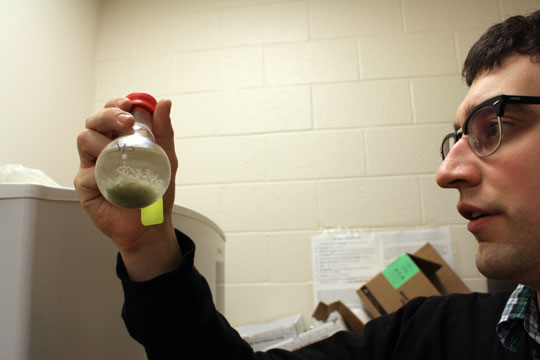
MSc student Justin Belanger examines a sample of green-plastic produced in Dr. Kozak’s lab.

 
The last time that you were out dodging bags caught in the trees along the Sugarloaf Mountain trail, you might have thought of ways you could produce a bit less waste. Well, researchers at Memorial University in St. John’s are also exploring ways to do that too.

Dr. Chris Kozak is a faculty member of MUN’s Chemistry Department and a member of the Green Chemistry and Catalysis Group. He says his research is part of a movement towards something called a “cradle to cradle” way of making materials which considers the impacts of a material throughout its lifecycle –- including how the material is produced, how it is used in a product, and what happens to it after that product reaches the end of its life. The goal is to design materials that have little or no negative impact on the environment.

Justin Bélanger is a MSc student in Dr. Kozak’s lab at MUN. He is from PEI, and moved to Newfoundland in order to work with Dr. Kozak and perform research on green chemicals. Bélanger’s MSc thesis involves research on green plastic.

Conventional plastics have serious negative impacts on the environment both at the beginning and end of their lifecycles. Plastics are typically made using oil, and their production usually uses very dangerous chemicals as solvents. One example of a common plastic used in water bottles and Tupperware is polycarbonate.

“The way polycarbonate is made right now, it uses two chemicals. One is called Bisphenol A (BPA), and the other is called phosgene. And phoshene is a nerve gas,” says Dr. Kozak.

Even if the solvents aren’t in the final plastic product, disposing of these chemicals can be very harmful to the environment. Then, at the end of their lifecycles, conventional plastics will take hundreds or thousands of years to break down, and so the plastic builds up in the environment.

For an example of the effect plastic has on the world’s oceans, check out this TED talk about the Great Pacific Garbage Patch by Captain Charles Moore of the Algalita Marine Research Foundation.

The green plastic Bélanger is working on is made using carbon dioxide (CO2) instead of petrochemicals, and the solvents he uses are much less harmful to the environment. The plastic itself is biodegradable, which means that microbes or UV light can safely break it down back into CO2. His project involves trying to control the properties of the final product, such as how hard or flexible the plastic will be. As Bélanger and other researchers learn more about green chemicals, and find more efficient ways to make them, industrial companies will become more willing to incorporate them into products.
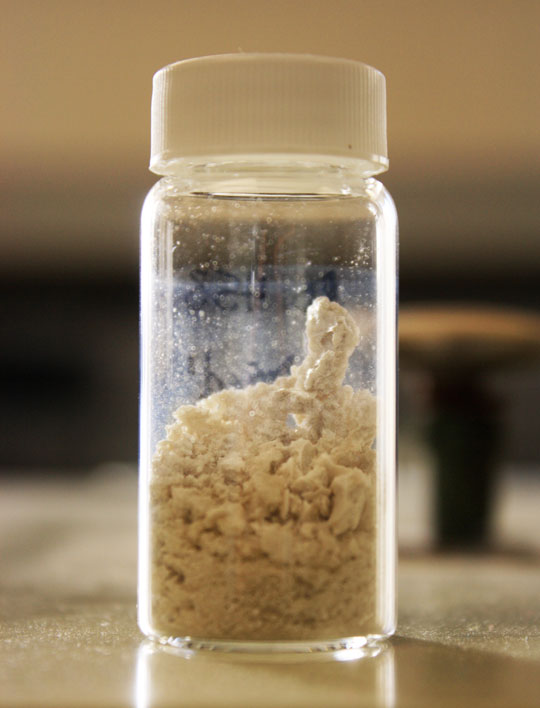
Dr. Kozak’s lab is working to convert their green-plastic products into pellets, so that the plastics can be easily shipped off to industrial partners in the future.

 
In fact, green chemicals are already being used in some products you use. For example, the plastic bags used by the NL Liquor Store (made by EPI-Global) include around two per cent green plastics — which is enough green plastic that the bags will start to break down in a matter of weeks instead of the centuries.

This is something that you can test yourself: Take a NL Liquor Store plastic shopping bag, and check for the “100% Degradable” stamp. Place the bag in a bowl, and leave it next to a window where it will be exposed to lots of sunlight. After a month or so, you should already see signs that the bag is breaking up.

According to Dr. Kozak, MUN is an apporopriate place for conducting research on green chemicals. The development of the offshore oil industry in the province provides him with local industrial partners for his research. One of his long-term plans is to work with offshore oil producers to capture CO2 produced in combustion, and develop it into green-plastics or other useful products.

“The ultimate goal is that in fifty years, then all chemistry will be green and all processes will be green,” he says.
 

This was written by:

avatar

E-mail


PUBLISHER'S NOTE: Comments (which include restaurant reviews, Rants, Wha? questions and I Saw You submissions) appearing on the site are not the opinion of The Scope, but only of the comment writer. We may remove questions, answers, and comments that are hateful, inflammatory, spam, or any other nonsense. Please play nice. More detailed terms here.
 

2 Responses

  1. avatar
    Betty Says:

    This is RAD.

    Good job fellahs, keep it up.

  2. avatar
    Laurence Says:

    Science made relevant to everyday environmentlal issues.
    Great article; encoraging.
    Keep up the good work


PHVsPjxsaT48c3Ryb25nPndvb19hZHNfcm90YXRlPC9zdHJvbmc+IC0gdHJ1ZTwvbGk+PGxpPjxzdHJvbmc+d29vX2FkXzMwMF9hZHNlbnNlPC9zdHJvbmc+IC0gPC9saT48bGk+PHN0cm9uZz53b29fYWRfMzAwX2ltYWdlPC9zdHJvbmc+IC0gaHR0cDovL3RoZXNjb3BlLmNhL2Fkcy9jb21pY2NvbnRlc3RhZDIuanBnPC9saT48bGk+PHN0cm9uZz53b29fYWRfMzAwX3VybDwvc3Ryb25nPiAtIGh0dHA6Ly90aGVzY29wZS5jYS9jdWx0dXJlL3RoZS1zY29wZXMtY29taWMtY29udGVzdC0yMDEwPC9saT48bGk+PHN0cm9uZz53b29fYWRfaW1hZ2VfMTwvc3Ryb25nPiAtIGh0dHA6Ly90aGVzY29wZS5jYS93cC1jb250ZW50L3RoZW1lcy9mcmVzaG5ld3MvaW1hZ2VzL2FkLTEyNXgxMjUuZ2lmPC9saT48bGk+PHN0cm9uZz53b29fYWRfaW1hZ2VfMjwvc3Ryb25nPiAtIGh0dHA6Ly90aGVzY29wZS5jYS93cC1jb250ZW50L3RoZW1lcy9mcmVzaG5ld3MvaW1hZ2VzL2FkLTEyNXgxMjUuZ2lmPC9saT48bGk+PHN0cm9uZz53b29fYWRfaW1hZ2VfMzwvc3Ryb25nPiAtIGh0dHA6Ly90aGVzY29wZS5jYS93cC1jb250ZW50L3RoZW1lcy9mcmVzaG5ld3MvaW1hZ2VzL2FkLTEyNXgxMjUuZ2lmPC9saT48bGk+PHN0cm9uZz53b29fYWRfaW1hZ2VfNDwvc3Ryb25nPiAtIGh0dHA6Ly90aGVzY29wZS5jYS93cC1jb250ZW50L3RoZW1lcy9mcmVzaG5ld3MvaW1hZ2VzL2FkLTEyNXgxMjUuZ2lmPC9saT48bGk+PHN0cm9uZz53b29fYWRfaW1hZ2VfNTwvc3Ryb25nPiAtIGh0dHA6Ly93d3cud29vdGhlbWVzLmNvbS9hZHMvd29vdGhlbWVzLTEyNXgxMjUtNC5naWY8L2xpPjxsaT48c3Ryb25nPndvb19hZF9pbWFnZV82PC9zdHJvbmc+IC0gaHR0cDovL3d3dy53b290aGVtZXMuY29tL2Fkcy93b290aGVtZXMtMTI1eDEyNS00LmdpZjwvbGk+PGxpPjxzdHJvbmc+d29vX2FkX3VybF8xPC9zdHJvbmc+IC0gaHR0cDovL2V4YW1wbGUuY29tL2Fkcy9hZDFfZGVzdGluYXRpb24uaHRtbDwvbGk+PGxpPjxzdHJvbmc+d29vX2FkX3VybF8yPC9zdHJvbmc+IC0gaHR0cDovL2V4YW1wbGUuY29tL2Fkcy9hZDFfZGVzdGluYXRpb24uaHRtbDwvbGk+PGxpPjxzdHJvbmc+d29vX2FkX3VybF8zPC9zdHJvbmc+IC0gaHR0cDovL2V4YW1wbGUuY29tL2Fkcy9hZDFfZGVzdGluYXRpb24uaHRtbDwvbGk+PGxpPjxzdHJvbmc+d29vX2FkX3VybF80PC9zdHJvbmc+IC0gaHR0cDovL2V4YW1wbGUuY29tL2Fkcy9hZDFfZGVzdGluYXRpb24uaHRtbDwvbGk+PGxpPjxzdHJvbmc+d29vX2FkX3VybF81PC9zdHJvbmc+IC0gaHR0cDovL3d3dy53b290aGVtZXMuY29tPC9saT48bGk+PHN0cm9uZz53b29fYWRfdXJsXzY8L3N0cm9uZz4gLSBodHRwOi8vd3d3Lndvb3RoZW1lcy5jb208L2xpPjxsaT48c3Ryb25nPndvb19hbHRfc3R5bGVzaGVldDwvc3Ryb25nPiAtIDYtd2hpdGV5LmNzczwvbGk+PGxpPjxzdHJvbmc+d29vX2FyY2hpdmVzPC9zdHJvbmc+IC0gYXJjaGl2ZXM8L2xpPjxsaT48c3Ryb25nPndvb19hc2lkZXNfY2F0ZWdvcnk8L3N0cm9uZz4gLSBSYW50IEZhcm08L2xpPjxsaT48c3Ryb25nPndvb19hc2lkZXNfZW50cmllczwvc3Ryb25nPiAtIDI8L2xpPjxsaT48c3Ryb25nPndvb19hdXRob3I8L3N0cm9uZz4gLSB0cnVlPC9saT48bGk+PHN0cm9uZz53b29fYXV0b19pbWc8L3N0cm9uZz4gLSBmYWxzZTwvbGk+PGxpPjxzdHJvbmc+d29vX2Jsb2NrX2ltYWdlPC9zdHJvbmc+IC0gaHR0cDovL3RoZXNjb3BlLmNhL3RlbXAvYW5pbWFsc3RvcnkuanBnPC9saT48bGk+PHN0cm9uZz53b29fYmxvY2tfdXJsPC9zdHJvbmc+IC0gaHR0cDovL3RoZXNjb3BlLmNhL3Bvc3RjYXJkLXN0b3J5LWNvbnRlc3QvPC9saT48bGk+PHN0cm9uZz53b29fY29udGVudDwvc3Ryb25nPiAtIGZhbHNlPC9saT48bGk+PHN0cm9uZz53b29fY29udGVudF9mZWF0PC9zdHJvbmc+IC0gZmFsc2U8L2xpPjxsaT48c3Ryb25nPndvb19jdXN0b21fZmF2aWNvbjwvc3Ryb25nPiAtIDwvbGk+PGxpPjxzdHJvbmc+d29vX2ZlYXR1cmVkX2NhdGVnb3J5PC9zdHJvbmc+IC0gRmVhdHVyZXM8L2xpPjxsaT48c3Ryb25nPndvb19mZWF0dXJlZF9lbnRyaWVzPC9zdHJvbmc+IC0gMTwvbGk+PGxpPjxzdHJvbmc+d29vX2ZlYXR1cmVkX3Bvc3RzPC9zdHJvbmc+IC0gMTwvbGk+PGxpPjxzdHJvbmc+d29vX2ZlYXRfaW1hZ2VfaGVpZ2h0PC9zdHJvbmc+IC0gOTk5PC9saT48bGk+PHN0cm9uZz53b29fZmVhdF9pbWFnZV93aWR0aDwvc3Ryb25nPiAtIDM5NDwvbGk+PGxpPjxzdHJvbmc+d29vX2ZlZWRidXJuZXJfaWQ8L3N0cm9uZz4gLSBodHRwOi8vZmVlZGJ1cm5lci5nb29nbGUuY29tL2ZiL2EvbWFpbHZlcmlmeT91cmk9dGhlc2NvcGVubCZsb2M9ZW5fVVM8L2xpPjxsaT48c3Ryb25nPndvb19mZWVkYnVybmVyX3VybDwvc3Ryb25nPiAtIDwvbGk+PGxpPjxzdHJvbmc+d29vX2ZsaWNrcl9lbnRyaWVzPC9zdHJvbmc+IC0gOTwvbGk+PGxpPjxzdHJvbmc+d29vX2ZsaWNrcl9pZDwvc3Ryb25nPiAtIDk4ODQ5OTc2QE4wMDwvbGk+PGxpPjxzdHJvbmc+d29vX2ZyYW1ld29ya192ZXJzaW9uPC9zdHJvbmc+IC0gMi4zLjM8L2xpPjxsaT48c3Ryb25nPndvb19nb29nbGVfYW5hbHl0aWNzPC9zdHJvbmc+IC0gPC9saT48bGk+PHN0cm9uZz53b29fZ3JhdmF0YXI8L3N0cm9uZz4gLSB0cnVlPC9saT48bGk+PHN0cm9uZz53b29faG9tZV9vbmVfY29sPC9zdHJvbmc+IC0gdHJ1ZTwvbGk+PGxpPjxzdHJvbmc+d29vX2ltYWdlX3NpbmdsZTwvc3Ryb25nPiAtIHRydWU8L2xpPjxsaT48c3Ryb25nPndvb19sYXlvdXQ8L3N0cm9uZz4gLSAxLWRlZmF1bHQucGhwPC9saT48bGk+PHN0cm9uZz53b29fbG9nbzwvc3Ryb25nPiAtIGh0dHA6Ly90aGVzY29wZS5jYS93cC1jb250ZW50L3dvb191cGxvYWRzLzEwLVdFQi1sb2dvdHlwZS5wbmc8L2xpPjxsaT48c3Ryb25nPndvb19tYW51YWw8L3N0cm9uZz4gLSBodHRwOi8vd3d3Lndvb3RoZW1lcy5jb20vc3VwcG9ydC90aGVtZS1kb2N1bWVudGF0aW9uL2ZyZXNoLW5ld3MvPC9saT48bGk+PHN0cm9uZz53b29fbm90X21wdTwvc3Ryb25nPiAtIHRydWU8L2xpPjxsaT48c3Ryb25nPndvb19vdGhlcl9lbnRyaWVzPC9zdHJvbmc+IC0gMTk8L2xpPjxsaT48c3Ryb25nPndvb19yZXNpemU8L3N0cm9uZz4gLSB0cnVlPC9saT48bGk+PHN0cm9uZz53b29fc2hvcnRuYW1lPC9zdHJvbmc+IC0gd29vPC9saT48bGk+PHN0cm9uZz53b29fc2hvd19hc2lkZXM8L3N0cm9uZz4gLSB0cnVlPC9saT48bGk+PHN0cm9uZz53b29fc2hvd19mZWF0dXJlZDwvc3Ryb25nPiAtIHRydWU8L2xpPjxsaT48c3Ryb25nPndvb19zaW5nbGVfaW1hZ2VfaGVpZ2h0PC9zdHJvbmc+IC0gMTAwPC9saT48bGk+PHN0cm9uZz53b29fc2luZ2xlX2ltYWdlX3dpZHRoPC9zdHJvbmc+IC0gMTAwPC9saT48bGk+PHN0cm9uZz53b29fdGFiczwvc3Ryb25nPiAtIGZhbHNlPC9saT48bGk+PHN0cm9uZz53b29fdGhlbWVuYW1lPC9zdHJvbmc+IC0gRnJlc2ggTmV3czwvbGk+PGxpPjxzdHJvbmc+d29vX3RodW1iX2ltYWdlX2hlaWdodDwvc3Ryb25nPiAtIDk5OTwvbGk+PGxpPjxzdHJvbmc+d29vX3RodW1iX2ltYWdlX3dpZHRoPC9zdHJvbmc+IC0gNzU8L2xpPjxsaT48c3Ryb25nPndvb191cGxvYWRzPC9zdHJvbmc+IC0gYTo4OntpOjA7czo2MToiaHR0cDovL3RoZXNjb3BlLmNhL3dwLWNvbnRlbnQvd29vX3VwbG9hZHMvMTAtV0VCLWxvZ290eXBlLnBuZyI7aToxO3M6NjA6Imh0dHA6Ly90aGVzY29wZS5jYS93cC1jb250ZW50L3dvb191cGxvYWRzLzktV0VCLWxvZ290eXBlLnBuZyI7aToyO3M6NjA6Imh0dHA6Ly90aGVzY29wZS5jYS93cC1jb250ZW50L3dvb191cGxvYWRzLzgtV0VCLWxvZ290eXBlLnBuZyI7aTozO3M6NjA6Imh0dHA6Ly90aGVzY29wZS5jYS93cC1jb250ZW50L3dvb191cGxvYWRzLzctV0VCLWxvZ290eXBlLnBuZyI7aTo0O3M6NjA6Imh0dHA6Ly90aGVzY29wZS5jYS93cC1jb250ZW50L3dvb191cGxvYWRzLzYtV0VCLWxvZ290eXBlLnBuZyI7aTo1O3M6NTg6Imh0dHA6Ly90aGVzY29wZS5jYS93cC1jb250ZW50L3dvb191cGxvYWRzLzUtc2NvcGUtbG9nby5qcGciO2k6NjtzOjYwOiJodHRwOi8vdGhlc2NvcGUuY2Evd3AtY29udGVudC93b29fdXBsb2Fkcy80LVdFQi1sb2dvdHlwZS5qcGciO2k6NztzOjU4OiJodHRwOi8vdGhlc2NvcGUuY2Evd3AtY29udGVudC93b29fdXBsb2Fkcy8zLWxvZ28tdHJhbnMucG5nIjt9PC9saT48bGk+PHN0cm9uZz53b29fdmlkZW9fY2F0ZWdvcnk8L3N0cm9uZz4gLSB0dnNjb3BlPC9saT48L3VsPg==