

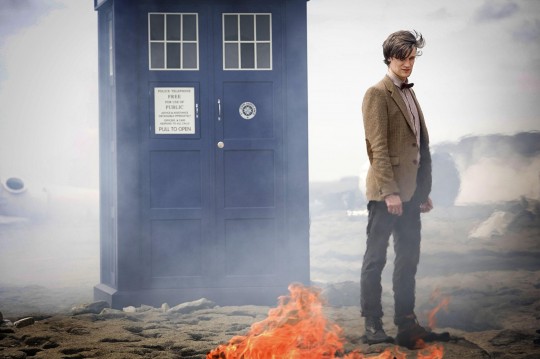
Adam Clarke even stole the last of the Who hash.
On Boxing Day, Space is set to air A Christmas Carol at 10:30 NL time. No, they’re not getting classy on us. That’s the title of the latest episode of Doctor Who, one of a long-line of holiday specials that have aired since the series returned to television in 2005. On Christmas Day, Space will be re-airing all of the Who Christmas specials, leading up to this new outing.
Doctor Who, that TV show about a clever alien who travels in time in a blue box, picks up young girls (to travel in time/space with) and boys (when the mood strikes him) and has a sonic screwdriver that can do anything.
As of this year, Doctor Who has starred Matt Smith as the enigmatic time traveller and the results have seldom been better. Smith has a natural intelligence and weirdness that radiates from his charming, puddy-like face. This past season, which aired over the Spring on BBC and Space, was a return to form, resulting in spectacular episodes that ranged from rousing sci-fi/horror mash-ups (“The Beast Below”, “Flesh And Stone”/”The Time Of Angels”), poignant depictions of depression (“Vincent And The Doctor”) and sweet-natured, character-based comedy (“The Lodger”).
For the first time since the late eighties, really, Doctor Who was worth watching again.
If I’m going to review a sci-fi fantasy about an alien and his magic time machine, then I might as well not write about it in chronological order. I have a weird history with Doctor Who. I was largely unaware of the series during its original 26-year run came, since it came to an end when I was about six. What little I did see of it consisted of random clips I’d catch at YTV at 3:30AM while I was waiting for early morning reruns of WKRP In Cincinnatti and the original Twilight Zone.*
Back then, I was routinely sneaking down and watching TV at the lowest possible volume to make sure my beloved Smother didn’t wake up and throw a Mommie Dearest because I was up too early (weird kids have weird backgrounds). I’d invariably catch the tail-end of a Doctor Who rerun while alone in the living room with no light save the blue glow of our floor model set.
The snippet was always a variation on nightmare fuel: a brief glimpse of our hero about to die horribly before the terrifying cliffhanger noise lead into the show’s memorable theme tune.
Doctor Who seemed to be an existential Hell where the hero died horribly each week, like a live-action Aeon Flux with frock coats instead of BDSM gear. I actually feared that the title Doctor Who was an allusion to the fact that we never got to know the hero because he was always snuffing it before he accomplished anything.
When I was in my teens and just discovering comic novelist Douglas Adams, my major exposure to the show came from a video a friend had rented called “Shada”. “Shada” was a 70s Doctor Who story that was only partially filmed, so the BBC shot new footage in the 90s of Tom Baker (who had played The Doctor from 1974 to 1981) to summarize the scenes that weren’t filmed. While the scenes that were shot in the seventies were very funny, the VHS box had downplayed what little footage existed. The experience of watching the tape consisted of…
1) Scenes of Tom Baker and the supporting cast spouting funny Adams dialogue.
2) A moment for the plot to develop and suspense to build.
3) An awkward jump-cut to a much older Tom Baker staring at the camera, exclaiming “and then something exciting happened that we didn’t film” (cliffhanger noise)
4) Repeat 1-3 for over two hours.
I came to watch Doctor Who proper in 2002, when another friend of mine lent me a handful of tapes, urging me to give the show a chance. I was glad I did. Doctor Who was exactly the kind of show that appealed to me. It’s quite liberating how the show sometimes drastically changes tone/style from one story to the next. It had a hero who was foremost eccentric and witty. Oh, and each episode looked like it cost approximately 50 cents. So you had this odd jumble of talent fighting against impossible budgets and, somehow, winning. Also, the budget guaranteed that many of the effects were poor and some of the actors were not up to par, resulting in a weird experience of simultaneous laughing with and at the same program.
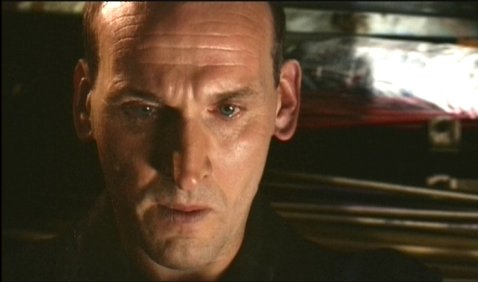
When the show returned to the BBC under new producer/head writer, Russell T. Davies (Queer As Folk), I was excited to watch the new episodes. Though many people balked at the higher budget, this Doctor Who wasn’t much to write home about. That they’d cast Christopher Eccleston in the title role was a step in the right direction, but the writing was frequently dumb and Eccleston seemed to struggle to keep his dignity when acting alongside human plank of wood John Barrowman or confronting farting aliens, or giggling after being told he’s “so gay.”
Despite a handful of decent instalments, Eccleston is overshadowed by weak guest actors, an overarcing story that doesn’t go anywhere, and loud, constant incidental music that spoils nearly every scene. The scripts in 2005 were so bad that Eccleston’s final episode, a two-parter where the Doctor and Co. encounter a futuristic Weakest Link and a robotic Anne Robinson (how cutting edge!) and ends with him mouthing off about dogs without noses was one of the stronger stories he’d been in.
Unlike the fans of the show, there hasn’t been a huge break between Doctor Who for me. From the original run, the American TV movie made in ’96, and the 2005 revival, it all feels like the same entity to me. When the show’s bad, it tends to have the same flaws no matter what year it is. The worst episodes of old suffer from poor characterization, tone-deaf soundtracks, boring plots and ugly, forced sexuality, while the new ones… well, same deal. It’s the sexuality part that’s most depressing, since it shouldn’t really figure into the program. In earlier episodes, this concerned the Doctor’s (mostly female) companions, who were sometimes threatened sexually (and this was played for laughs in at least one 60′s story) or treated like dimwits (pretty much every story from the early 70s.)
From 2005-2009, it was The Doctor who became sexualized, and, within minutes of Eccleston’s first episode, he gets a young woman named Rose (Billie Piper) to dump her boyfriend and run away with him. Later in the series, it’s established that The Doctor and Rose are involved. Since he can’t get married and settle down, lest the show become really boring, The Doctor grows a clone so that Rose can get married without troubling our hero, who’s otherwise quite broken up about not settling down with her. (It’s kinda like what Urkel did with Stefan Urquelle.)
The romance element fizzles in Doctor Who because it destroys the character’s enigmatic nature. One aspect of The Doctor’s appeal is how he didn’t seem to feel love or lust for anyone. Since returning to the airwaves five years ago, that’s been ignored to the character’s detriment. If he routinely makes goo-eyes at London girls, then he becomes more human and, as a result, less special and interesting.
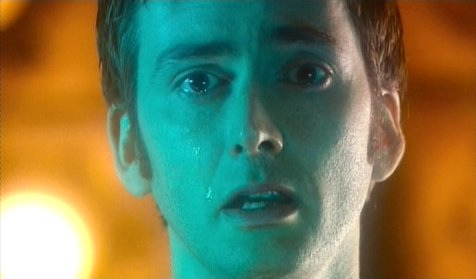
As the character regenerated and David Tennant took over for Eccleston, the show won new popularity and acclaim, but it had never been more insufferable. During his tenure, Tennant’s tenth Doctor was running around with 3-D specs on, dropping pop culture references to remind viewers that he was cool and generally failing to be a hero in any sense of the word. He was a dud with no discernible personality, a blank regeneration.
You can’t completely blame Tennant, as his initial performances had a freshness to them that made up for some mediocre scripts, but they soon get bogged down in irritating catchphrases (“alonzeeee!”, “I’m sorry. I’m so sorry”), gobs of hair gel and a lack of characterization. The only thing that could characterize his time on the show is the sound of incoherent blubbering, as head writer Russell T. Davies had characters cry every five minutes to create some sense of drama. Instead it just made The Doctor and the regulars seem self-absorbed and pathetic.
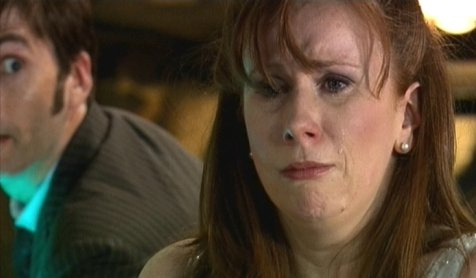
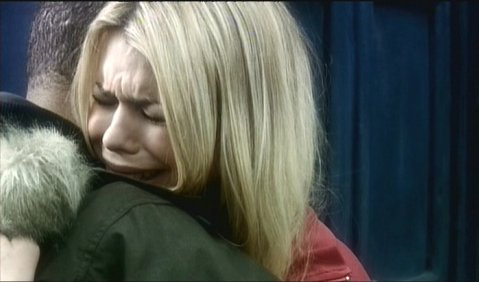
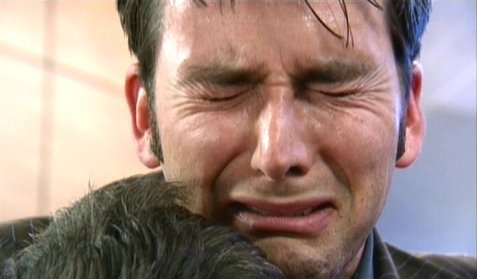
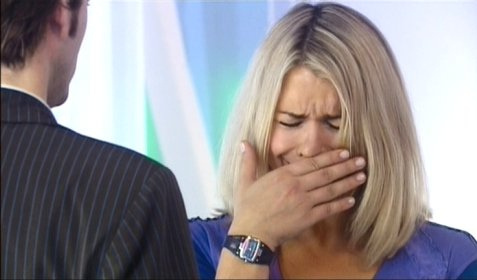
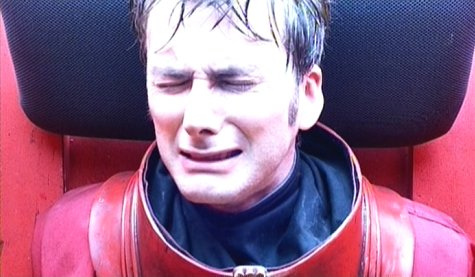
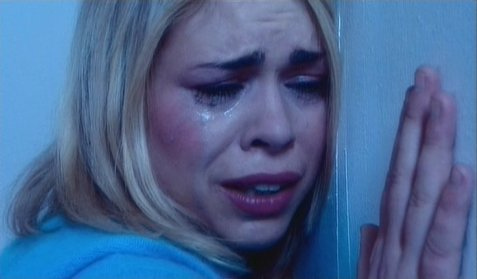
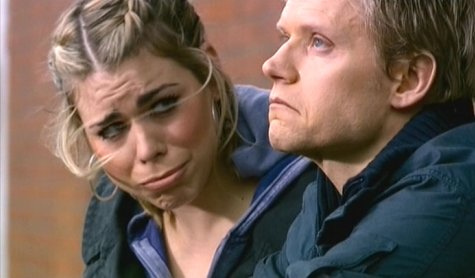
Nothing says heroic fantasy quite like thinking about yourself and going “A BLOOH BLOOH BLA BLOOH” whenever a challenge befalls them.
Much of Tennant’s popularity largely stems by how badly the viewer wants to have sex with him. To my knowledge, no other actor in the role has been judged by this standard, as I know a lot of people who like Sylvester McCoy but precious few were hoping to get all Red Shoe Diaries with him. Admittedly, that’s a generalization, but Tennant’s Doctor was grotesque; a preening, juvenile, self-righteous, self-obsessed wheezebag who’d sooner have a cry about how sad he is to be moderately inconvenienced or laugh at his own awful jokes than do anything genuinely heroic. It was like sharing the TARDIS with Russell Brand.
If you watch the Tennant Xmas specials airing on Space, you’ll see this in spades. The Doctor’s insufferable catchphrases, completely inept heroics and, worst of all, having a good cry because he doesn’t want to leave our happy, smiling faces. Yes, because regeneration is just like dying. Except the bit where you’re actually dead.
The 10th Doctor’s swansong (the two-part “The End Of Time” Xmas special), captures the series’ excesses at their worst: a continuity-heavy storyline that doesn’t make any sense, a scene of characters weeping every few minutes, painfully shoe-horned references to current events (“Obama’s gonna fix ‘dis economy, he will”), loud music that constantly calls attention to itself and a waste of an excellent guest star. In the case of “The End Of Time”, that’s Timothy Dalton, who is seen spitting and holding a raygun for a few seconds before his ambiguous fate. It’s awful, but it’s actually one of Tennant’s better outings. For proof of how bad it can get, look no further than the “Voyage Of The Damned” Xmas special, in which The Doctor and Kylie Minogue fight capitalism on the Space Titanic. But not before a visit from the Queen Mum (played by what sounded like Monty Python alum Terry Jones).
Despite the show’s popularity at that time, the scripts from 2007 to 2009 are almost uniformly poor, as the writers emulated Michael Bay-style action movies to resolve endings (like in “Rise Of The Cybermen” when a cyborg falls to its death in slo-mo before being engulfed in an explosion), opted to solve all conflicts by having the Doctor use a sonic screwdriver like a magic wand that gets him out of trouble (which had been a problem in some ‘70’s Who) and employed dumb story arcs that never added up. In this time, Doctor Who also fell into the unfortunate trap of Spider-Man morality.
Whenever Spider-Man is faced with the possibility of killing someone as a last ditch resort, someone else usually does the deed so the hero can retain his principles. Ahh, nothing quite like an inconsistent character being praised for his scant morals. Tennant’s Doctor’s name and toys were his greatest weapon, making him rather more like James Bond (who defeated enemies with gadgets, while dropping bad jokes and constantly reminding others of who he was) than the avuncular, Sherlock Holmes-ish figure of old who saved the world because he was wittier than they were.
Jumping ahead to 2010, this is where things have improved considerably, thanks to new head writer/producer, Steven Moffat. The scripts have been beefed up considerably, but that shouldn’t come as a surprise coming from the writer behind Sherlock, Coupling and the only Tennant episodes worth watching: “Blink” (a horror story with malevolent stone angels), “The Girl In The Fireplace” (the only time a Doctor love story worked) and the “Silence In The Library” two-parter.
Despite a few weak outings, both involving returning nemeses, the show has rebounded. Matt Smith’s Doctor is a breath of fresh hair. He doesn’t fall for a boring young woman who wears jogpants in public, nor is he unafraid of working on his own or making a difficult choice. His companion, the sardonic Amy Pond (Karen Gillan), is obviously attracted to him, but The Doctor keeps his distance from her. Presumably, because she’s in her twenties and he’s a 900 year-old alien from beyond the moon and the writers no better than to turn The Doctor into a time-travelling Chester The Molester.
And for someone who’s been cancelled at least twice, don’t you think The Doctor deserves better than that?




December 25th, 2010 at 1:04 am
I blame any and all faults of Tennant as the Doctor on Russell T Davies. Tennant was brilliant in Blink as well as The Girl In The Fireplace, for example (and countless other episodes that I’m not going to riddle off), it was Davies’ character development that really brought him down.
Most notably, Davies’ need to bring EVERY side character into EVERY finale is what destroyed it for me. You can’t develop a story when you’re really just trying to figure out how you can tie everybody who’s ever been in a Doctor Who episode into your script.
Steven Moffatt and Matt Smith are definitely steps in the right direction. I thought Tennant was great when he was allowed to be, but his character doomed to fail from the beginning. I think he worked as a good foil to Eccleston, though. I kind of see Eccleston as too rigid, Tennant as too charismatic, and Smith as the best of both worlds. That being said, I thought the newest season was brilliant up until the ginormous copout of a finale that they spewed out in June.
December 25th, 2010 at 10:10 am
I’d agree with you on Tennant/Eccleston. Davies, who has gone on record as disliking “witty humour”, was not above putting poor Tennant through Scooby Dooish gags (the well-intentioned, but hideous “Love & Monsters”). Davies must have approved Tennant abandoning his Scottish burr for a mockney accent so bad Dick Van Dyke called the BBC to complain. I’ll never figure that one out…
That said, I do think Tennant’s on autopilot during most of his final full season. His theatrical schtick of pulling his hair and jutting out his lower jaw doesn’t disguise the fact that he looks really bored during “Silence In The Library”/”Forest Of The Dead”…his one good season 4 story. Granted, even that story had The Doctor chase the shadows away by reminding them that he’s the scariest Time Lord with the biggest Time Penis and he’d had their moms and they were rubbish.
This season’s finale was a copout, but it reminded me of past finales, like the Tom Baker story “The Invasion Of Time” (the source of the cliffhanger clip). I have a soft spot for end-of-season Who stories where it’s obvious that there’s no money left to film anything. As such, it coasted on charm…and that fezzes are cool.
December 25th, 2010 at 3:30 pm
I’ve been mulling this over all night, haha.
And after further deliberation, I think it’s definitely unfair to Tennant to claim his Doctor had ‘no personality’. I loved Tennant’s Doctor. I went into it liking his roles in other projects, so I had an open mind about it, and I found him captivating as the Doctor. I think it can be easy to dislike him, but if you’re willing to let him take you for a ride, Tennant as the Doctor was a tonne of fun.
He was a Davison fan, and it was obvious. “Time Crash” was super cute, and it was great seeing the two of them playing off of each other. He pays homage to past Doctors all over the place, and you could tell he was having a lot of fun with it. If anything, I’d criticize Eccleston for a lack of personality. He really didn’t carve himself any place, and just seemed uncomfortable in the role all season.
December 25th, 2010 at 11:00 pm
I felt the opposite, naturally. Eccleston seemed to have a clear idea with what he wanted for the role (best expressed in Dalek) and just didn’t want to recite goofy humour that was beneath (so he just plowed through it).
All Doctors have awkward transition periods, barring only Troughton and Smith it seems. As good as Davison or Tom Baker were, for example, their kind of all over the place for their second season. Weirdly enough, I think Tennant has a contained giddiness and some nice other qualities when he started out, but just became a generic wacky Doc. That’s what’s in the scripts, save a handful of them. He may have been a Davison fan and, as his more down-to-earth John Smith performance in Human Nature suggests, he would’ve been better off as the introspective, occasionally bitchy, sometimes too human Doctor that Davison was at his best (Frontios, Caves Of Androzani, Snakedance). Instead, it felt like the writers were hoping to create Tom Baker because he was so eccentric. Except Tom’s eccentricity came from him getting more of a hand in his characterization after a flat debut season and having some delightfully bonkers scripts from people who were good at writing those. Having Tennant brag about deflowering a Queen or donning 3-D glasses as he sang the Ghostbusters theme or bawling over The Master always felt forced to me. Like the actor was always giving 110% even though the page offered nothing more than DERP DERP THE DOCTOR SAYS ALONZEEEEEEEE DERP.
I s’pose Colin Baker did the same thing, except no one liked what he had to offer at the time.
December 25th, 2010 at 11:16 pm
Oh, and incidentally…”a happy Christmas to all of you at home”. How I wrote this review without referencing that I’ll never know.
December 26th, 2010 at 1:28 pm
i love doctor who so much!! i can’t wait for tonight!!!
blink is one of my favorite episodes, but matt smith is my favorite doctor to date!!!