

If Adam Clarke were a Time Lord, it’d be a waste of 13 lives.
Sci-Fi On The Rock may have come and gone, but there isn’t a better time to celebrate science fiction. This is Easter weekend, so now is the perfect time to reflect and celebrate the death and resurrection of Spock. Also, Doctor Who is returning to Space on April 23 for what’s alternately been referred to as its second, sixth and thirty-second season. Such is the nature of a television show about a time-travelling pixie-man with the sartorial tastes of a mentally ill English prof.
Since the revival of the series in 2005 (which I’d written about last Christmas*), lots of NuWho fans (or Wholigans, as they’ve been known not to call themselves) have been reintroduced to The Doctor and his trusty TARDIS, as well as villains like the Cybermen and mad scientist/Dalek creator, Davros.
With the series experiencing a huge resurgence of fans in its current incarnation, fans of the revival are eager to explore its original twenty-six year on BBC or its spin-offs. But with decades of episodes, an as-yet-incomplete and surprisingly expensive DVD range, exploring the show’s past is a surprisingly daunting task. Worse still, most guides only recommend the same episodes over and over.
Don’t even bother watching The One Where The Doctor Dies Again or The One Where This Bad Guy First Appears because Doctor Who was never about game-changing moments. It’s not Breaking Bad, it’s a formulaic show that exceeds when it’s cleverly playing with cliches and not creating milestones or developing any kind of mythology. Those episodes are, in my experience, the series’ biggest let-downs (watch “The Three Doctors” and tell me otherwise). Doctor Who is more like a band whose deep cuts are better than their singles.
If you want to explore the old series, you’re going to need a nerd to help you on your quest and, dadgummit, I am that nerd.
In keeping with the tone of the series, we’re going to pop through the eras of the eight “classic” Doctors in non-chronological order. Instead, I’ll be writing in terms of which eras are the easiest for NuWho fans to get into. Since much of the series can be cleanly divided into eras defined by the actor playing The Doctor, I’ll follow that method for convenience.
The Sylvester McCoy Era (1987-1989; Seasons 24-26)
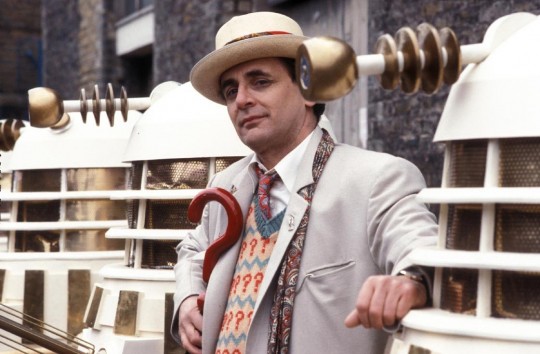
I know what you’re thinking, new series fans. Just look at the Doctor in this picture. Romantic images of David Tennant and Matt Smith are dashed to pieces when you see that the 7th Doctor was played by a Scottish dwarf who’s wearing a sweater that was knitted for him by The Riddler’s nan. I know. Where’s the sex appeal you expect from the series when you’ve got a lead actor who looks like an elderly Ron Hynes squatting on his knees in the hopes of starring in Dorf Does Golf 2: Revenge Of The Sand Wedge?
Well, there’s not going to be any sexual chemistry in the show. It never really had it and, honestly, it never really needed it. Yet, this era of Doctor Who would set the template for the 2005-2009 run of the series. You’ve got the superficially goofy, but surprisingly melancholy seventh Doctor, accompanied by an ordinary London shopgirl (Ace, played by Sophie Aldred) thrown into extraordinary circumstances, who has lost some of his compassion in his ever-increasing scale of conflicts with space-CHUDs of all stripes.
Like the new series, the tone of McCoy’s stories range from sci-fi, slapstick, satire, fantasy, horror, blockbuster-style action and plain old space opera. Just as the new series is praised for having brave companions instead of screamy dimwits, McCoy’s companion Ace (introduced at the end of his first season) is spunky, resourceful and likeable. Further still, the McCoy era is the only time in the classic series where the development of the companion as a character and her changing relationship with The Doctor is given any kind of focus. It’s also the only time we see the Doctor really change over the course of the series, as he balances his manipulative tendencies with his obvious fondness for Ace.
Recommended stories: The Greatest Show In The Galaxy, Remembrance Of The Daleks, The Curse Of Fenric, The Happiness Patrol.
These four stories, taken largely from McCoy’s second season, highlight everything that’s right about his era: energetic, unusual plotlines that develop The Doctor’s friendship with Ace balanced with surprisingly effective action scenes all on a budget so low you could mistake any of these stories for an Are You Afraid Of The Dark? episode. This Doctor tackles robot clowns, Norse gods, specialized Daleks and a murderer who is literally made out of candy. And he does it all with sleight of hand. McCoy’s seventh Doctor thwarts opponents while doffing his panama hat, performing a bad magic trick or struggling to keep bowling pins in the air. His is still one of the most endearing interpretations of the character.
Proceed With Caution: The bulk of Sylvester McCoy’s last season is usually what gets recommended by critics, often praising those stories as the antithesis of his rocky first year, which consists of four “light” stories that are, at their worst, just as tacky and juvenile as NuWho comedy episodes like “Love & Monsters” and “New Earth”. Initially, the lead actor’s natural weirdness and energy is a great strength to his stories, but McCoy is clearly bored with the role in his third and final year. So, he begins hamming it up at the most wildly inappropriate times. In the celebrated season 26 story, “Ghost Light”, McCoy butchers a potentially tense confrontation by pulling an array of silly faces that even Bill Cosby turn his nose up at. McCoy’s got equally dire moments in each of his final stories, save “The Curse Of Fenric”, so it’s best to explore those after you’ve seen other stories from his era.
The Tom Baker Era (1974-1981; Seasons 12-18)
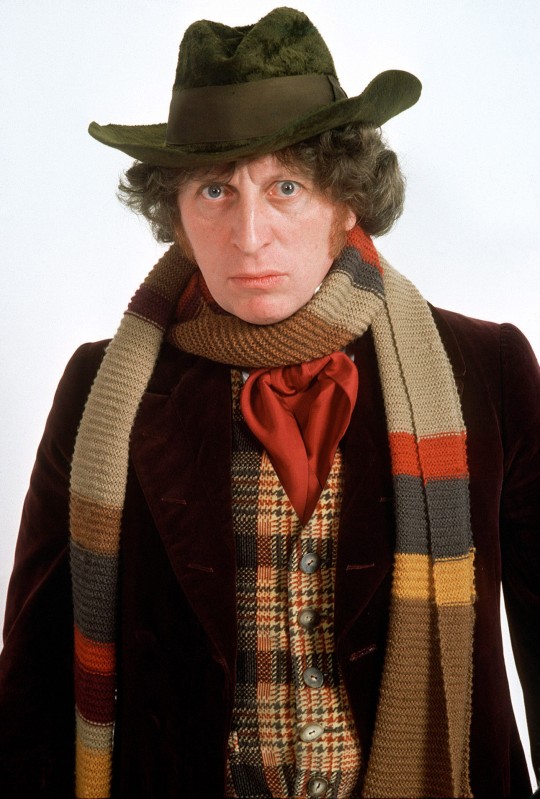
There are two types of actors usually cast as The Doctor: actors eager to play an eccentric and eccentrics eager to play themselves. Tom Baker, an actor gifted with a powerful voice and a striking face, is definitely in the latter category. His mop-haired fourth Doctor is at his best when he’s grinning like a lunatic, kindly offering candy to strangers and running around like he’s hepped-up on goofballs while the universe threatens to implode.
Where Not To Start: The Ark In Space, Genesis Of The Daleks, The Horror Of Fang Rock.
Each of these three stories gets built-up by writers and fans, but there’s really nothing special about them. “The Ark In Space” is often said by fans to be the inspiration for Ridley Scott’s Alien, but since Alien isn’t a completely boring film about a space wasp that turns people into bubble wrap, it’s safe to say they got that wrong. “The Horror Of Fang Rock” suffers from the same problem as “Ark”, which is that it has a fun script that suffers from slow pacing and a stiff performance from Tom Baker back when he took the show too seriously.
And, even though it’s important for introducing the recurring villain, Davros, “Genesis Of The Daleks” offers only 30 compelling minutes (the Davros footage) in a sluggish 120 minute package. While some NuWho stories would benefit from being expanded into 90 or 120 minute stories, the reverse is true of “Genesis”, which pads out its non-Davros running time with scenes of The Doctor being menaced by a giant clam.
Recommended Stories: Anything from seasons 16-18, really.
As the longest-serving Doctor, both Baker’s interpretation of the character and the style of his stories are wildly different. While there are some fine stories prior to his later seasons, the 4th Doctor is at his best when Tom Baker stops playing him like a character and starts playing him like Tom Baker. His last three seasons as The Doctor see Baker’s confidence at its peak and his manic energy and humourous ad-libs give even the weaker scripts an unexpected life.
Now you may be wondering why I’m recommending three of his seasons instead of a handful of stories from all seven years. In addition to Baker being at the top of his powers, each of these three years takes such a different approach to the program, it’s worth watching the bulk of each.
Season 16 is the first time a season of Doctor Who would be linked by an overarching storyline. For each of the six stories, the time-travelling bohemian is put on a quest to find an immensely powerful McGuffin known as the Key To Time and keep it out of the hands of an ancient evil. Plucked from wandering by a self-proclaimed force for good and reluctantly teamed up with one of his own race in the form of the bright, but priggish Romana (initially played by Mary Tamm, later by Lalla Ward).
How awesome are the Key To Time stories? Over the course of the season, the Doctor and Romana clash with intergalactic con-men, battle a cyborg space pirate with a robot parrot, flee bloodsucking pieces of Stonehenge’s non-union equivalent, encounter a robot named George, run away from a giant octopus, outwit gods and put all of time on a 5-second loop. Plus, halfway through the season, The Doctor is put on trial and defends himself while wearing a barrister’s wig for no reason.
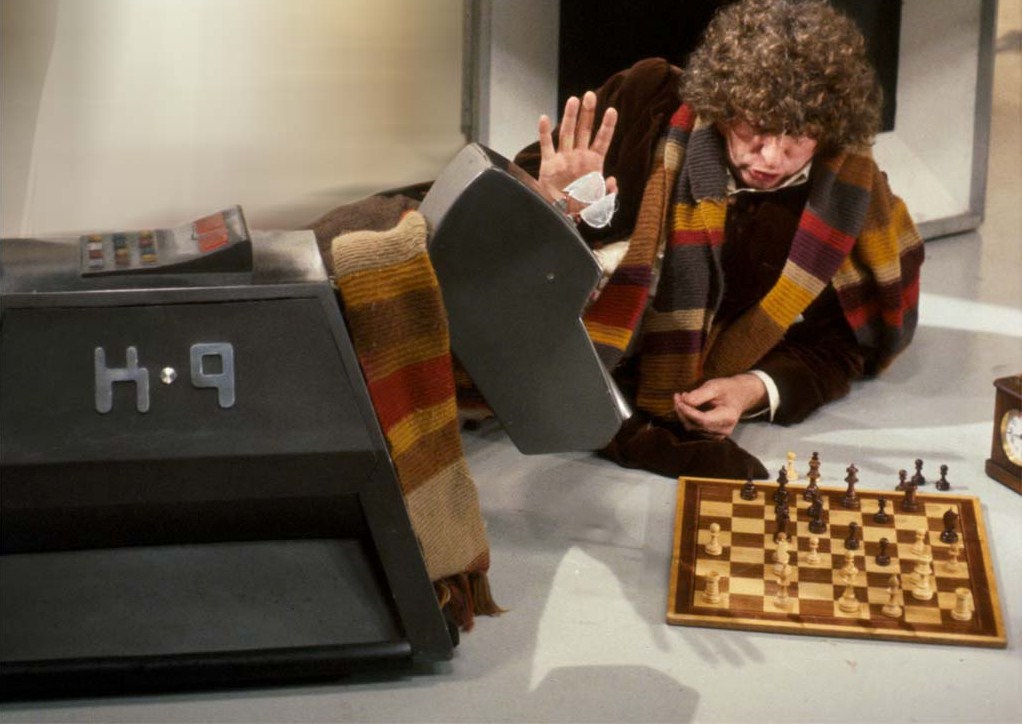
Oh, and to seal the deal, The Doctor and Romana do all of the above whilst armed only with their wits and a robot dog named K9. That’s how awesome should be defined in the dictionary.
The mood of this season’s stories is so loose and spontaneous that, in an outtake from the series’ 100th episode, the action breaks down so that The Doctor can celebrate his birthday. This scene would never air, as the makers of the show feared it to be too silly. That attitude would swiftly change with the arrival of Hitchhikers Guide To The Galaxy creator Douglas Adams as the series’ new script editor.
Securing the job after writing the second Key To Time story, The Pirate Planet, Adams’ makes Doctor Who his own in Season 17. In season 16, Adams had scripts rejected for being too silly, including a story which would later form the basis of Life, The Universe And Everything. In season 17, the script would’ve likely gone unfilmed for not being silly enough. While the previous year was influenced by the popularity of Star Wars and saw Doctor Who at its most fantastical and light-hearted, the combined forces of Adams and Tom Baker transformed the series into a sitcom about an alien in goofy clothes. Except it wasn’t like Alf at all. It was amazing.
Many critics believe that this overtly comedic approach was the death-knell of the series, bringing it to a level of campiness from which it never fully recovered. Those are the same people who can’t enjoy a talking robot dog who shoots lazers out of his nose. The season opens with “Destiny Of The Daleks”, which sees The Doctor battling the Daleks because Daleks mean good ratings. While the script is a bit clunky, the Baker ad-libs and Adams’ touching up of the otherwise moldy script elevates it to a minor gem. As a space-adventure, it’s weak, but as a comedy, it’s brilliant.
And this is where Douglas Adams’ approach to the series rubs some the wrong way. In the past, the The Doctor would often be forced to describe an impossible alien world at the top of the program only to end up in a barely disguised rock quarry for the rest of the story. In “Destiny”, the fourth Doctor takes one look outside and exclaims “oh, look! Rocks!” like a child who’d just eaten a days worth of Fiddle Faddle and had yet to feel the comedown. After 17 years of landing in quarries, I think the show had earned that line. Doctor Who made fun of itself as early as its black-and-white days with the first Doctor, but what annoyed fans and critics was that Adams would do that in each and every story during his sole year as script editor.
Or to put it another way, the show was now getting self-indulgent. Luckily, self-indulgence is what Douglas Adams and Tom Baker do best. This reaches its apex with the brilliant “City Of Death”, whose complicated (and very silly) plot involves Skarroth, a one-eyed broccoli alien, selling fake Mona Lisas to fund his time-travel experiments. In order to create these fakes, he forces Leonardo Da Vinci to paint several copies of his own famous paintings (don’t ask). Luckily, Leonarda Da Vinci is an old friend of The Doctor’s, so The Doctor writes “This Is A Fake” on each of the Da Vinci canvases in order to thwart the villian. And that doesn’t even describe 1/10 of the lunacy of the Adams co-written “City”.
Conventional wisdom often sees “City Of Death” singled out as one of the original series’ finest hours and it’s hard not to agree. Yet most don’t care for the rest of Adams’ approach, which places the season 17 finale at the bottom of most fan polls.
Except those people are wrong, because the final story, entitled “The Horns Of Nimon”, is immensely entertaining. While none of the season 17 stories can top “City Of Death”, their mix of clever one-liners, mugging actors and frenetic pacing creates perfect Doctor Who. This approach is at its broadest in “Nimon”, which contains such amazingly hammy performances from Baker and guest villain Graham Crowden that the show could easily have been renamed Pigs In Spaaaaaaace and no one would’ve batted an eye. Unlike Sylvester McCoy’s lazy performances in his final year, season 17 features actors who are more fun to watch when they ham it up than when they play it straight, as this clip from “Nimon” demonstrates.
This clip is of note for two reasons. One, if you didn’t giggle like a gremlin at Crowden’s delivery of the line “you meddlesome hussy”, we can’t ever be friends. Secondly, it’s Romana the companion, not The Doctor, who gets the big confrontation scene at the end. This season, like the one that followed it, makes great use of Romana, who has changed from a booksmarts-not-streetsmarts stereotype into a female version of The Doctor complete with stylish outfits and her own sonic screwdriver. Her and the 4th Doctor make one of the finest teams in the series and present the only time in the series where there’s any legitimate sexual tension between the leads.
Rounding things out is Baker’s last season in the role. Season 18 has a fundamental shift in approach from new script editor Christopher Bidmead and producer John Nathan-Turner. The mix of Baker’s indomitable humour, Nathan-Turner’s glossy more-80′s-than-80′s production and Bidmead’s interest in science-driven plots ends up being one of the few perfect seasons of the show. Deciding that the show had become flat-looking, a conscious effort was made to give the show a cinematic style, a stronger sense of continuity, as well as greater special effects, sets and costumes. Such extravagance shouldn’t mix well with the more “serious” sci-fi tone and Baker’s penchant for ad-libbing, but it does.
You want a good Doctor Who story? Go to seasons 16-18 and just pick one. They’re all tremendous fun. Even the “serious” ones.
Honourable mention: Season 14 features two of Tom Baker’s stories (“Robots Of Death” and “The Deadly Assassin”), but they’re nowhere near as fun as seeing him hamming it up against space pirates or time-travelling space broccolis. Like how it’s more fun to watch Samuel L. Jackson in Pulp Fiction or Deep Blue Sea than it is to watch him in The Red Violin. Some actors are better hams than they are actors, as is the case with Tom.
The Peter Davison Era (1982-1985; Seasons 19-21)
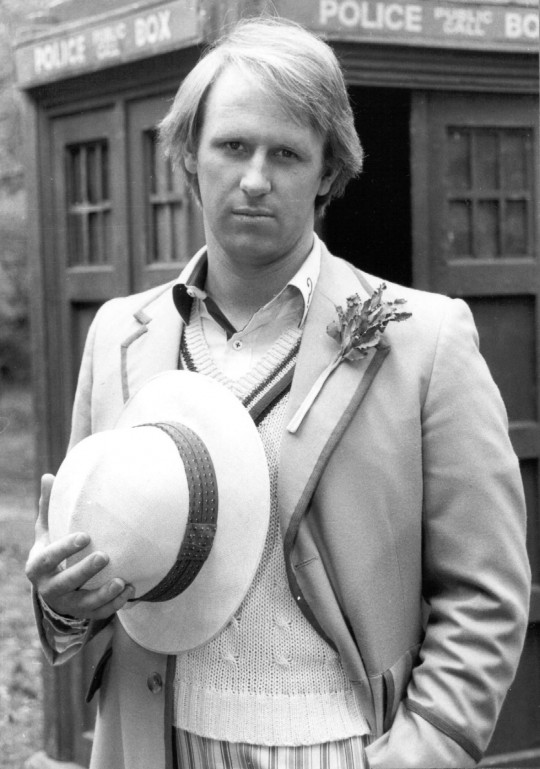
Peter Davison’s tenure on the show seems like a natural to most new series fans. His was the only Doctor to appear in the new series, when Davison’s fifth Doctor met David Tennant’s tenth in 2008′s “Time Crash”. But, the fifth Doctor’s era also perfectly encapsulates the quality ratio of the show: 1/3 of his era is great, 1/3 of his era is boring and 1/3 of his era passes the Tommy Wiseau threshold of technical incompetence and unintended hilarity.
The main problem with Davison’s era is that it’s loaded with the most awful companions, bar none. Over three years, the youthful fifth Doctor is forced to carry around…
*A bossy, sometimes psychotic Australian stewardess.
*A prissy math prodigy.
*An orphaned princess.
*A depressed three-legged dog that can bark the entirety of “Whole Lotta Love” (when it can be bothered).
*A shape-shifting, lute-playing robot whose mouth barely moves.
*A whiny American sex object.
*A cowardly ginger man in a schoolboy outfit who sometimes wants to kill The Doctor when urged by magic crystals.
Now, I only made up one of those companions, but they’re all so awful that I bet you can’t guess which one without consulting a wiki. It’s no coincidence that many of the better episodes play down the TARDIS companions innate unlikability by having them succumb to possession, spot their identical twins or have The Doctor talk to a guest star who more or less acts as a companion in their place.
As a leading man, Davison is all over the place in his three year run, which speaks less of his range as an actor and more of his insecurity in playing the part; sometimes Davison portrays The Doctor as naive and childlike, sometimes as a smart-ass supergenius and sometimes as a very old man coping with senility.
Recommended Stories: Frontios, Snakedance, Mawdryn Undead, Enlightenment.
Davison was at his best when he was written as snarky and confident, best exemplified in “Frontios” and “Snakedance”. Both of these stories feature The Doctor and his usually lifeless companions in top form, boosted by solid guest casts, memorable monsters and decent production values. “Frontios” deals with goofy space-bugs who harvest the colonists of a dying planet and “Snakedance” features an evil entity possessing one of the TARDIS team. Neither is breaking new ground. Both stories are just clever and intelligently made sci-fi escapism. “Mawdryn Undead” is a cozy piece of nostalgia that reintroduces a villain from the Key To Time season and a former companion who first appeared in the late 60′s (Brigadier Lethbridge-Stewart played by Nicholas Courtney, who acted alongside nearly all of the Doctors in the series). “Mawdryn” is not heady sci-fi, but it makes neat use out of time paradoxes, as The Doctor and his companion arrive in the same area, but six years apart, and struggle to reunite.
“Enlightenment”, on the other hand, is a genuinely original piece in Doctor Who, as The Doctor and company arrive on a Edwardian sailing ship whose crew claims to be in a race against a pirate ship. And they are…in space. Turns out that the higher-ups in the crew are Eternals, bored, deathless aliens that have agreed to the race in hopes of receiving the prize of enlightenment.
“Enlightenment” has the feel of the best NuWho stories.With its surprisingly effective special effects, its moody atmosphere and music, it is a surprisingly melancholy story. There’s a remarkably downbeat subplot where when one of the Eternals begins to fall for one of The Doctor’s companions. And, just so the series doesn’t forget it’s escapist roots, The Doctor and one of his companions are kidnapped by pirates towards the end. Fun!
What To Avoid: Earthshock.
Singled out for re-introducing long-standing baddies, the Cybermen, after a lengthy absence, “Earthshock” is everything Doctor Who does poorly wrapped up in a cynical package. Though Davison’s on fine form, his character is frequently undercut by getting bitch-slapped by a butch military-type, sniped at by his bossy companions, seeing one of said companions killed in a fairly contrived manner and failing to even come close to saving the day. You get the feeling that the writer was way more interested in the Cybermen, despite the show being called Doctor Who and not “The Camp Cyborgs Who Succeed Somewhat”.
Yes, having a companion die is an exciting new thing that the series had never done before. But, having it done in such a cheap, tacky story leaves the whole affair with a nasty aftertaste. If there’s one thing that doesn’t work in Doctor Who, it’s nihilism and “Earthshock” is one of a handful of stories in the Davison era that suck all the joy out of the program. Other Davison stories, involving the return of classic monsters would be equally repellent in the hopes of replicating the surprising popularity of this story.
That said, my one soft spot for “Earthshock” comes from the redesigned Cybermen who now speak in deep, theatrical growls. There’s nothing funnier than supposedly emotionless cyborgs who clap their fists together screaming “excellent!” at each other in lame Darth Vader voices. That their body language always seems so casual gives one the impression that they’re telling water-cooler jokes*.
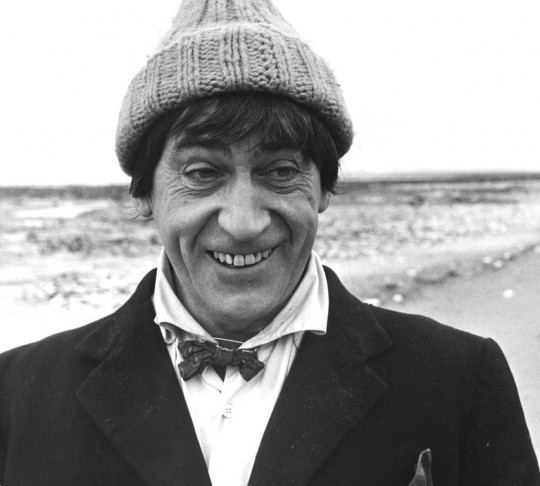
The Patrick Troughton Era (1966-69; Seasons 4-6)
Most rightfully cite Patrick Troughton as the real template for many of the actors who’ve since played the role. While 1st Doctor William Hartnell gradually evolved from an enigmatic figure to a giggling lunatic, Troughton’s outwardly clownish-inwardly brilliant 2nd Doctor still resonates. It’s easy to see why, as he’s probably the best all-round actor to have ever played the part.
Recommended: The Mind Robber
Due to the destruction of archive materials by the BBC in the seventies, many of Troughton’s stories only exist in audio and are sold on CD. This is a shame as “Power Of The Daleks”, his first story, is easily one of Doctor Who‘s finest hours. Now, in the age of podcasts, it might not seem so weird to spend two hours listening to a multi-part TV show on CD, but I wouldn’t recommend that as your first encounter with the 2nd Doctor. Of the few complete stories he has left, “The Mind Robber” is easily the most imaginative and fun. In this 5-part story, The Doctor and his companions land in a world outside time and space: a land of fiction. There, they encounter 50′s-style sci-fi robots, Gulliver from Gulliver’s Travels, a unicorn and a German Batman (I’m not kidding). It’s the kind of story where anything could happen and it only becomes odd when you get used to its logic and it starts making sense to you. The Doctor and the villain taking turns writing the end of the episode like it’s “Duck Amok”? Sure. One of the companions has his face fall off? Yeah. When said face is hastily reassembled by The Doctor, the companion is now played by a different actor? Why not?
Proceed With Caution: Now, most of Troughton’s episodes that still exist on video range from average to great, but the latter stories (like “The Invasion” and “The War Games”) I fear might be too long for those accustiomed to NuWho. Similarly, I’ve listened to a good chunk of the “missing” stories on audio and many of them are quite good. They just use the old audio and, in many cases, the BBC re-hired old cast members to narrate portions of each story in order to provide any information that are lost with the visuals. Quality aside, it’s still not the ideal way to experience Doctor Who.
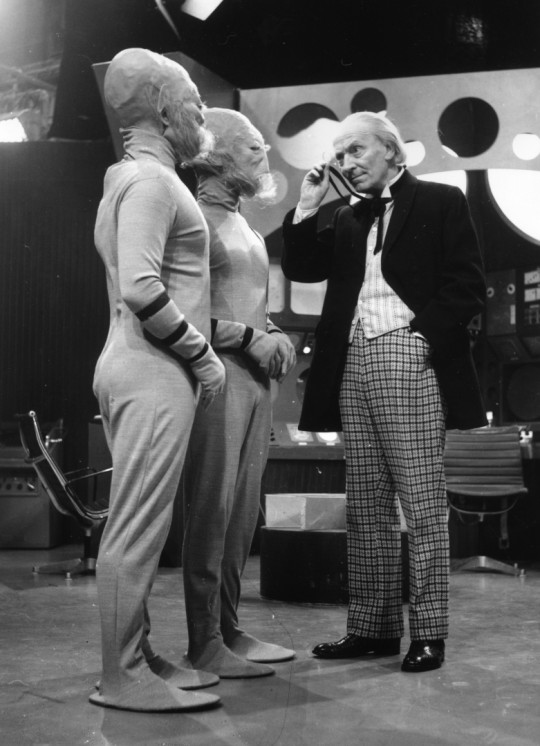
The William Hartnell Era (1963-1966; Seasons 1-3)
Recommended: Pilot/An Unearthly Child (Part One), Inside The Spaceship, The Chase.
The grandfather of them all (introduced to us as a literal grandfather), the 1st Doctor is too often stereotyped as crochety and seemingly amoral. While this slightly darker portrayal of the character is present in his first few stories, the character mellows towards the end of his first season. For the remainder of the run, William Hartnell plays the character in an avuncular, slightly crackpot way. Just the sight of him grabbing his lapels, ending his sentences with “hmm?” and launching into an unexplained giggle fit makes you wish he wasn’t so overlooked in this day and age.
Now, I love great television from any decade, so I’ve never had a problem with pacing when it suits a story or builds a mood. The first few seasons of Doctor Who often do this quite well, but audiences used to flashy, action-driven stories of NuWho will find this era particularly hard going. While there’s historical value in it, new series fans will find the original Dalek story impossible to watch when they realize it’s 3 and ½ hours long. That’s why my first recommendation is the single half-hour pilot, “An Unearthly Child”, which is a self-contained introduction to The Doctor and his granddaughter, Susan, reluctant companions Ian and Barbara, as well as the TARDIS. “Child” is available in both the version that originally aired in ’63 and an unbroadcast version with a slightly different script. Both lead in to a 3-part story about cavemen that is average at best and easily skipped.
In the early episodes especially, the focus is on the companions, while The Doctor remains a mystery. Unlike some of the later eras of the show, the companions throughout the first Doctor’s run are generally strong. Yes, it’s disappointing, especially in retrospect, that Susan is sometimes written as an incompetent screamer, but schoolteachers Ian and Barbara are two of the most charismatic and capable “sidekicks” that the show has ever created. The focus on the characters comes to a head in the third story of season one, “Inside The Spaceship”, which portrays the four TARDIS residents slowly going mad and lashing out at each other. At a brisk 60 minutes, it’s a close approximation of what a new series episode would be like if produced by Auntie Beeb in the early 60′s. That it remains compelling and suspenseful so early in the series is a testament to how strong the writing and the actors are.
Now, I’d argue that Hartnell’s best season is his first, but I wouldn’t recommend plowing through any of it in chronological order (especially since there are a handful of first Doctor stories that are only available in audio). No, you should skip to season two’s “The Chase”. Just as “Inside The Spaceship” is a NuWho analogue, “The Chase” is a glimpse of what Douglas Adams’ approach to Doctor Who would look like in the sixties. This six-part story shows the fiendish Daleks unsuccessfully chasing The Doctor and friends throughout various locales, like a jungle, a haunted house and the Mary Celeste.
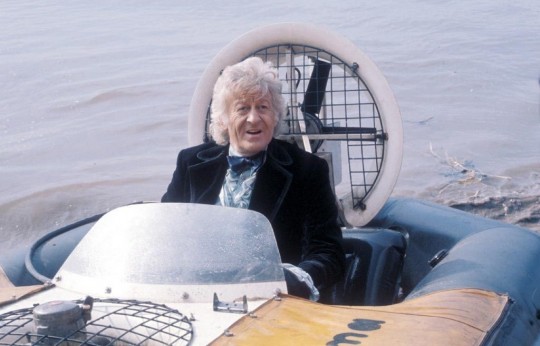
The Jon Pertwee Era (1970-1974; Seasons 7-11)
Recommended: “The Mind Of Evil”, “The Time Monster” and “The Time Warrior”.
The 3rd Doctor’s era is atypical of everything that has come before or since. The Doctor is earthbound for most of the series and is actively working with a military outfit called U.N.I.T. Pertwee’s Doctor uses his mind to manipulate gadgets and not his enemies. He’s brasher and more arrogant than many other incarnations of the character. On the one hand, Pertwee is perfect to play the third Doctor; he can shoot facial expressions so sour that they could curdle milk. On the other hand, a stuffy, condescending Doctor who’s less prone to crack wise and semi-comfortably works for the military will rub some the wrong way. It’s not aided by the fact that this Doctor knows kung fu and performs it as ably as only a middle-aged entertainer who’s never once heard of kung fu can. It’s an era that’s not entirely to my taste, but shouldn’t be avoided.
Pertwee’s five year run would introduce the evil Master (another renegade Time Lord and former friend of The Doctor’s), Autons (who would return in the first episode of the new series), Sontarans (equal parts Klingon and Mr Potato Head) and the late Elisabeth Sladen as Sarah Jane Smith (who would get not just one, but two BBC spin-offs). But it’s got a female companion who’s more or less laughed at in every single story (Jo Grant, played by Katy Manning), frequent comedy Welsh stereotypes and characters making light of Women’s Lib at various points. Accusations of sexism and patriarchal b.s. are easy to level at a fair bit of Doctor Who, but it’s seldom as nauseatingly omnipresent as it is in this era.
So, the best way to approach the Pertwee era is to try the best of what it has to offer. The Master would face the third Doctor in eight stories, the best of these is easily “The Mind Of Evil”, but I have an equal soft spot for “The Time Monster”. Whereas “Evil” is tightly scripted and features a neat plot involving a machine that can project your greatest fears, “Monster” is an immensely silly story that’s full of padding (The Doctor spends the entirety of one episode simply driving somewhere), has a monster that looks like the inflatable balloon-man you see outside car dealerships and devotes an entire episode to The Doctor and The Master getting their TARDIS’ stuck together before the action whisks away to the lost city of Atlantis(!). It shouldn’t hang together at all, but it’s immensely likeable television.
Between the simple, but effective “Evil” and the plot Mad Libs of “Monster”, there’s a story like “The Time Warrior” that’s a nice balance of both. When The Doctor and Sarah Jane are whisked back to the Middle Ages, they find that a Sontaran has been giving advanced weaponry to a couple of lowly bandits. While the first four years of the Pertwee era has companions that are almost comically drab, Sarah Jane Smith provides a spark to the program and in her chemistry with Pertwee and, later, Tom Baker.
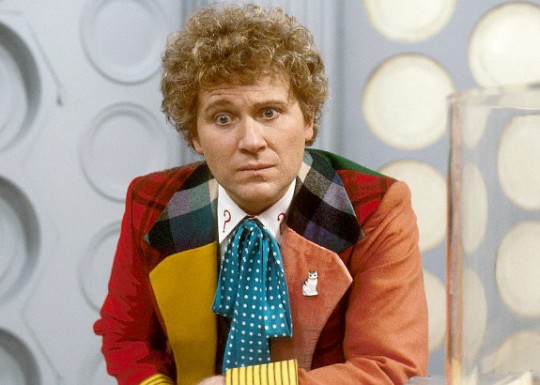
The Colin Baker Era (1984-1986; Seasons 22 and 23)
Recommended: Vengeance On Varos.
Colin Baker’s time on the show is so maligned by critics and fans, as well as those with only a rudimentary understanding of the show that it seems impolite to point how awful it is. If you asked a pastor about Colin Baker, he’d probably turn up his nose in disgust without really understanding why. It’s not his fault, really. By the time he turned up, the show had been using the same production/creative staff for years and the well had gone dry. But if the scripts had merely been formulaic, that wouldn’t have been the problem. Deeming the darker 5th Doctor stories like “Earthshock”, “Resurrection Of The Daleks” and “The Caves Of Androzani” to be a success, the production staff brought a mean-spirited quality to the show that made it actively unpleasant to watch. How unpleasant? Well, Colin’s 6th Doctor strangles his companion within his first full episode and generally spends much of his era season acting like Rimmer from Red Dwarf. The idea was that the 6th Doctor would start out nasty and mellow out over time, but that doesn’t even sound like it was a good idea in the first place. The combination of the actor’s plump physique, pompous performance and a costume that makes him look like a discount birthday clown is enough to swear off Doctor Who ever again.
Not without good reason, either. Most of the scripts for Colin’s tenure result in trainwreck television and this cavalcade of bad ideas reaches it peak with what is the worst Dalek story of the old series: the unwatchable “Revelation Of The Daleks”. Luckily, “Vengeance On Varos”, Colin’s third story, is surprisingly well done. It’s every bit as dark with its subject matter as the other stories of his time, but this is the one time in his era that remember how Doctor Who is supposed to be fun. So, even though The Doctor and his companion, Peri (Nicola Bryant), land in a grim world where capital punishment is prime-time TV, the handling of the subject is given a touch of whimsy. Sure, it’s got Colin in his stupid coat, looking like a rainbow that just won top prize in a pie-eating contest, but the tense, scream-o relationship between him and his companion has been dialed down. They actually seem to be enjoying themselves and are given a great villain to square off against in the form of the nasty, slug-like Sil (Nabil Shaban). It’s a good runaround, but if you’re looking for a taste “classic” Doctor Who, you’re best off leaving Colin out of the picture until you’ve seen the show’s finer moments.
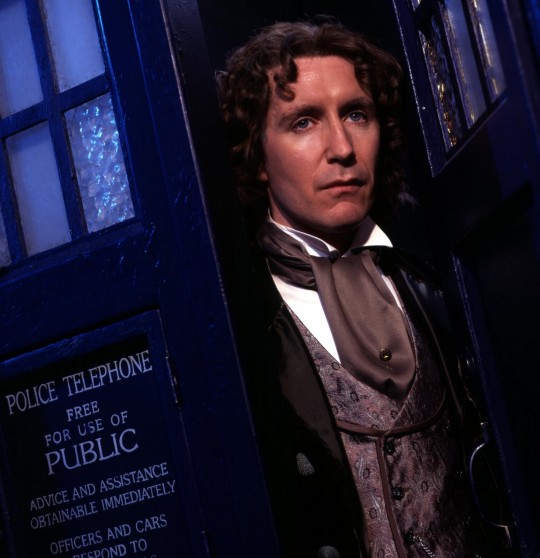
The Paul McGann Variety Special (1996)
What To Avoid: This TV movie.
While Doctor Who ended in 1989, pay no attention to the aborted attempt at a revival that aired on Fox in the mid-nineties. Conceived as a pilot to a potential new series, the telemovie “Doctor Who” (disappointingly not titled “Doctor Who – In An Exciting Adventure With The Fox Network!”) is a complete disaster. You might think that a big-budget, 90 minute version of the series set up to sell the premise to large swathes of viewers who’d never heard of the show would gracefully and gradually build-up to revealing the Doctor as a character, as well as the iconic TARDIS time machine and tease with glimpses of enigmatic backstory. You know, all the stuff that the first NuWho episode “Rose” did so well.
So, how do they start this monstrosity? Oh, by showing The Doctor sitting in the unexplained floaty blue police box with a library in it and having him rattle off about the history of his people and several of his nemeses in a two minute voiceover. Oh, and the actor playing The Doctor in this scene? He’s not going to play The Doctor in this telemovie. That guy shows up more than a half-hour into the movie (more on him later).
Needless to say, everybody in the States watched Roseanne that night (it was a good’un, too: Dan had a heart attack!) The remaining few diehard Wholigans watched a dry, badly-directed (no, weird camera angles are not good direction if the audience has no clue what the scope or location of where they are at any given moment), embarrassingly-written dirge about the Doctor having to prevent Eric Roberts (The Dark Knight) from taking over the world with his toxic loogies.
I’m not kidding. Eric Roberts horks loogies at people for an alarming amount of the film’s running time. Its all part of his fiendish scheme to steal a clock that turns doors into teflon.
Still, in many ways the strength of Doctor Who is not in its scripts, but in its leading man. This is where the movie falls apart completely. I’m not terribly fond of Pertwee or Colin Baker, but I wouldn’t say they were wrong for the part. Paul McGann is bland, charmless and drier than a Stephen Wright comedy show in the Sahara after full-scale nuclear armageddon. McGann plays the character without any humour or warmth. Peter Davison may have underplayed the part, but Paul McGann sleepwalks through it. He’s the Doctor for people who thought Davison was too over-the-top.
There, now you have oodles of Doctor Who to watch over the Easter holiday. What? It’s not like you had anything better to do. Your family might want you to come for dinner, but who wants to do that when you can watch Tom Baker fight space-vampires?
*Little did I realize that I sacrificed the chance to title that 2010 review Last Christmas, I Gave You Two Hearts in favour of a Richard Hell reference. Oh, the shame.
** Cyberleader: “My dog has no nose”
Cyber-Scout: “How does it smell?”
Cyberleader: “EXCELLENT!” *fist-pump*






April 22nd, 2011 at 3:04 pm
Good list, though I feel I should mention the oft downtrodden 8th Doctor. While the movie he was introduced in was a paltry mess, Paul McGann went on to become a very compelling 8th Doctor….if only in audio form. The 8th Doctor lived on in radioplay form via the productions created by BigFinish audio. ( Which you can find here: http://www.bigfinish.com/Doctor-Who )
April 26th, 2011 at 12:00 pm
Loved the article and agreed with many of the recommendations. However, have to disagree somewhat with your take on the 1996 failed pilot/movie. It was far from the best of Doctor Who, but come on, it wasn’t as bad as you made it out to be. And yes, I did watch it over Easter. For my money, each of the doctors (and the actors playing the doctors) bring something different to the character. My personal favourite is one of the “new” doctors, but that is just my opinion.
I think real Doctor Who fans should take a look at the 1996 movie, only just to have a complete perspective on what the Doctor was/could be/is.