

Archive | On Screen RSS feed for this section
Death of a Ghost Hunter (2007)

If you’ve got Netflix, you’ve probably seen the creepy little green girl pictured above. She was probably peeking at you from between the episodes of “Murder, She Wrote” and the Witty Romantic Independent Comedies with a Strong Female Lead.
“Death of a Ghost Hunter” (2007) is filmed in the style of a paranormal reality television series like OLN’s “Ghosthunters”, “Ghosthunters Academy” or “International Ghosthunters”. That means there’s an abusive amount of glassy-eyed, green-skinned people, gasping as the room temperature lowers (dramatically), a chair moves on its own (dramatically), or mysterious voices are recorded (in a manner that is also dramatic). As a bonus, all of the fakey flashbacks are filmed with the totally-authentic “Instagram distressed” filter.
What kills this movie — aside from the lack of ghosts — is the lead ghosthunter, who begins her running commentary for the visually impaired. She walks into a room; “I walked into the room”. She reaches for a light switch; “I went to turn on the light”. It doesn’t work; “It doesn’t seem to work”.
It’s since been removed from Netflix (making it literally ‘unwatchable’). It’s since popped up on YouTube, so you can watch the whole thing there:
From The Blogowe’en Reject Pile: Phenomena
Mon, Sep 19, 2011
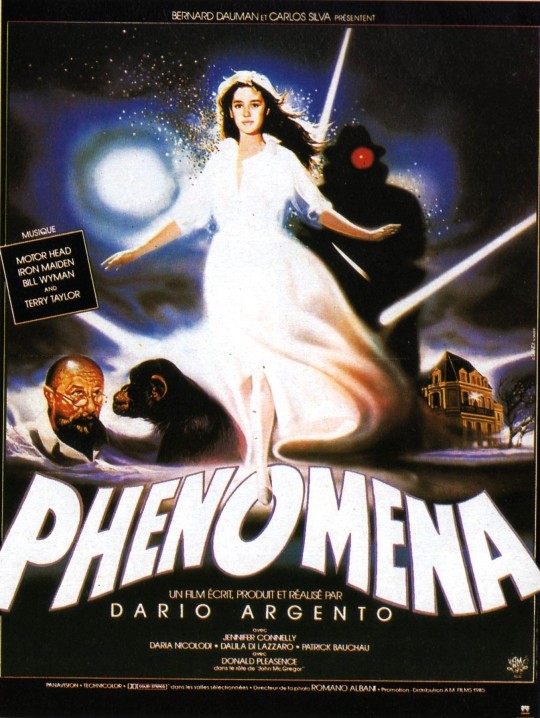
Adam Clarke wishes a film existed where Donald Pleasence played man-servant to a super-intelligent primate. Maurice, perhaps?
When Rodney Wall and I dust off the many clamshell VHS cases and their digital equivalents for Blogowe’en, plenty of films are discussed and fall by the wayside. Phenomena, a 1985 film by horror auteur Dario Argento almost made my list twice, only to be left off at the last second.
Yes, Blogowe’en is that intense and is constantly subject to revision.
While it’s neither a great horror film (like Noroi), nor a great party film (like Lifeforce), it’s interesting for where it sits in Argento’s filmography. The majority of films the Italian giallo/horror director would helm after this one tend to be dull (Trauma) or offensively stupid (Mother Of Tears), Phenomena is his last gasp of inspiration. The film’s not as strange as Suspiria, not as fun as Tenebre and not as scary Deep Red, but it has moments.
In the film, Jennifer Connelly (Requiem For A Dream, The Rocketeer) plays Jennifer Corvino, an American whose father has sent her to a private school in Switzerland. This vulnerable young girl is getting settled in in a place with no family to turn to while, wait for it, a gloved killer is roaming the countryside!
Meanwhile, Corvino starts having strange dreams, sleepwalking and attracting the attention of every insect with a twenty-mile radius. When on one of her patented bouts of somnambulism, Jennifer meets forensic etymologist Dr. John McGregor (Donald Pleasence, THX 1138, Raw Meat). McGregor has been investigating the recent murders when not relaxing with his chimp. No, seriously, this is that movie where Donald Pleasence has a laser-guided chimp.
Don’t worry, it makes sense. McGregor’s wheelchair-bound and the chimp is his little assistant. Oh, and I guess he only saw 2/3 Monkey Shines and figured “why not?”
It is in these scenes where McGregor tells Corvino of her talent: bugs like her and since bugs are McGregor’s business, he and Jennifer attempt to use their knowledge of and power over insects to help pinpoint the murderer and bring the serial killer to justice.
But what’s the connection between these plot threads? What is the nature of the bond between Jennifer and the insects? Who is killing these young girls? Why can’t Jennifer reach her father? What does her sleepwalking have to do with the plot? These questions will be raised and promptly forgotten as the film leaps to a bewildering climax.
Screenwriters Dario Argento and Franco Ferrini have created characters who think solely in waves of brainfarts and nothing about the damn enterprise makes sense, even by Argento’s standards. A horror film’s descent into madness is most effective when the filmmakers give us a reasonable simulation of reality, however sketchy or brief before the nightmare can begin. Argento fails to represent reality in every facet save one and Phenomena is all the weaker for it.
In terms of establishing any sense of reality in the picture, it’s Donald Pleasence that shows himself to be the most adept actor in the entire film, elevating a curious mix of cliches, exposition and just plain silliness into a character. He makes John McGregor a character seemingly out of thin air, rising to the challenge of an unfocussed script. It’s a shame that the focus of the film is on an untested Jennifer Connelly instead of the detective team of Pleasence and Primate, P.D; while she’s got great range now, Connelly is rather lifeless in this film. It’s a testament to Donald Pleasence’s talent that he manages to pull off such a laughable role. He’s a wheelchair-bound etymologist with a laser-guided chimp who gets his work done in minutes and prefers to discuss the case with a pre-pubescent who could be the killer’s next victim than, say, his employers. Oh, and he serves a mouthful of exposition on how bugs “like” Jennifer. Even more surprisingly, Pleasence quashes any creepy sexual vibes provided by his character as written.
Aside from Pleasence, the film;s strengths are littered in the somewhat ponderous 111 minute running time. The film’s climax is effectively surreal, despite being one of the sillier ways to end a slasher film. Both the murder sequences and Jennifer’s encounters with insects result in a sort of last hurrah for Argento as a director.
Phenomena may be the most workmanlike of Dario Argento’s peak-era, but it’s not entirely without merit. Seeing just how the killer in this film is disposed of does make it worth the rental alone.
In the Name of the King (2006)
Fri, Sep 16, 2011
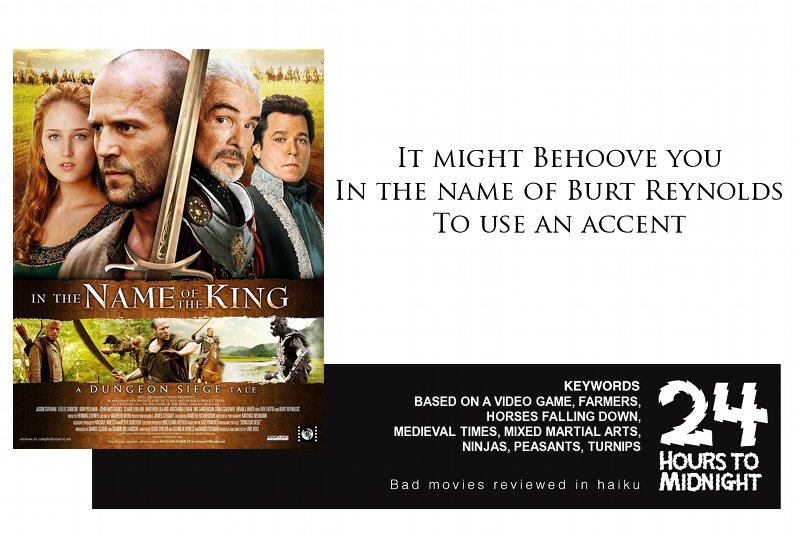
“In the Name of the King: A Dungeon Siege Tale” (2006) is yet another cinematic garbage dumpster from German director Uwe Boll. Jason Statham plays humble turnip farmer, Turnip Farmer. He lives in root-gathering peace with his cardboard wife and son. Following a massacre at Nan’s house, Farmer goes on a quest for revenge. However, stalking him at every turn is Ray Liotta in a wizard’s robe. Actually, considering Liotta’s slick Goodfellas-hairdo and his long, shiny leather coat, he’s reminiscent of K-Rock’s Big Tom.
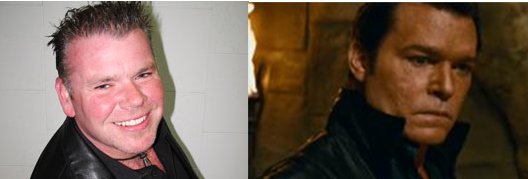
Noted evil wizards.
For the uninitiated, Uwe Boll is probably the worst director of all time. In fairness, most of this is due to the fact that Boll is probably the worst human being of all time. His crimes include exploiting a German tax shelter for filmmakers, punching out movie critics, and hiring prostitutes instead of actors (trust us — however awesome that stuff sounds, it’s not).
The big question about this movie is how some actors and actresses ended up here. Matthew Lillard flops around like he’s auditioning for “The Tudors”, Leelee Sobieski is in a subplot lifted from “Lord of the Rings”, and awesome genre-dude Ron Perlman takes a pig for a walk, then soon disappears. Burt Reynolds also stars as the titular king (a.k.a Embarrassed Burt Reynolds).
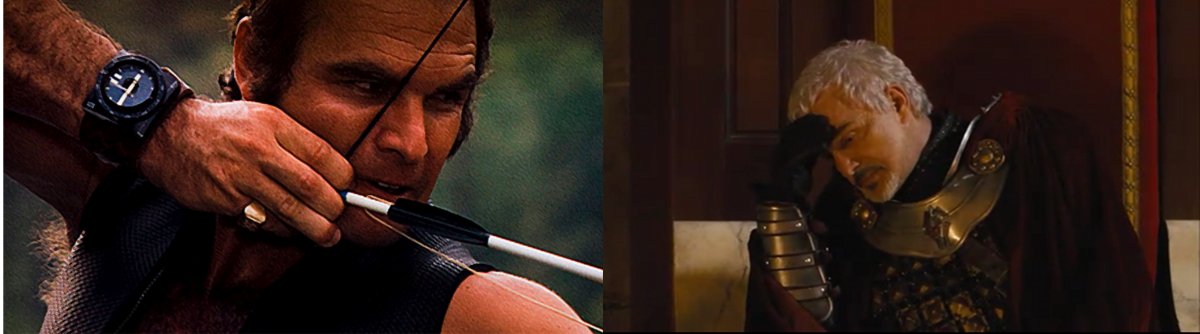
Burt, what happened?
Go Back to School
Mon, Sep 12, 2011
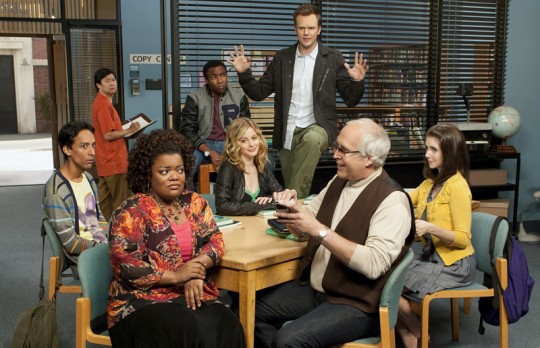
Adam Clarke urges you to forget your classes, forget Big Bang Theory, and enroll in the Community cult.
Ah, the Fall semester brings back many memories of university. Yes, those halcyon days wherein the noble panty raid was seen by sororities as a rogueish jape instead of a campaign of fear and overt sexual harassment. The days when the campus was openly segregated between snobs, slobs and nerds. The days when all of us had a diverse group of friends who only had one definable characteristic. In my punk rock days, I shared a dorm with a downtrodden alcoholic and a finicky gay man. Collectively, we were known as Rum, Sodomy and The Clash…
Wait a minute! Those aren’t memories, those are just cliches I pieced together from such indie hits as Revenge Of The Nerds, Animal House and Van Wilder 2: The Rise Of Taj. None of those things happened to me.
Aside from the crippling depression, my actual university years were pretty awesome. I think. Regardless, my confusion in the first paragraph brings us to the topic at hand, as this blend of warm fuzzies and pop culture references is the bread and butter of the NBC television comedy series Community.
Community, which begins its third season on September 22nd, centres on an eclectic group of misfits who befriend each other as they endure the humiliation of attending Greendale Community College. All of the students and staff are there only because they’ve screwed up their lives in some way, starting with spikey-haired alpha male, Jeff Winger (Joel McHale), a former lawyer who was disbarred after it was discovered that he bluffed his way into his firm without a law degree. Winger has relied on his charm to skim through life, but manages to join a study group with a socially awkward pop culture obssessive, a dimwitted ex-quarterback, a racist moist towelette magnate, a directionless do-gooder, a high school drop-out, and a cheery, Christian single mom.
Somehow this set-up leads to John Woo/28 Days Later-inspired paintball wars, a stop-motion holiday special in the Rankin-Bass tradition (Remember the stop-motion Rudolph the Red Nosed Reindeer?), Levar Burton showing up to serenade boyish Troy (Donald Glover) with the Reading Rainbow theme and an episode in which the hopelessly out of touch Pierce (Chevy Chase) has a massive drug trip while dressed as Beastmaster.
For the uninitiated viewer who hasn’t heard this, Community might seem like pretty traditional sitcom territory on paper. The casting of Chevy Chase, the least talented member of Saturday Night Live’s original cast, might make you presume it’s on par with Chase’s latter-day film work like Snow Day or Man Of The House (starring Jonathan Taylor Thomas!), and you probably see no reason to stop watching the immensely successful Big Bang Theory, Community’s timeslot competition.
Well, there are a bunch of reasons why you should be watching Community instead of Big Bang Theory. First of all, Big Bang Theory’s writing is so bland, it could more accurately be renamed Sheldon & Four Other Characters You Don’t Care About or This Show’s About As Funny As Sophie’s Choice. Community, on the other hand, is one of the best-written comedies on TV nowadays. The series can boast that each of its main and recurring characters are funny, and that it builds many of its jokes using meta-humour and pop culture riffs.
Then again, I have a love-hate relationship with Community. On the one hand, it’s the funniest, smartest sitcom since Newsradio and Arrested Development. On the other hand, it rescued Chevy Chase from obscurity where he belonged. Still, I can’t fault the show when the writing’s so good that it even makes the moldy antics of Chevy Chase seem fresh. Pick up the first season or the September 6th release of the second season on DVD. Community is an ideal source of procrastination, if you’re looking for that sort of thing this school year.
Recommended episodes: “Social Psychology”, “Introduction To Statistics”, “Contemporary American Poultry”, “Modern Warfare”, “Basic Rocket Science”, “Cooperative Calligraphy”, “Conspiracy Theories & Interior Design”, “Mixology Certification”, “Abed’s Uncontrollable Christmas”, “Advanced Dungeons & Dragons”, “Paradigms Of Human Memory”, “A Fistful Of Paintballs”, “A Few Paintballs More”.
The Top Four Best Movie Product Placements
Mon, Sep 12, 2011
In honour of The Greatest Movie Ever Sold, Adam Clarke presents his favourite product placements in the movies.
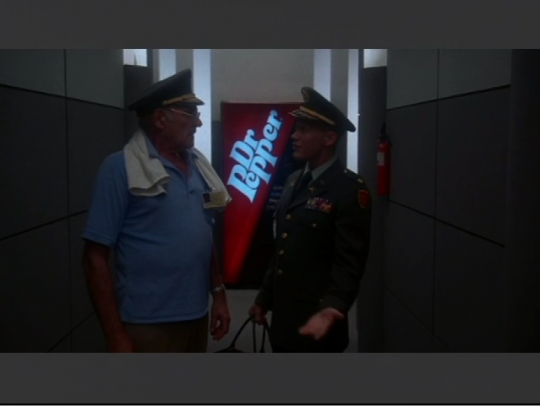
1. Dr. Peppers will be served in the war room
Godzilla 1985
1984′s The Return Of Godzilla sought out to take the fire-breathing dinosaur out of the realm of cheap kiddie flicks and return him to his horror/sci-fi roots as an allegory for nuclear war. While the film proved to be a success in Japan, the redubbed, re-edited American version (retitled Godzilla 1985) failed to catch on with audiences. More prominent than Godzilla or any human character is the highly visible Dr. Pepper machine that glows in the back of every scene with military officials shot for this re-edited American version. Some trailers for the American cut of the film even boasted about how it was “sponsored by Dr. Pepper!”
While the American redubbed/recut version and its glowing, unsubtle push for Dr Pepper robs the film of any power, Godzilla did fare a little better in a Dr Pepper ad campaign to support the film’s release.
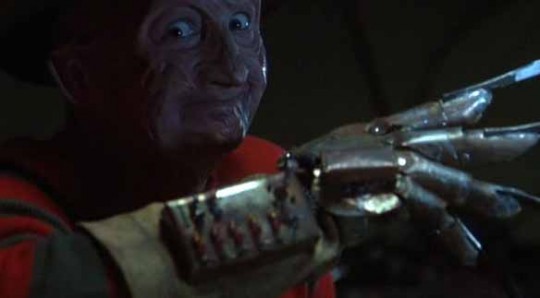
2. The Power Glove Is So Bad
The Wizard and Freddy’s Dead: The Final Nightmare
Apparently, Nintendo thought it would be less fun to hold a controller when you could have one awkwardly strapped to your arm while you played it with one hand. It was terrible, sold poorly and had a reputation that was not helped by the bratty gamer villain of 1989′s NES tournament film, The Wizard, and his unintentionally accurate assertion that the Power Glove “is so bad”.
Nintendo’s stock would plummet further as the defective doohickey is name-checked by Freddy Krueger (Robert Englund) at the lowest point in his popularity during 1991′s Freddy’s Dead: The Final Nightmare. Nothing screams “fun for kids” quite like a ringing endorsement from a child-molesting burn victim. At least when they released the Virtual Boy, Nintendo had the good sense to not to throw it on screen.
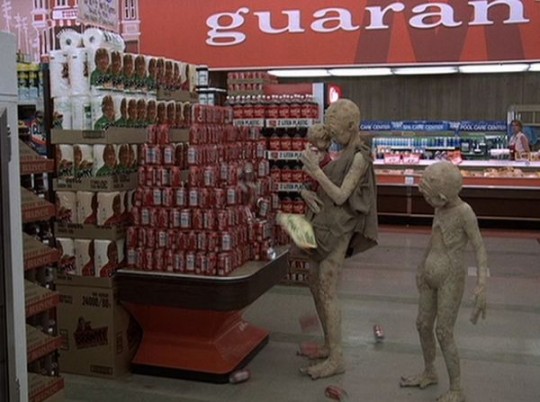
3. Pretty much all of…
Mac ‘n’ Me
The title of king of all product placements belongs to E.T. rip-off, Mac ‘n’ Me. Even the trailer for the film is really just an ad for McDonalds with a soft pitch for Coke.
Yes, this alien-and-child bonding movie features an alien who needs soda and fast food to live just like every boy or girl with dreams of one day acquiring Type 2 Diabetes in the lottery of bad choices we call life. I could go on, but I think the McDonalds breakdancing scene speaks for itself.
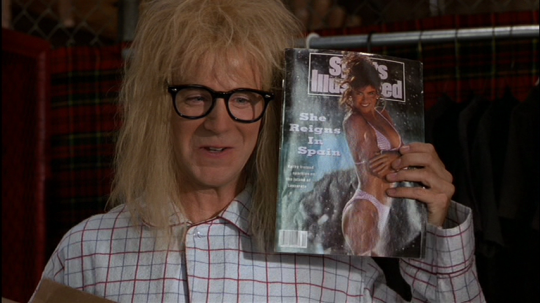
4. Irony 101
Wayne’s World
I couldn’t make this list without including this scene.
90′s cable staple Wayne’s World remains one of the few SNL-based comedies that’s actually funny. This exchange between Wayne and Garth on the nature of selling out remains one of the film’s funniest moments:
X-Men: First Class Was Actually Pretty Okay
Mon, Sep 12, 2011
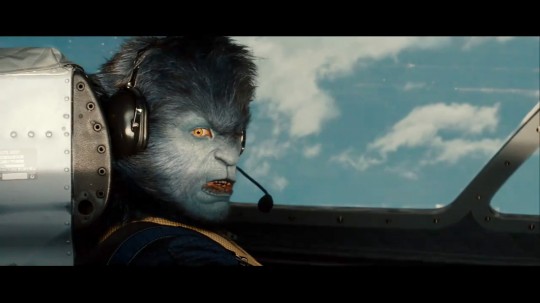
Adam Clarke shaved his head to be Charles Xavier last Halloween, but everyone assumed he was Gomer from Full Metal Jacket.
Newly out on DVD this month is X-Men: First Class, an attempt to inject some blood into the otherwise D.O.A. X-Men film franchise. While the last two films earned a great deal of flack from fans, I think they’re deluding themselves if they think the first two, supposedly good predecessors rose above “meh.” They were fairly well-cast and boasted decent production values, but never really bothered to tell a story. That X-Men directors Bryan Singer, Brett Ratner and Gavin Hood failed to sustain so much as one decent, remotely exciting action scene didn’t help much to dissuade the notion that a film about the Marvel mutants would never devote enough time to character development to create an engaging action film.
That said, X-Men: First Class doesn’t suck, which is triply surprising given that:
a) it’s a prequel (they’re almost always terrible)
b) it’s an X-Men film (ditto)
c) it boasts one of the worst performances of this year (shame on you, January Jones)
Yet, this retelling of the formation of the superhero team proves to be their only watchable outing. James McAvoy and Michael Fassbender bring a lot to their roles as Charles Xavier and Erik Lensherr (aka Magneto), the former with a refreshing amount of humour.
Yet, it wouldn’t be an X-Men movie if it didn’t feature one awful performance (the aforementioned Jones, succeeding series staple Halle Berry for most miscast actor), some awful special effects (see photo above) and a climax that feels formulaic and limp. Still, it at least has a fun and well-paced first half before disintegrating. As far as X-Men movies go, that makes First Class the Empire Strikes Back of the series, but that’s on par with being the thinnest kid at fat camp.
Orca (1977)
Fri, Sep 9, 2011
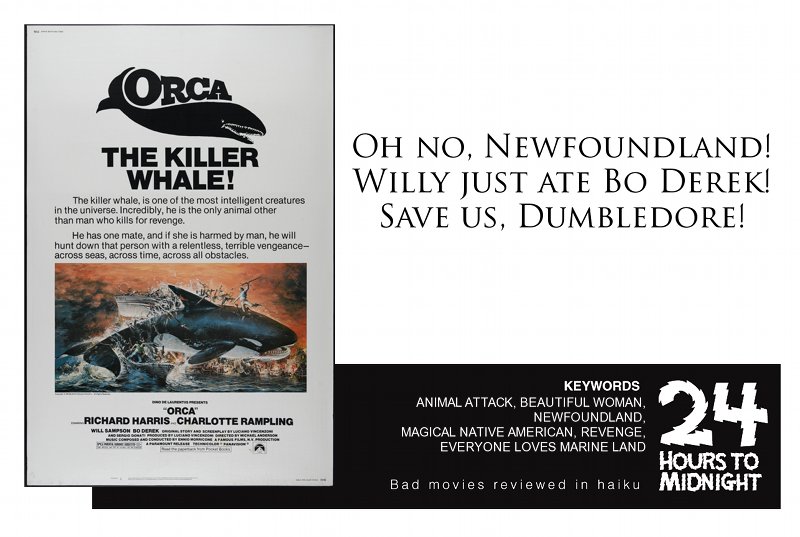
Partially filmed in Petty Harbour, Orca (1977) is probably one of the best-known horror movies with a Newfoundland connection. Coming out just under two years after Jaws (1975), Orca ups the gore, ups the eco-guilt, and ups the threat. With Jaws, you never had to worry about him eating your house.
The film is brought to you by director Michael Anderson (Logan’s Run), producer Dino De Laurentiis (Barbarella, Danger: Diabolik, Maximum Overdrive, Blue Velvet), prolific composer Ennio Morricone, and stars Richard Harris and Bo Derek.
You can watch the whole film on YouTube. Let’s feel bad about the environment, you guys!
Every week here at thescope.ca, the folks from 24 Hours to Midnight: The Blog! will write a haiku about one of their favourite bad movies.
The Last Detective
Wed, Sep 7, 2011
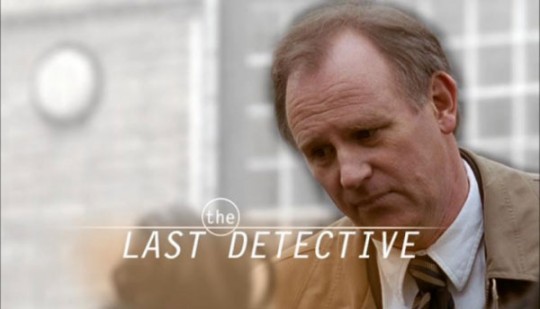
Adam Clarke discovers the charms of this English mystery series.
In the world of The Last Detective, nobody listens to Detective Constable Davies (Peter Davison, Doctor Who). In fact, the relationship he has with his superiors is downright hostile and his ex-wife, Julie (Emma Amos), seems to regard him with a mix of pity and frustration. Davies is trapped in a world where being the victim is the norm. He’s reasonable, gentle, hard-working and intelligent, but his introspective nature is mistaken for a lack of ambition, so he’s constantly underestimated. Fortunately, so do the criminals trying to evade him.
Bright spots are few for the middle-aged detective, who has been given the derisive nickname “Dangerous” by friends and colleagues alike. All he’s got is a shaggy St. Bernard, the passion he invests in his job and the late-night chats with his best friend Mod (Sean Hughes, The Commitments), a perpetually-unemployed alcoholic.
Such is the general outline of The Last Detective, a British mystery series that aired from 2003 to 2007 and was recently collected in a nice little box set from Acorn Media. Unlike the gritty, po-faced elements of Prime Suspect or the formulaic storytelling of the glossy CSI, Detective is a lot like its protagonist: charming, quietly funny and under-appreciated.
In the first episode, Davies is already at the bottom of the ladder. His divorce is still fresh, but his wife’s already seeing someone. He’s been overlooked for promotion by his hard-drinking superior, Aspinall (Rob Spendlove), in favour of the young, fashionably-dressed Chris Morris lookalike, Pimlott (Charles De’Ath). Davies’ endless bad fortune sees him assigned to a decades-unsolved murder case, which has long gone cold. Aspinall is getting Davies out of the way, but the detective’s kindness and empathy for the victim’s family bring Davies close to solving the case. The promise of closing a stone cold whodunnit sees Aspinall wave the promise of a much-deserved promotion for the belittled detective. However, as the evidence increasingly points to a police cover-up, Davies may end up killing his career to bring the killer to justice.
Needless to say, Davies’ solution ends up destroying all the good will built up in that story and Aspinall dubs him “The Last Detective”, as DC Davies is the last detective he’ll ever assign to a real case. Once again, Davies has few friends in the department and his wife still sees him as a joke. Even with the murder solved, the victim’s family find little comfort in Davies digging up the past. The detective’s kind-heartedness proves to be his undoing each time, resulting in another late-night pint with Mod.
The Last Detective offers a welcome break from the kinds of heroes who are currently fashionable on television. “Dangerous” Davies is sweet, well-meaning, compassionate and hard-working. He has no special powers and no tragic backstory (even his divorce is treated as more of a disappointment than a failure). He’s a middle-aged man who looks his age with thinning hair, fading looks and coffee-stained teeth who we never once see shirtless and who seldom gets the girl. He’s a rumpled underdog along the lines of Carl Kolchak or Det. Columbo.
Most importantly, he’s not a genius. Don’t get me wrong, I prefer my genre heroes to be shown as “brains”, but most fictional geniuses tend to be written as someone who makes logical leaps and is rewarded by a script that rewards jumping to a conclusion as if it were thoughtful analysis. Surround that character with idiots so that (s)he appears more intelligent (TV writers must take a Hack 101 workshop to perfect this trope) and you’ve got a hit series. Cast Hugh Laurie in the title role of said series and you’ve got House.
Indeed, the only criticism I can level at the show is that after the first season, the writers throw in ever more contrived reasons to keep Davies at the bottom. The first season seems to carry through an arc, showing Davies working his way up to the top on his terms as he continues to prove himself to his superiors and to himself. The final season, in a mark of desperation, features increasingly violent and improbable stories, miscast b-level guest stars (Roger Daltery and Whose Line‘s Tony Slattery) and an overwhelming desire to keep the status quo. As such, the series doesn’t end, so much as it stops without ever giving Davies a proper finale. Acknowledging that, however, the early episodes are exceptional, particularly in the 2003 season.
This past decade continues to be an amazing age for television, producing in shows that are experimental and unpredicatable (Louie), as detailed as any novel (The Wire), unabashedly clever (Community) and completely gripping (True Blood…wait! I meant Breaking Bad! Yes, Breaking Bad) Yet, in an age that has produced the aforementioned new classics and some ambitious misfires (sorry, The Cape…I mean, Rubicon! Yes, Rubicon), there’s something to be said about a genre piece done right. This cozy British mini-series makes for an ideal evening of comfort food TV.
The Initiation (1984)
Fri, Sep 2, 2011
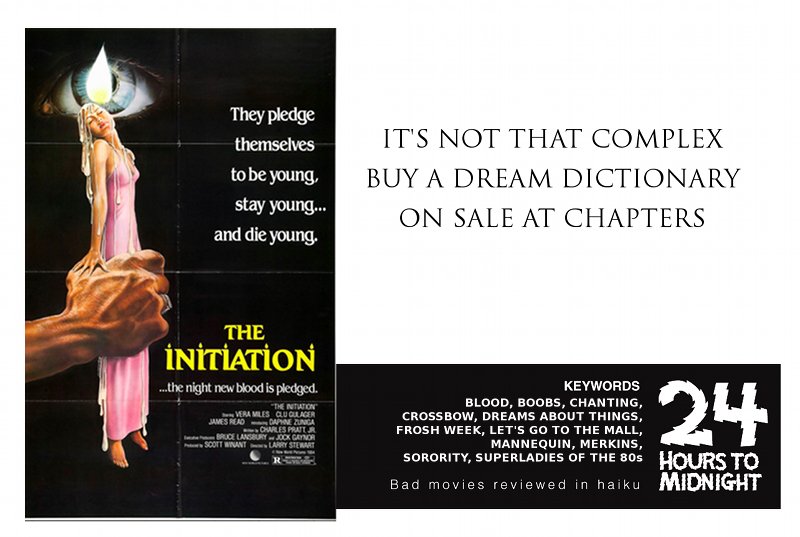
Daphne Zuniga (of Melrose Place) stars as sorority hopeful Kelly Fairchild. The film’s jam-packed with some of our favorite horror movie tropes: sorority shenanigans, a scary mental institution, prophetic dreams, psychic phenomena, an abandoned mall — à la Night of the Comet (1984) – and (spoiler alert!) an evil twin. Pair with The Initiation of Sarah (1978, or preferably 2004) for a scintillating double-feature.
Watch the trailer here, or catch the whole movie on YouTube:
Fright Night (2011)
Fri, Aug 26, 2011
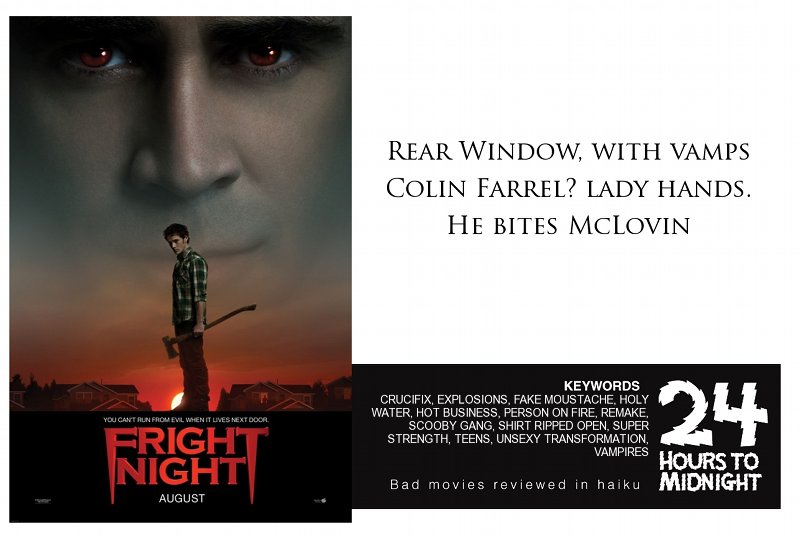
Though this remake loses some of the original’s ’80s charm, it retains the self-aware laughs and genuine scares that made Fright Night
Let’s All Go To The Lobby 2011
Fri, Aug 26, 2011
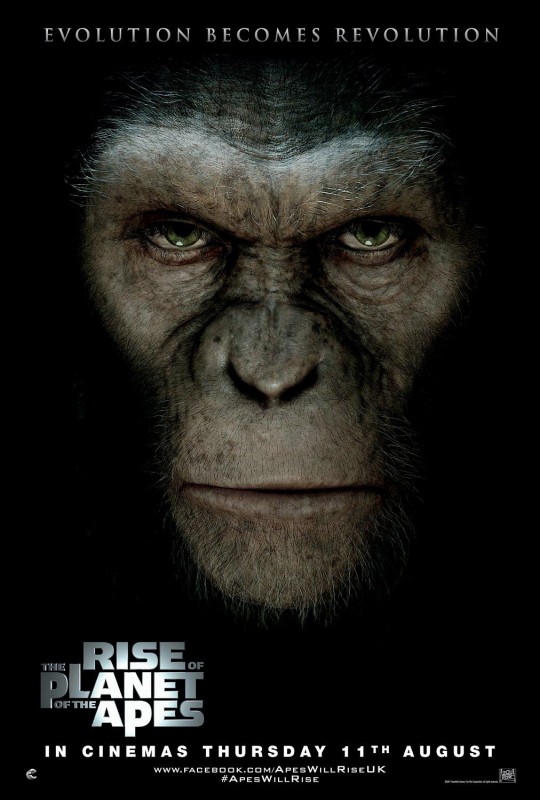
Adam Clarke went to the movies this weekend and all he saw was a buncha remakes, prequels and reboots.
Rise Of The Planet Of The Apes is an attempt to do something a little different in that it sets up a new series while telling a coherent story. Something Tim Burton’s attempt at remaking Planet Of The Apes 10 years ago utterly failed to do.
The plot of Rise arises from Dr. Will Rodman’s (James Franco) search for a cure to Alzheimer’s, driven by the deterioration of his father, Charles (John Lithgow). The serum, if effective, will not just repair damaged brain cells but continuously improve the brain. Will’s problem is that he has been operating on apes.
Following the cinema rule that all animals being experimented on will (appropriately enough) go completely apeshit and such is the case with his most promising subject, a captured chimp named Bright Eyes. After Bright Eyes’ freaking out and being subsequently gunned down by security, it’s revealed that she only went on a chimp rampage because she thought they were going to harm her newborn child that none of the scientists observing her 24/7 were aware of. Will absconds with the young ape and takes him to live with his father in the suburbs.
Apparently this ape is invisible because no one notices that the Rodmans have an ape living in his attic. Either that or they assume that having a wild primate in the home is a perfectly normal occurence that could lead to slapstick hilarity as evidenced by Dunston Checks In. Regardless, the chimp dubbed Caesar proves to be exceptionally intelligent and, within years, has mastered sign language and whose IQ doubles with each passing year. Then, Will adminsters the drug to his father who not only recovers from Alzheimer’s, but becomes more intelligent than he ever was.
The effects on humans prove temporary and Charles is reduced to his previous state. When he ends up in an altercation with a neighbour, Caesar leaps to Charles’ rescue and is taken by animal control who lock Caesar in with many wild apes. Forced to abandon Caesar, Will focuses his efforts on a new version of the drug, testing it out on a new ape, the heavily-scarred Koba.
Surrounded by his own kind and mistreated by cruel guards in animal control, Caesar uses his superior intelligence to lead an ape revolution.
Probably the most impressive film playing in local theatres at the moment, Rise is an unexpected pleasure and a refreshing alternative to the average summer flicks that load up action at the expense of plot, character and, most importantly, atmosphere. It’s not without its flaws–how come no one notices an ape in the suburbs? Or an ape pregnancy in a heavily-monitored lab? Why apes seemingly invulnerable to glass shards from all the windows they jump through? Did Franco’s love interest even have a name? Why did they choose Koba, who’s the scariest possible primate they could find this side of Shakma?–it successfully tells a story without obnoxiously setting itself up for a new film series. There will be sequels, sure, but at least you leave the theatre without feeling ripped off.
While not a cerebral film, as it fails to explore many of the implications of a drug that could boost mental capabilities, Rise is subtle and interesting. It contains only one major action sequence (the titular ape uprising). Much of the story is spent with Caesar (Andy Serkis, acting out what would later be digitized as an ape a la his performance as Gollum) struggling with being the only special one of his kind and him being pushed to change that. The pleasant, Flowers For Algernon-like Lithgow subplot (character is notably named “Charles”) is strong enough to have been its own movie. Lithgow, one of the most enjoyable over-actors when allowed to go full ham, is, like the film, unexpectedly subdued and thoughtful.
The other human characters are bland and a game cast (Franco, Brian Cox, that guy who played Draco Malfoy) are merely adequate. Poor David Oyelowo (The No 1 Ladies Detective Agency) is wasted as Jacobs, the man funding Rodman’s research. Jacobs sports such thin characterization that he might as well be named Money McCorporate, wear dollar sign contact lenses and have Million Dollar Man’s theme as his ring tone.
But the human characters are not as important as the apes, which has elevated CGI in my eyes. Now, I’ve seldom if ever seen CGI creatures that had 1/10 of the presence that old fashioned latex and animatronics have. While that’s true to a degree (the early ape effects with Caesar’s mother are laughably cartoonish and over-expressive), the special effects are impressive and the combination of actors and computer trickery produce primates who can, well, act. CGI creatures have perhaps finally entered the realm of stop-motion and claymation, which never looked real exactly, but always had presence.
Oh, and there’s an intelligent circus orangutan named Maurice (played by Karin Konoval) who provides the movie with some welcome humour and charm as Caesar’s right-hand ape. I would watch Maurice in anything. Seriously, I want him as a ramshackle detective who gets in too deep in a Night Moves-style mystery. I want Maurice to be teamed up with Clint Eastwood in a buddy comedy titled Many Which Ways But How? I want that primate in every movie.
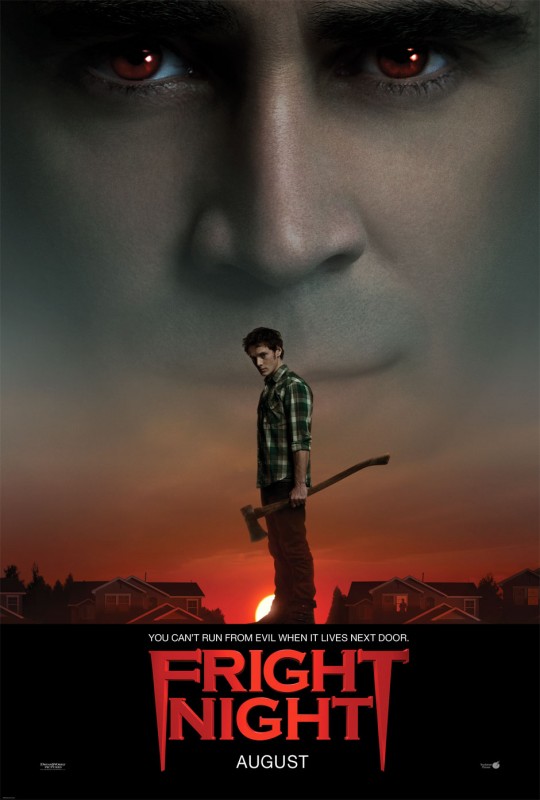
The Marti Noxon-scripted remake of Tom Holland’s terrific 1985 film, Fright Night, follows the original’s plot pretty faithfully. High-schooler Charlie Brewster (Anton Yelchin) lives with his mom (Toni Collette), dates Amy (Imogen Poots) and is estranged from his childhood friend, Evil Ed (Christopher Mintz-Plasse). When people in the neighbourhood start disappearing, it becomes evident that the Brwesters’ new neighbour, Jerry Dandridge (Colin Farrell) is a vampire. To defeat this creature of the night, Charlie turns to vampire expert, Peter Vincent (David Tennant, Doctor Who), but Dandridge’s army of bloodsuckers grows with each passing night.
What’s interesting is that Evil Ed is inadvertently portrayed as the real hero of the first third of the movie. In this film, Ed is the one who notices that Jerry Dandridge is a vampire, not Charlie. Ed is the horror obssessive that knows all about vampires, not Charlie. Ed is the one who gets in trouble trying to do the right thing, not Charlie. Charlie doesn’t even notice or care that one of his childhood friends has been killed, nor does he mourn anyone who falls prey to Dandridge.
See, in the original film, Charlie did all of those things and Ed was his socially retarded friend that Charlie was drifting away from. In this film, this newly-sympathetic Ed dies while callous Charlie and his buddy, Mark (Dave Franco), get to live. Even though Charlie leaves Ed to become friends with Mark, the asshole jock who bullies all the nerdy kids. The Hell? What kind of world do we live in when McLovin from Superbad dies so that James Franco’s lookalike brother can live?
While Christopher Mintz-Plasse is one of the film’s most charming aspects before biting the dust early on, it should be noted that Colin Farell is a lot of fun as Dandridge. Filling in for Chris Sarandon (who cameos in this film) was not easy, but Farell is visibly having a ball as he oozes undead charm from scene to scene. Also of note is David Tennant who continues to impress when not playing Doctor Who. Peter Vincent, in the remake, has been updated from a washed-up b-movie actor to some kind of occultist star who performs elaborate Vegas shows. Tennant initially plays Vincent with ugly facial hair, long flowing locks, tight leather pants and an obnoxious demeanor, making him a spot-on parody of inexplicably popular, unfunny comedian and blight on humanity’s anus, Russell Brand.
While Fright, like Rise, isn’t perfect, it’s an enjoyable retelling of a familiar story.
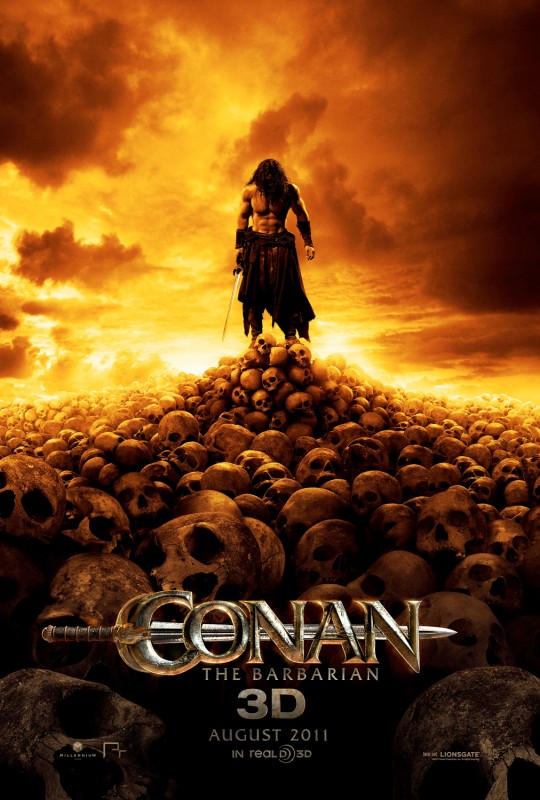
The same cannot be said of Conan The Barbarian, which is easily one of the worst films I’ve seen in the last five years. The only film that’s worse than it, and certainly one of the most tedious movies ever made, was 2010′s Nightmare On Elm Street remake.
Returning to the source material for a new Conan adventure was an excellent idea. Shame they chose the most incompetent hands possible to helm such a feature. In this film, Conan is a promising warrior raised by Corin (Ron Perlman, providing the sole note of dignity in this fetid garbage pile). When Conan’s barbarian tribe is slain by the invader Zym (Stephen Lang) and his psychic daughter, Marique (Rose McGowan), he grows up to avenge his father’s death.
Alright, so I don’t get why Conan director Marcus Nispel makes movies.
I get why Michael Bay makes movies even though I don’t like his movies. Bay likes asses, bad jokes and explosions, which he has made into a top-grossing formula. I get why Zach Snyder makes movies even though all his movies are terrible. Snyder, for better or worse, brought something new to action cinema’s table when he directed 300. Yes, his ugly-to-look-at CGI atmosphere and annoying slow-mo-then-super-fast, bone-crunching fight scenes are unbearable, but they’re his signature.
Marcus Nispel? Him I don’t get. He just rips off Zach Snyder and Michael Bay, which he shouldn’t do. He shouldn’t do it not because they’re the wrong men to rip off, but rather that he does it so very badly. Nispel’s films are so flavourless and inept that it makes me respect both aforementioned directors a little bit, if only because Marcus Nispel would be a joke to them and rightfully so. Nispel specializes in unwatchable remakes having previously helmed the reboots of The Texas Chainsaw Massacre and Friday The 13th for, wait for it, Michael Bay’s production company.
The script is witless and without fun, as is the direction, but the cast don’t even make an impression Jason Momoa smirks and grunts his way through the movie because that’s all Conan is written as doing. Rose McGowan seems to be having fun as Marique, the sorceress who’s a little bit Freddy Krueger (she sports finger knives), a little bit Borg Queen (she’s pale and weirdly sexual) and a whole lot of incest (she’s daddy’s girl). And what of said daddy? Stephen Lang continues his trend of delivering uninspired performances as cliched, two-dimensional bad guys after his equally boring performance in James Cameron’s wretched Avatar
No, the sole saving grace here is Ron Perlman who, if the filmmakers were wise, would’ve been cast as a latter-day Conan once he becomes a ruler in the Hyborean age. I’d rather watch that hypothetical King Conan than a tepid retread that would’ve been more accurately titled Conan The Bore-Barian. Of the HyBOREan age. A tale that takes place in the days of high tedium!
Anyhoo, that’s what happened when I went to the lobby this weekend, a sea of remakes/prequels/reboots. Come back next week, when we’ll be discussing original ideas, hopefully.
In defense of Escape From L.A.
Fri, Aug 19, 2011
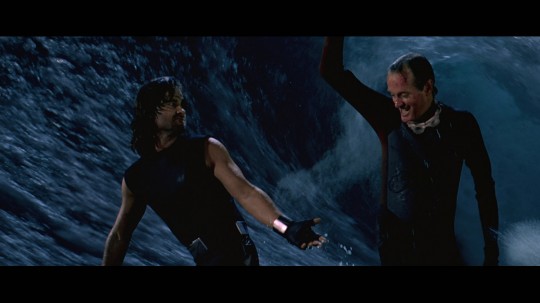
Adam Clarke‘s insistence that others call him “Snake” is usually met with derisive laughter.
It’s no secret how much I adore the films of John Carpenter. My piece on wrestlers in the movies featured an extended love letter to 1988′s They Live and both In The Mouth Of Madness and Someone’s Watching Me! were featured in last year’s Blogowe’en.
In the latter Blogowe’en entry, I wrote about Carpenter’s downfall as a filmmaker and how the director’s recent efforts have been uniformly disappointing. Caprenter’s latest, The Ward, has just been released on DVD, but does nothing to suggest he’s gotten his groove back.
Despite odd duds like Christine, Memoirs Of An Invisible Man and his Village Of The Damned remake, Carpenter had an impressive twenty-two year streak beginning with 1974′s Dark Star and ending with today’s blog entry: the misunderstood future cult classic, Escape From L.A.
In the far-flung future of 2013, the United States has elected a bible-thumping, bigoted, ultra-conservative president (Cliff Robertson; Charly, Spider-Man). President Robertson has decreed that all violent criminals, atheists, gays and other undesirables be deported to Los Angeles, which has since been transformed into a prison state. And, wherever there’s a state that’s become a prison camp, you’re sure to find one-eyed ne’er-do-well Snake Plissken (Kurt Russell).
As was the case with Escape from New York (1981), where Plissken rescues a different president in 1997 (yes, Snake Plissken was a bad enough dude to rescue the president), he’s been captured for committing crimes, but has been offered a chance at freedom should he complete a mission behalf of the U.S. government. This time, Snake must rescue President Robertson’s daughter, Utopia (A.J. Langer), who has been lured into L.A. through misleading chats with revolutionary and Castro wannabe, Cuervo Jones (Georges Corraface). In exchange, he will receive a full presidential pardon for his crimes.
Basically Plissken, both a war hero and a known criminal, is asked to play catch a predator. Seeing as he’s going to L.A. either way, Plissken agrees, but refuses to be given a life-or-death time limit as per his escape from New York in ’97 (back then, Plissken had timed explosives injected into his body to ensure his cooperation). Little does Plissken realize, he’s already been infected with the Plutoxin 7 virus, which will kill him in 10 hours. It may be a different state, a different rescue mission and a different president, but history’s begun to repeat itself for the man they call Snake.
Escape From L.A. is often said to be a sequel that’s as much a remake of its predecessor as it is a continuation of that story due to its repetition of plot elements from Escape From New York. But, that repetition is the point of L.A. Little has changed since Plissken’s daring escape from the clutches of the Duke Of New York (Isaac Hayes). The president has gone from an unfeeling bureaucrat whose rehearsed optimism hides his contempt for those beneath his station to, well, the living embodiment of your Sarah Palins and Michelle Bachmanns. When Snake arrives in prison, he finds that many of the inmates don’t want to leave.
Rather than continue the moody, serio-comic, comic book vibe of Escape From New York, this Escape is campy, tongue-in-cheek and every bit as satirical as Carpenter’s They Live. This goofier tone, closer to Carpenter’s Big Trouble In Little China than the previous Escape film, is like the difference between the Superman comics of the 30′s and those of the 60′s. In the original Siegel and Shuster comics, Superman was leaping over tall buildings in a single bound and used his super-powers to handle real-life threats like corrupt bankers and the like. In the 60′s, the censorship of the Comics Code Authority prevented writers from handling comics in their previous, two-fisted pulp traditions. As such, the writers got intensely surreal, resulting in stories about Superman splitting from Clark Kent and fighting his alter ego or forcing his supposed “pal” Jimmy Olsen to marry an ape for some reason. Needless to say, I love 60′s comics and I think “for some reason” is the best reason for any plot point whatsoever. Like that episode of TNG where Q brought the Enterprise crew into a deadly Robin Hood fantasy…for some reason.
This Silver Age comic goofiness, along with the intentionally derivative storyline, frustrated some viewers of Escape From L.A. Sadly, this has left the film without a fanbase, as there are fans who hoped for a more serious follow-up and those who hadn’t seen, liked, or heard of Escape From New York had little reason to check it out amongst mixed reviews and dismal box office. The fans wanted a new adventure with the Snake Plissken, not more of the same.
Of course, that would miss the entire point of the film, which shows that the world Plissken inhabits has not changed at all, but has just gotten worse. Everything that happened in the previous film didn’t matter because the political situation in America is largely unchanged. Now, instead of the hellish nightmare of roving gangs raping and pillaging in anarchy in New York, most of the “immoral Americans” like L.A. as a prefarable alternative to the restrictive United States of America. Just as Donald Pleasence’s untrustworthy president in New York was a product of Carpenter’s Nixon-era script (it would go unproduced until Reagan was in office), Robertson’s president is a perfect lampoon of conservative commentators Jerry Falwell and Pat Robertson, who had come to be the face of the American right by the time of Escape From L.A.
Now, I recommend Escape From L.A. particularly to those who didn’t care for the original film. If you didn’t care for the grit and grime of New York, perhaps you’d rather see Snake Plissken drive past the animatronic, Universal Studios shark on his way to L.A., hang-glide his way into Disneyworld with a transgendered thief (Pam Grier, Jackie Brown, Coffy, The L Word), surf with aging hipster Peter Fonda or, in a quick and clever sight gag, fly past a building that’s clearly labelled “MINIATURES”.
Escape From L.A. made the mistake of assuming its audience would appreciate its satire of right-wing politicians and its over-the-top, winking action sequences. This movie came out the same year as the box office hit, Independence Day, an action film that was the epitome of the dumb, tone-deaf action flicks that were all the rage in the mid-to-late 90′s.
With a cast that includes the aforementioned Russell, Fonda, Robertson and Grier, that would almost be enough to see the film. Throw in supporting roles for character actors like Bruce Campbell (Evil Dead, Burn Notice), Steve Buscemi (Fargo, Boardwalk Empire). Stacy Keach (Titus, The Ninth Configuration) and Michelle Forbes (True Blood, Homicide: Life On The Street, Star Trek: The Next Generation) and the movie becomes irresistible.
So, while it’s not the sequel you were expecting, its perfect cast, weird humour, potent satire, provocative ending, and the welcome return of Kurt Russell as one of cult cinema’s most iconic characters, you’ve got a perfect b-movie. That’s exactly what John Carpenter set out to make and, to this day, is his last essential film.
Haiku movie review: 24 Hours to Midnight
Fri, Aug 19, 2011
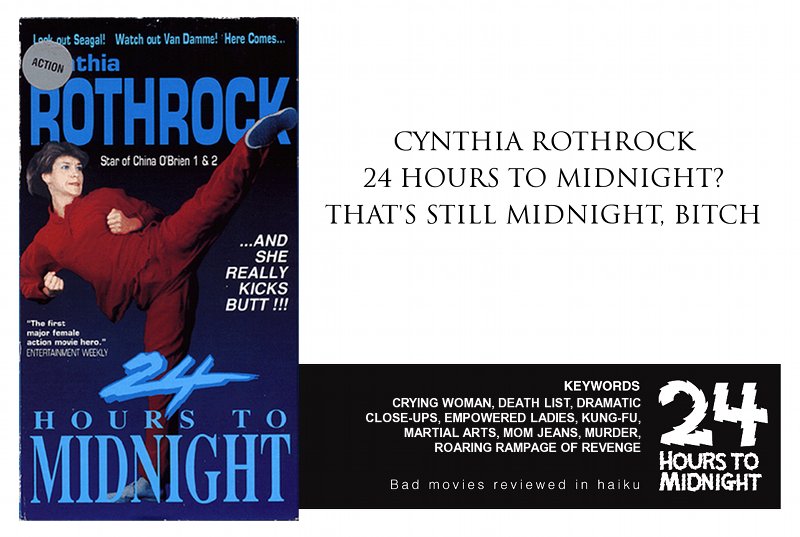
24 Hours to Midnight: The Blog! (est. 2009) is a local movie review site, focusing on “B-grade and lower” films, mostly found at flea markets, yard sales, and video stores like Capitol Video.
Every week here at thescope.ca, they will write a haiku about one of their favourite bad movies. They start things off by reviewing their namesake film.
Cynthia Rothrock is an American martial artist and actress that has been active for the past twenty years in Hong Kong and the States. She specializes in martial arts films where she invariably is witness to the assassination of a loved one, goes undercover by wearing a wig, then seeks closure by kicking people in the face. It’s also worth noting that she was the basis for Mortal Kombat’s Sonya Blade. What a swell lady!
Twists & Turnbuckles: Wrestlers On Screen
Mon, Aug 15, 2011
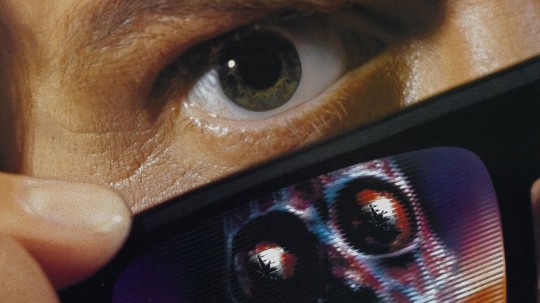
Adam Clarke briefly fought in the WCW under the name “The Shockmaster”
I’d never say I was a hardcore fan of wrestling, but I certainly was surrounded by it in my youth. I drank out of Hulk Hogan and Brutus “The Barber” Beefcake glasses, I pumped quarters in that WWF arcade game at Electric Avenue in the mall throughout the early 90′s, I owned a Hulk Hogan Wrestling Buddy (my brother owned Ultimate Warrior) and the first VHS tapes to come into our house were a giant Wrestlemania tape with Andre The Giant on the cover and the 1989 Hulk Hogan vehicle, No Holds Barred*. I also wrote to Hogan when the fiendish Earthquake put him in a coma and drew a picture of all the vitamins I was going to eat in order to get him out of the hospital. I take full responsibility for his speedy recovery, although lightning didn’t strike twice when Nan went into a coma the following year.
Alright, maybe I’m in denial about the whole fan thing, at least when I was a kid. I stopped paying attention to wrestling sometime around age 11 or 12. I still have a fondness for the wrestlers I watched growing up and I don’t seem to be the only one. How else can you explain the hype surrounding Championship Wrestling International‘s East Coast Invasion Tour, which brings old school wrestlers like “Million Dollar Man” Ted Dibiase and “Hacksaw” Jim Duggan to our fair province?
Oh, and the Hulkster’s coming too, so I should definitely go. He’ll remember me for getting him out of that coma.
In honour of this event, I present you with my favourite big screen appearances from pro wrestlers over the years.
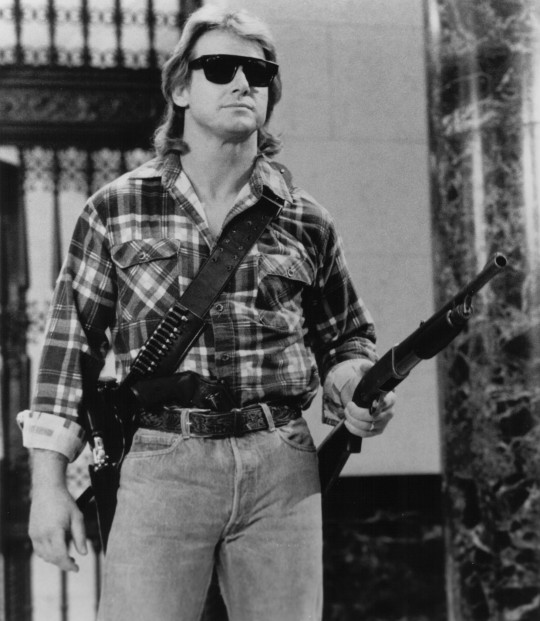
1. “Rowdy” Roddy Piper in John Carpenter’s They Live (1989)
Roddy Piper’s transition from wrestler to b-movie star has thus far yielded only one good movie (suck it, Hell Comes To Frogtown), but what a movie! When film scholars study John Carpenter’s They Live, they always cry “why didn’t they stop making movies in ’89? There’s never gonna be another They Live“.
For those not in the know, They Live is a rare moment for Carpenter, the greatest horror director of the 70′s and 80′s (suck it, Lucio Fulci), to get goofy (see also: Escape From L.A. and Big Trouble In Little China). And goofy he gets!
The plot depicts a blue-collar Joe (Piper), left homeless by Reaganomics, who discovers a pair of sunglasses that change his perception of the world. Subliminal messages are everywhere, like when Piper looks at some cash and each bill has “THIS IS YOUR GOD” inscribed on it. Also, nearly every upper-class blue-blood is, with the aid of the glasses, revealed to be a reptile person from beyond the moon! Before Piper can lead any sort of revolution, one of the lizard-faced rich people takes notice and whispers “I’ve got one that can see” into her Rolex watch.
Best movie ever, right? Hold on. It gets better. It also features an infamous 7 minute fight scene between Piper and co-star Keith David (best known as the “ass to ass!” guy from Requiem For A Dream).
When I heard a remake of They Live was in the works, I was disappointed to learn that the filmmakers plan on dropping all of the satirical/comedic elements from Carpenter’s film. A damn shame. I think an ideal remake would emphasize them and star John C. Reilly in the Piper role and have Will Ferrell take over for Keith David. Imagine that fight scene…
REILLY: Hey, man. Put on these glasses.
FERRELL: NO! NO!
REILLY: Geez. Come on. Come on, pal. Put ‘em on.
FERRELL: NO!
REILLY: Put the glasses on. For your health.
FERRELL: YOUR CHARACTER DOESN’T EVEN HAVE A NAME! YOU DIRTY MOTHERFU—
Box office gold awaits. Get at me, Apatow comedy-making robots and/or rights holders to They Live.
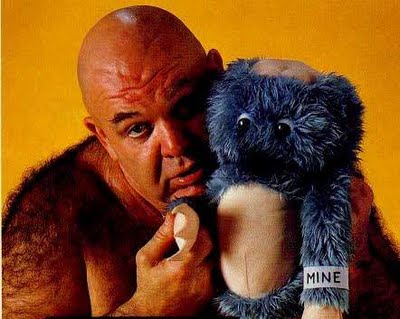
Not an image from Ed Wood, but easily my favourite picture of Steele
2. George “The Animal” Steele in Ed Wood (1994)
Ed Wood is Tim Burton’s second best movie (his masterpiece is Pee Wee’s Big Adventure; suck it, Big Fish). In a loving (if highly fictionalized) tribute to Plan 9 From Outer Space director Ed Wood, Burton assembled one of his best casts. While Johnny Depp, Bill Murray and Martin Landau got the lion’s share of the praise, turnbuckle-devouring George “The Animal” Steele was perfectly cast as wrestler-turned-bad-movie-actor, Tor Johnson.
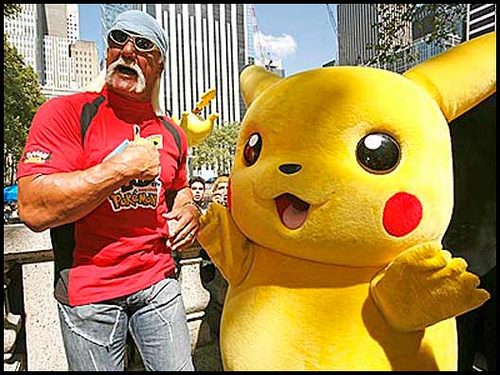
Typing "Hulk Hogan Gremlins" into Google yielded this image.
3. Hulk Hogan in Gremlins 2: The New Batch (1990)
The wrestler cameo is a fairly common cinema staple. “Macho Man” Randy Savage’s appearance as Bonesaw in Spiderman has warped my brain to the point that, whenever I hear someone say “dinner’s ready”, I invariably reply “Bonesaw is ready!”
Ahem. Wrestler cameos do not come better than this: Hulk Hogan, as himself, freaking out at a bunch of Gremlins as only he could.
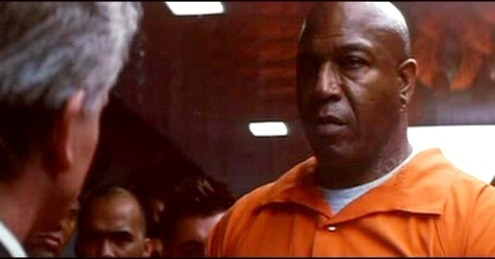
4. Tom “Tiny” Lister in The Dark Knight (2008)
Although Lister was an actor well before he played Zeus in No Holds Barred, he did wrestle in-character for the WWF for a time. This makes him good enough to be part of Hulk Hogan’s Rock’n'Wrestling in my eyes. He’s part of the brotherhood, brother!
Anyhoo, Lister makes an unexpected cameo as a sympathetic prisoner in The Dark Knight and the humanity of that scene, and particularly his character, is my favourite moment from the movie.
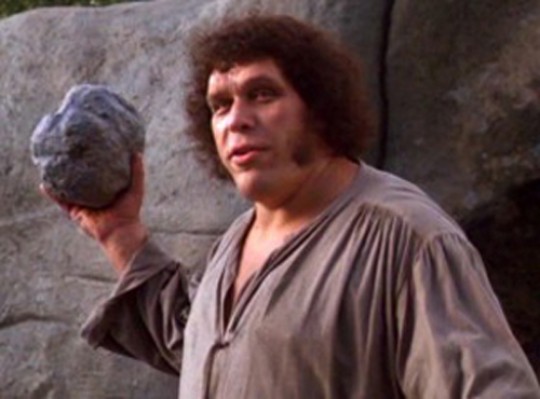
5. Andre The Giant Has A Peanut in The Princess Bride (1987)
Oh, like I could write this without bringing up the rhyming Fezzik from Rob Reiner’s The Princess Bride. Angering Wallace Shawn with his silver tongue is about the best use of any wrestler, period.
These are the men who’ve taken their wrestling prowess and charms to elevate cinema. Take us home, Lou Albano!
* There was a problem with the sound on our No Holds Barred tape; not only was the dialogue out of sync, but it was sped up so that everyone sounded like The Chipmunks. Mom wanted to return it to the store, but I insisted that we keep it. I then stuck a new label sticker on the tape (blank tapes always came with so many extra ones) where I had given No Holds Barred its new title, Hulk Hogan & Dale: Rescue Rangers. I was a weird kid.
What is Mystery Science Theatre 3000, you ask?
Mon, Aug 8, 2011
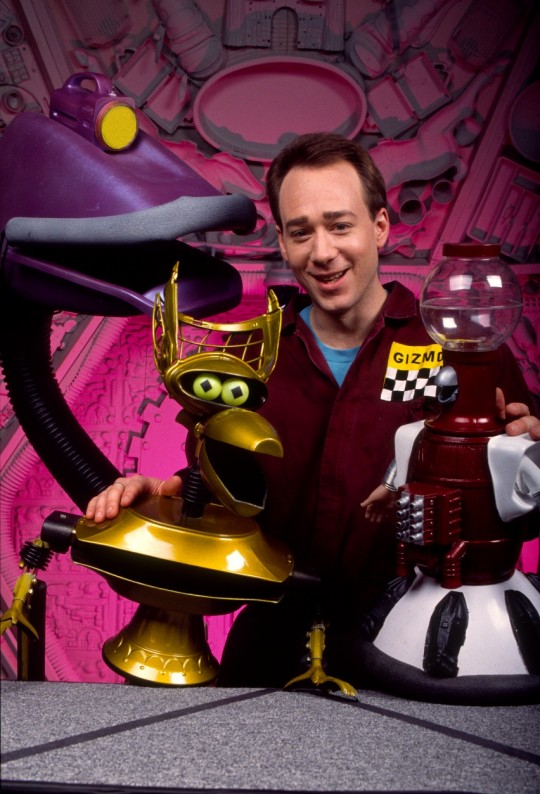
“When we write a joke, we never ask, ‘Who’s gonna get this?’ We always say, ‘The right people will get this’.”
-MST3k star and creator, Joel Hodgson (pictured above with robots Crow and Tom Servo), on the show’s writing process.
Since rewatching Max Headroom last year, I’m wondering how well that which was once important to me has held up. Hoping to understand their initial appeal and how they came to be, from time to time, I’ll be revisiting TV shows and films that were once very important to me as part of a series I call “My Childhood Lied?” For the inaugural edition of “My Childhood Lied?” I’ve chosen to revisit one of the most important television series to infect my developing brain: Mystery Science Theatre 3000.
Yes, I’m using the Canadian spelling of “theatre.” It’s not my fault the Mid-West got it wrong.
For those unfamiliar with the show, Mystery Science Theatre 3000 (heretofore MST3k) chronicled the existence of sleepy-eyed janitor and would-be inventor Joel Robinson (Joel Hodgson) who’d been shot into outer space by mad scientist Dr. Clayton Forrester (Trace Beaulieu). Joel, floating in space aboard the bone-shaped Satellite of Love, was forced to watch the world’s cheesiest movies as part of Forrester’s experiment. To keep from getting lonely, Joel builds some robots, two of which follow him into the theatre. Together, Joel Robinson, gumball-headed Tom Servo (initially played by J. Elvis Weinstein, later Kevin Murphy) and Crow T. Robot (played by Beaulieu until the show’s 8th season) sit in silhouette and crack jokes during educational shorts, b-movies, z-movies and even the odd episode of General Hospital.
In addition to the theatre wisecracking, the Satellite of Love crew would appear in sketches or interact with the earth-bound Clayton Forrester and his assistant, known as TV’s Frank (Frank Conniff).
The above either sounds amazing to you, or you wouldn’t want to be within ten feet of a television airing it. If you laughed at Frank Conniff referring to himself as TV’s Frank solely by virtue of appearing on one TV show, you’re in the right mindset for MST3k.
Revisiting the series, it’s easy to see why it made such an impact on me as a kid. As the above quote from Joel Hodgson indicates, MST3k never once spoke down to the audience. Each episode contained a barrage of jokes that not only skewered that week’s experiment, but culture in general. MST3k had the only writers room that could crack jokes about Aristophanes or do a sketch where Naked Lunch and Camus’ The Plague had been turned into pop-up books.
It’s incredible that a show this smart was ever greenlit, much less kept on the air for more than a decade. In the wastelands of teevee in the 90′s, mediocrity seemed to triumph over creativity nearly every time. How else can you explain the popularity of Friends and Ally McBeal while smart series like Newsradio and Homicide: Life On The Street clung to the airwaves with varying degrees of success? MST3k’s longevity is nothing short of a miracle.
The series’ hip, reference-heavy humour makes a lot of sense given when it was created. Increasingly post-modern shows like Sledge Hammer, No Soap Radio and Police Squad (and its Naked Gun film spin-offs) made minor blips on the air, but TV was becoming increasingly aware of itself as evidenced by the pop-culture riffs commonly found on hit shows like Night Court, Growing Pains, Alf and The Young Ones*. It was also the decade of “Weird Al” Yankovic and Pee-wee Herman. Even our screen monsters were subject to post-modern winking at the audience. Freddy Krueger (d)evolving from supernatural child murderer to a game show host wannabe who killed nubile teens between quips, for instance.
I’m always surprised when someone writes that we now live in some kind of manic, pop-culture-referencing society what with Family Guy and viral videos and such. Surely, the height of self-awareness in entertainment was 30 years ago, eh, lazy pop-culture critics?
Back to the subject at hand: MST3k has aged quite well. If anything, the series’ jokes have only become funnier as I’ve gotten older. It’s easy to see why it was a hit with me and so many other viewers. Watching MST3k was my first experience ever feeling like a piece of art/entertainment had been made exclusively for me. I imagine others who liked its smart, smart-ass banter and sketches felt the same way. I recommend MST3k to anyone game for a smarter, weirder kind of television. There are minor caveats, however.
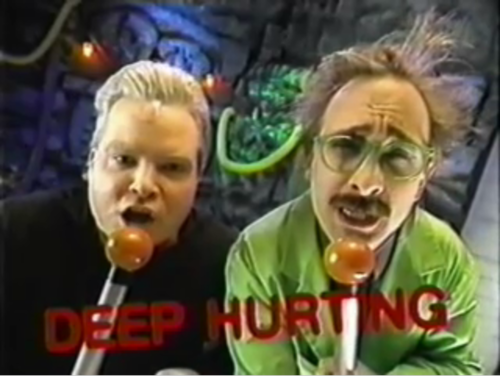
The first seasons of MST3k, featuring J. Elvis Weinstein in place of Frank Conniff as Dr. Forrester’s assistant, are the perfect example of a show finding its footing. This is not the fault of Weinstein, who’s more at home when the series was improvised instead of scripted. The second season introduced TV’s Frank and the series’ growing pains had more or less ended. By the show’s third season, MST3k had finally hit its stride.
By the show’s fifth season, a somewhat controversial change occurred when Joel Hodgson left the show and was replaced by series writer Mike Nelson. Nelson would be riffing with the robots until the series’ tenth and final season.
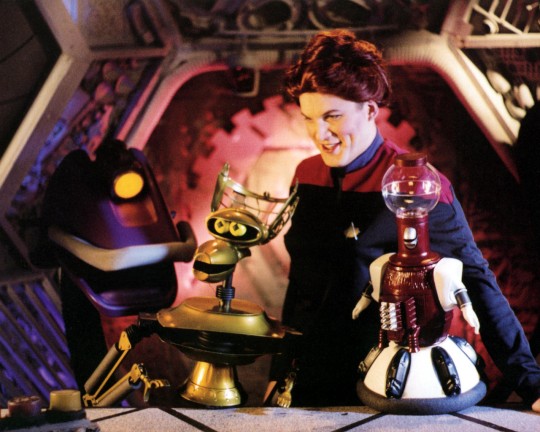
Mike Nelson (in drag as Voyager's Capt. Janeway) and the bots.
I’m not one for the Joel vs. Mike debate, but the show did decline on the latter’s watch. While Mike’s first few seasons on the Satellite of Love are a lot of fun, the show’s last three years are largely devoid of energy. In these seasons, wherein the show moved from Comedy Central to the Sci-Fi Channel, the jokes often plumbed easy targets like unattractive actors. The sketches between the films at this time were largely perfunctory and dumb.
This divide has less to do the loss of Joel, who did provide the show with a sweet-natured quality, than the losses of Frank Conniff and Trace Beaulieu. Conniff, whose job off-camera was to pick many of the experiments from the pile of VHS’ the staff would root through, had a wonderfully bizarre sense of humour the show needed. Beaulieu, in some respects, was the real star of the show. As Crow T. Robot, Beaulieu made excellent use of his gift for impressions and somehow made an awkward-looking robot puppet seem alive. As Dr. Forrester, Beaulieu displayed a manic intensity that put him on par with John Cleese at his best. His chemistry with Conniff resulted in some of the funniest and strangest sequences I’ve ever witnessed on TV.
When Beaulieu left after the series’ only film (1996′s MST3k: The Movie) and its cancellation from Comedy Central, MST3k never really recovered (Conniff left between Beaulieu and Hodgson’s departures). Mary Jo Pehl (replacing Beaulieu as the series’ antagonist) and Mike Nelson were never as strong as the show’s stars as they were when they played recurring guest characters. There were some great moments in those final seasons, but the show had lost a lot of its spark.
This divide is even more pronounced in the two post-MST3k comedies by the show’s two hosts. Mike Nelson’s RiffTrax offers audio files of Nelson (often joined by Kevin Murphy and Bill Corbett, who replaced Beaulieu as Crow in the Sci-Fi years) riffing on modern movies. While popular, there’s still the lack of fun that plagued MST3k in its final years. Joel Hodgson’s Cinematic Titanic, meanwhile, is an impressive sequel to MST3k, which features silhouettes of Hodgson, Beaulieu, Pehl, Conniff and Weinstein riffing on b-movie fare so often featured on MST3k. Cinematic Titanic is the more worthy continuation of the concept.
While copyright wrangling prevents all 198 episodes of MST3kfrom ever getting a home video release, there have been 20 box sets released as of this writing. The latest DVD release is sub-titled “MST3k vs. Gamera”. All of the experiments featured in this set are Joel-era episodes featuring a Japanese series of films about Gamera. Gamera being a giant, flying, fire-breathing turle that defends the Earth and is friend to children everywhere (especially boys in short-shorts, it seems). It’s a fine place to start if you’re looking to pick up a set.
The easiest way to get into the series, however, would be to watch one of the many educational shorts mocked over the course of the series. Such as…
Body Care & Grooming
What To Do On A Date
Hired (Parts I and II)
What To Do About Juvenile Delinquency
Posture Pals
Cheating
Why Study Industrial Arts?
As for full episodes, any of the following would be a great place to start….
Cave Dwellers
Gamera vs. Guiron
Master Ninja
Santa Claus Conquers The Martians
Teenagers From Outer Space
Monster A Go Go
Manos: The Hands Of Fate
Eegah!
Operation Double 007
Mitchell
The Brain That Wouldn’t Die
Red Zone Cuba
The Brute Man
Space Mutiny
Overdrawn At The Memory Bank
Puma Man
MST3k made me the man I am today. Well, that may be overstating it, but it definitely encouraged my already pop culture saturated sense of humour. If you’re looking for a show that’s funnier than peak era Simpsons and cheaper-looking than Beakman’s World, you’re in for a treat.
*One of these things is not like the others. One of these things just doesn’t belong.


Fri, Sep 23, 2011
24 Hours to Midnight