

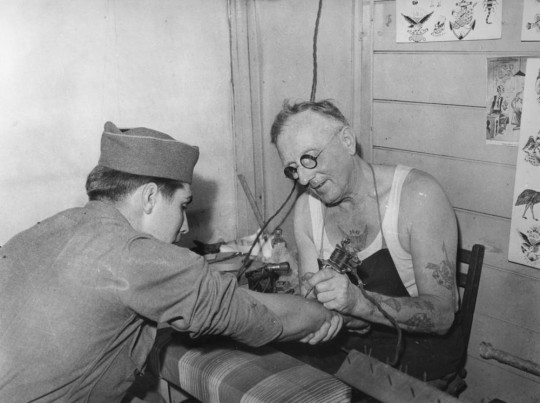
From humble origins as a trapping of the cultural fringe, tattoos have become increasingly mainstream in the past decade. Though unsafe tattoo and body piercing practises pose possible risks of infection and blood-borne pathogens like HIV and hepatitis, in Newfoundland the booming industry is still regulation-free. One local tattoo studio hopes to change that.
Dave Munro, owner of Trouble Bound Tattoos in St. John’s, is frustrated with the lack of checks and balances in the province-wide tattoo industry.
“The average person does not know enough about what they should be encountering in a tattoo studio to just be able to walk in and be safe,” Munro said. “[The provincial government] is putting people at risk by not intervening on behalf of the general public.”
Munro wants to see mandatory inspections be required for anyone operating a tattoo shop, comparing it to the heavily regulated food and beverage industry.
In 2006, a 17-year-old Newfoundland girl died from toxic shock syndrome, suspected to have been the result of a poorly sterilized nipple piercing. Then-provincial health minister Tom Osborne said he was considering placing regulations on the industry, but, four years later, there are none.
Munro says the revolving-door staffing situation at the Ministry of Health and the tattoo and piercing industry’s relatively low profile are largely to blame for this. “The only time this issue comes to the forefront is when there’s some sabre rattling,” he said.
While the public health concerns are the key point, Munro says from a tax perspective the lack of regulation is equally frustrating.
“I’m paying for a business license, which isn’t a massive amount of money for this province, about $1600 a year; now, you figure there’s four or five operating studios in the city, but there’s probably about [...] a hundred people tattooing out of their houses,” Munro said. “If you take that number, $1600 per person, you start seeing where the money is missing.”
He hopes that, if regulations are put in place, the tattoo industry will offer greater protection for consumers and increase perceptions of legitimacy about business owners.
“[The government] is more than willing to take my tax money and will hunt me if I don’t pay them, but at the same time they refuse to acknowledge me on the basic level of a donut shop,” Munro said. Nathan Downey






Nathan Downey | Thu, Mar 31, 2011 | 1180
Storefront