

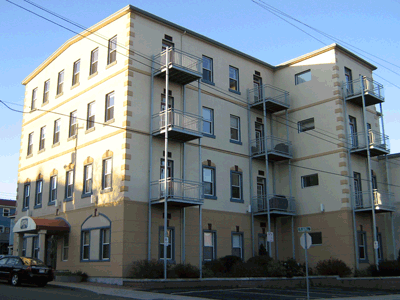
22 Flavin Street
As more of downtown’s old, industrial and commercial spaces are transformed into condominium developments, people (and grocery stores) seem to be returning from the suburbs they only recently fled to. And with this return, some of the stories surrounding these old places get lost behind the new drywall. One of the city’s earlier such projects was the conversion of the Imperial Tobacco Company building at the corner of Flavin and Bond in the mid 90s.
The original structure was built in 1903, and then rebuilt in 1910 after it was destroyed by fire. The factory produced over 800,000 cigarettes a year with tobacco from Kentucky and Virginia. One of their most popular brands was Mayo tobacco, a familiar name which decorated the factory water tower, as well as many building-side murals downtown. The name grew even more popular when it became the moniker of one of Newfoundland’s most celebrated World War I service men, Frank “Mayo” Lind.
Documenting his experiences and observations in countless letters which lead right up to his death at Beaumont Hamel, Lind has been called “Newfoundland’s unofficial World War I correspondent”. While stationed in Scotland in 1915, 36 year old Lind, of the First Newfoundland Regiment, wrote to The Daily News in St. John’s complaining about the lack of tobacco among the troops. His plea triggered six different local fund raising campaigns to send tobacco to the men overseas. The tobacco was, of course, Mayo brand, and the shipments came directly from the Imperial Tobacco Company in St. John’s.
The condominium block now known simply as The Imperial was the completed by Reardon Construction and Development Ltd to the tune of $3,200,000, and in 1997 was granted a Southcott Award by the Newfoundland Historic Trust.
—Lesley Thompson
Suggestion for a nook? nooks@thescope.ca





Lesley Thompson | Thu, Nov 8, 2007 | 590
Nooks & Crannies