

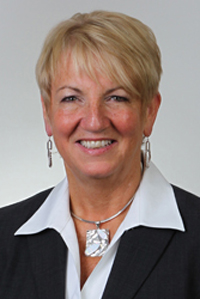
We spoke with most of the St. John’s candidates, asking them a set of questions about themselves and their party.
Good morning.
Hello Premier Dunderdale.
How are you?
Not bad, how are you?
I’m great, thank you.
It’s Elling Lien from The Scope newspaper.
Nice to talk to you.
Nice to talk to you. I have to be honest I’ve never spoken to a Premier before, one-on-one.
We’re just like everybody else [laugh], I hope you won’t be disappointed.
[Laughs] We’ll see. How are things going, you must be super busy?
It is a busy time, but you know this tends to be a pretty busy place anyway.
Oh yeah, definitely. So I have a set of questions that Sarah set out and it shouldn’t take much more than seven to eight minutes.
Yep, that’s fine.
First question: Are you having fun yet? [laugh]
[laugh] I like this job very much I have to tell you, and I was a little apprehensive coming into it in December, but found very quickly that I enjoyed the challenge of the office. I have an opportunity to meet so many people, I have an opportunity to work with so many wonderful people that I have to say, I have really enjoyed my time here, I really have.
You kind of indicated that you were making the decision as of last December or that you were warming up to the leadership position last December, is that correct?
Yep.
What made you change your mind, because there was a point where you said, “No, I don’t want to do that” but…?
Yep, well you know, I found out that Danny Williams was leaving the night before he made this announcement. [laughs]
Oh [laughs], that’s the kind of guy he is right?
Yeah, absolutely, so I didn’t have a whole lot of time to think through my position. I certainly up to that point had not been on a leadership track. It wasn’t something that I foresaw in my future, you know I thought he’d be around for at least another term and I wasn’t going to put myself on a leadership track for four years from now, you know for 2015, and that’s not where I wanted to be in my personal life. So I was thinking other things altogether about where my path might lie and so it was very shocking to me when he told me that he was leaving. And so I was very much caught off in my own reaction to that announcement and how I felt about that and extrapolated from that that, perhaps. A whole lot of other people in the province were feeling the same way. You know because there’s anxiety that comes with change and I thought perhaps the best way that I could serve the people of the province was to be very focused on the running of the place through the transition so that I could bring stability and assurance to the people that somebody was at the helm paying close attention while we went through the transition. I thought that was very important.
So you kind of had a dry run before you actually could make the decision?
Yep. And then, you know, in terms of the reaction of the people of the province, a significant number of them had a different view and so they began to encourage me right from the earlier stage to reconsider that decision and the members of my own Caucus approached me and asked me to reconsider that condition and so I respected them enough and was humbled enough by their confidence in me to say to them, “Yes, I will then. Maybe over Christmas I’ll have a think about it and talk to my family about it and see where we are.” And, you know, even in those early days I knew that I could do the job and I knew that I was certainly enjoying the job and that if I had the confidence of my party first of all and secondary that kind of support in the province that I’d have a go at it.
I’ve already gone off the rail here on the interview – but what attracted you to this kind of position? There’s a huge amount of responsibility and pressure and…
There is, absolutely and you are absolutely consumed by it, but it’s the opportunity to contribute to the positive growth of this place where you live and a rare opportunity and to do good things. And you know, very few people in the province get to do that.
The power. [laugh]
Very few people, yeah, get the opportunity to sit in the Premier’s office and direct a lot of that, to guide a lot of that. And that’s an amazing position to hold.
You’re not going to let it go to your head are you?
I haven’t and you know, I don’t think that I will. I tend to be very grounded in any case and I mean I’ve lived long enough now to certainly have a good understanding of who I am. And I’m proud of who I am. You know I’m proud of my family, I’m proud of my parents, the fact that they… you know, that we weren’t rich people. My father, or mother never earned an easy dollar in their life and they worked hard, very hard, like most Newfoundlanders and Labradorians, for everything they had. They struggled to raise the family but they did that with value and generosity and love and all that kind of stuff. I’m so proud of that, I don’t want to be anybody else.
I should have asked this question first and you kind of segued into it, but you said recently, “I’ve had people try to define me all my life.” So, who are you?
Well I’m a woman of Newfoundland and Labrador who has lived all of her life in this province, I’ve been a partner, a wife in a relationship for 30 years, have raised two children in this province. I’m a grandmother of four beautiful boys, I’ve worked and lived in [the] community all of my life, I’m passionate about this place and I have a view on our history and I don’t think we have served ourselves as well as we ought to. I certainly don’t think that others have and I believe very strongly that it is important to take control of our destiny and to have a vision of where we want our province to go, what it is that we see.
How do we achieve our full potential as a people? And I mean for me then there’s all kinds of sub-groups to that, you know, how do we be inclusive? How do we ensure that everybody in our community, everybody in our society can live a fulfilling life, have the means to earn a reasonable living here and get educated and you know, have a good life and become all that they can be and to be included in every aspect of society in this place? How do we make all of that…? I think it’s clearer now than it has been at any time before in our history that we have all the elements to make all of that happen. So that’s what fuels me, the vision of that, you know the fact that we have the tools and the ability to do all of that and to be part of the leadership in making all of that happen – that’s pretty exciting stuff.
And the next question is also big. These are all big, short-answer questions. Why should we trust you?
Because you can look back over my life, which has been a fairly public life. I have always been involved in community building. I have had leadership positions in the past in terms of municipal government particularly, but in terms of social issues as well, economic issues as well. You can look back at 30 years of history and see the role I played, you know of the principles I espouse and the way I have conducted myself. You also have eight years of governance to look at where I have been the minister of two principal, senior departments…
Yeah, they’re not small portfolios.
No, either one… and how I have conducted myself and the work that I have been able to accomplish and lead in both of those departments; the fact that I was Deputy Premier, that I was Acting Premier, while Premier Williams was out for his heart surgery and you know on what I’ve done in the last eight to ten months. There’s nothing more that I can offer up other than, here’s my experience, here’s my record and here’s how I have conducted myself over 30 years. I think you can make an extrapolation out of that; that this is a woman of principle that we are dealing with here.
What in this moment in history do you think is the biggest challenge facing the province?
Well we are starting our transition from a non-renewable economy into a renewable economy and that’s a challenging prospect for the people of the province, you know, to have confidence that we are going at this in a strategic and well-thought out and well-planned way and it’s not without anxiety because it requires that we take some risk here. So that’s the challenge we have before us.
I smell Muskrat Falls in the air. Is that what you are talking about?
Yeah, absolutely, I mean we laid out our vision for economic development in this province before the last election, in the energy plan we released at the end of August, early September 2007, and that was a critical part of the 2007 election. Here’s the plan, here’s how we are going to do it and you know this is part of our platform, and we had a resounding result in the election and so an endorsement of that vision and that plan. You know, here’s the plan, here’s how we are going to do it.
When people come up to you on the street or you are talking to them at parties or whatever, they are kind of on the fence, they don’t understand Muskrat Falls.
What’s your elevator pitch?
Well, you know, all they have to do is look at their light bills and see that their light bills have gone up 35% in the last 10 years. All they have to do is look at the news or go to the gas station and see that oil prices continue to rise and rise and rise and countries all over the world are trying to manage electricity costs and so on if they are fossil-fuelled based, and that something has to be done, because otherwise we are not going to be able to afford electricity. You know, if you go to CNN, you’ll see those kinds of discussions happening in the United States, you’ll see them happening in Great Britain and so on, so the predictions that have been made by Nalcor for example, and assumptions, are shared all over the world. Anybody who is paying attention, will find the same kinds of predictions, forecasting and concern about how we are going to manage all of this, taking place all over the world and hydroelectricity is something that we understand very well, it’s an old technology but still works very well for people, we’ve had 50 years of experience of doing it here in province and it’s the way forward that will provide us a new energy we are going to need to run the place, but it will stabilize those energy prices because we don’t have the volatility of oil anymore.
This is again going off the page here, but why hasn’t wind power been in the forefront?
Just let me say this to you in the most respectful way [laugh], these are the kinds of questions that get asked but you see that’s the education that we need to do – because wind is more expensive than hydro. Wind is intermittent alright, so for example if you need 500 megawatts of power and you need it every day for 365 days a year and somebody contracts that to you, that they want 500 megawatts of power, then you’ve got to deliver that. You can’t call them up and say, “Well the wind is not blowing today so we can only give you 300 megawatts of power today.”
Get some out of work Newfoundlanders to blow at it or something [laugh].
[laugh] So because wind is intermittent, because tidal is intermittent, because solar is intermittent, you have to do what we call back-stop it. So you have to buy or provide for electricity from another source to provide that 500 megawatts, that extra 200 megawatts for example when the wind is not blowing or the sun is not shining or you know… So it costs more and when people are selling you the power you can’t say to them, “I’m only going to come get this power if I need it”, you’ve got to take it everyday, so you’ve got to back-stop your wind. So here on the island for example, we’ve got lots of wind, we’ve got 5,000 megawatts of wind in Labrador, which is as big as the Upper Churchill, and once we get it out, we’re able to transmit it out of Labrador, then we’ll be able to back-stop it with the Churchill River so that’s a real plus for us, but you know, to develop wind on the island in an isolated system without a means of back-stopping it is so expensive, ‘cos we’re still tied to thermal. We wouldn’t be able to shut down Holyrood. What are we going to do when the wind stops blowing?
Yeah, I know, exactly. I totally agree with you, I think large-scale wind is the way to go but…
Large-scale wind will play an important role in our energy warehouse but we’ve got to find a way to back-stop it first and it is more expensive to develop as our main source of power. Once we get Muskrat Falls and Gull Island developed then it only makes sense for us to develop wind, because then we don’t have to back-stop, we don’t have to buy nuclear to back-stop it, we don’t have to build thermal generation to back-stop it; we’ll be able to back-stop it with our own hydro. And you can see some of the complications in explaining this to people who don’t have an expertise and don’t deal it with every day. It’s a complicated subject.
But it’s on the radar and maybe I’ll come back in 20 years and ask you the same question [laughs].
[h] Yeah and it’s trying to work your way through it. You know I do this every day, or did it every day for five years in the department and so when you are dealing with it every day it seems fairly straightforward and of course experts at Nalcor are dealing with it for 30 years – but you know it certainly wasn’t clear to me when I first started dealing with it and it’s not clear to people in [the] community when they are trying to wrap their heads around these concepts and stuff. So in terms of Muskrat in talking to people it’s a complicated piece of work that we are trying to break down as much as we can into simple language and simple concepts and make it available to people and that’s why Nalcor has been going all over the province and holding forums and information sessions and so on, so that people in their own community come into the parish hall or the community centre or whatever and spend hours going to the different booths, talking to people from Nalcor who own the expertise, who are doing their very best to explain this as simply as we can so that people are able to understand the concepts and the principles that are driving the whole development of Muskrat Falls and the Lower Churchill generally.
Wouldn’t it be nice if politics was less political? [laugh]
[laugh] Wouldn’t be near as much fun though [laugh].
Okay. I still have a couple of questions but these are short answers and kind of for fun. They’re big questions though: How would you like to die?
Peacefully, a very old age in my own bed.
Okay. Have you ever been so heartbroken you called in sick for work?
Yes.
What’s the worst job you have ever had?
I suppose.. I don’t know.. house cleaning, that’s the worst job I ever had. It’s an endless job, that’s the thing about it. You know you just get finished [with] your house cleaning and you got to start all over again, you know sometimes you don’t even get 15 minutes to enjoy it, especially when you have children.
What was your favourite TV show when you were a kid?
Ed Sullivan.
What’s your favourite TV show now?
A Criminal Mind.
I don’t know that one. Would you sing karaoke in front of your co-workers?
Not on your life. Although I have to tell you that I take my I-pod with me everywhere and sometimes I forget that I am not alone, much to the amusement of my fellow travelers and colleagues.
Right[laugh], isn’t that weird, Premier Dunderdale singing ABBA. [laugh]
I get signs like ‘shhh’ and hilarious laughter. Apparently I let loose in the airport in Toronto earlier in the week, much to the amusement of friends.
Were you that jet-lagged that you didn’t realize…?
Well I was just singing along quietly I thought, but apparently not. [laugh] Much to my embarrassment.
What were you singing?
Oh, “Move like Jagger” or something like that.
Can you sing a little bit now?
No! [laugh] I shouldn’t have sang a little bit then. [laugh]
What’s the best concert you have ever been to?
Oh, The Rolling Stones, in New Brunswick. I guess it was two years ago – no, that’s not the best, that’s the second best. Leonard Cohen, Holy Heart. Surreal. It was amazing. Everybody who was there that night, there was 1,000 of us that almost had an out-of-body experience that night. I’m telling you it was the best concert I have ever been to.
I’ve heard that often from the people that were there too.
Yeah, it was amazing.
What’s the most spontaneous thing you have ever done?
Well there’s been a few. I tend to be spontaneous anyway so…
Is that a good thing?
Yeah, it is… It’s a long time ago. My late husband was a Master Mariner and he was in Montreal and I suspected I might be pregnant and without telling anybody jumped in a car and took off to Montreal to tell him face-to-face. Got stuck in a great big storm on the ferry for three days and then had to drive on to Montreal. By that time he was well aware that I was on my way but he wasn’t quite sure where I was or why I was coming and when I got there I got the silent treatment before I got the blast and thank God I was pregnant, because he was so angry with me that I don’t know what else would have softened him up. [laugh]
Pretty good story. So were you on the boat for three days?
Yes and incommunicado, so my mother had to break down and tell him I was on my way. He was so worried he was beside himself, so when he knew I was safe he was furious.
Last question now, what’s one of your worst habits, or your worst habit?
I don’t know, drinking too much coffee, I think that’s not good. I like it a lot, I’m not disciplined around it, I shouldn’t be drinking it at all.
Oprah says the green tea right? [laugh]
Yeah and I try the green tea but really, coffee is a real weakness for me.
Alright. Thank you so much.
You’re welcome.
Good luck and great day.
Thanks so much and you too, bye now.






Elling Lien | Fri, Sep 30, 2011 | 1194
Election