

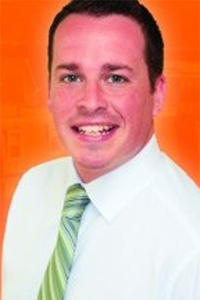
We spoke with most of the St. John’s candidates, asking them a set of questions about themselves and their party.
Our first question is who are you?
My name is Keith Dunne and I’m the NDP candidate for St John’s South.
Why should we trust you?
For over 12 years I’ve been working either in the student movement or in the labour movement or in community and non-governmental organizations, dealing with a range of issues: affordable housing, access to education, childcare, healthcare. And I guess I should be trusted based on my track record which is, you know, working for students, working for regular people to try to make a difference in their lives and so I think that’s the reason for trusting me.
Is this your first time running in provincial politics?
Yes it is.
What made you decide to run?
There was a host of reasons. I saw the provincial government I think getting closer and closer to the Harper crowd and that was one of the reasons that pushed me in the direction of running. Again I’ve been trying to build better communities and [a] better province through my work in the student movement for a number of years and I really want to make a difference and give back to the province and you know I thought that running and becoming an MHA would be the best vehicle for me to make a real difference in the future of the province. So there was a host of issues, but those are the two that really stick out in terms of my final decision to run.
Why did you choose to go right to provincial and not maybe start at municipal level or something?
It was a matter of timing. It was a matter of sort of looking at the federal election and then the provincial election coming up – and I have an interest in municipal politics – but in terms of the timing, where I am right now in my life, and I think at a provincial level I can really deal with and touch on the issues that are most important not only to me, but [to] the future of the province and the people in the district and you know, that’s issues around affordable housing, around senior care, around healthcare, around education, you know issues that I’m passionate about, issues that I have worked on before and I think that the provincial stage is where I can make the most difference right now in my life.
Okay, fair enough. What do you think is the biggest challenge facing your riding?
Well I’ve knocked on just over 2,500 doors so far myself, over the course of the past couple of months and there’s a couple of issues that come up sort of time and time again and we take detailed notes on this, but childcare is a big issue, affordable housing has come up a number of times, senior care has come up again and then there’s sort of a general sort of category around finances and concern around personal finances, about being able to make ends meet, you know particularly seniors talking about how they are going to heat their homes through the winter and pay for groceries based on the limited amount of funds that they have. So there’s a number of core issues that come up. I mean I think again that the three that I hear the most are around affordable housing, childcare and senior care issues.
Okay. What do you think are the biggest challenges facing the province?
I think there’s a number of challenges facing the province, you know right now we’re sort of in a period where based on world revenues and that – obviously there’s more money in the coffers – but that’s not going to be there forever, it’s a non-renewable resource, so I think the challenge right now is setting ourselves up in such a way that we are ensuring that no-one is falling through the cracks right now and that everybody shares in the prosperity, but that we’re setting ourselves up for the future. And it’s been a challenge for a lot of governments at a number of levels, it’s looking far down the road and seeing what the challenges are, seeing what our strengths are and then building from there to be able to set ourselves up for the best way possible. So I think that’s a challenge, I think you know, in terms of the way that the federal government is moving towards austerity measures, I mean you look at for example the closure of their Maritime Rescue Subcentre in our district, or in my district. I think it’s going to be a major challenge in terms of the way the federal government is going to try to claw back services and jobs here in the province, so I think that’s a major challenge for us. So there’s a number of challenges for the province, but to be honest I think the future of the province is quite bright, I think we’re poised to have a brighter future, we just need to make sure again that we are trying to you know, lift the standard of living for all Newfoundlanders and Labradorians and not just those select few that are able to connect themselves to the oil and gas industry, so you know for rural and urban, Newfoundland and Labrador is where we need to make sure that we are preparing for the future.
What do you think we should be doing with the oil money in order to shore up for the future when the oil runs out?
Well I think there’s a number of things that we need to do. I think we need to make sure that we are strengthening our social safety net to make sure that… so that we are breaking down the barriers to education, so that people can get the training and the education that they need so that they can be prepared for you know, the future market, the future economy. I think that’s incredibly important. Again, I think we need to make sure that we are sharing the wealth; I think we need to make sure that we are looking at rural development, looking at ways that we can revitalize the fishery, which is again a renewable resource that is incredibly important to the province, not just rural Newfoundland and Labrador. So I think the key right now is to ensure that we are making the right decisions fiscally, that we are being fiscally responsible but that we are setting ourselves in such a way that we are prepared for a time when oil runs out, that we prepare for a time when we move from that oil-based industry to.. industry outside of that. So I think it’s incredibly important that we make sure that we are breaking down the barriers of poverty, of affordable housing, of education, of access to healthcare and revitalizing our fishery I think is a keystone to what we need to do to move forward.
Okay, what’s the most spontaneous thing you have ever done?
[laugh] Wow, that’s a very good question. I’m sort of a planned approach sort of guy so spontaneous is not really up my alley so I can’t really think of anything right now off the top of my head. I’m sorry.
Fair enough, that’s alright. What’s the best concert you’ve ever seen?
I saw Dave Matthews Band in a place called Fishers, Indiana. It was an outdoor amphitheatre, it was a three-hour long concert and it was absolutely amazing.
What’s the worst job you ever had?
The worst job I ever had was I had to clean out barrels at an industrial site for part of one summer and that was absolutely awful, hot work and I very quickly looked for a new job after a couple of weeks there [laugh].
Fair enough[laugh]. Would you sing karaoke in front of your co-workers?
I think I would yeah, if I was egged on enough I think I’d get up and sing a song I was comfortable with, but I’m not the first one to line up to do karaoke [laugh].
Alright. Well thanks so much and take care.
Okay, thanks a lot, Sarah. Yeah, no problem, I really appreciate it.
Thank you.
Okay, bye-bye.






October 4th, 2011 at 2:30 pm
keith. you’re pink.
i like it.