

Archive | Special Feature RSS feed for this section
The Distro King
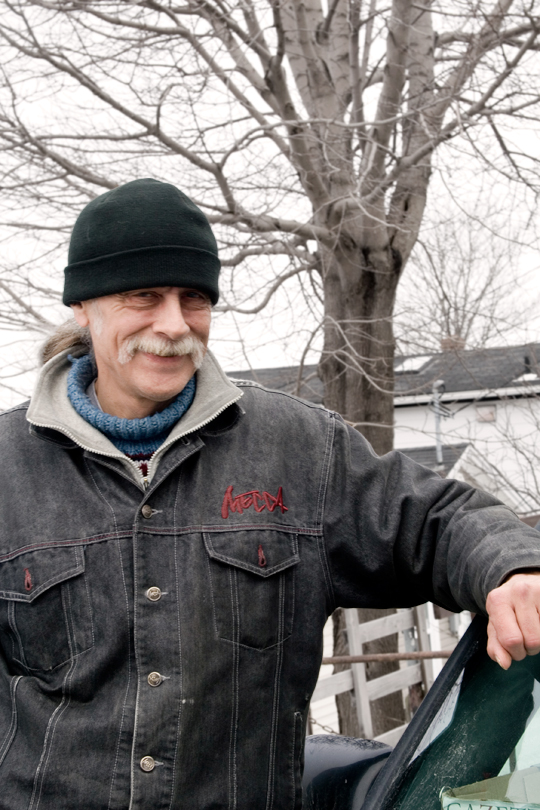
Photo by Martin Connelly
Barry Ross has distributed The Scope since our first issue in 2006, and for the last ten years or so he’s been distributing publications and hanging posters. These days he works for 12 different publications, and spends most of his days on the road.
So how did you get into this?
When I think back to many decades ago there were times I’d do something along these lines, jack of all trades or whatever kind of scenario—but as I’ve started to age I can see these things that you maybe did one or two times as a kid turn out to be what your career is—and it’s starting the education for your career as it were.
It started with The Muse. My wife was working at MUN, and I’ve always had an interest in university newspapers and stuff, so I used to read The Muse, and they were advertising that they needed an off campus distributor. The ads kept staring at me in the face—and then I realized I liked The Muse, I want to be helpful if I can be, and I’ve got a vehicle and I love to drive, so jeez, why don’t I check it out? And that’s what got me into it.
How long have you been at it then?
I started about 10 years ago, with The Muse off campus, and then shortly thereafter with The Gazette off campus, and then The Scope came along, and after that I decided to find some other publication to distribute and make it a full time job.
So how many are you distributing now?
About 12, all around.
How did you get connected with The Scope?
They found out about me through The Muse, actually, long before the first issue. I had a little meeting with them and they hired me on as it were, so from the first issue on I was the first car route distributor. Eventually they added enough locations so we hired on a second driver and as it stands now we have three drivers and one walking route. Two people can do it, but boy it’s a long day—a 15 hour day from early-early till late. Especially in the winter when weather can slow you down.
Tell me about a typical day distributing The Scope.
I get on the go pretty early. As it turns out I do a lot of driving but I do a lot of walking too. I must walk about five miles a day—quite often it is carrying a bundle of papers. It’s sorta non stop. I might swing through a drive-thru to grab a bite to eat or something, but usually I only do that if I know that the next location I need to go to is more than a five minute drive away—I don’t just sit there in the car and eat. I just do it when I’m moving.
The more I do it I’m getting calmer with it. It is sort of stressful because you are in traffic all the time, so you have to look out for accidents—but you’re multitasking because you have to think about what you just did and what you’re going to do. You design your route, but then you might be doing something a little differently—so you’re constantly at least mentally willing to ad lib any given moment. So you can get pretty stressed out by the end of the day. But I’m finding now that I can be less stressed and I don’t know if it’s self control, or if it’s easier now, or if it’s just that I’m not sweating the small stuff I shouldn’t have been sweating in the first place.
Get over it and get on with your stress free life, y’know?
So do you run into a lot of people throughout the day?
Well certainly, a lot of the places I go, people can see me coming through the front window, and they’re real happy to see me because they’re bored—so the first thing they’re gonna do is grab a copy out of my hands before I even put them in the rack. And even if we don’t have a fantastic rapport they’ll yell out “thanks” as I’m walking away.
How about people who aren’t as nice?
The only time I’ve ever had direct negative comments are when we’ve been terminated. One example would be Carpenters Millwrights College in Paradise. They’d taken the rack and when I asked about it they said, “oh yes, we have it here—we don’t want this anymore.” And I said, okay, like I don’t even ask why, because usually they’ll volunteer it. And if they don’t I’ll just walk away anyway.
With the sex column in there, that’s quite often why they get terminated from a location. She would tell me, “oh the sex column in there was awful! In just one of the responses the guy there he said the word ‘fuck’ four times!”
And I’m thinking, really, for a college, the word “fuck” is what got them? Not the actual sexual goings on in the column, but to be upset at a college over the word “fuck”—I don’t get it. But what can you do in a situation like that? Generally speaking they know I’m just the messenger, just the delivery guy, so they’re generally okay with me. If they seem to be addressing me personally I tell them “I’m just the paperboy, y’know?”
Do people ever mess with the publications?
I sort of call it a jungle, you know? There’s all kinds of animals out there, and you never know what to expect. One thing that bugs me is when someone will take one and read it, crumple it up, and then put it back in the rack—don’t you get it? You’re supposed to take it! That kind of bugs me, especially when quite often they’ll put it in backwards so you can’t see the front cover anymore. And that effects sales, as it were. Or sometimes they’ll pick up the whole stack of papers and turn them all around. And why would you do that Mr. Monkey? Only monkeys know.
It sounds like you take some ownership over the publications you’re distributing.
Well for sure, like one other monkey thing I’ve seen is I’ll go into some location and someone has come in with a new publication and they’ve taken over our rack or something—and it’s like, that’s not cool. If you can’t afford your own rack just put a pile on the counter. And just these areas where publications are located—they become all messy. When I’m in there with whatever publication I have, I do some housekeeping, I tidy everybody’s stuff up and do some rearranging—to fit everything in the space in the best way, because it’s better for everyone if it’s like that. Even if someone takes over our rack or whatever, I won’t throw them out, I’ll just put them somewhere where they should be. So I do have a certain ownership of the whole scene in a way. It’s my business, and I only want the best for it.
The answer, my friend…
Thu, Oct 22, 2009

We have oil. For the moment.
But what else do we have?
We have lots of wind.
In fact, Newfoundland and Labrador is the windiest province in Canada. But right now we have only three small wind energy projects operating here, and generating electricity from wind is still low on our list of priorities.
But are we overlooking what could become our biggest energy resource?
While European countries are setting to work building massive onshore and offshore wind farms just across the way, our provincial government is single-mindedly pursuing the development of the Lower Churchill for hydroelectric projects. Is wind energy for Newfoundland and Labrador getting lost in the shuffle?
With the following three articles, The Scope will take a look at what’s blowing in the wind…
•••••••••••••••
Wind vs. Hydro
By Justin Brake
Standing before a crowd of about 1,500 in Los Angeles, California, Newfoundland and Labrador Premier Danny Williams seems in fine form.
He’s at the Governor’s Global Climate Summit 2, organized by none other than California Governor Arnold Schwarzenegger, where academics, NGO reps, energy industry executives, and government officials from around the world have gathered there to discuss their role in addressing climate change.
Newfoundland and Labrador has unparalleled potential for the development of a substantial renewable energy industry, Williams proclaims, saying a transition from oil-based energy to clean, renewable energy will play a significant role in the province’s strategy to address climate change.
But to end the province’s dependence on oil-based power, Williams is looking to the controversial Lower Churchill Project, which includes plans for two hydroelectric dams in the Churchill River – one at Gull Island and one downstream at Muskrat Falls. It’s claimed that the project will produce energy for 1.5 million homes with little environmental impact.
“There was a tremendous amount of interest in the Lower Churchill project, as it was recognized by many I spoke with as a phenomenal green energy project,” Williams writes in a press release issued on the last day of the summit. “This hydroelectricity project is a simple, tried, tested and true technology for delivery of clean, green energy for North America.”
So what in Joey’s name are we waiting for?
Dr. Piotr Trela, Climate Change and Energy Coordinator for the Sierra Club Canada’s Atlantic chapter and member of the Atlantic Canada Sustainable Energy Coalition St. John’s is not quite as enthusiastic about the Lower Churchill Project.
“I think there’s a danger in concentrating too much on this project, which has pretty serious financial and environmental issues,” he says. “We may be neglecting a whole range of other projects which could produce as much energy, probably at a lower cost, and with more benefits actually going to the communities as opposed to the provincial government.”
Instead, Trela advocates a province-wide network of community-owned and operated energy generation projects, comprised primarily of wind farms but also of strategically-placed small hydro dams.
These options, he says, seem to have been overlooked.
According to Trela, the Lower Churchill Project falls pretty short of “green.” Forest clearing, methane-producing pools of stagnant water and wildlife displacement are just a few of the problems the project will bring to the area, he says.
Small scale wind farms and hydro dams, on the other hand, can have pretty minimal ecological footprints, he says.
“Every form of energy production will have some consequences,” he explains. “But some of those consequences are different for different types of energy. It also depends on the scale and on the particular location. You can do a lot of damage if you put a wind farm in the wrong place if you have, say, bird migration, or if you put it next to houses and people complain about the noise.”
“Generally though,” he says, “wind power seems to have one of the least amounts of environmental problems associated with it.”
In terms of greenhouse gases, Premier Williams is adamant the Lower Churchill will produce “clean” energy.
“We will, over the next 30 years, as we move into the repatriation of the Upper Churchill, go from a fossil fuel economy to a very much clean, green economy,” the Premier told The Muse upon returning from California. “Ninety-eight per cent of our electricity, for example, will be clean and green.”
The term “clean” typically implies a zero-carbon emission standard. But, as Trela explains, this is not possible with large scale hydro projects.
“If water is stagnant, it produces methane, which is a potent greenhouse gas,” he says, referring to the reservoirs that would likely result from the necessary flooding of drylands. “So if you hear that [large hydroelectric dams] are a greenhouse gas-free source of energy, it’s not entirely true.”
Conversely, wind farms produce minimal carbon dioxide and other greenhouse gas emissions, says Trela.
“The primary objective of the Lower Churchill is the export of energy,” says Trela. “And, I mean, that’s a part of the thinking. We take the oil, which has been mainly exported and is non-renewable, and use the profits to build a basis for the renewable system. My problem is that the alternative to the one big mega project was never given a chance to be heard.”
•••••••••••••••
Where are all the windmills?
By Sarah Smellie
Mayor Wayde Rowsell gets downright dreamy when he talks about it.
“From all different focal points here in St. Lawrence, you can see these majestic towers against the blue sky and the rugged terrain,” he says, pausing for a contented sigh. “It’s just beautiful.”
St. Lawrence—on the southern edge of the Burin peninsula—is the kind of town where, on a mellow Friday afternoon, the direct line from City Hall to Rowsell’s office is his home phone number. But it just so happens to be famous for energy innovation, being the site of the province’s very first wind farm; nine Vestas V90 wind turbines line the shore just within the town limits.
All together, the sleek, triple-bladed rotor towers push a maximum of 27 megawatt hours of energy onto the island’s power grid.
“It’s brought a lot of wind change and a lot of political change,” chuckles Rowsell.
Initially, the construction of the 80 meter-high towers created over fifty jobs for the community. Now that they’re up and running, there are six full-time employees tending to them.
The project has also been a boon for St. Lawrence’s tax base.
“We signed off a twenty-year tax deal which will equate to a minimum of two million dollars over those 20 years,” Roswell explains. NeWind Inc., the company that owns the farm, has also committed to a donation of $30,000 over five years to the St. Lawrence Soccer Association—a fine way to make friends in a town that christened itself Canada’s Soccer Capital.
“I wouldn’t mind if we had three or four of these wind farms, it’s been such a positive thing here,” says Rowsell.
Over in Fermeuse—on the Avalon’s Southern Shore—they’re reaping similar benefits from their wind farm, which was completed in the spring. “I use the access road as a walking trail, and the sight of those windmills is something amazing,” says the freshly elected Mayor Perry Oates. “Last week, there were even three tourists with cameras.”
The Fermeuse project, owned by SkyPower Inc., spreads up over the side of a hill a few kilometers outside of town. It’s identical to the St. Lawrence farm—nine Vestas V90s spinning away in the breeze. Combined, the two farms generate a maximum of 54 megawatt hours for the province. That powers 14,000 homes without burning a drop of oil. In fact the power generated from the wind farms has cut down the Holyrood Power Station’s oil consumption by 3330,000 barrels a year.
Oates says he’s never heard a negative thing about the farm. The project has brought jobs, people and tax money. Like Rowsell, he finds the structures to be quite remarkable. “You stand under them and look up and you think, ‘My Christ, how did we ever build such magnificent things?’ “
Perhaps the real question is: Why aren’t we building more of these magnificent things?
According to Greg Jones, Manager of Business Development at Nalcor Energy, the limited wind power is due to the limited Newfoundland power grid. “Wind is predictable, we know how much we’ll get per year, but we don’t know when and how fast it will come,” he explains. Neither the Fermeuse nor the St. Lawrence wind farms have mechanisms to store and streamline the power they generate, so the wattage output varies with the wind speed – high-velocity winds throw maximum power onto the Newfoundland grid. In these situations, Jones says there’s nowhere on our grid to push the surplus of power from more wind turbines.
“I’m not sure why that last storm we had didn’t get named,” he laughs. “But we had to shut down [the connection at] Fermeuse.”
A new Wind-hydrogen Diesel project in Ramea, which Jones describes as “strictly R&D,” is using hydrogen technology to store surplus wind energy and dodge grid problems. Wind-generated electricity converts fresh water into hydrogen and oxygen. The oxygen is released into the atmosphere and the hydrogen is stored in two tanks. It can then be used in an internal combustion engine to produce electricity. Its off-the-grid technology is promising for small scale operations, but for large, island-wide power, it’s just not feasible. We’re stuck on the grid.
“So the 54 megawatts from these two projects are as close to the maximum that we could put on our grid right now,” he says. “That is, according to the theory.”
The actuality might be very different. “Studies may show holes in the system which could store more energy,” he says. If holes are revealed, they’ll be looking to wind power to fill them. “There are more monitoring towers reading wind levels as we speak.”
Ultimately, he believes that a connection to the North American grid is going to be our ticket out of non-renewable energy dependence.
“At times when we have surplus wind generation, we’ll push it onto the grid,” he says. “We’ll be able to shut down [the power station at] Holyrood.”
“A renewable future for our province is a very real thing,” he adds.
Over in St. Lawrence, Mayor Rowsell agrees that things are sounding pretty good. “You stand up by these gigantic wind towers and if you’re very close, you can hear a swishing noise from the blades, and that’s it. That’s the only noise you hear from them while they’re doing all that work,” he says.
“We’re striving for a more environmentally friendly way to power the rural communities and this is it.”
•••••••••••••••
In the back yard
Imagine being free of annoying light bills and reducing carbon emissions at the same time.
That’s what having a wind turbine on your property provides.
While many say residential turbines are not the only answer to our energy problems, they are still considered a step in the right direction.
With a combination of economic and environmental advantages, you’d think wind turbines would be everywhere. But according to one local businessman, setting things up can be an unnecessarily confusing and time-consuming process.
Shawn Hayward looks at the rules surrounding residential wind turbines.
Ten years ago, Gerry Skinner discovered the practical draw of renewable energy. After helping a friend install a solar panel onto his cottage, a neighbour said he wanted to save on his electricity bill by getting one for his cottage as well.
“It caught on, and we realized this could be a profitable and fulfilling profession,” says Chris Skinner, Gerry’s son and co-owner of New Found Energies, a company that installs wind turbines and solar panels in residential buildings.
The more energy a turbine creates the less people have to buy from Newfoundland Power. Wind turbines pay themselves off in seven to eight years, according to Skinner, and have a life span of about 20 years.
The turbines can generate all or part of a home’s power, depending on how far the homeowner wants to go, but Skinner says it’s his goal that each installation is able to generate as much power as the household buys from the public provider.
Since opening in 2000, New Found Energies has installed over a hundred turbines across Newfoundland, but Skinner says obstacles from both levels of government are slowing the growth of turbines across the suburban landscape.
Nalcor, the provincial Crown corporation which controls energy resources, hasn’t made its policy on household turbines clear, according to Skinner. People still don’t know that wind turbines are an energy option.
“They don’t encourage people to do it,” says Skinner. “We’re always trying to get something concrete for the homeowner, so that someone can go to the website and download what their regulations are on it.”
Municipalities such as Stephenville on the west coast have banned wind turbines completely, citing noise complaints, safety concerns and aesthetics. Portugal Cove-St. Phillips is one community that allows wind turbines, and St. John’s recently approved a wind turbine in the Goulds.
The capital city judges each application individually based on the location of the home, according to a city official. A turbine close to other houses will create more noise complaints than one far from any neighbours.
Skinner says there is no reason for noise complaints against wind turbines. “Ambient noise alone in an area can usually drown out a wind turbine,” he says.
The only obstacles for people in municipalities that allow wind turbines are the suitability of their property for the structures. Tall trees and buildings can decrease the energy produced, and high wind speeds can damage the turbine. The direction of prevailing winds doesn’t matter because most turbines turn automatically to face the wind.
Green energy has been a much-talked about issue over the past few years, but Skinner says none have his customers have benefited from tax rebates to reward them for the carbon dioxide they are taking out of the atmosphere.
“It’s a hard sell because there’s no incentive from the government or utility to produce your own energy,” he says. “The user is on his own to fund this.”
Windiest province
Newfoundland is the best location for wind energy in Canada, according to Dr. Mohammed T. Iqbal, associate professor of electrical engineering at Memorial University, who specializes in renewable energy. The average wind speed must be higher than six metres per second to make a wind turbine viable, Dr. Iqbal says, and with the highest average wind speed in the country, most of Newfoundland and Labrador meets that requirement.
The price of oil affects the economics of wind generation, according to Dr. Iqbal. The higher the price of oil, the more public utilities like Newfoundland Power must charge their customers for energy, and the greater incentive people will have to provide their own electricity. Right now about 20 per cent of power on the island comes from burning fossil fuels.
While there is an oil and gas degree program at Memorial University, there’s no program for renewable energy here or anywhere else in Canada. Dr. Iqbal teaches a single course dedicated to renewable energy, the rest of his time devoted to general electrical engineering.
Dr. Iqbal says more engineers specializing in wind power generation would provide more manpower to build the structures and research more efficient ways of harnessing the wind.
“It would be very good if we had a degree program at MUN or any university in Canada and graduates were coming from the program to these new installations,” he says.
Wind energy in Canada now produces enough energy to power 560,000 homes. In September, the Ontario Power Authority (OPA) announced a program that makes it easier and more profitable for people to set up renewable energy systems like wind turbines. Homeowners can sell the excess power they generate to OPA after filing an application and signing a contract, and all relevant information is provided on a user-friendly website.
Household wind turbines are still a rare sight in this province, even with our famously strong breezes. If utilities made the process less complicated, if municipalities didn’t deny applications, and the provincial or federal government offered incentives for household green energy production, there would be a lot more turbine blades in the air, and a lot less smoke.
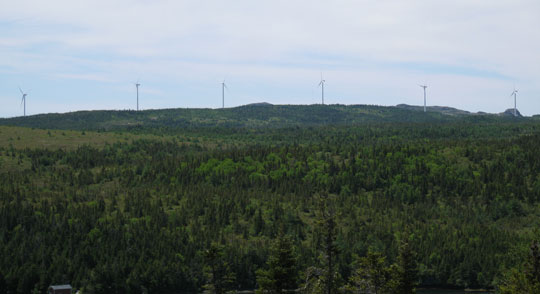
Wind farm in Fermeuse
Tails of the unexpected
Thu, Jun 4, 2009
We asked our readers to submit short stories about an animal in their lives for this issue, with the top prize being a studio pet portrait valued at $150 with Randy Dawe Photography. Here is the winning entry, two of the runners-up, and more of the submitted stories. All illustrations by Ricky King.
—
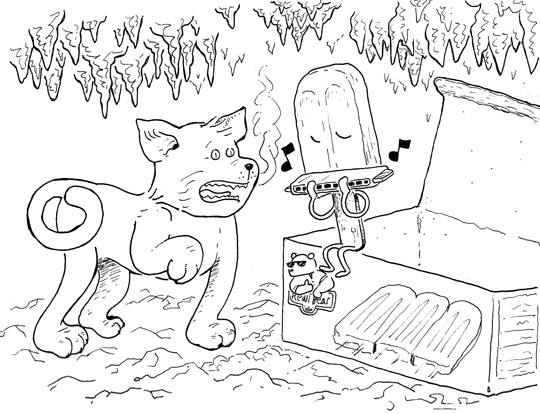

Ice to meet you
So I had this cat named Felix. When he was still young, and small—by cat standards—he frequently followed me around the house. This I assume was a habit he picked up from my dog, ‘cause we all know how bitchy and arrogant cats can be. Anyway, one day I walked to my back porch to grab a tub of ice cream from the full sized stand up freezer we had out there. It was a hot summer day, and I needed something to cool me down. Once in my possession, I walked back into the kitchen with the tub, placed it on the counter, then proceeded to dig scoops of the frozen treat into a bowl.
At the time I had a bad habit of leaving the ice cream tub out as I ate, but for some reason that day I decided to grow up, be responsible, and bring the ice cream back to the freezer. I’m a hero, I know.
I walked back to the porch, pulled on the air sealed freezer door, and my cat popped out.
My freaking cat.
He had followed me to the back porch when I grabbed the ice cream, and somehow I didn’t notice him stepping inside the freezer when I closed the door.
If I had decided to enjoy my bowl of ice cream before putting the tub back, it would have been the saddest bowl of ice cream I had ever eaten.
—
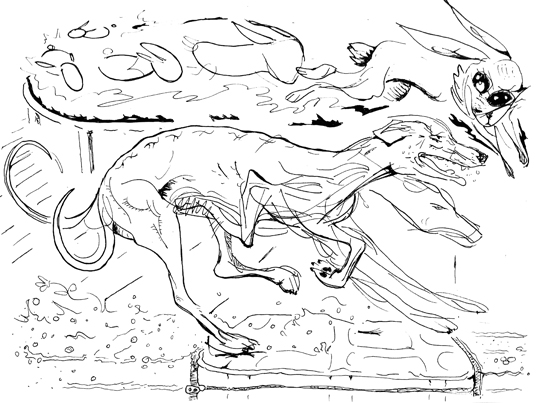
Nico’s Lament
by Marc Poirier
Nico is always running—even in her sleep I can tell in her little mind, she really isn’t drooling all over our new bed sheets, she’s somewhere else. What exactly a dog dreams about is beyond me, so I decided to ask her about it one day when she was sprawled across our couch.
“What exactly do you dream about?” I asked her as I rummaged through a fresh bag of dog treats. Her usual response to any question I ask involves the rolling of her eyes and a loud huff, but this time the thought of getting a fresh treat was incentive enough for her to give me a reply.
She told me her dreams all start in the same place—in a little crate she used to call home before deciding to adopt us and take over our bed. In her dream she is preparing for what will be her last race—because running in circles is never fun, neither is the cheering of obsessed fans. So this time she decided to run straight out of the auditorium. Whether she actually made it out or not didn’t really matter, but she was sick of chasing a plastic rabbit that she could never seem to catch. In fact, running around in circles made her hate what she was naturally born to do, to run.
“Yes, today will be different,” she thought as the trainer led her to the starting gate. “I just have to remember to keep running straight this time.”
“Did you make it out?” I asked, dangling a treat over her head as a reward. “Oh yes,” she grinned, licking her lips while gently taking the treat from my hand. “And running has never been quite so much fun as it is now.”
That night I went to crawl into bed, and, as usual, my greyhound was stretched across my side of the bed. I was going to poke at her and make her get down to the floor, but I couldn’t. I think she deserves it.
—
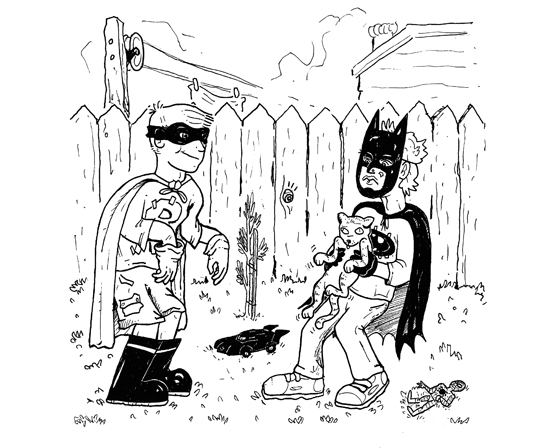
Escape From Gotham
by Dan Murray
My cat went missing. Cats, you know, they’re independent, they don’t want to be cooped up inside, so let them run free and have adventures. But mine went missing. I was ten and she was three.
We searched everywhere. My parents, brother, and I ran up and down the streets telling all of the neighbours. We put up posters, although we didn’t have a photo of her facing the camera, and goodness knows you weren’t going to get a collar on that cat for more than five minutes. “You’ve got to be kidding me, you must have me confused with some other pet,” she would say with her eyes as my mother approached, collar in hand.
No photo, no identification, and no sign of her for days. She was officially lost.
How many cats go missing each year anyway? How many marmalade tabbies were there in my neighbourhood? And how many more speeding cars did I see just waiting for a lone feline to mow down?
I wanted my cat back, but things didn’t seem hopeful.
A couple days later I saw Batman and Robin playing in my front yard. Not the real ones, just some kids in costumes. I looked to see what they were up to and saw a cat—and not just any cat, my cat. Those kids had my cat. Why did they have my cat? What were they doing with her? And why were they in superhero outfits, with my cat? I walked over.
“Hey! What are you doing with that cat? It’s mine!”
“No, she’s ours.”
“Nuh-uh. That’s my cat.”
“N… No, she’s Catwoman, and I’m Batman.”
“Shut up and give her back!”
Being an odd child does not make one less persistent, and our battle over the cat continued.
Eventually, our cat was returned from the dastardly duo.
Batman’s father later informed my mother that the boy found the cat and brought her home. They sometimes saw her walking around the area, and thinking she was a stray, decided to take her in to feed her. They kept her safe—safe inside their house.
Had my cat been able to escape, a life with twice as many meals would probably have suited her fine.
Unfortunately, she did not expect Batman to be such a conniving foe.
—
More pet stories
A Special Dog Named Whiskey
By Sandra Lynch
When I became a great friend with Helen I used to help her with a beautiful white dog named Whiskey. She was a fun dog. She made people love her who got to know her. She used to make me laugh with her and play with her and when she walked to the park she had an ice cream with me.
When Helen had a party at her house she would ask me to stay the night and I did. I slept on the sofa and the wonderful white dog would come up to sleep with me. Then I would clean up and talk to Whiskey and she would talk back to me. We became best friends and I did lots for Whiskey.
Then she got sick. I would call Helen and tell her Whiskey needs you and to come right now. I told my friend I had a very sick dog that needed me. So, I brought coffee over in a big coffee thermos and stayed all night with her. I told her “I will never leave you.” She looked at me and said -Do you mean it? And I said, “Yes”. I gave her a pink blanket. Whiskey loved it. She would sleep on it and I gave her music to listen to. She used to be relaxed on the bed and listen to the music.
She was a smart white dog. She used to drink coffee with me and we used to sit in the park together.
One day she didn’t eat her Vienna sausage. Sometimes I would put her pill in the Vienna sausage and she would eat them.
Me and Helen went to buy a big wooden pine box so she would have something to lay in. Whiskey liked to wear her pink corduroy coat with the wool collar.
So we took her to Bay Roberts to get an ultrasound done and they told us that Whiskey was going to die very soon. I used to rub her ears and rub her all over to make her feel great.
She was so frail. One day she was not great. Helen told me she was ready to die and it was OK. I told Whiskey it was OK, too. We love you.
She died February 26, 2008. She was a great dog to know and love.
—
Dad and Dorgie
By Tess Burke
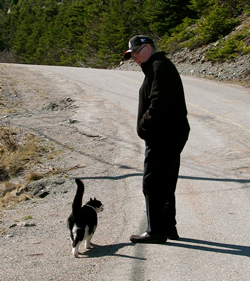
This is my Dad’s cat Dorge, they go for walks together.
Dorge (rhymes with the beginning of gorgeous, it’s how my small nephew, Corey said it, “daugeous”, so the cat’s name is Dorge for short”)
Dad had a cat, Sam, for a long time, almost 20 years and when Sam died he said he’d never get another. My sister, Liz, who lived in town had two cats, one of whom was Dorge. Liz offerred to give Dorg to Dad to ease the sadness he felt over losing Sam but he said he was doubtful about owning another cat, especially a townie cat. Liz had to move away so Dad took Dorgie in and ever since it has been a tight relationship. Dorge, although overweight and a tad negligent when it comes to the grooming side of things, is probably the nicest cat you’ve ever met. Everyone loves him. He likes living around the bay and seems to have no regrets about abandoning his townie life. My Dad adores him and I am pretty sure it is mutual for Dorge.
—
A series of short stories about Mr. Kitty Babar
By Liza Abbott
Cats will sleep anywhere, especially the bathroom sink. I left the tap running once for kitty to have a drink, he ended up curling up in the sink for a nap. I went back a few minutes later and the water was up to his neck, he was sound asleep.
Cats are natural born hunters. Kitty has managed to bring home many “gifts” to the front step. His latest was an earthworm, he proudly walked in the house; carrying it in his mouth.
Mr. Kitty loves to play with just about anything that isn’t one of his toys-such as a wasp that got in the house last summer. He was chasing after it and batting it for so long that the wasp wanted to play back, by stinging kitty. It ended with kitty’s paw swelling 5 times its size. Nickname: Mitten.
If humans have a voice box then cats have a “meower”. Kitty got a throat infection once and lost his meower. As a very vocal cat it was odd not to hear him for a few days. His mouth would open but no sound would come out. It was great when he begged for treats: “’what was that kitty? I can’t hear you”…
I found a paddle ball at the house one day,…i thought id give it a go, i wasn’t very good at it. Kitty was looking it oddly as I made a fool of myself. All of a sudden the ball bounced straight off of his little head. He shot me a look of total shock and took off up over the stairs. I was laughing hysterically. I looked up the flight of stairs and there he was peeking his head around the corner, eyes glowing; caught one look at me and took off again. I think he steered clear of me for two days after that.
Midnight snack takes on new meaning: Kitty had to wear a cone due to an injury. During his meal of wet canned cat food a lot would end up on the inside of the cone. It was a usual occurrence to hear him smacking his tongue around the inside of the cone late at night.
—
Max, the Cat
By Mary Pike
I once spent $489.66 on a cat, a female tabby with just enough silver to cause her coat to shimmer in the sunlight. She answers to Max, a name chosen before I rescued her from a cardboard box of mewling siblings.
The $489.66 included a panic-outside-of-working-hours emergency fee of $60.00, a blood count, one bag of I.V. fluid, a total body panel (purpose unknown), an x-ray, an injection, two tests, and a day-and-a-half of boarding. The good news was that my dehydrated eight-pounder became as plump as can be managed with $489.66, the bad news, the money spent to find out there was nothing else wrong with her.
I took my expensive little fur ball home from her holiday at the vets. Released from her carrier cage she became reacquainted with her two floors of unrestricted freedom. Sniff, sniff, rub, rub, purr, purr against familiar objects until satisfied that she was indeed safely home.
Max.
The first night we were ever together she scrambled up my body and perched on my shoulder as I cooked supper. Fearful that she would land in my Spicy Italian I put her back down on the kitchen floor. Up she scrambled again. Down I put her. Open the drawer in the bottom of the stove to get a saucepan, toe it closed, scratch, scratch, scratch on the shiny white, and there’s Max, her head caught in the narrow opening.
Ever wonder how to teach a kitten not to roam? Put her in a tiny leash on the back patio until you find her swinging in her harness, meowing in the wind.
Encourage response to a name? Here, Max, Max, Max. Thump. And one dazed kitten rarely again poked her head and shoulders out through the second floor banister.
And training.
Pin bubble wrap over the corners of the couch to hamper claw sharpening? She popped those bubbles with glee. Teach her not to hang out in houseplants? Place a bowl of vinegar in the planter and watch her bathe her hind paws while attempting to scale the umbrella plant. Roll tinfoil over the top of a cast iron radiator to discourage using the rad as a launching pad to the kitchen counter? She batted around loose pieces of that stuff like they were toy mice.
Four hundred eighty-nine dollars and sixty-six cents. I didn’t give that much to charity last year.
—
My Pet Story
By Al
The best things in life arrive serendipitously, I find. So begins the tale of BIRDY the beagle, a research dog who came in on the coattails of an old love (long gone – I knew it was over when he said “You love the dog more than u love me”. True)
She was a bitch in every sense of the word. She hated other dogs, some humans (little children were not exempt) and woe be to anyone foolish enough to disturb her when eating (gorging), sleeping or guarding house or vehicle. She was an escape artist, a humper and a dumper (of course – but she ate it! A self-cleaning up animal).
But on the brilliant side, she was a great traveler – by land, air or sea. From the lab at Georgetown U in Wash DC her rescue mama took her to T.O., then to Vancouver where I claimed her, to Kelowna (with sidetrips bk to Van., to Ont. and Calgary) and finally to St. John’s. She even made it to France (St. Pierre) and Vermont.
Now let’s face it folks – looks r everything and she had them in spades (well okay, I may have been biased). She put a smile on my face every time I saw her coming. She loved who she loved, even if they didn’t love her back (cats, Ann and Lyne who know I mean u). She licked my tears away, gave me the courage to move on – she was my best girl.
The first anniversary of my decision to end her life (the most difficult one to date) is fast approaching. Let’s raise a glass to Birdy (u crowd at AC too). Not a NL beagle dog but the best kind nonetheless. God luv ya, my Beauty.
Least adoptable, just as adorable
Thu, Jun 4, 2009
Life doesn’t always deal you a fair hand, so we contacted four of the local adoption and shelter organizations and asked them about their “least adoptable” pets up for adoption, in the hope that maybe you’re the friend they’re looking for.
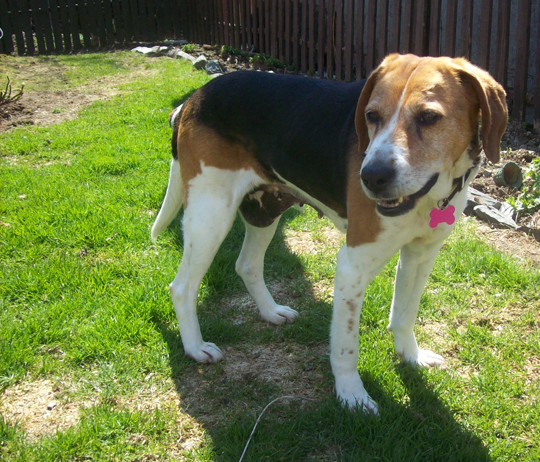
Ivy
(aka Poor Old Ivy)
Sex: Not if I can help it.
Age: I lost track several years ago.
Best Feature: My one good eye, the other has a permanently glazed look.
Favourite Pass-Time: Sleeping in the sun.
Religion: Beaglism.
Favourite Activity: A nice walk in the park.
Greatest Desire: To find someone to love me. Isn’t that everyone’s?
Beagle Paws recently got a call from a local shelter about a female beagle who had been there a long time, and whose time was up.
One look at Poor Old Ivy and we knew we had our work cut out for us. This was no beauty queen. Her tough demeanour and battle scars indicated she had seen many a hard time and was lucky to still be around to tell about it. A large lump hanging from her belly did nothing to add to her charm.
As we do for all our rescued beagles, a trip to the vet was quickly arranged and it was determined that Ivy had an inquinal hernia, which was later repaired at the same time that she was spayed. Ivy also appears to have very little vision in her right eye.
Ivy doesn’t have much patience with other dogs (Who can blame her? Would you have much patience if you were in her paws?) However, she had one special friend, a strong and handsome young dog, who kept her company and made the nights less lonely. Sadly, the good looking ones always get adopted first, and Ivy’s only friend recently went to a loving home.
She’s trying hard to be happy for him, but she sure is lonely. She knows her wait might be long, but she is patiently dreaming of the day when a family will come just for her.
Ivy wants to let everyone know that even though she isn’t pretty on the outside, her inside is beautiful, and her big beagle heart is full of love.
Will you be the lucky one on the receiving end of that love, and give this sweet old girl the life she deserves?
To find out more about Poor Old Ivy, call Beagle Paws at 738-PAWS (7297) or e-mail info@beaglepaws.com. Visit www.beaglepaws.com for more information.
—


Zoe
Meet the lovely Zoe. At first glance she looks like any other female canine struggling with a minor weight issue, but spend a few moments in her presence and you will see why we like to say she is a rare mix of Brittany spaniel and pig. Listen closely and you’ll hear a faint grunt as she wiggles her way up the stairs each morning looking for someone to charm into giving her a treat or two (preferably two). In Zoe’s case what they say is true—the way to the heart is definitely through the stomach.
When Zoe is not busy with her day job of melting hearts and conning her way into as much extra food as she can get, you can find her on the prowl for a new feline friend, napping in and taking over a nice comfy bed, or looking for the perfect under-eye concealer to hide the redness caused by her slight pollen allergy.
Her pet peeve is when she’s put on a leash and expected to go where someone else wants her to go (mainly when the journey includes stairs and the destination is a kennel). While Miss Zoe may be considered a little high maintenance, there is no doubt that she will make up for the extra work by giving extra love to the lucky family that finds their way to her.
Zoe came to us because her owner felt she could no longer care for her. She is a 5 year old, spayed, Brittany spaniel mix. She is housetrained, loves cats, children and seemingly people in general. She is waiting at our shelter for her new home, one where she can receive the love, time and patience she needs to be the wonderful girl we know she can be.
To find out more about Zoe, contact the SPCA at 726-0301, or drop by the shelter on R.C.A.F. Road, off Torbay Road. Visit www.spcastjohns.org for more information.
Zoe was adopted on Tuesday, June 19. The couple who took her saw her in the Scope and fell in love!
—
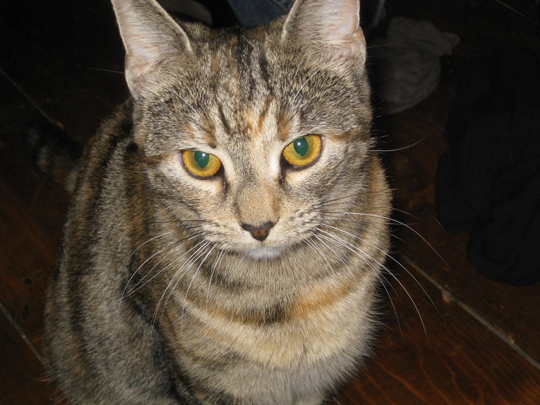
Ruby
Age: Young adult
Occupation: Unemployed house cat
Body art: Swish and Swirl
Best feature: My deeply expressive eyes
Who are you looking for?: A cat lover who is “between cats.” (I’m allergic to other cats.)
What do you do for fun?: I play fetch with my catnip mouse.
How often do you exercise?: If you call playing exercise, then I have my kittenish moments!
Where do you sit on the political fence?: At the very top.
Three things you are most thankful for:
1. Cat toys, with a preference for catnip mice.
2. A caring person with whom to lounge and play.
3. Three squares a day.
Ruby has been in foster care with Heavenly Creatures for over a year now. This gorgeous red and brown tabby has gone through much in her young life: one litter of kittens that we know of as well as abandonment, hunger and fear.
But this petite princess of ours managed to maintain her sweetheart of a personality—she’s easy-going and a real joy to be around. Although Ruby might be 2 or 3 years old, she’s still a kitten at heart sometimes, chasing her toys and even fetching them for another toss. She can be very relaxed too; perfectly content to nap and lounge with her human friends.
Ruby is affectionate, but never demanding. A stunning companion in every way.
To find out more about Ruby, call Heavenly Creatures at 739-0077 or e-mail info@heavenlycreatures.ca. Visit www.heavenlycreatures.ca for more information.
—
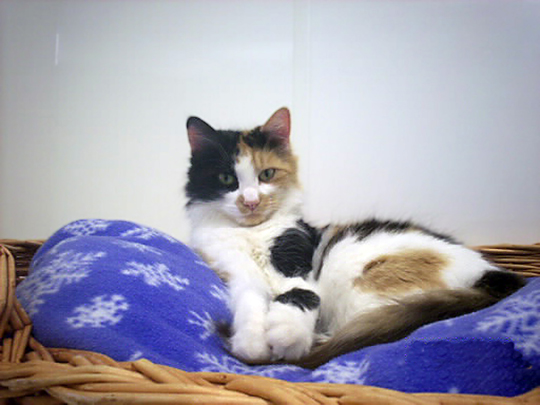
Mercedes
Description: Long-haired, spayed female
Occupation: Retired empty nester.
Best feature: Soft, silky fur.
Strengths: Easy-going personality, beautiful calico markings, striking amber eyes.
Weaknesses: Sleeps too much, couch potato, bottomless belly.
Seeking: A cat lover who comes with a warm lap and plenty of Temptations Treats.
Mercedes came to the Humane Services animal shelter with her two kittens in tow. The kittens, Bentley and Porche, found homes in a matter of days, but unfortunately Mercedes did not find her forever home, and is still waiting patiently at the shelter.
As is the case with many homeless mother cats, once they have successfully and lovingly raised their kittens, most people do not give them a second look. It is the cute fluffy kittens that most potential adopters are looking for.
Top 10 reasons to adopt a mother cat:
10. Keep your feet warm at night.
9. You already know their personality.
8. It feels good to save a life.
7. Past the ”kitty crazy” stage.
6. Tend to be calmer and settled in their ways.
5. Good lap warmers.
4. Already litter trained.
3. Experienced motherly instinct.
2. Have an affectionate temperament.
1. They’re a best friend for life.
If you are interested in meeting Mercedes, she is hanging out at Humane Services, City of St. John’s, 81 Higgins Line. Phone: 311. More info: www.stjohns.ca
Comics Contest 2009
Sun, Mar 15, 2009

Yes indeedy, it’s time for our annual comics contest, which means this year might just be your chance at (regional) fame and (minuscule) fortune! Think you can do it? Think you have what it takes to transcribe your weird and/or funny and/or political brain to paper? Then the Scope’s Second Annual Comics Contest is for you. Submit five installments of your single-panel or multi-panel comic to us at:
COMICS CONTEST
c/o The Scope
P.O. Box 1044
St. John’s, NL
A1C 5M3
Entries must be stamped by the postman on or before Thursday, April 16, 2009. The winners—as decided by a judging panel of local cultural icons and assorted miscreants—will earn a paid, one-year run with The Scope (online and in print). First runner-up will win $100, and second runner-up will win $50. The winners and select submissions will get some exposure in our annual Comics Issue, slated for May 21.
The contest is open only to residents of Newfoundland and Labrador. The comics should be black and white only, and can be any shape, so long as they fit on an 8.5 x 11 page. Please don’t send originals because we can’t return them to you; good photocopies or files on CD are fine. Questions? E-mail elling@thescope.ca. No phone calls please.
breakfast face-off.
Thu, Aug 28, 2008

What you have before you is our annual round-up of restaurants serving that most important meal of the day, breakfast. Usually consisting of two eggs, a few pieces of meat or slice of tomato, a heaping pile of hash browns, a couple slabs of hot buttery toast, and coffee, the mighty Traditional is the benchmark for our poll.
Here’s the low-down on scoring some traditional (and not-so-traditional) breakfasts in the city.
By Bryhanna Greenough
All prices include taxes, but not tip (15%) (more…)
get thee outharbour!
Thu, Aug 28, 2008

Though St. John’s is a mystical city of near-infinite joy, it sure feels good to get out every once in a while. Sarah Smellie rounds up a variety of ways for the non-motorized-vehicled proletariat to pick up and roll out.
a tall glass of milk please.
Thu, Aug 28, 2008

So you’re 18. You’re trapped in the limbo between state-authorized “young adulthood” and “adulthood”.
You may well have been married for 4 years, have 3 kids, be a practicing medical doctor, and fly your own personal jet, but you still aren’t legally permitted to a bar to see Jody Richardson or Mark Bragg sing into a microphone.
It’s duh law.
Thankfully—unlike herpes—your malady is temporary. And since St. John’s is a cultural hotbed, there are plenty of things to do to keep your evenings active without goin’ on the load.
By Elling Lien
bay-taxi quick reference.
Thu, Aug 28, 2008

For up-to-date information, see /2009/08/27/bay-taxi-quick-reference-2009
Here’s a handy clip ‘n save guide to some small bus companies and all their destinations. Unless otherwise noted, most companies can only accomodate a bicycle if you give them advance notice or if there is enough room in the vehicle on that day. Call ahead to discuss it with them.
By Sarah Smellie
a guide to a few neighbourhoods.
Thu, Aug 28, 2008
Some helpful hints and pointers for the outharbor youth planning his First visit to suave, swinging, sophisticated Sin John’s. They are being presented here in hope of saving many youthful Baymen from the pitfalls and tight spots that bestrew the boulevards and avenues of the glittering Capital.
Excerpt from the article “Outharbour Youth’s Guide to Sin John’s” by Ray Guy.
A short touring guide by locals, for locals. Like you… maybe.
By Alex Pierson, Brad Hodder, Dana Cooper, and Adam Clarke
Warning: Does not contain all neighbourhoods.
Breakfast Face-Off 2007
Thu, Aug 30, 2007
By Bryhanna Greenough
Ah, breakfast. Where would we be without it?
Hungry and grouchy, most likely.
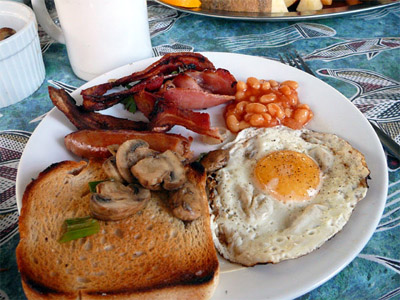
Not only is it the most important meal of the day, but breakfast is also the cheapest meal to eat out. And nothing beats hot buttery toast, eggs done to spec, and a good, bottomless cup of joe to get rid of that hangover you’ve been carrying around with you like a dead albatross.
This year we scouted out 20 of our favourite spots to grab a hearty breakfast in the city. The comparisons are all based on the traditional breakfast—which can vary—but in most incarnations includes two eggs, hash browns, bacon or ham or sausage or tomato, and two slices of buttered toast.
Yum!
Here we go: (more…)
St. John’s area crap weather survival tips
Thu, Aug 30, 2007
By Sarah Smellie
Let’s be honest here: things may be all right now, but St. John’s has some rather intense weather on the way. We’re talking a day of solid snowfall that accumulates into ten-foot-high snowdrifts, followed by a day of pissing rain which turns the snowdrifts into giant, oozing masses of gook. Some days it even slushes. Giant, half-liquid, half-solid clumps fall from the sky, slapping down on your head and drenching you on first contact.
But don’t let the weather run your life and drive you to spend your February evenings drooling over an empty pizza box. You can beat the frostbite and the cabin fever. Here’s how. (more…)
Hot Summer Guide 2007
Thu, Jun 21, 2007

The Scope’s critics pick their favourites from what this summer has to offer.
Water fight and water balloon photos by Ryan Davis
Big thanks to Steve Pike, Mark White, Mike Worthman, Meghan MacNeil, Sarah Rowe, Hilarie Vatcher, Sherri Levesque, Charlotte Reid, Kira Sheppard, Kaya Anderson Payne, Bryhanna Greenough, and that one guy whose name eludes me who held up the “visual art” balloon for being in the photos.
For more water fight photos, see the gallery.
Printable Hot Ticket calendars for JULY | AUGUST (pdf)


Thu, Feb 25, 2010
Martin Connelly