

Archive | People RSS feed for this section
Lynn Panting, Dancer
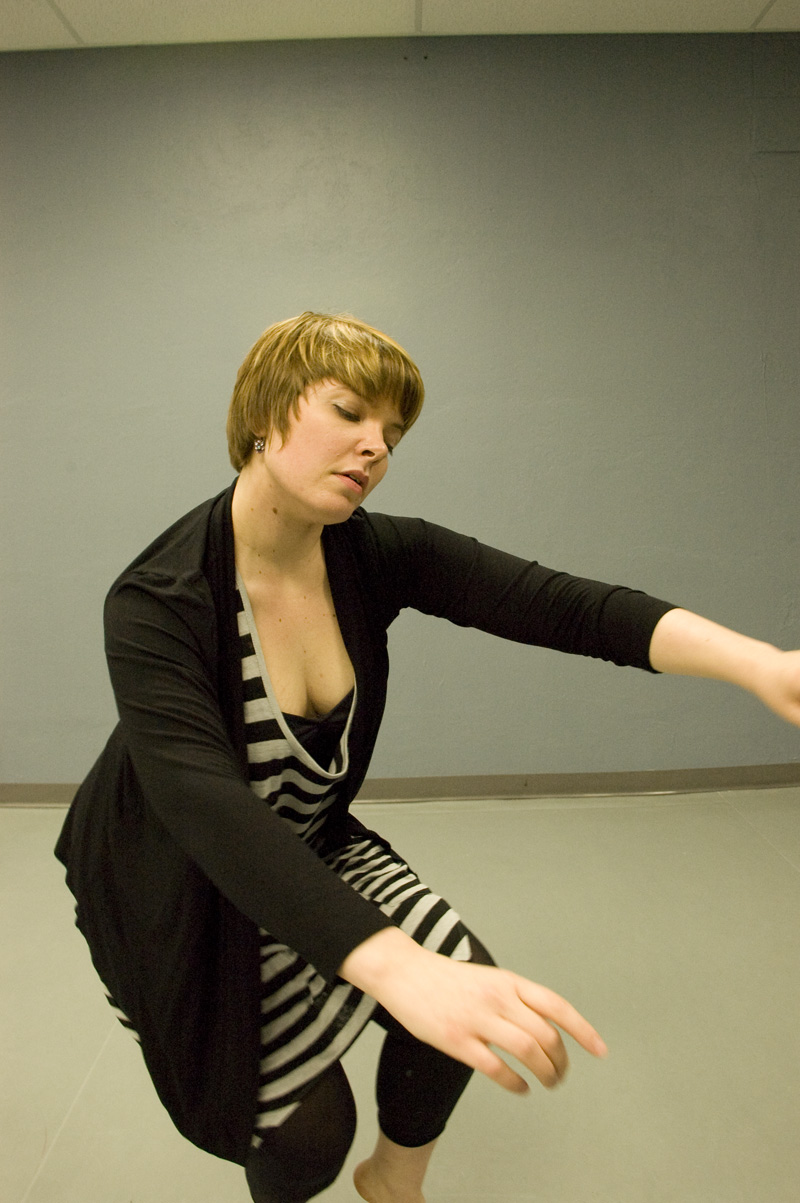
From taking dance classes to teaching them, Lynn Panting has been expressing herself through movement all her life. Interview and photo by Ryan Davis.
How did you get your start with dance?
My mom’s best friend, Pauline Emery, was a dancer and she made me my first tutu when I was four. Every day I would ask my mom to go to dance lessons but she thought I was too young. Finally, she let me do a summer session when I was five. I loved it so much. More than the tutus, the tiaras and the shoes—the aesthetics of dance—I very much loved the music and the idea that dance class was a place to go and move to music. Sometimes we’d have a live musician, like a percussionist or someone playing the piano, and I thought that was the bees’ knees.
Are there any standout moments in your life as a dancer?
Probably moreso than the actual dance moments, I think it’s the moments that surround the dance—the kinds of communities that are built in dance classes. With this studio community, you grow up with a group of girls and end up spending more time at the studio than at home. You may not talk to them much, but your body is sharing the same space with them for hours and hours a week. So you get to know them on a more intimate level. It’s a really interesting connection. But in terms of performance, I formed a group of dancers in 2006. That stood out to me because, growing up, I was never the best dance kid in class in any kind of a way. I knew I wasn’t going to go to the National Ballet and I wasn’t going to dance on Broadway. Dance was not going to be my career, or so I thought. But then I got this group of people together and when we started dancing I realized that I was making dance my life. And although I had been a teacher’s assistant, that’s different from making art and saying what you want to say with your dance.
What are you trying to say when you dance?
A lot of my dances are about very everyday, mundane things. I’m not doing a piece about world peace or devastation. Rather, I’m focusing on one-on-one relationships. Maybe it’s about sadness or joy or love or loss, but on a very simple level. Those are almost the hardest things to express—those things that everyone feels and knows. So the piece I was speaking of with that group in 2006 was called Particulars, and it was about an individual’s relationship to a group. How you can feel a part of something and yet apart from something. And the ideas surrounding group dynamics which I was feeling very much at that time, being an early twenty-something finding where I fit in and how relationships affect a larger group. Now it’s more about hope or finding something quite joyful. That’s what I like to dance about, as cheesy as that sounds when you say it out loud. But that’s why you dance it, I suppose. Maybe it’s why I didn’t write a poem or a novel.
You’re a dance teacher too. What do you hope students will take away from your classes?
I hope they love it. That’s all I hope for. I would like them to learn to point their feet. That would be quite lovely. But it’s not essential. And I hope they appreciate their own body for whatever it is. Everyone has issues and obstacles in terms of their ability and their movement. Even if it’s your own movement patterns and breaking out of those. So I really try to get people to embrace those limitations. It’s the only way to work with them and even move past them. But most importantly, not to think of them as limitations. For me, what I’ve learned is to really embrace what you have and what you can bring to the movement
Julia Bloomquist, Co-owner of The Sprout
Fri, Jun 3, 2011
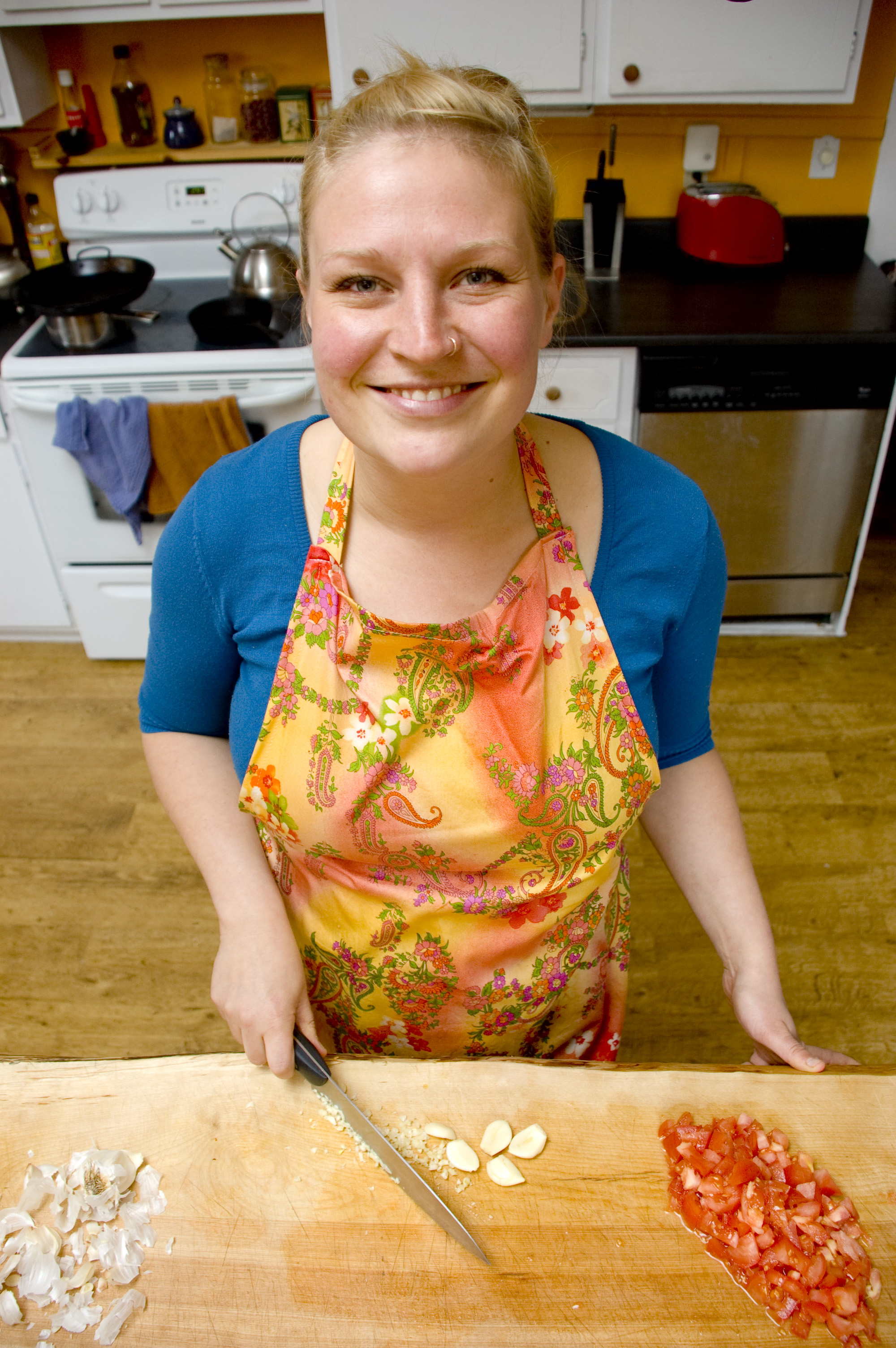
Photo by Ryan Davis
Julia Bloomquist adores food, and cooking has been a major part her life for as long as she can remember—from helping her mother prepare meals as a young child to her later work in about ten different kitchens and cooking for groups of up to 80 people in tree planting camps. When the co-owner of The Sprout Restaurant on Duckworth Street talks about food, her passion is obvious. Ryan Davis met up with Julia in her kitchen to get a taste of her soup and her passion for food and cooking.
Why are you so into food and cooking?
My family has always been interested in good food and long meals. That’s probably where it started. I remember being a kid and sitting down at the table for three hours at a time. And certainly watching my mom cook as a child was influential. As the oldest child I was naturally the one to help out. There were four kids in my family and we were raised as vegetarians, so that forced my mom to be creative with our meals. Growing up in Spain for five years gave me a bit more perspective on the importance of visual cooking and of being able to cook with very fragrant spices… onions… garlic. Things that really sizzle. I lived there until I was six but my earliest memory of seeing serious food production was when I was around three or four. I was allowed to walk with my little sister, on our own, down to the bakery. It was a tiny bakery with a wood-fired oven where they handled the bread with a long paddle. Mom and Dad would give us some money and we would go down and buy a loaf for the evening meal, and that was a big outing for us, especially going on our own. That left a pretty big mark on me.
How did you learn to cook?
I definitely learned through Mom. But then I lived on my own with some family friends when I was 16 and then I really began experimenting with cooking. I also worked as a prep cook when I was that age, at a Mexican restaurant. So that was a big influence as well. It took one really awesome employer who was well trained as a chef and who put full faith in me. Even though I was young he just gave me full responsibility and taught me how to make a lot of the sauces.
What sense do you rely on most when you’re cooking?
I use my sense of smell more than anything, definitely. When I know onions or celery are soft enough, it’s partly vision, but mainly you can smell them becoming really fragrant. And it’s easier to know what fragrant means if you have a glass of wine in your hand. Even when I write down recipes, I’ll write, “sauté until fragrant.” As soon as it gets to the top part of your nose, you know. When you can taste it through your nose. That’s usually how I think when I’m cooking.
How do you like to cook?
When you’re cooking at home, it’s important to feel really comfortable and not rushed. Even having something to nibble on or a glass of wine really helps. Also, if you cook at a low temperature, you don’t have to worry about timing as much. Put your burner on low and five extra minutes isn’t going to make a huge difference. Relax and enjoy the process!
Who’s Rick Barry Mixer?
Wed, May 18, 2011
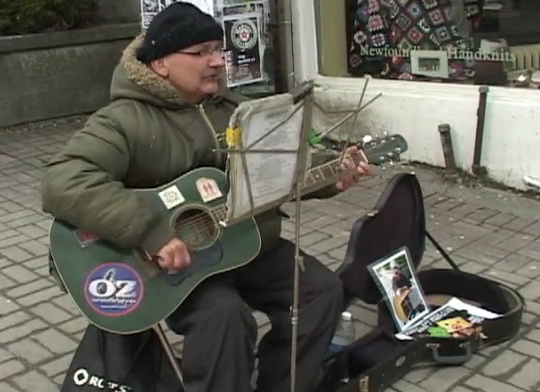
Still from the documentary Who's Rick Barry Mixer?
If you’ve ever been on the corner of Water and George Street when the bars get out on a Saturday night, you’ve likely seen busker Rick Mixer singing and strumming his guitar. He’s there in the rain, he’s there in the cold, and he’s been busking there for years.
A team of student filmmakers — Erin Alexander, Sarah Browne, Heather Austin, and David Feehan — put together a documentary about him for an English class at MUN called Producing the Documentary, where they studied different methods of documentary composition, and learned how to research, storyboard, shoot, script, and edit. And they decided on Mixer as their subject.
I caught up with Alexander to ask about it.
How did you decide on Rick Mixer for this project?
We were advised to pick a subject that had a broad focus as well as a specific one, and we all wanted to focus on something to do with the arts. In St. John’s, buskers are sort of faceless entertainment for most people as they walk down Water Street. One of our groupmates happened to run into him downtown one night and started chatting with him. He was so nice that she mentioned the doc to him then and he agreed right away.
So he wasn’t reluctant at all?
No… He was all for travelling to his home town and working outdoors, repeating interviews… But as far as his personal and family life, he didn’t much want to get into it, so we steered clear. But he was otherwise gung-ho. And the other people we spoke to in the piece we approached on the fly and they were all for having a chat on camera also.
How long did it all take you to put together?
It took us about 2 months to do once we’d finalized Rick as our subject, navigating around our school schedules and things.
Click here to watch the video at Vimeo.
Mathias Kom, Festival Organizer
Tue, Mar 29, 2011
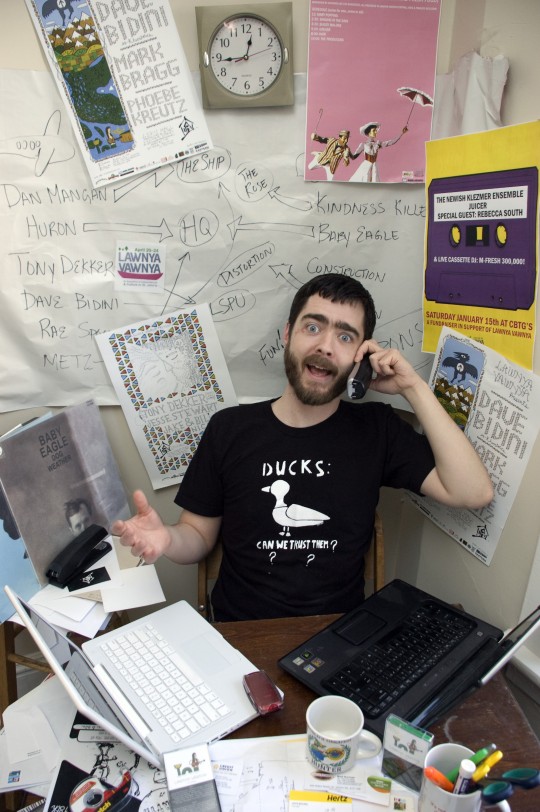
Lawnya Vawnya, an exposition of independent arts and culture in St. John’s, running April 20-24, boasts an impressive line-up of music, readings, lectures, art, and a music crawl. We spoke with Mathias Kom, musician, festival organizer, and newcomer to St. John’s about planning the first ever Lawnya Vawnya, and convincing big acts from away to come play at St. John’s newest festival.
How did you come to live in St. John’s?
I got called out at a show at the Ship in March last year when we were here on tour when I said, “I love this place. You guys are amazing. And I’m going to move here one day.” And for the record, every time I’ve said that to an audience in St. John’s, I’ve meant it. But someone called me out. I heard from the back of the crowd, “Yeah right, you’ve said that a thousand times, it’s never going to happen, you’re just saying that.” And it’s like when Marty McFly in Back to the Future can’t handle being called “chicken.” I can’t handle a challenge like that. So I thought, “Dammit, no. I’m gonna show that guy.” And that’s when it all happened. So I convinced Ariel Sharratt (festival organizer) to come. She was on tour with us too. Dave Lander (festival organizer) found us a house and we all moved in together.
How did this festival begin?
It started mainly because, the few of us that are working on the festival all live in the same house. We got to talking in the fall about how there are so many bands that we’d really like to see play in St. John’s. We started listing off a wish list. There were people we thought would never come here, but we thought, wouldn’t it be fun to try and organize a festival and reach out to as many of these people as possible? The first time we ever got together to talk about it was outstanding. We planned to have a preliminary meeting to decide some things, and it was eight hours long. None of us cared or payed attention to the clock. And then it was dark.
How did you convince musicians to come?
A lot of people are really interested in coming to Newfoundland. They’ll jump at the chance. And that’s what we were so amazed by, how easy it was to convince people to come to a festival that’s never happened before. The people who have been here before, just like me once upon a time, look for any chance to get back.
With such a big line-up, how can you afford to do this festival?
I’d say 75 per cent of the work we’ve done has focused on raising money. It would be amazing in the future to not panic over every dollar which is where we are right now. But right now we are literally selling cookies late night on George Street to pay for plane tickets.
What makes playing in Newfoundland a unique experience?
This isn’t the sort of place where you walk into a venue, play your show, get back in your van, and leave. Just because of where this place is, you end up staying at least a few days. And people are so welcoming and warm that you end up inevitably partying with the audience after the show. The first time I ever came here I was blown away by the feeling after three days in St. John’s playing a few shows, and the day I left I felt like I had made so many friends. That doesn’t happen, in my experience, anywhere else. And the way people interact with music. Also, there’s something about the excitement felt by bands who finally make it here. They’re a little more excited, a little more willing, a little more tired. A little more out of their minds after driving across the island and not knowing what they’re getting into and whatever. They’re really ready to experience something and audiences are really ready too.
Interview and photo by Ryan Davis
Keith Vokey, Master Screecher
Tue, Mar 1, 2011
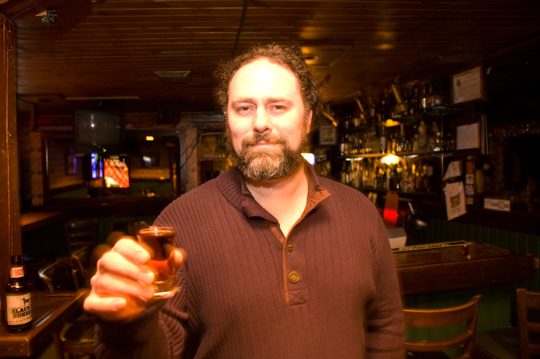
Keith Vokey, resident screecher at Christian’s Pub on George Street, estimates he’s screeched-in between 30-35,000 people over the past 17 years. While the origins of the screech-in are a bit hazy, his father, Merle Vokey, is considered to be a major player in the invention of the tradition. At age 16, Keith met Rush at a screech-in and there’s been no looking back ever since.
How did you get your start with the screech-ins?
My first time seeing a screech-in, it was done by my father out at Grenfell College one summer at a teacher’s conference. I was about seven or eight years old. I thought he was kind of dorky. But he made everybody laugh and they seemed to like him, so that was cool. Saw a few more throughout the years. It was shortly after meeting Rush when I realized by doing this screech-in thing, maybe I’d meet my heroes as they came through town too. So it became a past time hobby that was also an occasional job.
After 17 years of screech-ins, you must have the routine down.
It comes pretty easily now. What I do concentrate on these days is where I’m going and how I’m going to get to the next part. That’s the fun in it for me. It’s an interactive show that has forced reactions. I ask people to perform in specific ways, so I’m always looking for the right person to offer up the best reaction. So when I’m singing a song, I’m also sizing up the room and sifting through the people for good candidates. Do they have a relaxed personality that could take a little poking and prodding? Or are they the type of person who, if I were to light a spark under them, would blow up? There’s a fine line because if you get someone too outgoing, they might take over the show and while sometimes that’s great, their grandstanding can also take attention away and the energy of the show goes down. It all has to do with timing and energy.
You must be very connected with your audience.
It is very intimate. I call it a cross between guerrilla theatre and folk drama. I do get to touch people and be touched by them.
You can’t do this without being touched by people. Not by everybody of course. With some people you’d prefer they didn’t touch you. [laughs]
Not everyone is in favour of the screech-in. What would you say to them?
Some people say that it’s a misrepresentation of our culture. My response is that yes, I am presenting the Newfoundland stereotype. That’s kind of the whole point. But I take the stereotypes and turn them on their ear. This is not what Newfoundland is all about. I don’t think anyone seriously believes it. I am presenting a negative stereotype, but I’m also working to disabuse people from that stereotype. I’m fully aware of the objections that come with what I do. My father warned me before I ever got into it. And it was something that I questioned deeply on a moral level. Am I selling my culture out? Am I betraying my province? I’ve looked myself in the mirror and I’ve asked myself all those questions and I can say deep down in my heart, no, I am not. Some might misinterpret what I’m presenting and maybe I’m not doing it in the best way possible. But my heart is in the right place.
Why do you keep doing it?
I love meeting people. Especially when you talk to those who have travelled from far away and have something very insightful or heartfelt to say about where they’re from or how they perceive things or how their culture is different. There are countless stories like that. I feel like I’ve almost met the world in this 200 square foot space. I’m very blessed by what I saw growing up and how I came to do this. There was no plan to do it, but boy am I glad to be here and do what I do. It’s something very special.
Interview and photo by Ryan Davis
Lisa Simms, floral designer
Tue, Feb 1, 2011
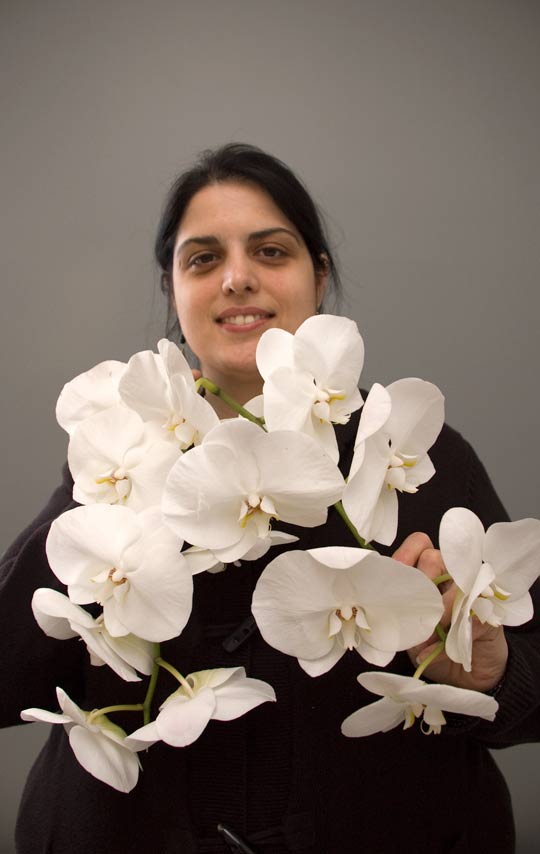
Photo by Ryan Davis
Love it or hate it, Valentine’s day is on its way and beloveds from all over will be expressing their undying adulation with bouquets of fragrant flowers. We recently stopped to smell the roses at The Flower Studio on Military Road. Our interview with Lisa Simms gets to the heart of arranging flowers.
How did you get interested in floral design?
My grandmother was a gardener and my parents liked having a garden, so I think that’s where it all stemmed from. I remember the lilacs and peonies. It was such a short season for them so when they did come out, they were especially beautiful.
I started out just after high school working at Shady Brook Farms, planting flowers. I would transplant and nurture them. I think I appreciate the process, starting from the seed, watching it grow into a plant, and then turning into a beautiful flower. I did a night course in floral design, worked in Halifax at a flower shop for seven years, and went to design shows.
What do floral designers do, exactly?
When people think of a floral designer they may think that they just put flowers in a vase and that’s it. But to me it’s definitely artwork. It’s living art. It changes. A tulip will grow an inch or so after they’ve been cut and put in water, so you even have to consider the height in floral arrangement and prepare for it. The work requires a certain amount of premeditation to consider how the arrangement will look at that perfect moment when it’s in full bloom.
Each flower has different characteristics you can manipulate. Calla lilies bend quite easily, for example, so you can massage their tissuey stems to wrap and twist them. You have to know the make-up of the flower, how it grows. The restrictions. It’s not just an arrangement, it’s an expression, but I’m not painting or using a canvas, I’m using flowers. I really like working with the texture. Even with different greenery, whether it’s a fern or a large, flat tropical leaf, you have these amazing textures. I really connect with that. It’s like, I feel the texture with my eyes sometimes!
What is Valentine’s Day like for you?
It’s definitely a busy time. But unlike Christmas, which is also busy for several weeks, Valentine’s is just one day. You can’t send flowers on the 15th. People won’t be happy. [laugh] Everyone just thinks of red roses automatically, and, of course, they are very beautiful. But it’s nice to steer away from the ordinary, whether it’s a rose of a different colour or a tropical flower. I think orchids are amazing for Valentine’s. They are more expensive, but they’re stunning and they last so long. But, really, it comes down to making it personal.
What is at the heart of what you do?
To me it’s not just a job. I need my senses stimulated! The interaction with people adds to the work. You can arrange flowers just for the sake of it, but when you put the emotion into it, considering the people and the occasion, it makes it more rewarding at the end of the day. Flowers are tied into very emotional moments in people’s lives — whether it’s sadness because of a loss, or happiness and love because of a wedding, or the birth of a new baby. So I try to put my heart and soul in every piece.
And I just love flowers. Unpacking the flowers to see what has arrived is so exciting.
And as the seasons change, so do the flowers. So you look forward to the peonies and lilacs in June, and then come the sunflowers in the summer. It’s never-ending change, really.
Interview and photo by Ryan Davis
Life on the high wheel
Thu, Nov 25, 2010

Watson on Signal Hill
Steve Watson, Central Dairies Executive Chef, does some cool, weird stuff.
You already know him as “that guy who makes ice scuptures” or “the town crier guy in Mount Pearl” or “that guy in the chef’s hat who co-hosts that show with Karl Wells on Rogers TV.”
But ever since he bought a penny farthing–the first machine on the planet to ever be called a ‘bicycle’–you may soon also be known as something else: “That guy on the …what the heck is that?!”
We caught up with Watson to talk about his awesome ride.
Tell me about your bike!
I’ve always ridden bikes, the tandems and all that kind of stuff. Six months ago, I thought, “I want something different.” When I do things, it usually is different. And I was looking on the internet and I thought, “A penny farthing is the bike for me.”
I went and I did a little bit of research on it. I looked at it and I postponed it a bit and then, about a month ago, I went down to Canary Cycles and I said, “I’ve got a project for you.”
That project was getting me a penny farthing. Don Planchat [manager] sort of looked at me kind of strange and he said, “People want to advance in technology, not go back a hundred years.” [laughs]
So this was on a Saturday. I went back home and I looked on the Internet and I found a place that made replicas of them. I went back in on a Monday and I said to Don, “Did you have any luck?” and he said, “No, I haven’t,” and I said, “Here you go. There are some replicas, you can bring them in from California! So within a day he said that yes, he could it.
The big thing with it was that I wanted it here so that I could go into the Christmas Parade, but it was one of those things that when you order it, you say to yourself, “What have I done?” When you look on the Internet, all you see is a couple of crashes with them, people going over the handle bars!
Anyway, I studied it a little bit and took a ride last week. They say, for a start, to get on the bike — there’s a little step on the back and you step on it and skip along and then lift yourself onto the seat — but just skip along for the first while and practice steering it. And practice getting off the bike because, as you can imagine, it’s quite some height.
So I did that, and, lo and behold, after the second time I said, “Well, I might as well get on the seat now,” and I tell you, it’s one of the easiest things to ride once you’re on it.
Does it get going pretty fast?
You can certainly go on at a fair clip, that’s for sure. There aren’t any breaks on it!
You don’t just pedal backwards? How do you stop it?
You have to put pressure on the back of the pedal when you want to slow down. Going downhill, you want to really watch yourself. Or don’t go down them at all.
Well, it’s got to pick up speed really fast, with the front wheel being so big.
Oh, unbelievable! And that’s one of the smallest ones, that’s a 48-inch wheel. You can get a 52-inch wheel, a 56-inch wheel, and the monster is a 60-inch wheel. But it certainly brings lots of looks going down the street.

Watson in Mount Pearl
Have you taken it out a lot?
I’ve been out several times now. I got it a week ago, [on November 10th], and then we were off for a ride on Thursday, it was Remembrance Day. Where I live in Mount Pearl, they just refurbished all the roads, so everything’s nice and smooth in the cul de sacs.
The weird thing is, when you ride along you can look through everyone’s windows because you’re so high up! [laughs]
How is it to steer?
Very, very easy. As I say, I felt confident on the bike and I think that’s 99% of your battle. Once you go, you go, so to speak. To turn around in the middle of the road is no problem at all.
Do you wear the whole outfit, with the britches and the vest and the cap, every time you take it out?
Well, yes, absolutely, that’s all part of it. Some people say, “What did you buy that for?” Well, people buy different things don’t they? Whether it be a convertible car or you name it, and they usually get dressed for the occasion if they’re going on these vehicles, so why not? And you don’t want to wear anything baggy because you’ll catch something in the wheel, and if you catch anything in the wheel you’re going to go straight over.
The bike arrived Wednesday, and I thought it was going to arrive on Friday, so when I was to pick it up I didn’t have my britches ready! I just had to pick it up in my regular clothes. I wanted a photograph in the bicycle shop, so I loaded in the van again on Saturday. I wanted to go in the bicycle shop again with all the garb on, but it was very busy in there so I left it. And that’s when I went up on Signal Hill. What a heyday up there! It was a perfect day, not a speck of wind, and everybody was out there clicking their cameras.
I assume that you didn’t bike yourself up Signal Hill.
No, no, I had the Central Dairies special events vehicle.
What’s the bike made out of?
It’s all metal and it’s a reproduction so it’s very very solid.
Yeah, it looks like those are good tires.
Well, they’re solid rubber. And the spokes on them they’re radial spokes so they just go straight up and down they don’t cross over at all and they’re the thickness of a motorbike’s spoke so there’s a little bit of compression there and you get a bit of a comfortable ride.
So it is comfortable to ride?
Oh yes, very. Then again, it’s safety first all the time. You can’t look down, you’ve always got to be looking ahead at least twenty feet because you don’t want to go in any potholes or any ruts or any grates, that’s for sure.
Why did you buy this bike? You said you thought you were having a midlife crisis… ?
Well, that’s what everybody was telling me, so I’m sticking to that!
But usually people ride those out with the purchase of a fancy sports car…
No, as I say, when I do things – well, I’m the town crier of Mount Pearl, I ride around on a tandem, I carve ice in front of people, so I’m always doing something different. Always. I have a lot of fun, that’s for sure.
Well, I hope you have a lot of fun on that bike. What does your wife think?
Well, the first time I took it out was a week ago last Thursday morning. That was prior to our ride downtown, on our tandem. This was seven o’clock in the morning, and I didn’t tell her that I was going to have a go on it. Anyways, after half an hour, she came looking for me and there I am going up and down the street on it.
When I first ordered it, she thought, “Okay, fine.” Then I told her the price and she said, “Oh my God, I know what I’m going to get for myself for Christmas.” Because they’re not cheap, you know.
No, I don’t imagine they are.
There’s only this one place making the replicas, they’re in California, that’s the only place in the world making them today. The bicycles themselves were made initially between the years of 1870 and 1878 and once every ten years there’s a race with them in the UK. Oh, and every year there’s a penny farthing bicycle race in Tasmania.
Think you’d ever enter one of those races?
You just never know. It sounds interesting just to go and meet everyone who’s got one…. you never know!
You might even start a trend here. You could take over the parking lot of A&W with retro bicycles.
There you go! And you know, that may happen because once people start to see you… You know, the other thing was, everyone who’s seen me on it now said “I just saw someone on one of those!” and that was on the American Pickers, which is a TV show now on the History Channel and about three weeks ago, there was one of the guys on there on a penny farthing. So everybody’s got it on top of their mind
You might really be on to something!
Absolutely!
Look for Steve Watson and his penny farthing in this year’s Downtown St. John’s Christmas Parade happening this Sunday, November 28 at 1pm.
Three guys with moustaches
Wed, Nov 3, 2010
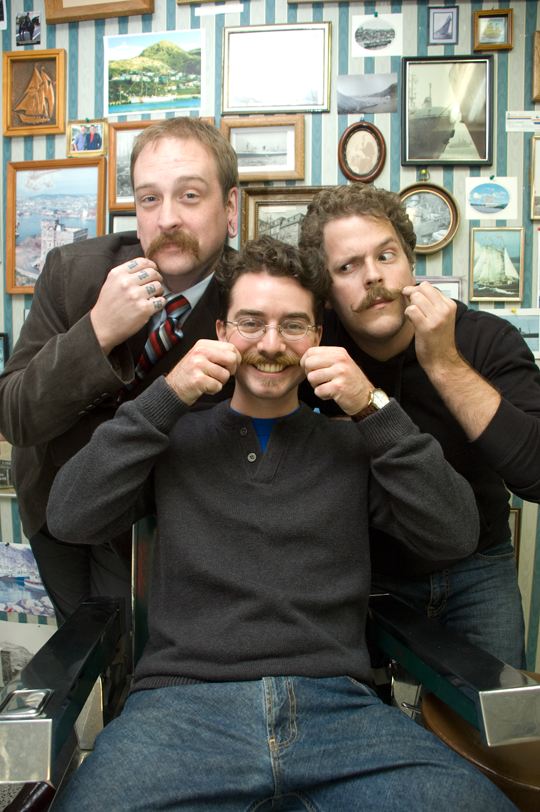
Men and their moustaches (L-R): Craig Cutler (with “The Walrus”), Jeff Foran (with “The Spaniard”), and Jed Baker (with “The Handlebar”). Photo taken at The Family Barber Shop by Ryan Davis.
Movember is a moustache growing charity event that raises funds and awareness for men’s health every November. For a detailed account of what’s involved in having a hairy upper lip, we spoke with three mustachioed men.
Tell me about your own personal history with the moustache.
Jeff Foran: I think I come by my moustache honestly. My dad had a moustache. He shaved his off so I kinda felt the tradition should stay alive. The first reason why I really grew it out with any real attention was that I was going to France. I thought, “If I’m going to France I have to at least look French a bit.” It bought me a bit of respect.
Craig Cutler: My story is a little bit different in that I worked out of a tattoo shop for many years and was just trying to come up with ways to look stupid. I was able to get some really big curls for a long time. When I was younger it wouldn’t grow very full, but as you get older the hair keeps growing, and in some places where you really don’t want it to. I’ve had one now for most of the past 12 years.
Jed Baker: I’ve only had this for two weeks. It’s my first serious moustache. I had a moustache in college for two different theatre shows but they were shaved off on closing night.
Do you have any fears associated with having a moustache?
JB: My fear is that I’m going to get into a fight with somebody and they’re gonna grab the tip and just yank it right off.
CC: It really hurts. But they need to get a hold of it first.
JF: When mine was at it’s longest, people would grab a hold of it or just touch it. It’s kind of disgusting to have someone touch your moustache, especially when you’re in a bar. So beware.
CC: Do you ever get people who threaten to shave off your moustache while you’re sleeping? I’ve had that happen.
JF: I’ve had nightmares about my moustache. In the dream I wake up and it’s gone. I go into a panic in the dream because I don’t look the same. Everyone thinks I’m 12.
What are the rules of Movember?
JB: You get people to sponsor your moustache growing. [ca.movember.com] You start clean-shaven on November 1st and you have to shave everything but the moustache every day. You cannot cheat by not shaving your beard. You have to have a very clear moustache coming in for the 30 days.
CC: I’m not going to shave my moustache for that.
JF: No. I would sooner stand as a beacon of inspiration.
Is there a certain comedic element to the moustache?
JB: Yes. It’s a statement. Hipsters have really grabbed on to the moustache among other things. It’s like they’re mining the past ironically to look cool today.
CC: Until it gets popular.
JF: Yes, but I don’t appreciate it when people think that I wear a moustache ironically. I don’t. I wear it because I like it. I feel dignified in it. It makes me feel masculine. And I don’t think there are a lot of things in today’s fashion culture which are made for men to feel, not uber manly, but masculine. Facial hair of this genre helps someone to feel that way. If they’re having trouble defining themselves as a masculine person then a moustache is something that stands out.
Do you ever give a nod to the stranger with a moustache?
CC: For sure. I’ve walked down the street and said to another man, “That’s a handsome moustache.”
JF: Yeah. Those are four words that you would never hear otherwise. Unless you were a person with a moustache, I imagine you would feel uncomfortable approaching a stranger and saying that.
Click here to read some tips for moustache maintenance and well being.
Tips for moustache maintenance and well being
Wed, Nov 3, 2010
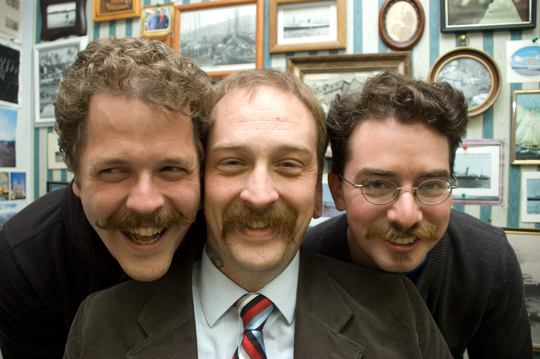
Photo by Ryan Davis taken at the Family Barber Shop.
From mustachioed men (L-R) Craig Cutler, Jeff Foran and Jed Baker.
• Carry a handkerchief. (CC)
• Drink out of a travel mug. (JF)
• You can forget about bagels with cream cheese. (JB)
• Be conscious of playing with it. Don’t look like you’re obsessed with it. (JF)
• Dreadlock wax works well for styling. (CC)
• If your hair and moustache aren’t the same colour, you can use a tinted wax. (JF)
• One thing that goes really well with a moustache is a mullet. (CC)
Harry Sullivan
Thu, Sep 2, 2010
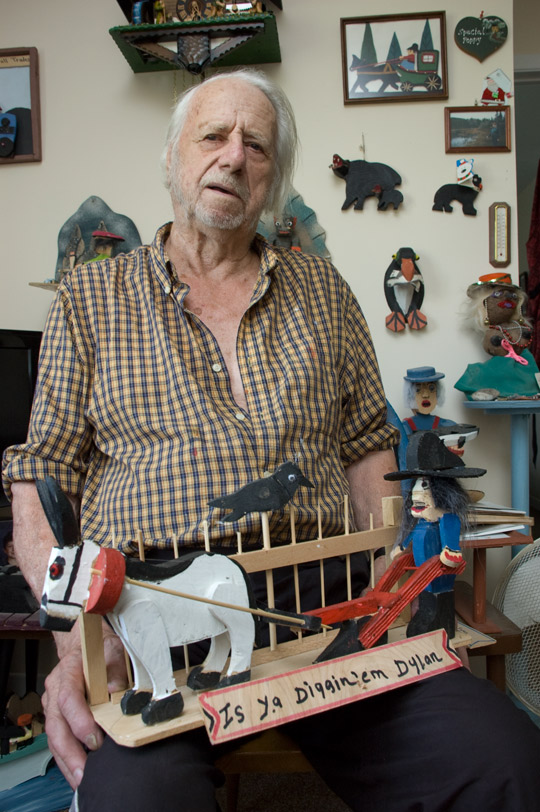
As a child growing up near Windsor Lake, I would spend my days in the forest behind my house. In one area, deep in the woods, I came upon a scattering of startling concrete faces nailed to the trees. These old men had marbles for eyes and crooked pipes in their mouths. It added a certain mystery to the woods that I never forgot. It was only by chance that I met the maker of these faces 25 years later.
I met with Harry Sullivan at his home in Torbay. It was early in the conversation when we realized we were once neighbours. The retired 84-year-old bricklayer has been making what he calls “folk art” for the past 13 years but he’s been making art, like the concrete faces, all his life.
Using scraps of wood paneling and 2x4s, beach rocks, feathers, cotton swabs, or old pieces of leather—basically anything that’s kicking around—Harry creates scenes of the food fishery, whale watching, ice fishing, and even a tableau of Billy Baldwin’s forge back when he was a kid growing up in Pouch Cove. He makes birdhouses, old men sawing up wood, Big Foot monsters, and “Mars Rovers” (that run off the smell of birch). Most recently he made a rock face of opposition leader, Yvonne Jones, as an expression of concern for her recent breast cancer surgery.
You make a lot of people and with great expressions!
“I was always interested in faces. When I was a bricklayer you’d have your pile of mortar on your board, and your trowel. You’d just hit your board and it would all float right off smooth. And I would just mark in it, eye, eye, nose, mouth—old man’s face just like that. I used to do that when the youngsters come along.”
Tell me about this one with the guy plowing his field.
“Up on the Southern Shore in Mobile, that’s the place where the goat spoke. That’s how I come to make this. There’s an old man in his garden, digging his potatoes. This is a true story, from years ago. And he went up and he caught an old billygoat. And he hold up the billygoat, over the fence, and the goat said, ‘Is you diggin’ em Dylan?’ And Dylan thought it was the goat that spoke. And that’s how I made it. ‘Is you diggin’ em Dylan?/Is you diggin’ em deep?/Is you diggin’ em Dylan in a great big heap?/Yes I’m diggin’ em said Dylan/Not enough to fill a boat/But I’d be diggin’em more if it wasn’t for you/You rotten stinkin’ goat.’ Look, he’s plowing up his ground.”
At your stand on Torbay Road there once was a sign that listed your contact information so people could come by your home and pay for the art. Did anyone steal anything?
“I had a sign like that, but I had a lot of stuff taken away from me. I thought people would be honest enough. It said, ‘Please give me a call or drop by.’ Now I’ve had people come by my place and pay me. ‘I took two of your birdhouses. I took a rooster,’ and so on and so forth. They’re honest people. The people who rob you, or do stuff like that, they’re not hurting me, they’re hurting themselves.”
Why do you make art?
“Just because I love to be doing it. I love what I think about. And what I make from my head. It’s good physical living and excellent for the body and for the soul. It’s what we’re all about. You got to enjoy what you make.”
Interview and photo by Ryan Davis
Marie Wadden
Fri, Jan 2, 2009
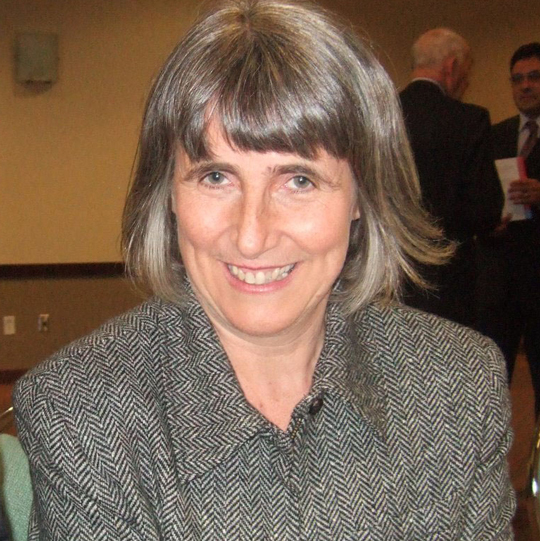
Occupation: Network Producer for CBC radio, author, and investigative writing instructor at MUN. She’s also chair of the board of directors of the Suzuki Talent Education Program.
Bio: Marie Wadden has a masters’ degree in Journalism and has been working as a broadcast journalist since 1977, first in TV and then in radio. She won the 2005 Atkinson fellowship in Public Policy and wrote about addiction in aboriginal communities across Canada in a series of articles for the Toronto Star. This research also generated a book—her second about aboriginal issues—that was recently released in paperback.
How did you get into journalism?: “I worked at the campus radio station at MUN in the 1970s. But I always wanted to write. From a very early age I dreamed of myself as a writer. I had this vision of myself in a room with a view composing stories and telling stories. But I also was always a very practical person, so I thought, ‘well I better get a practical skill,’ so journalism was the one that was going to enable me to write.”
What inspires you to write about aboriginal issues?: “The relationships that I’ve developed with aboriginal people, and again, they’ve kind of happened by accident. I was traveling with a friend to Labrador in 1978 and seeing Sheshatshiu for the first time and never having learned anything about the Innu in school. And by that time I had already worked for a year at CBC and I had never seen them on television so it was like they weren’t in the public life of the province, and they weren’t in the social life of the province. It was like they didn’t exist.”
Tell me a little about how your latest book, Where the Pavement Ends, came about?: “It came about from my long dismay with the prevalence of addiction in the communities I love so much, particularly now Natuashish and Sheshatshiu and amongst the people I know really well.”
“I had some of the most enriching experiences in my life in those communities… and yet all I could see was the spiral of addiction getting worse rather than getting becoming lesser.”
— Kerri Breen
Tommy Gushue
Thu, Dec 18, 2008

Bio: At only 22 years of age, Tommy Gushue has won scriptwriting contests, sold a pilot to the CBC, nabbed an agent, and formed his own local production company, Black Market Films. Black Market’s first project was to shoot a zombie film, Date with the Dead, co-starring Andy Jones. Dead is set to be completed by February 2009.
How did you happen to sell your own series to the CBC?: “In June I won the 2008 Island Media Screenwriting competition, and I was flown out to PEI to pitch Hotel Noir, a mystery-thriller that’s set in an old Montreal Hotel in the 1940’s.”
What’s the status of the series?: “I’m working on a general outline for the first season, and the first draft of the pilot is due early in the Spring”
What’s the genesis of Date with the Dead?: “Nima Yousefi, a friend of mine in LA showed me his new script, which would become Date With The Dead. I thought it was fantastic.”
How did you get Andy Jones involved?: “We immediately started seeking out some of the most talented people in town to fill out the cast and the crew…when we started showing [the script] around, people got excited”
What’s in store for Black Market Films?: “We’ve got a lot of things planned for the future, but the very next thing will probably be another short film sometime around the spring. Whatever our next project is, our approach will be the same: there’s some great work being done here in town, but not a lot of it is being seen. St. John’s has a very close-knit film community, but outside of that, there isn’t much interest at all from the average film-goer.
We’re trying to change that…We’re focusing on making films that people outside of [St. John’s] will want to see: independent films for people who don’t watch independent films.”
— Adam Clarke
Jamie Skidmore
Thu, Dec 4, 2008
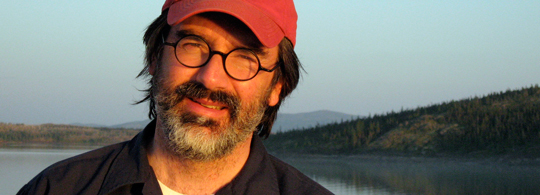
Bio: Jamie Skidmore has been working in theatre for over 20 years as a director and designer. Recent direction credits include A Ghost on the Shore, an environmental and historical theatrical piece that he also wrote, as well as Mother Courage and Her Children and Woyzeck. In 2006 he also served as the Production Manager/Technical Director for the Magnetic North Theatre Festival. Jamie is currently the co-ordinator of the Diploma in Performance and Communications Media and teaches courses in theatre and video production at MUN.
You are a teacher of young theatre artists at MUN, what are their main concerns regarding theatre here in St. John’s? “I was speaking to a student yesterday who perceives the theatre scene in St. John’s as very closed and insular. I don’t think this is the case, but I also think young actors and directors need to make their own theatre for a while before connecting up with established organizations. Krista Hann is a good example of an artist who has made quite a name for herself by mounting her own work, and doing so in a relatively short period of time.”
What is the best part of your job? “When a student says something in class that is brilliant and that never occurred to me.”
What is the worst part of your job? “It’s often sad when a really great student moves on to other things.”
Is there anything missing in the St. John’s theatre scene? “An audience. For certain types of shows it’s easy to pack the house, but lots of productions get relatively few people out. St. John’s is blessed with great theatre that is often seen by very small groups of people. Everyone should include theatre as an option when deciding what to do on the weekend. Parents should bring their children and teenagers to the theatre in order to develop the next generation of theatre-goers. Support the arts!”
— Dave Sullivan
Charlie Thomlinson
Thu, Nov 20, 2008
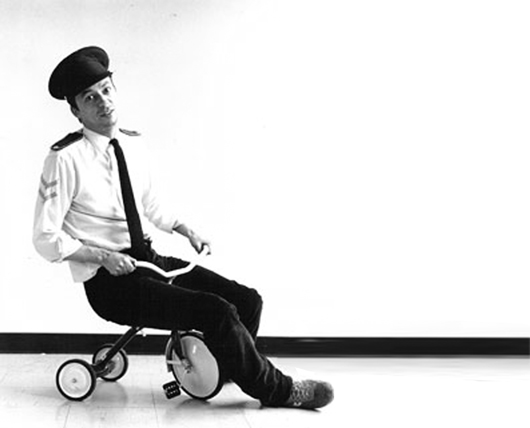
Bio: Charlie Tomlinson has been involved in theatre for nearly as long as he can remember. Born in London, England, Tomlinson moved to Newfoundland in 1972 and would go on to study history and philosophy on MUN. Later, he would serve as artistic animateur for the LSPU Hall from 1988 to 1991 and teach theatre at the University of Alberta before returning to Newfoundland. On his return, Tomlinson co-founded the celebrated theatre company c2c whose production of The Leisure Society opens November 26. (more…)
Tim Conway
Thu, Nov 6, 2008
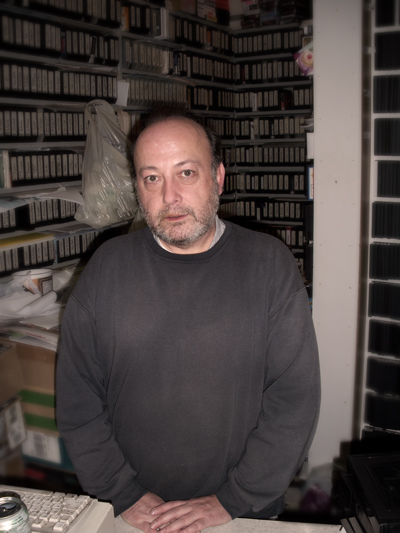
Being able to talk to Tim Conway presents many possibilities—what was it like to work with Sandra Bullock in Speed II: Cruise Control? What’s the methodology behind Dorf Does Golf?
Of course, that’s not the Tim Conway we spoke to, so those questions must wait.
St. John’s Tim Conway runs Capitol Video (134 Military Rd) and sits on the board for the Nickel Film Festival. (more…)



Tue, Jul 5, 2011
Ryan Davis