

Archive | On Stage RSS feed for this section
Move like it’s new
Spoken word / body by Martin Bélanger
Sept 18, 2010
Martin Bélanger is both a storyteller and dancer, and for this piece he went to his past journal entries for inspiration. He risks coming off as a pretentious navel-gazer, but thankfully this isn’t art brought up from the depths of a tortured soul. Bélanger has original things to say and makes connections between philosophy, personal experience, body and movement.
Bélanger says our bodies get bored with daily life, trapped into performing repetitive movements such as opening a particular lock with a particular key, or doing the dishes. He experiments with new ways of moving while doing everyday things: picking up a water bottle, walking the dog, having a conversation using the whole body. His movements are surreal, expressive, and beautiful.
For dance purists, it may come across as top-heavy with spoken language, since much of the performance consists of live or recorded monologues, but for the general public, this gives the work more accessibility. Repetition works well here too: the audience is given more than one chance to wrap their heads around his ideas, and each time a new layer is added where it becomes less and less based in words and more and more based in movement. You can see his thoughts turn into movement.
Spoken word / body is thought-provoking, original and accessible. This is a show I wish more people could have seen here.
The Festival of New Dance continues until September 25. To find out more, visit www.neighbourhooddanceworks.com
Our dancers dance naked
Fri, Sep 17, 2010
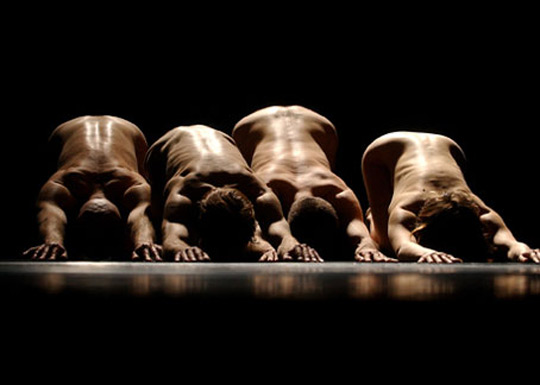
The Festival of New Dance opened last night with Amour, acide et noix by Daniel Léveillé. I’m not sure how ‘noix’ translates, but this 65 minute all-nude — full frontal — performance was certainly a balls-out way to kick off the festival’s 20th year.
Four naked bodies emerge, jerking and stuttering and marching in formation under stark lights to The Four Seasons. The Vivaldi you hear won’t fool you. This is unapologetically contemporary dance, every aspect pointing to a big sign that reads “this is not ballet.” These bare-skins make leaps like frogs, feet landing with meaty thuds, stopping motionless in their tracks. These human bodies seem to knows no ecstasy: They are heavy, unsteady, and liable to collapse suddenly.
Yes, there are fluttering, flaccid penises! Floppity breasts! And yeah, your mental image is right: They’re all kind of funny because they can’t be controlled. At one point in the show, the dancers stand perfectly still, and the lights, for the only time in the show, become beautiful and shadowy. Suddenly a vintage bird identification recording comes over the sound system, and you really do become a bird watcher.
Overall it’s not a light, whimsical performance, but it’s also not depressing or upsetting either. There are some funny moments, and certainly many amusing ones.
This show is not for everyone, but certainly worth a try.
The final performance of Amour, acide et noix at the LSPU Hall tonight, Friday September 17 at 8pm. For more information call 753-4531. The Festival of New Dance is taking place September 16 to 25. More info at www.neighbourhooddanceworks.com
Without a safety net: Interview with contemporary dancer Peggy Baker
Tue, Sep 7, 2010
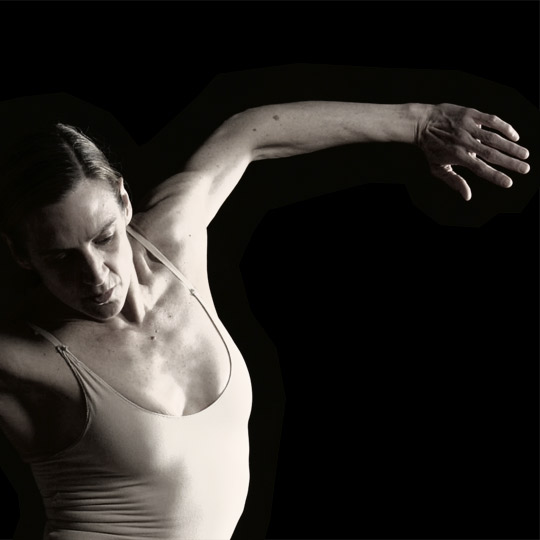
In town as part of this year’s Festival of New Dance, renowned Canadian contemporary dancer Peggy Baker talks to Elling Lien about work, dance, and her silent, solo work, Portal.
I was thinking about how as people work indoors more and more, people are losing contact with their bodies. I thought it would be interesting to talk to you about that, since as a dancer you know your body really well. What do you think?
Oh boy. Well, I think it’s a shame for one thing. The less variety we have on a physical level -– it seems to me that people are still very physical but their relationship is extremely narrow. Think visually how much time people spend looking at screens now as opposed to actual, real objects. Or the amount of print that we look at, as opposed to engaging in real time conversations with somebody we’re sharing space with.
The same thing goes for our bodies. We do less and less things with them. We have a narrower repertoire of physical activities. A lot of people don’t do any labour with their body at all. That’s all dance is. It’s just labour. It’s work. It’s work on the very, very bottom line. I feel very grateful that I can exert my body in that way because it has things to teach me.
One of the reasons people are getting carpal tunnel syndrome now at computers is because there’s no resistance from the keyboard. That was one of the things about an actual typewriter. The whole mechanism of it was a more healthy interaction. I’m not saying I don’t have the same fascination, but I’m very, very lucky that my life is a bit more complicated than that, and my physical life is primary.
I wanted to mention that watching your videos online, your body reminds me a lot of my mother’s body. She’s been a farmer her entire life. She’s still working and she’s not a young person any more. She’s got long arms, and her hands are, well… You can see that they’ve worked really hard. I can see a real similarity.
The kind of dancing that I’ve done has nurtured a particular kind of body. It’s an extremely different from a ballet dancer, for example. The aesthetic is very, very different.
You’re not afraid to build up your arms, for example…
No, definitely. If we just think of ballet and the way that arms are used in ballet, it’s actually a very narrow vocabulary of movements for classical dancers. The men, of course, have a much broader vocabulary because they’re actually lifting people and moving people around and manipulating. The women, the actual vocabulary for their arms is extremely narrow. In contemporary dance that’s one of the most expansive elements of the vocabulary.
You’ve been teaching at the National Ballet School for twenty years now. What kind of place does contemporary dance have there? Are you squeezing in there, or is it fairly respected?
It’s absolutely an integral part of the curriculum there. It’s changed a little bit –- I’ve been there for twenty years and it has shifted tremendously over that time, but it still shifts a little bit every year. It’s a very dynamic curriculum that’s still being developed and discovered. It’s changing just like everything else in the world.
Students assume now that they’re going to join a company that doesn’t only do classic ballet, even if it’s what they train in with their company class every morning, they all understand very clearly that it’s the last century. Most people say contemporary dance now because modern dance, which was really based in the techniques and in the companies of Martha Graham and Bertram Ross. Even Lester Horton. Those were the modern dance techniques. The lives of those creators are over, and their legacy is already and has been for many decades now. Dance has already been transformed and reinvigorated from a broader point of view. The principles that they discovered and developed, those have now become integrated in the broader dance world. There’s nothing more that can be done with their work. Those bodies of work already exist and creators now must also be doing their own work.
It’s like as if rock and roll stopped at the Beatles or Elvis…
Yes, exactly. They’re still really important to reflect on, and without them, we wouldn’t have arrived where we are now. It’s the very same thing. That’s actually a great analogy. People didn’t stop making pop music and rock and roll when the Beatles disbanded. Everyone didn’t say, “that’s it for pop music!”
“That’s as far as we can go! We have nothing left to say!”
It goes back to the brilliance of that time: Popular culture was being turned on its ear. These crucial creators in modern dance did the very same thing, but every so often somebody else is able to break through and offer some brand new ideas.
One of the reasons people have a hard time connecting with contemporary dance is they don’t know what the purpose is. What do you think?
Yeah, they assume it’s going to be something very concrete because we do things for reasons in our lives. I think dance, especially contemporary dance, it’s this very unusual balance between abstract and actual. They’re not necessarily related. I don’t believe that when people are listening to music they’re looking for meaning. They’re assuming an experience of music. The same thing when they look at contemporary art. It’s the mystery of the mind and sensibility that brought those elements together and the strange conflicts and the possibilities for meaning. It’s not a singular meaning. Actually, I believe that the meaning the audience receives is the actual meaning. They’re completing the work by their own perception of it. I think that people are too caught up in whether they liked it or not. I think they feel they’re supposed to be able to judge how good it was by how much they liked it. To me, those are the least important questions.
“I give it two thumbs up!”
[laughs] Yes, I think if people would just ask themselves, “What did I see?” they’d realize that they actually received something very unique to themselves.
So how do you get people to understand how to appreciate contemporary dance?
I think that’s part of the role of people who are publishing about dance. It’s the role of the presenter to provide pre-show talks or program notes or events that are public.
What kinds of things could the dance community and the publicity folks be doing differently?
I’ll just give you an example of things I do. I do every year in Toronto a series of free performances. They happen in unusual places at unusual times of day. So maybe at a theatre that’s not a dance theatre, or at the museum, or at the art gallery, or at a seniors’ home. Sometimes they’re over lunchtime or they’re on a Sunday afternoon. They’re free, and I call them Inside the Art. People who come to these performances hear me talking about the work and showing dances. Then we engage in a conversation about the work. I’ve been doing that for at least 10 years and that’s part of how I try to connect with my audience in Toronto.
How did you decide to do that kind of thing?
I just needed to. I felt almost like I wasn’t able to expand my reach into the community that I am a part of. I don’t mean the dance community—I mean the community that I live in, like my neighborhood and the city that I live in. When I performed in Calgary a couple years ago, I actually came out and talked to the audience for the first 10 minutes of my show. I know that it’s really demanding to look at one person dance for an hour. You’re wondering ‘what is this?’ So I told them a little bit about each dance and the various choreographers. I tried to free them up to be able to receive the performance. We need to be able to not be afraid to speak literally to the audience.
I’m doing in a dance called Portal in St. John’s. It’s a very, very stark dance. There’s no music.
Silent!
I’m really sharing this darkened theater space with the audience. I’m on the stage but we’re sharing the pressure of the silence, and the uncertainty. The lights keep going out and I reappear somewhere else on the stage in a different lighting effect. It really plays with perspective. Sometimes I look gigantic. Other times I look very, very small. It doesn’t have any of the markers for us to understand beginning, middle and end because there’s no music, there’s no arc for the music, and because there’s all these blackouts all the way along. I think it ends up being really, really exciting for the audience. The uncertainty that we often feel when we’re seeing contemporary performance is amplified and becomes obvious that it’s part of the whole idea of the piece. For me, this idea of Portal, which is a threshold to someplace brand new, becomes a metaphor for the stage space, for the experience and performance, for each tiny little segment of the dance itself.
So by making the work silent, it seems like you’re confronting the audience, in a way. Raw contemporary dance.
I don’t feel that it’s confronting. I feel that it’s just breaking down one more barrier. To me it feels like a dance that’s very close to the bone. I’m taking away anything around it that would obscure the dance itself, and letting people just see what the dance is.
I just finished teaching a workshop in which everybody worked on their dance every single day, and we never used any of the music. We worked in silence. It’s just amazing how much more clear the dance is without the complication and scaffolding of the music. You are seeing the dance. When you reduce it down that far you can start to see what it is you’re giving people and what are they receiving. The music often tells you how important or what the tone is, or if it’s funny or sad or conflicted. The music is setting that up. When you don’t have the music and the dancer needs to bring that clarity and precision to what they’re doing, it’s super exciting.
By the end of the week we didn’t miss the music at all. We felt that we were receiving the dancing.
How could you see that in the students?
By their insightful comments about what they were looking at and the heightened precision and clarity of their dancing.
So they weren’t doing a certain thing on a certain beat? They didn’t have that to rely on. Is that right?
Right. They had to embody the tempo and dynamics. A lot of times dancers think they’re doing things because the music is doing it. They think that their dancing is becoming exciting. Actually it hasn’t changed at all. The music has become more exciting, but they haven’t done anything with their dancing. I think the dancers lean on music far too much. I don’t mean that we’d all be better off if dance had no music. No. But dancers spend too much time dancing to music and not enough time simply dancing.
You did an interview on CBC’s Q last year, in the spring. You were talking about Portal, and you mentioned that at that time when you were working on the show, you said at the beginning you were afraid of doing it in silence. Why were you afraid?
It takes you a while to understand what a dance is. The choreographer and the dancer are discovering what the dance is. Hopefully they discover what it is before the audience step into their discovery! As things are being made or as they’re being embodied, there’s a process of them coming to light and the choreographer as they understand what the work is hopefully is going to clear out elements that obscure it and not just keep everything because they made it that way as they go along. Things reveal themselves. I now understand what this dance is and so I’m not afraid of doing it in silence. At first I wasn’t assuming I would make a dance that wouldn’t have music.
It ended up, as I understood what it was, that it was a dance in silence. It revealed itself as I worked on it. I actually started working from a book of haiku. Each haiku had a photograph of a lotus –- it was a gift actually from a friend whose cottage I’m visiting right now. She gave me that book. I think it was a Christmas gift.
I took the book into the studio as a starting point, and I started making material that was inspired by these photographs and also by these haiku. Then I started experimenting with different music. It was quite a long process, as most dance is. At a certain point I brought in a book of photographs by Diane Arbus because certain things about the lilies -– the lotuses were so pristine and perfect and they started to drive me crazy. So I brought in a book of Diane Arbus photographs because they’re all about your discomfort with the predicament of the person you’re looking at in the photograph.
What about the lotuses was making you crazy?
They were sort of these hyper-perfect photos. Real lotuses don’t even look that perfect! It was sort of like food photography, once you realize that every plate at the dinner table is not going to look like that. It’s all been staged. So I brought in this book of Diane Arbus photographs. It was one of the last books and it was of people in an asylum. They’re very amazing photographs but they’re very disturbing. They really helped me because they started to give me this idea of this sort of fragmented world view.
We all have quite a narrow world view, but people who can’t even take care of themselves have an even narrower world view. They don’t understand all the mechanisms that are supporting their care, for example. So this started giving me this idea of this fragmented experience where scale keeps shifting and where the locations are dislocated; there’s not any continuity.
Because one of the most striking things in this book were photographs of these extremely, extremely mentally disabled people dressed up for Halloween. They were dressed up in funny or scary costumes, but they already were on a certain level funny or scary. It was such a tremendous amplification of the way that they’ve been looked at by people who don’t know them. It was just very extreme and a very unusual and extreme body and physical expression. As we all get socialized we learn what’s acceptable ways for sitting, standing, walking, eating. Anyway, it was a reverse universe to the lotuses.
So it came from the starkness and individuality of these lotuses and these haiku (the kind of perception and balance of those ideas that are expressed in those very few syllables.) Then flipping to this reverse universe of looking at these Diane Arbus photographs.
It’s really interesting that it comes from haiku as well. Haiku are very short but they’re very precise and they’re very stark. They’re usually about fleeting moments. They’re also usually very accessible, even though poetry generally isn’t considered accessible..
Right. Someone looked at Portal and decided to write what they saw in each of these little windows of light, it would have the same quality as a haiku. Even if people see something that looks like a “distant, fluttering,” that’s just what it is. When we can’t clearly see something, there’s still a wholeness to it.
It is a tremendous mystery why we make music, why we make poetry, why we dance, why we do these things that are completely unnecessary to our survival, on a certain level. But these things must be answering some deeper human need. These quandaries that are particular to humans –- ethical, moral, abstract –- they’re one of the biggest things in our lives. We’re preoccupied by them. Whenever something really big happens to us –- a birth, a death, a displacement of some kind — this is what’s on our minds. These sort of imponderables. People need to reflect on these mysteries through painting, music, poetry, and dance.
Well, I’m excited to see your show.
The opportunities to perform are less and less frequent. I am so thrilled to be able to share this work, in particular, but also it’s quite amazing to me to be able to dance this long. It’s more and more precious the opportunities to still practice my art and to share it in a performance setting. I’m really excited and it’s even more wonderful to be part of a festival, because there’s an excitement generated around the breadth of the activity.
It’s a feast!
Exactly.
Well, I really enjoyed talking with you Peggy.
Likewise. Thanks for calling.
Peggy Baker will be performing Portal as part of the Festival of New Dance at the LSPU Hall on Monday September 20 & Tuesday, September 21at 8pm. Special light design by Marc Parent. Lee Su-Feh’s The Whole Beast, another solo work, is also on the bill. Tickets are $15+/$20+ and are available at LSPU Hall—3 Victoria Street 753-4531. For more information about the Festival of New Dance, visit their website at http://www.neighbourhooddanceworks.com
Emile’s Dream at 30,000 Feet
Thu, May 13, 2010
Emile Benoit was one of Newfoundland and Labrador’s best known and loved fiddlers. Last month, local theatre company Artistic Fraud toured across the province with a show on his life and music, called Emile’s Dream. On a plane on the way to a show in Labrador City, cast members Kelly Russell, Phil Churchill and Daniel Payne brought out their fiddles and played a couple-a tunes.
I asked Daniel Payne (the one in the toque) a few questions about spontaneous performance.
Why did you do it?
It’s just such a part of Emile’s legend, his love of entertaining people anywhere, including on airplanes. In Emile’s Dream, the show we were touring, we actually have a scene where the three of us are in our seats on the plane and we are playing and telling that part of Emile’s story. And now here we are living that scene – in the air with our violins in the overhead compartments an arm’s length away. It would just have been a tragic waste of an opportunity to have not done it.
What was the reaction? It seems like people really warmed up to it…
If you watch the video you get a sense of it, I think. You can certainly see in our faces that the vibe is very good. It took a couple of tunes for people to realize “wow, something’s actually happening here.” By the time we played at the front of the plane, through the PA system, and actually had a chance to say to people what we were doing, people had really taken to it, and you can hear that when we finish playing. It was a very special moment, and I think that everyone on the plane appreciated that and participated in that.
How’d it feel to play Emile’s “Flying Reel” at 30,000 feet?
It was so excellent! Emile actually says in the play (which is all his own words; transcribed from interviews with him) that it was the sound of the wings that inspired the “Flying Reel”. So it was so crazy to be hearing what he would have heard when this tune came into his mind! It was also hilarious because we had so little room to play — while we were playing in the seats, I could basically only move my arm below the elbow, so it was kind of good practice too. I’m proud of the three of us for helping make a little memory that all of us who were on that plane will carry with us for a long time I think.
Justin Simms: The Infinity Plays
Thu, Apr 22, 2010
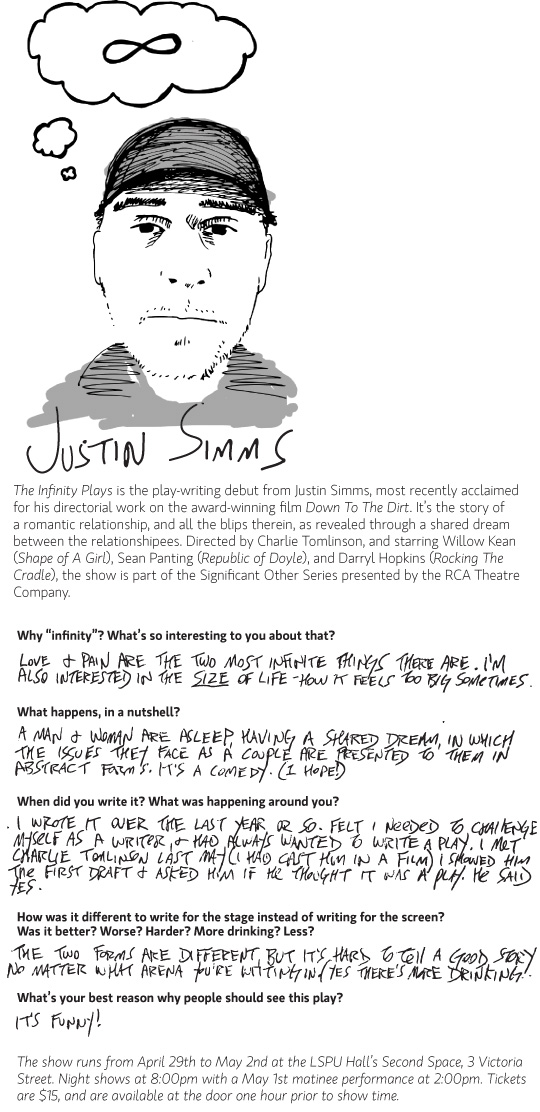
(Questions by Sarah Smellie and Elling Lien. Illustration by Elling Lien.)
Louise Moyse: A Propos of Nothing
Thu, Apr 22, 2010
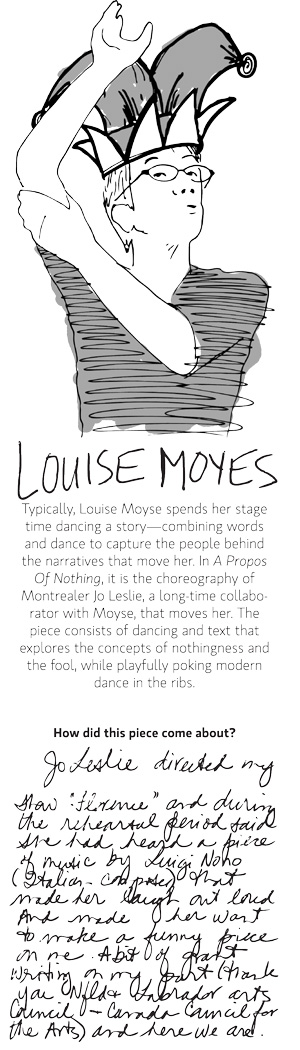
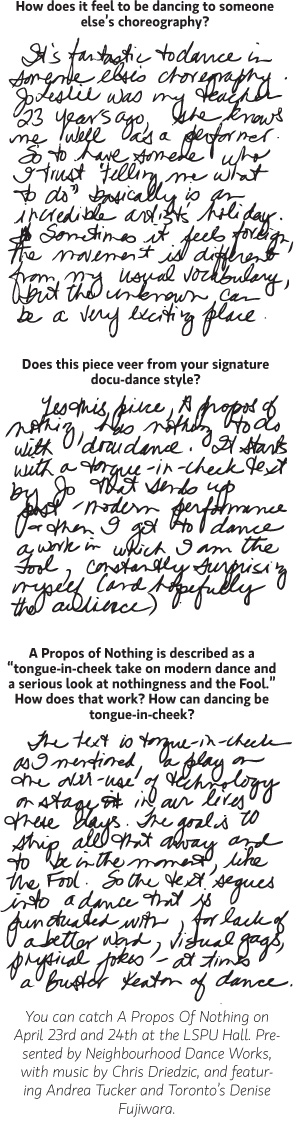
(Questions by Sarah Smellie and Elling Lien. Illustration by Elling Lien.)
Aiden Flynn: The Monk
Thu, Apr 22, 2010
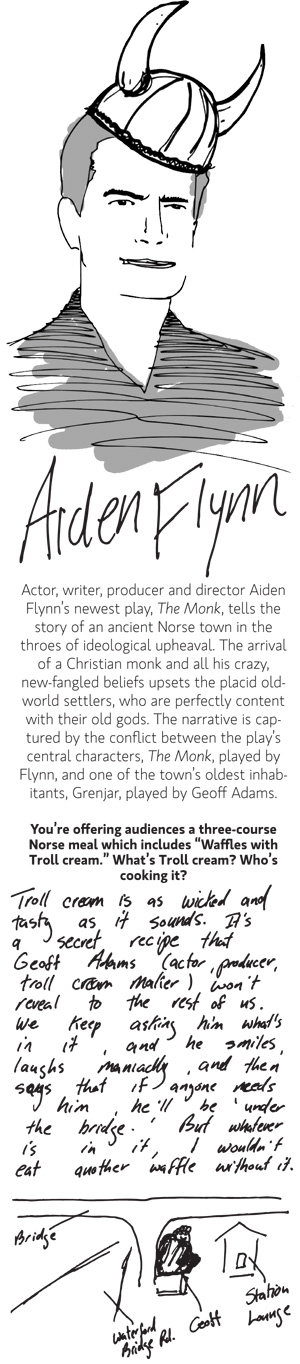
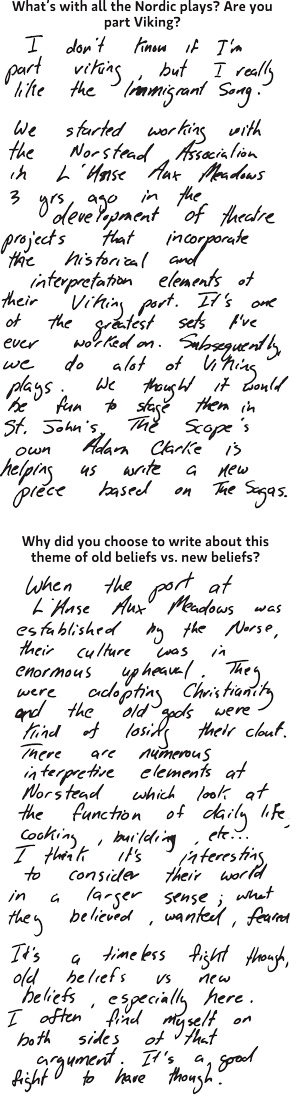
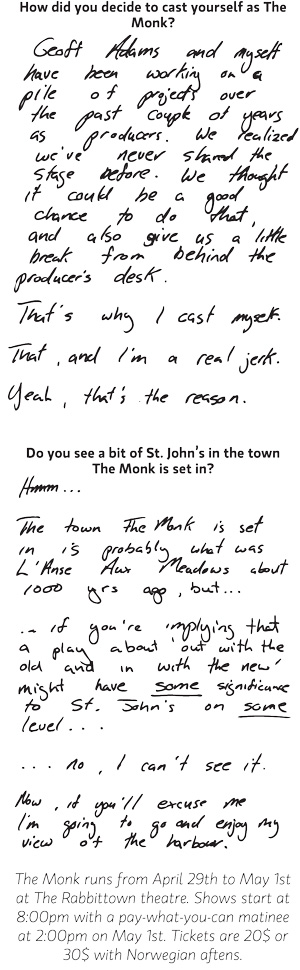
(Questions by Sarah Smellie and Elling Lien. Illustration by Elling Lien.)
Two debuts
Thu, Mar 25, 2010
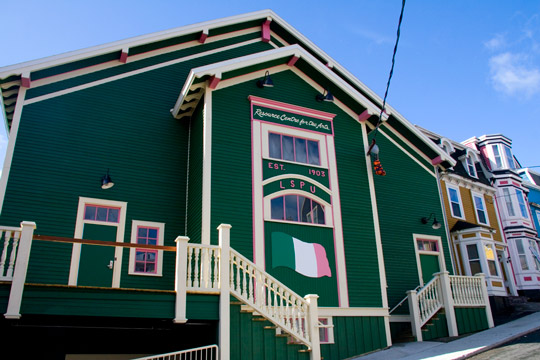
Photo by Martin Connelly
According to Amy House, RCA Artistic Animateur “The entire envelope of the building is redone. The entrance is now glass and the corridor is quite wide, it’s very nice and it’s very inviting. It’s like being in a new building.”
The RCA has been out of the Hall for about two and a half years, and construction has been ongoing for the past year.
The biggest change is the set up. The RCA converted what used to be the gallery into a downstairs performance space that will seat 60. House says the facility will accommodate developmental works and readings, but will also be used as a crush space when there’s a show on the go upstairs. “It’s also where the bar is,” she adds.
Until June marks the soft opening of the renovated hall, which will continue to softly open until the grand opening on October 6th this year. Between now and then, House says, they’ll work out the kinks associated with the new space, and work out scheduling, box office, and any other issues. There will never be two events running simultaneously, but there’s still a lot to figure out.
This will be the play’s second developmental incarnation—which explains the limited four night run. The first was last summer in Toronto at the Summerworks Theatre Festival. This time around, playwright and actor Jane Maggs wanted to see how the play, set in Newfoundland, resonated with local audiences.
Until June is a tragic comedy about Lily, a young woman who has idolized her older sister Monica throughout her life. It explores how the people we love can alter our lives with their failings as much as their affection, and features Maggs, Sue Kent, Mark O’Brien, and director Sherry White. It is a co-production of RCA theater, East of Reason (run by Maggs herself) and White Rooster.
Until June will run at the LSPU—3 Victoria St—from Wednesday, Apr 7 to Sunday, Apr 11 at 8pm. $25. Pay What you can matinee on Sunday, Apr 11 at 2pm. Call 579-4424 for tickets or info.
Frank Barry’s Psychic Baedeker
Thu, Feb 25, 2010
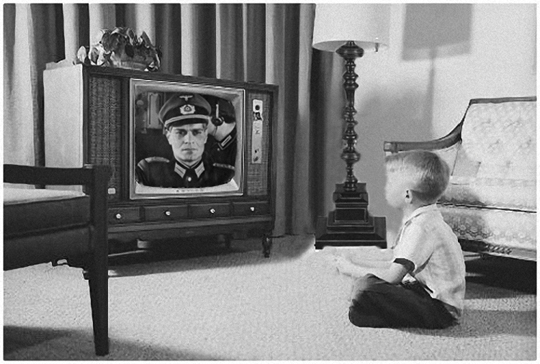
An image used in Frank Barry’s Pity the Flesh. Images from Wikimedia Commons, photo composite by Rhonda Pelley
“A friend told me that it’s really dangerous to spend a lot of time looking at images of tortured people and reading these accounts. It depresses you, it really does,” says Frank Barry. “After my initial period of ‘dark research’ as I call it, I went through a terrible depression. And I would never have said before that I got depressed. I have a certain world view and I’m an informed person and sometimes I lose faith but I’m an artist. I’m a hopeful person.”
Pity the Flesh is the latest play from local writer, actor and director Frank Barry. The protagonist is The Writer and what unfolds is the travelogue from his journey through hell as he tries to write a play about the history of torture. While researching and trying to deal with such heavy subject matter, The Writer starts to come unhinged from reality, and he tries to work out why he is so susceptible to the images in the media.
No one around him seems to be affected, they are victims of the ‘hypno-hearth’ he says.
He concludes that if democracy means that the government is a representation of its people, then we the people are complicit in whatever is done in our name.
There may be only one person on stage cracking in front of us here, but Barry seeks to point out the bigger fault lines in the foundation. “I’ve always done political plays,” he says. “I’m interested in productiveness. That’s what intrigues me. That interests me in the world. How society is put together. How it functions historically and now.”
The set for the play is simple: The Writer operates in a spotlight while images are projected onto a screen hanging next to him. The images that accompany The Writer have been designed by text and photo-based artist Rhonda Pelley.
There is an interesting parallel between this play her installation last summer “The Spirit Rooms—A Bus Shelter Project.” One of the themes in Pity the Flesh is anesthetic function of the media. Pelley’s photography installation turned the function of the bus shelter advert on its head by filling the commercial, public space of the ad poster into the personal expression of an artist.
In talking to Barry about his play, he tells me that he has had the play in the works for about three years. In that time he has also written a two film scripts, with rewrites, and another play that he still hopes to produce.
This play in particular has been so hard to write.
“It’s kind of funny,”Barry says, “This is my play about torture, but what this guy is telling us is that he never could write the play about torture because he couldn’t understand it. He couldn’t understand what torture was and he starts to believe that maybe it’s our sacred duty not to understand it. That you would have to be some other kind of beast altogether to understand, inhuman.”
Wreckhouse Theatre’s Pity the Flesh, written and Performed by Frank Barry, $20, Rabbittown Theatre-106 Freshwater Rd 739-8220 (Wed Mar 3 – Sun Mar 7 at 8pm / Pay-what-you-can matinee Sun Mar 7 at 2pm)
Show cancelled: “Due to unforeseen circumstances, the run of Wreckhouse Theatre’s Pity the Flesh scheduled for this weekend at the Rabbittown Theatre has been canceled.”
Between two worlds
Thu, Jan 28, 2010
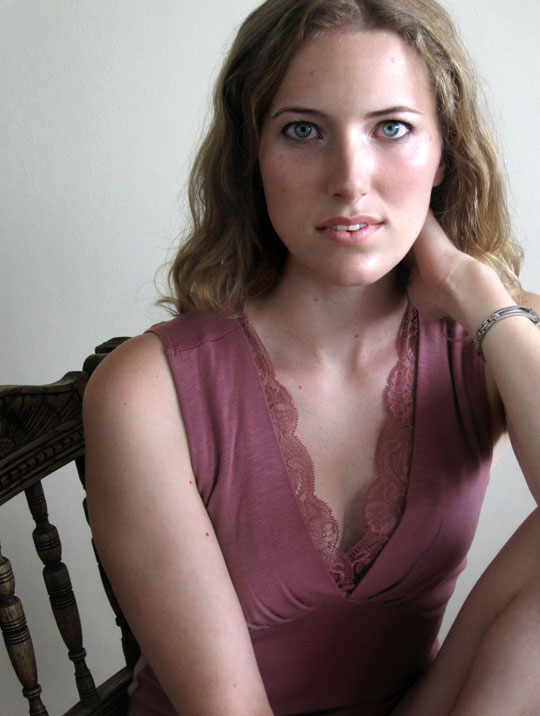
Actor Mikaela Dyke
Kevin Hehir speaks with Mikaela Dyke about Forest Production’s first effort, the story of Palestinian activist Rachel Corrie.
Rachel Corrie was a 23 year old from Olympia, Washington who was run over by an Israeli Defense Forces bulldozer in 2003. She was in the Gaza Strip with the International Solidarty Movement and on the day she was killed she was protesting home demolitions. My Name is Rachel Corrie is a play fashioned from her diary and the e-mails she sent during the three months she was there.
The play stars St. John’s native Mikaela Dyke, who has a performance resumé three feet long, and a fresh MA from University of Toronto in Drama. It’s the first offering from her new company, Forest Productions.
The play has a controversial performance history. It was first mounted in 2005 in London’s Royal Court Theatre, where it was lauded with awards, while the subsequent production at the New York Theatre Workshop the next year, was “postponed indefinitely” after pressure from Jewish groups. It did eventually run, and both the play and Rachel, a documentary film about her death continue to court debate. For instance, five members of the board of the San Francisco Jewish Film Festival resigned last summer over the film’s screening and the accompanying Q&A with Cindy Corrie, Rachel’s mother.
This particular conflict doesn’t get much attention here, and unlike campuses with outspoken Jewish and Arab students groups (Concordia being the most prominent) MUN hasn’t been the flashpoint for protest either. Dyke acknowledges this but suggests the play is relevant in other ways.
“The question of Israel-Palestine isn’t a huge issue here that Newfoundlander think about on a daily basis because we don’t have the communities. But the reason I think it’s interesting to bring this show here is that a lot of Newfoundlanders do international human rights work and social justice work.”
For Dyke the particular question about which side is right but rather, “what is our place as North Americans to go over there, and what do we do? Are we helping? …These are certainly issues that Rachel was dealing with and a lot of those questions come up in the script.”
“A well-written play can make us examine our perspective on real events from an angle we had never considered,” says MUN English professor Jamie Skidmore. “These insights should not only tell us something new about the event, but should force us to consider and examine ourselves”
It’s obvious that this self examination has already begun for Dyke.
“I was reading the script on the subway and I started to cry,” she says. “There are lots of similaritie. She was 23 when she died and I’m 24. …She’s from a small town in North America, she’s interested in this stuff but doesn’t know how it fits together. She even has the same arguments with her parents that I have.”
One of the arguments that hovers over this play and the legacy of Rachel Corrie more generally is whether she was a hero and martyr for the cause of human rights, or if she was naïve. The debate will likely continue forever, but Mikaela Dyke is no naïf. She says the goal of mounting this play isn’t to present one point of view as the correct one, but to spur dialogue.
“I don’t think Rachel lived long enough to really know why she was there,’ she concludes, “I think she was still figuring it out.”
Forest Productions presents My Name is Rachel Corrie at Rabbittown Theatre from Wednesday, February 10th to Saturday, February 13th, 8pm start. Cost is $20. Pay-What-You-Can Matinee on Saturday, February 13th. Featuring Mikaela Dyke. Directed by Jessie Fraser.
The woman I’ve become
Thu, Nov 5, 2009
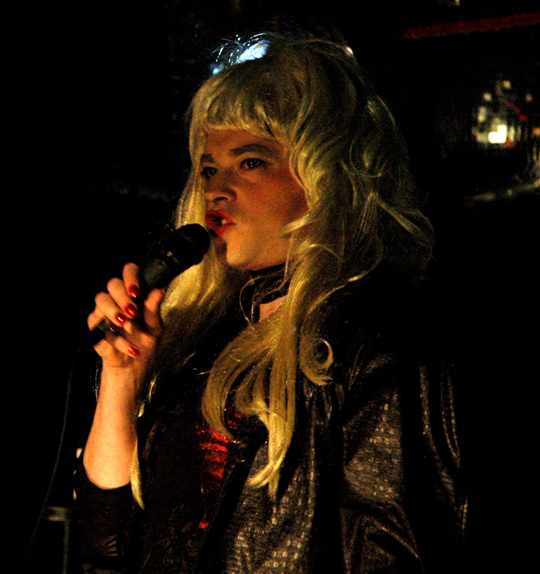
Photo by Clair Hipditch
Cult play Hedwig and the Angry Inch follows the story of a transgendered rock goddess from her humble roots in communist East Berlin to her botched sex-change operation, her life in the United States, her rivalry with fellow rock star Tommy Gnosis, and her fight for fame, recognition, and self-acceptance.
Brad Hodder, who stars in C2C Theatre’s production of Hedwig and the Angry Inch, spoke with The Scope’s Juls Mack about the play, and about sneaking extremely underage girls into bars.
Did you have any qualms about doing such a controversial play here in St. John’s?
Yeah, no. With C2C that’s not actually a conversation we ever have. The advantage of being here, running a company, is that you can pick the shows you want to do. The shows that are either good roles for you or the shows that challenge you as an artist, or you know, whatever you want. No one’s making million of bucks on this anyway, so you do shows that you want to do. I’ve got a hundred other things to do with my free time than go to rehearsal, so I pick things like Hedwig, so it’s fun to go to work.
And about the controversy… Uhh.. Whatever. St. John’s can handle it.
So would you invite your nan to the show?
No. No, I won’t invite my grandmother, but I think my folks will be there. And, uh, I just had a baby, over the summer, three months old and I’m hoping she’ll make it down to the show.
Oh, is the production all-ages even though it’s in a bar?
I guess not, because it is in a bar—the Rock House—and we are doing it as a bar show, so it can’t be all ages. I assume it’s for those 19 or up…
Including your daughter? Did you find her a fake ID?
I think babies can be snuck in.
Is Hedwig is always done in rock bars?
No, not always. It’s been done in restaurants, and it gets done in proper theatres sometimes.
The idea of using the Rock House was credited to Charlie, the artistic director. He was very clear from the onset that he wanted to do this as a rock show and have that feel and vibe, with not really big production values, but rather a very raw… a very simplified sort of version.
It’s kind of what C2C does, we try to always strip things down. We try to look for what are the bare necessities we need to tell the story. You end up having to make very creative choices, like you find these plays that sometimes need a living room, but, say, you can’t have a living room. So it forces you to think about, well, why is it a living room?
Hedwig and the Angry Inch runs Thursday, November 19th at 8:30pm with special guests Kujo and Saturday, November 21st at 8:30pm and 11:30pm with Matt Hornell & The Diamond Minds at the Rock House on George Street. Tickets are $10 and can be bought at Model Citizens and Fred’s Records.
Rabbittown’s The Woman in Black opens tonight
Wed, Oct 28, 2009

Before British author Susan Hill set out to write her book The Woman in Black, she made a list of things she felt every good ghost story should consist of.
It included:
1. A haunted place. A lonely house or church.
2. Atmosphere.
3. Weather – fog or mist, dusk, twilight, drizzle…
4. A ghost.
5. There has to be a motive for the hauntings. The ghost must have a purpose.
The story she came up with was adapted to the stage and became a London hit. Eventually, it became a Hallowe’en staple at our own Rabbittown Theatre, where it’s the fifth year they’ve put on the play. Incidentally, since this play was their first, it’s also the company’s fifth anniversary.
So if Saw 6 isn’t your thing (and I can’t imagine it would be) check out this version of this spooky classic.
The Woman in Black opens tonight, Wednesday, October 28 and runs to Sat Oct 31. 8pm. There will be a pay-what-you-can midnight show on Friday October 30, and a family-friendly pay-what-you-can on Saturday October 31 at 2pm. $20, Rabbittown Theatre is located at 106 Freshwater Road. 739-8220
Here is a short, creepy scene from the 1989 BBC television adaptation to get you in the mood:
RCA: Raising the curtain, rocking the cradle
Thu, Oct 8, 2009
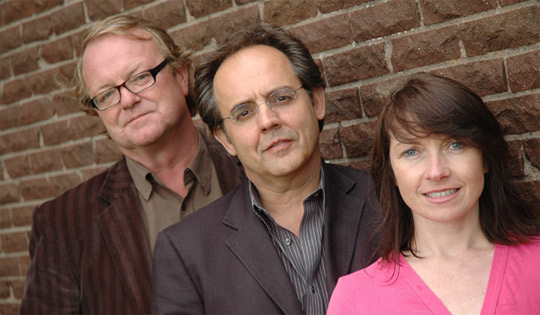
Rocking the Cradle writer Des Walsh, director Richard Rose and actor Ruth Lawrence.
Without a home to call their own until February, RCA Theatre Company will open its new season at MUN’s Reid Theatre with the production Rocking the Cradle
David Keating sat down with Amy House, the company’s artistic animateur, to talk about the play and the ongoing renovations at the LSPU Hall.
In the over 30 years of the Resource Centre for the Arts’ storied existence, the 2009/2010 season will likely prove to be a standout year. While still at the mercy of construction timetables, Amy House and the staff at RCA are anticipating being back in a completely renovated LSPU Hall sometime in February.
“We’re living in great anticipation of returning to the Hall, says House. “It’s going to be a wonderful space for artists and a great space for audiences.”
House says the efforts of staff and the Hall board to secure funding to revamp the space will finally bring the facility into the 21st century.
The renovations—a do-or-die situation for the space, according to House—will include an adaptable performance area that can be changed for theatre-in-the-round, entrances at both stage left and stage right, a lift that makes the theatre more accessible, and a new 50-seat second space downstairs for smaller shows, newer companies and works-in-progress.
Basic amenities like heat and air conditioning, as well as updated phone and ticketing systems, are also being added.
Claimed by the Mummers Troupe in 1971 as an artist’s space, the Longshoreman’s Protective Union Hall has been at the center of St. John’s art scene since its inception as a theatre and gallery.
Generations of performers—including member of CODCO and Rick Mercer—began their careers on its stage.
Part of the new vision for the Hall, in both in its space and its mandate, is the continued cultivation on new writing talent and a longer incubation period for new works before they reach the main stage.
“That 50-seat space downstairs is going to be instrumental in being able to present experimental and new works, and for artists to be able to try out new things in a less expensive venue,” says House.
“What I think is a great accomplishment is the development that’s happening before productions are being put on stage… Now we find productions that are in development for maybe two years before they’re considered for mainstage production.”
The RCA Theatre Company’s first production of the year, Rocking the Cradle, has benefited from this extended development process. The show has been co-produced with Tarragon Theatre in Toronto, and the show and its cast will transfer to Toronto for an extended month-long run after closing here in town.
House hopes that future mainstage productions will likewise find a life beyond their presentation at the Hall.
Rocking the Cradle
Written by Des Walsh and directed by Tarragon Theatre Artistic Director Richard Rose, Rocking the Cradle is an adaptation of Spanish poet and playwright Frederico Garcia Lorca’s Yerma re-imagined in 1960’s outport Newfoundland.
“It’s going to be a beautiful show, visually, for sure… the essence of that small community, that remote outport Newfoundland, the sound, the wind, and the visuals,” says House. “It’s going to be extraordinary to watch.”
Without a home base to work from, RCA has leaned on the resources of the whole theatre community to bring Cradle to life. The Arts and Culture Centre provided rehearsal space and resources, Holy Heart Theatre is handling box office and ticketing and MUN’s Reid Theatre is hosting the production.
“Doing this show has really brought home to me a sense of community,” says House. “There’s an advantage of being out of your home. You’re out in the world, and you’re out there with everybody else.”
Rocking the Cradle is presented by RCA/Tarragon Theatre at the Reid Theatre from October 8th to October 18th. Tickets are available at the Holy Heart box office. More info at rca.nf.ca.
Divination via processed meat
Thu, Aug 13, 2009
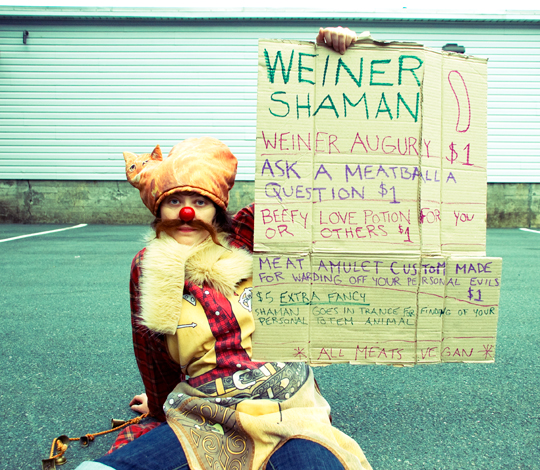
You know, we have a million and one reasons to talk to Sara Tilley.
She’s an award-winning novelist, founder of a successful feminist theatre company, a playwright, an actress, she spent six months mentoring with notable Canadian clown trainer Ian Wallace, and she’s the Executive Director of Visual Art Newfoundland and Labrador.
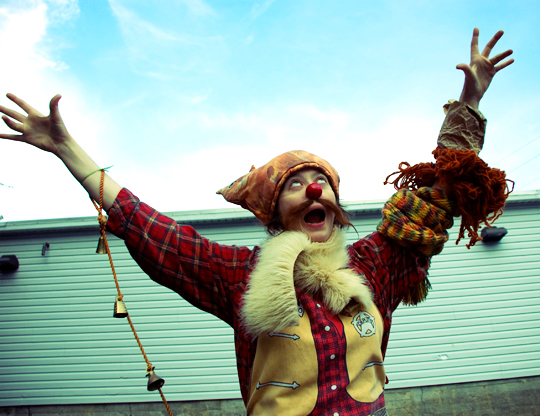
…But once a year, in an improvised performance to raise money for the Eastern Edge Gallery, she puts on a moustache and reads people’s fortunes using hot dogs and deli meats. And she calls this clown-man of unknown origin… Weiner Shaman.
Elling Lien contacted the Shaman by phone.
Photos by Ryan Davis.
Hello?
Hello? Is this the Weiner Shaman?
Yes?
How are you doing today?
I am very tired. Big, large parties in the baytowns of Newfoundland.
What are you doing out there?
I am …making wieners.
In preparation for the 24 Hour Art Marathon?
Yes. There is the making of special wieners of Newfoundland now, with things of the sea.
So you make your own? You go around the bay collecting things to put in the sausages?
Yes. Make them very special for special people that are coming to Marathon.
What can you put in?
Anything in 5 kilometers radium of sea can go in the wiener for Newfoundlander, that is my rule. And so now here we have… uh… horses, we have mutton, we have little dogs. Insects. Kelp.
Kelp is included, with the meats?
It is for sticking together the meats of the sea and the land.
Carageenan!
Ca-ra-geena-an.
It’s in ice cream too.
Ice cream! MMm! I like sugars as well as the meats. They are a magic food for the people, and that is why I like them.
So who are you? Tell me who the Weiner Shaman really is.
I am a magic person with special talking-to-dead-parts abilities. I can speak with anything that is cooked up and we want to eat. Because it used to be alive, and now it’s dead, it can tell us what is to come.
So rocks wouldn’t work.
Uh, I don’t know. Sometimes I have assistant shaman with rattles of rocks and so on, and that is good for amplifying the energy of the meats. Yes.
Uh, I can’t quite place your accent. Where are you from?
I am from far away. No country names necessary, but far, far. And cold.
Why come to Newfoundland? Did you experience some trouble back home?
Well, maybe, but not of large political sort, but more… uh… interpersonal fuck-ups. You know? What can I say? I am player. I can’t help but I like lady, and my wife are not happy with me about that. So I come here and I find the lady here is very beautiful. I like them to come down, give fortune, maybe I give them discount. You never know.

When did you first find out you could read fortunes?
Oh, I was a very small boy. It’s funny to think of it now. Small, small boy, and my mother made me a bowl of Kraft Dinner with little cute Vienna Sausages inside. She cut up the sausages very nice. And when she mix it up, some of the pieces they fall into a crumble of sausage! When I look, I hear the pieces is talking to me. I understand their shape, and they are telling me things about my mother and my father, what is going to happen in the future. It was a joyful experience for me. But when I tell my mother she got worried. She sent me to boarding school for bad boys, and I start my career there.
So what did you first see when you heard the meat talking to you?
It was funny, very funny, because I see my mother and father with many,many more little baby. And they are tired already, they do not want more. [laugh] I see this, and it come true. I usually focus on reproduction, because that is life. I want to know, are you fertile? And my mother, oh yes, very fertile.
Meat is life, life is meat.
And in between there, I tell future.
So how does a reading proceed?
I have many skills, so I have a sign that say “one dollar” and there are little things I can do for you, and then there are “five dollar” which are fancy things. But for one dollar I can do wiener fortunes. You take wiener, you squeeze wiener, you drop wiener, and I examine pieces where your hands have been and I can tell where the crags and crevice and falling apart, I can see your future. Meatball charm are for learning how many babies you will have. I love that one. I like the ladies to come over and do that one with me, because sometimes I give discounts, and I invite to private parties. But only the ladies who are pretty, 9+.
Have also made up gravy for love. A small gravy potion for putting in beer. She drink it and she love you.
What meat works best for love potions?
Oh, it’s always beef. Beef gravy, and for my amulets, which ward off whatever you want, for example, your ex-boyfriend, or mononucleosis. Some people are very afraid of the kissing disease.
For those I have salamis, I have hams, I have pepperonis, meat from deli, and I fashion a necklace, which you must wear until it falls off.
Why would people pick you over another fortune teller? Say, someone who does regular tarot card readings.
Because I am powerful. These other people are very small. I am a big power because I have this special talent. In my culture, there is only one wiener shaman every fifty years, so it is unique. People here may not understand how special I am, but the ones who come, they will never forget the thing that I tell them.
Are you up for a reading right now? Do you have any meat there now?
No, I do not.
But! The second most precious thing for fortune telling, because is dead, like meat, is plastic bag. Because is made of oil, and because oil is made of dead. So in a pinch, we use a plastic bag. We crumple, crumple, crumple. We throw the bag in the air. We chant. And when the bag has landing, we look at the shape and structure of the energies of the plastic, and we will see the future that way.
So because it’s the 25th anniversary of the Eastern Edge this year, could you give a reading for them?
Yes, I have bag ready, and I am now going to focus energies on bag. I am thinking of gallery now, and throw, and look. You may hear noises, so do not pee your pants about this…
PPppffff… eeeeeeehhhhhhhhhhh… Ahhhhh… AhhH!!
I am seeing a lot of cracks. A lot of deep cracks in a big tall shape like a mountain, okay? And I think this is talking about the unknown, the darkness, but also very majestic!
Oh! It is beautiful and shiny! The energies of the artists are going to be there forever. These people are making us happy because they are making their art. The bag is very tiny at top, but underneath is very solid. Very solid, not going to fall over. I see many years. There is at least 35… 38, maybe more. Is very healthy. I feel is so shiny people will love it every time they see it.
Well, thank you Weiner Shaman. I’ll see you at the Eastern Edge.
Thank you, and God bless.
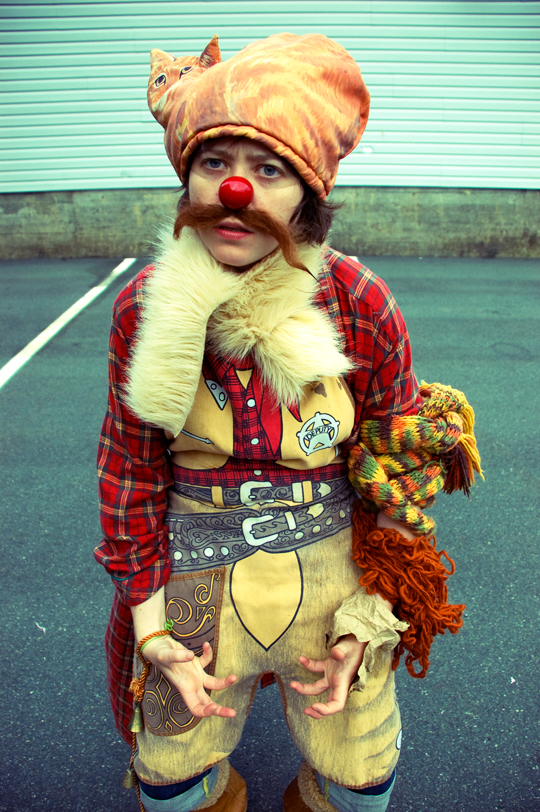
Weiner Shaman will hold his fortune-telling sessions starting at 6pm, Saturday, August 22, outside of Eastern Edge Gallery, 72 Harbour Drive. Don’t tell anyone, but all the Shaman’s meats are, in fact, vegan.
Yes we think we can dance
Thu, Jun 18, 2009
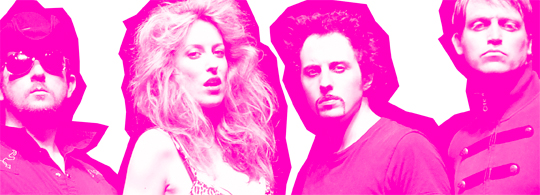
The province’s premiere sketch comedy troupe, The Dance Party of Newfoundland, are back for another show—with a new lineup. Long-time member Dave Sullivan has bid the group adieu, and Susan Kent—creator of that dodgy character on a bike, Jerry Pack—has signed on.
The group enjoyed a string of successes last year. They were presented the Second City Best Of The Fest Award at the 2007 Toronto Sketch Festival, they toured to Chicago and New York City, and performed at last year’s Just For Laughs Festival in Montreal. Balancing the troupe with their lives as actors on stage and screen has kept three of the four members on the mainland, but they always manage to return home for a run of shows.
This time around they’re teaming up with the Mark Bragg Band for a combination comedy/rock show… which is already drawing excited comparisons to the Wonderful Grand Band, the all-star comedy variety show from the early 80s.
Elling Lien sat down for a chat with three of the four members of DPN.
You guys have two shows coming up at the Rock House. They’ll be your first shows as the Dance Party in St. John’s in quite a while…
SC In over a year.
JH Shocking!
SC Yeah! Our last show would have been a year ago in March at the Hall, at the end of our tour.
And that was at the end of a very successful year, where you were doing really well in Toronto-you won the award at the Toronto Sketch Fest…
SC Then we did a run at the Diesel playhouse in Toronto, and we sold about 80 per cent of the tickets for that, which was great. And then we came home and we sold out twelve shows here. That’s where we peaked, and we’re on the downward slope now.
SK I’m the death knell.
SC When the Beatles got Ringo, it was all up, but when the Dance Party got Susan, it was like they went and got Pete Best.
SK UhhhHHH!!
But you guys definitely aren’t The Beatles. And I shouldn’t say ‘guys’, because, Susan, you’re in the group now.
SC Although she plays men mostly in the show.
SK They do a more believeable girl than I do.
So what happened? Dave Sullivan used to be a full member…
SC Dave failed a test that we gave him. We said, if you fail this one, you’re out. We’ve been letting you ride on a scholarship for a couple of years… no. You know what? Dave grew up.
JH Yeah, he went back to school, got married, bought a house…
SC And the thought of touring didn’t really appeal to him any more.
JH Unbelievable! He’s missing out now.
SC But for this show, he’s going to come back and do stuff with us again, which is great. We’re really happy about that.
JH …That’s supposed to be a surprise!
SK [laugh] You put it on Facebook, Jonny.
How did you get involved then, Susan?
SC We all had a party at Donny’s house, and the next day, Sue was like, “b’yes, remember how I’m in the Dance Party?” and I was like, “Oh yeah.”
SK Yeah, I roofied them so I could get into the Dance Party.
SC She drugged us, and when we woke up she was standing over us with twenty sketches written and threw them down at us. “Have ‘em read when I come back.”
JH Seriously though, we’ve always been buddies. We had done theatre together and we were fans of the Jerry character and Nan and those characters that Sue did, and it seemed like the logical and exciting thing to do.
JH And now, when we’re touring…
SK You guys get your laundry done.
SC We get our laundry done, and we get grants that we couldn’t get before. Now all we need is a first nations member and a paraplegic. Once we get all that settled, we’re going to be minted.
JH The only problem is when we’re touring we can’t fart in the car any more.
SC As much.
JH There was a lot of farting going on back in the day. Now we use cutlery too.
SC Ahh, sexism.
So, uh, what happened exactly?
SK Jonny and I are roommates, and I was sitting on the couch of the apartment, and he had been playing Xbox hockey, and he was in his drawers, and he said, “So, we’re goin’ on tour, would you wanna do that or wha’?” [laugh]
Are you …together?
SK No, we share an apartment. We’re roommates in Toronto.
Well I’m happy Susan is a member. It made sense when I heard it.
JH Yeah, I think a lot of people reacted that way too. Everybody’s been diggin’ it thus far. Not to say that they will here!
SK I’m shit-baked for friday night.
SC There’s a lot of pressure here now. This is where we see if she’s got it. Yeah. I went to a dog-fighting ring here in St. John’s the day I got in, and they were laying bets on “Will Sue Kent suck at the Dance Party show?”
Interview clip:
[playlist id=9]
I’ve seen a Dance Party show, but I haven’t seen a lot of other live comedy troupe shows-so what’s the difference between what they do and what you do?
SC You know what? I think for the most part, we are very much entrenched in a theatre background, and we strive for a lot of committment with the characters. The costumes and the theatricality is a big thing.
I also think that we write in a more traditional way. Our sketches tend to have a beginning, middle, and end, and a lot of times it’s a collection of funny ideas or funny moments.
JH We try to dress it up as much as possible. It’s always a trade-off with what you can do theatrically in terms of lighting and costumes, wigs, fake mustaches to what you can do quickly-so you’re not leaving the audience in the dark between transitions. But we try to get on a wig or glasses. When we first started going to Toronto to perform, that was when we really started seeing a lot of other troupes, where they often would leave that stuff aside. They would get up in whatever clothing they were wearing that day and do their sketch.
SC Codco and Kids in the Hall were a big influence for the costumes…
JH We just thought that was the way it was done. You dressed up.
SC We watched television shows with big budgets and thought, “oh yeah, that’s sketch comedy.”
The dress-up part, a lot of it involves you guys dressing up in drag…
SK Not any more! I got my corner!
SC It depends on what kind of girl we want. If we want a really, really feminine woman we get Jonny to do it, and if we want a…
SK …gangly, dorky kind, then my phone starts ringing.
SC Yeah, but the more genteel roles are still Jonny’s. He plays women with dignity.
SK [to Jonny] You always play women like women. You don’t play women like a guy playing women.
JH Well that’s good.
SK Oh, it is good. And Phil plays a very good woman too.
SC So what she’s saying is the only person who doesn’t play good women is me. That’s it.
SK You’re a good smothering mother type.
Has Jerry been incorporated into the Dance Party repertoire at all?
JH Oh yeah. Jerry’s gotten harsher than ever. His unibrow gets bigger, his bike gets smaller, and the creep-factor goes through the roof.
SK Yeah, we had to take the edge off him, because he was scaring Ontario. Someone actually came down during the Jerry sketch, hobbled down to the edge of the stage, made the sign of an X with their arms, then hobbled out of the theatre.
Was that one of those shows where it seemed like the end? Do you have those?
SK We thought in Petrolia that they were cresting the hill with torches.
SC Yeah, they even tried to kick us out of the motel that night because we were rapping. We were rapping to Fur Packed Action. The guy came out and said, “uh, you guys gotta get out.”
JH We were rapping loud though.
SC Yeah, we were. That was after that horrible show.
JH We were more afraid of that guy than he was of us, we were like, “Oh my gosh! We’re so sorry. We’ll go right to bed.”
SK My favourite comment that the theatre got after that show was, “I hated it, and it was too short.”
JH Yeah, we did a soft-seat theatre show across Ontario this year, and after those first few shows we ended up changing our content because we were getting a lot of older people… Sometimes we think people come to our show thinking it’s a celtic dance show, right?
SK That’s true. Some people do, for sure.
SC Everyone up there havin’ a good time in a fake kitchen! But at the same time, the Jon Dore Comedy Show toured Ontario before us and they had the same reaction. Certain types of comedy works in certain venues. And I don’t really want to make that kind of comedy.
The Rock House–a bar–is a pretty unusual venue for sketch comedy…
SC Yeah, the Hall is closed down, and we always wanted to do a bar show…
JH Actually, I was telling someone about the show recently and they said, “oh, we haven’t seen something like that since Wonderful Grand Band!” And yeah, it’ll be a bit of a hybrid of a show. At first it was just going to be us and then Mark Bragg was going to play later that night, but now he’s going to back all of our comedy songs up, and we’re even going to sing on one or two of his songs, in character.
SC So we’ve got a lot of music in this one. There are a lot of sketch troupes out there that either do music sketch, or they do straight sketch, and we sort of do a combination of both. Phil and Jonny are both such talented musicians, and Sue’s such a good singer…
SK And Steve’s beatbox is unparalleled.
SC So that’s another thing I think people like coming to see us for. You’ll stay at a rock concert for three hours on your feet, but for comedy that’s really unusual. We have a lot of good material that people haven’t seen here, so I think it’s a fairly good balance. We purposely chose the quickest and highest energy stuff we could…
If this goes really well, would you consider doing a tour with a band?
SC I’ve been thinking about that ever since we started this show. I think it would be a really special thing, and it suits us.
SK Oh, it would be so great to do that. It would be really cool.
Then the Wonderful Grand Band allusions might even stick…
SC “Disappointing Our Patria” could be the name of our tour. Or “Not Living Up to the Myth”.
JH Or maybe “At Least They’re Trying”
The Dance Party of Newfoundland — Steve Cochrane, Phil Churchill, Jonny Harris, Susan Kent and alumnus Dave Sullivan, will be performing at the Rock House on Fri June 19 (Tickets available in advance at The Ship and at Fred’s Records) and Sat June 20 (Tickets only available at the door). Music by The Mark Bragg Band. $20.



Wed, Sep 22, 2010
Bryhanna Greenough