

Archive | Sound Symposium XV RSS feed for this section
Sound Symposium XV Blog: Day Nine – Heartbreak
Prepare your ears! Morgan Murray will be blogging about the Sound Symposium XV for The Scope from July 2-10.
Dear Sound Symposium,
We need to have a talk.
We’ve spent a lot of time with one another over the past nine days. You’ve shared with me a lot of sounds I never even knew were possible. You’ve expanded my horizons. You’ve made me, of all people, want to dance to the radio, of all things. You’ve moved me with trumpets. You’ve made me crane my neck towards the harbour at 12:30, no matter where I might be, to hear the Harbour Symphony–I don’t know what will fill the void when 12:30 rolls around today and there is no honking. You’ve made me listen to whales, instead of of just watching them. Hell, you’ve made me listen to everything instead of just watching them. And, perhaps most surprisingly of all, when a cat got one of the pigeons who shits on my car and awakens me with the sound of its humping on my window sill, I wasn’t glad, I was sad. I was sad because of all the beautiful sounds that have been lost (not the humping sounds, mind you).
This is because of you.
I was ready to proclaim my unabashed love for you. I was ready to give you my class pin and my varsity jacket. I was ready to go steady. I was ready to shack up. I was ready to pop the question. I was composing traffic jam symphonies in my mind while stuck in traffic and scheming of the best ways to get the other drivers to play along so that a little piece of you could always be with me while you’re in hibernation for two more years.
But, Sound Symposium, last night, on your last night, at Cape Spear you showed me a side of yourself I had never seen before. A side I never thought I would ever see. And frankly, I think we should see other people.
Sound Symposium, you’ve broken my heart.
Your Cape Spear Project seemed, on paper, sure to be the highlight of the festival. Details were scant, but from what I could gather some hip German composer had composed music to wash over the Cape while thousands of ears clung to the cliffs and soaked it all in. I was prepared to be completely and utterly blown away.
These expectations were hardly unrealistic. Sound Symposium, without fail, you had blown me away time and time again since we first met nine days ago. Add Cape Spear into the mix… damn! I could hardly contain my excitement.
You see, Sound Symposium, Cape Spear is a special place.
Like you know, I’m a CFA (Come From Alberta), and have only been here a couple of years, which is why I missed you last time. But I’ve seen a lot of amazing things in my time here. I’ve travelled across the island. I’ve seen mountains and rocks, icebergs and moose, puffins and whales. I’ve seen the Dungeon. And I’ve seen nothing because the fog is so thick. I’ve heard stories, and jokes, and songs. I’ve met all sorts of wonderful people. And I met you, Sound Symposium, in all your glory. But, amidst all of this, two of the most staggering things I’ve experienced on this island have been at Cape Spear.
Do you remember that hellacious winter storm we had this past February? The snow, the wind, the whole bit. Hellacious! Probably the most intense storm I’ve seen in my two years here. And there have been quite a few, it storms here a lot.
Anyway, the next day, for reasons that don’t need explaining, I found myself out a Cape Spear. The place was deserted. Barren. Isolated. Though you can see it, St. John’s seemed a million miles away. But that wasn’t the impressive part. The impressive part, the most impressive part of Newfoundland I’ve seen so far, was the sea.
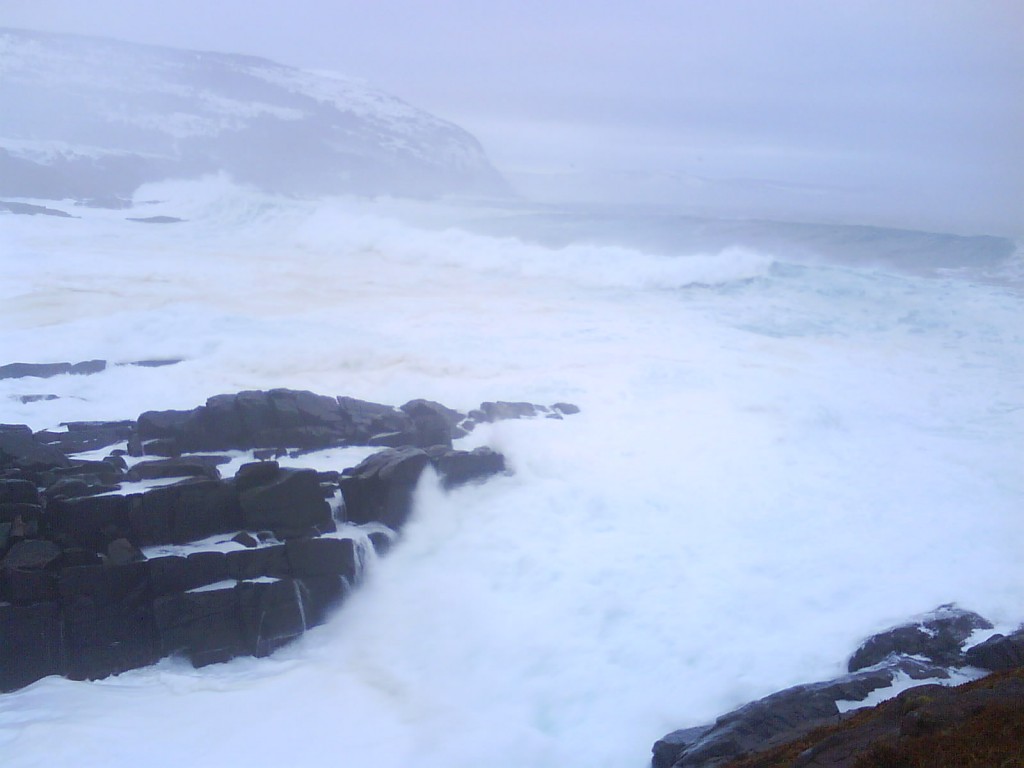
The storm had whipped the sea into a frothy, raging frenzy. Standing way up on the hill near the lighthouses you could not only hear, but feel, the waves crashing on the cliffs below. The raging sea crashing on land was unspeakably awesome and powerful, and me? I was nothing, nothing at all. The sea is so much more than any of our little lighthouses, towns, or cities could ever be. I stood in the freezing cold in stunned silence, my mouth agape. It was like nothing I had ever seen before.
The other staggering Cape Spear experience was less epic, but nonetheless impressive. Once again it was at the tail-end of a storm. This time Hurricane Bill. Do you remember Hurricane Bill from last summer? Everyone filled their bathtubs with water and stocked up on cans of cream corn, only to have the day the storm hit to be the mildest, nicest, sunniest days of the year. So I went to Cape Spear for the first time.
It was a lovely day until I made my way down the path for the compulsory photos in front of the “Furthest Eastern Point in North America” sign, and then things took a turn.
You see, Sound Symposium, they don’t tell you in any of the tourist brochures about the World War II bunkers built into the cliff-face at Cape Spear. I had no idea they existed. But there they are.
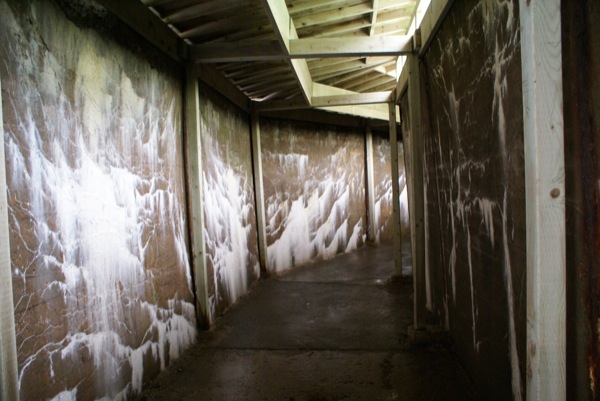
Military remains aren’t anything new. I’ve seen a lot of them in a lot of places. They are all cordoned off and lousy with plaques and interpretative signs telling you what it used to be like when the Red Coats were fighting the French a few hundred years ago (Placentia, for instance, has just such a bit of military remains I saw around the same time). But this bit of military remains at Cape Spear was different.
The bunkers and guns built into the cliff-face to ward off potential invading Germans sixty-five years ago isn’t cordoned off. They haven’t been partially rebuilt for educational or memorial purposes. The whole site is in disrepair. It’s falling apart. It is leaky, and rusty. The various darker-than-the-inside-of-a-cow rooms and tunnels and chambers are filled with trash, empty beer bottles, and “Fuck You!” graffiti that you can only see with a flashlight or a camera flash.
The particularly unsafe parts have been blocked off with rotting lumber or orange snow-fence. But I am shocked that something so unsafe–the entire site is one long string of ankle sprains and infected cuts on rusty door jambs just waiting to happen–is allowed to exist so unmarked (I think there is one faded sign that says something about the guns being surplus from some operation in the 1890s) and unpolished in a national historic site. Especially considering how many signs there are everywhere else at the Cape telling you to stay away from this cliff, stay on that path, where the lighthouse family had to go for fresh water, when this building was build, to pick up after your dog, etc., etc., etc.
It’s like a wound that everyone is trying to ignore. Not quite sure what to make of it. Not quite sure what it meant for there to be men burrowed in the cliff-face with loaded guns pointed out to sea. Not quite sure what it means now.
Walking through the tunnels, looking at the giant guns, listening to the echo of trash and empties bouncing off the concrete and tin-can walls as you shuffle through the darkness, you can’t be quite sure what it means. This was war. This was real. This was here. And while, thankfully, there wasn’t much action that went on here there were still men burrowed in the cliff-face with loaded guns pointed out to sea.
The Cape weighs on you: the power of the sea and the wind, the haunting of its history and the war. All that ambiguity. Without signs and interpretative guides telling you what to think and how to feel your mind wanders, imagines, strains to make all of it fit, somehow, into your head. It all crashes down on you like those waves that winter storm stirred up this past February.
Or at least it weighs on me.
Sound Symposium, I think we should see other people because it seems like none of this weighs on you.
Your Cape Spear Project began just after dark with a car-horn symphony followed by one of the several men in World War I trench warfare regalia–trench coat, boots, helmet, gas mask, and all–blew on a vuvuzela–yes, a vuvuzela–to officially kick off the performance.
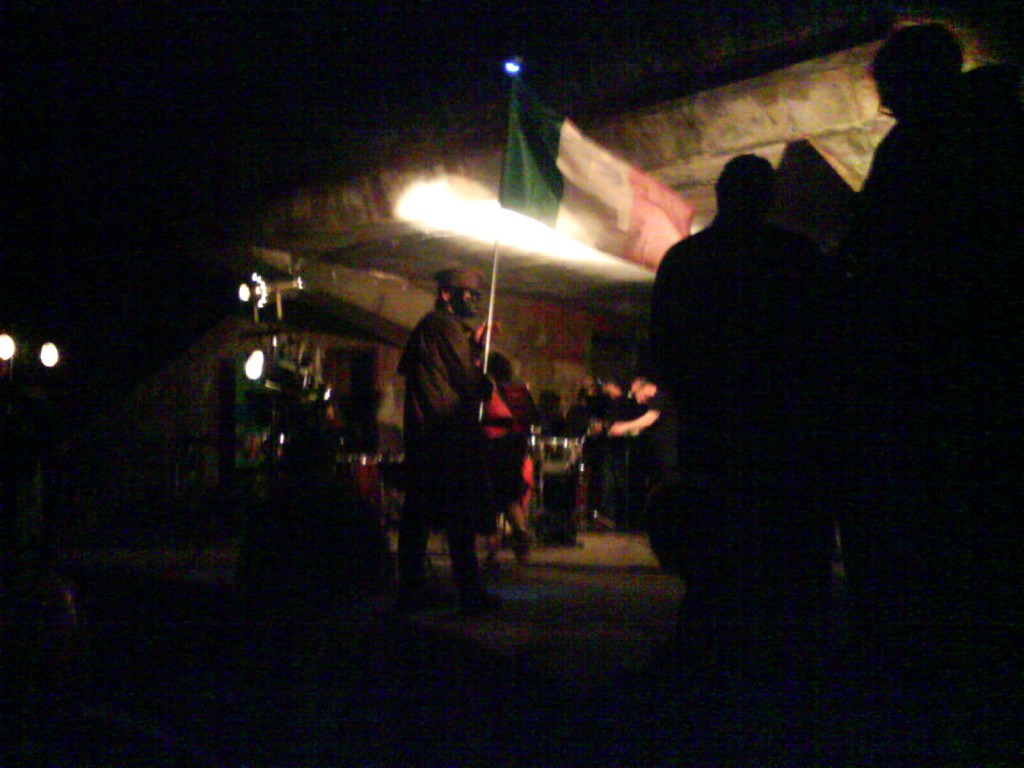
Then one of the several men in gas masks, maybe the one carrying the Republic of Newfoundland flag, squeezed a rubber ducky–yes, a rubber ducky–and led the throng of excited humanity down a the dark, unlit, path to another station of musicians. After their short piece and polite applause the gas masked rubber ducky republican tooted his rubber ducky once more and led the crowd on to the next thing, and the next thing, and the next thing.
Once we were down at the guns and the tunnels we were free to roam from dimly lit tin-can concrete corridor to corridor, chamber to chamber, to experience whatever it was we were supposed to be experiencing. But I am not sure what it was supposed to be. Not because so much power and history and all of that was crashing down upon me, but because it was senseless and silly and border-line offensive, like a man in a gas mask tooting a rubber ducky in a WWII gun battery.
I’m not talking about the sounds of the night, Sound Symposium, those weren’t silly. They were what they were and they were fine. But they were overshadowed by the spectacle you had created. By the gas masked men with rubber duckies and vuvuzelas, and the rooms you filled with silly things. Particularly the “Room of Memories,” I think you called it on the hand-drawn map you passed out, which was a collection of creepy looking dolls, and telephones, and random junk strewn about the old, wet, cement floor beneath the “Fuck You!” graffiti.
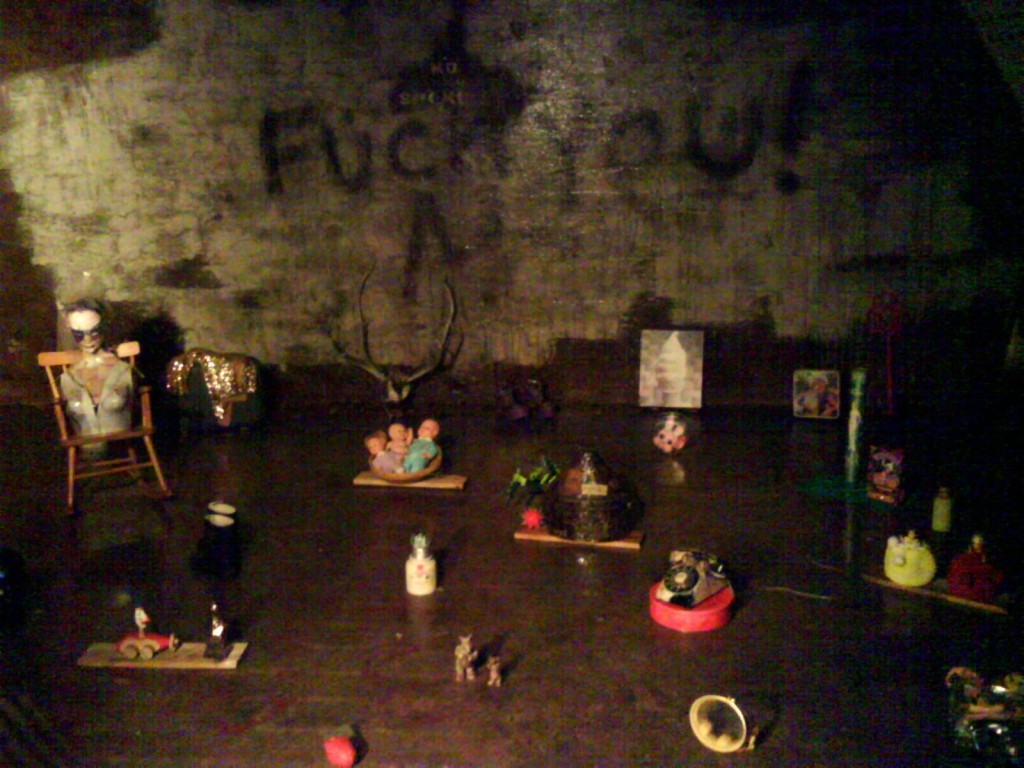
What was that Sound Symposium? I expected more out of you. You may have thought it was clever, or edgy, or who knows what. But it wasn’t. It was disappointing.
Why take the potential of your sounds and the Cape’s weight and turn it into a circus?
If you want to turn this weird and creepy gun battery into a site of some sort of avant garde sound extravaganza, go for it, but don’t forget where it is you are.
We aren’t just ears. We are eyes, and noses, mouths, and hands too. And memories and emotions. Things can mean something on their own, in a vaccuum, or played on a tape in your car. But they mean something else when you put them somewhere else, when the sea is roaring, the wind is howling, and the water is dripping down your neck from a crack in the ceiling of the falling down WWII gun battery you’re standing in.
And, my dear Sound Symposium, when your final act of the night was a crescendo of percussion and brass played behind one of the rusty guns that is still pointed out to sea, to a crowd huddled around with their backs to the sea, punctuated by a gas masked man’s final three blasts of his vuvuzela, it became clear that your Cape Spear Project wasn’t about making sound art at Cape Spear. It had nothing to do with Cape Spear. It ignored the most powerful things about the Cape–the sea and the wind–and the most haunting–the history–and instead was a self-indulgent party at a “cool” place. Which is what punk kids do.
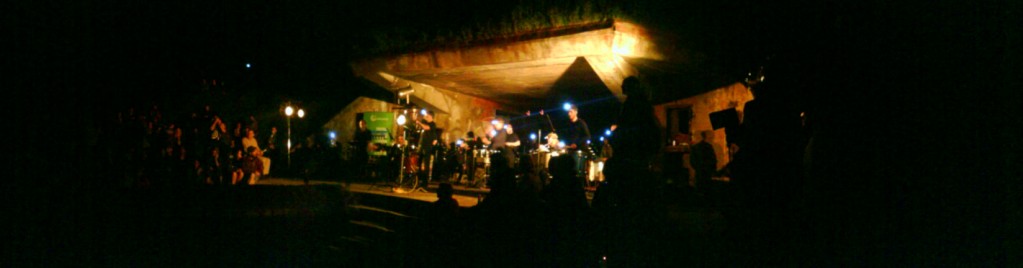
It could have been so much more, Sound Symposium. But I am disappointed. I am heartbroken. Maybe in a couple of years I will have gotten over it and when you come back around we can go for a coffee. Maybe one day we can be friends. But for now, it’s over.
Best wishes,
Morgan
Sound Symposium XV: Day Seven – Pigeons!
Mon, Jul 12, 2010
Prepare your ears! Morgan Murray will be blogging about the Sound Symposium XV for The Scope from July 2-12.
The Eastern Edge Gallery has to be one of my favourite art galleries of all time. And, full disclosure, it’s not because they host a monthly event I help to organize (Words In Edgewise, on the 14th), but because they constantly show artists whose work both makes me think and makes me smile. Which is why I like art in the first place. So when I saw that they were showing a Sound Symposium-related exhibition, and with me being The Scope’s Sound Symposium-related blogger, I hustled right down to Harbour Drive to investigate.
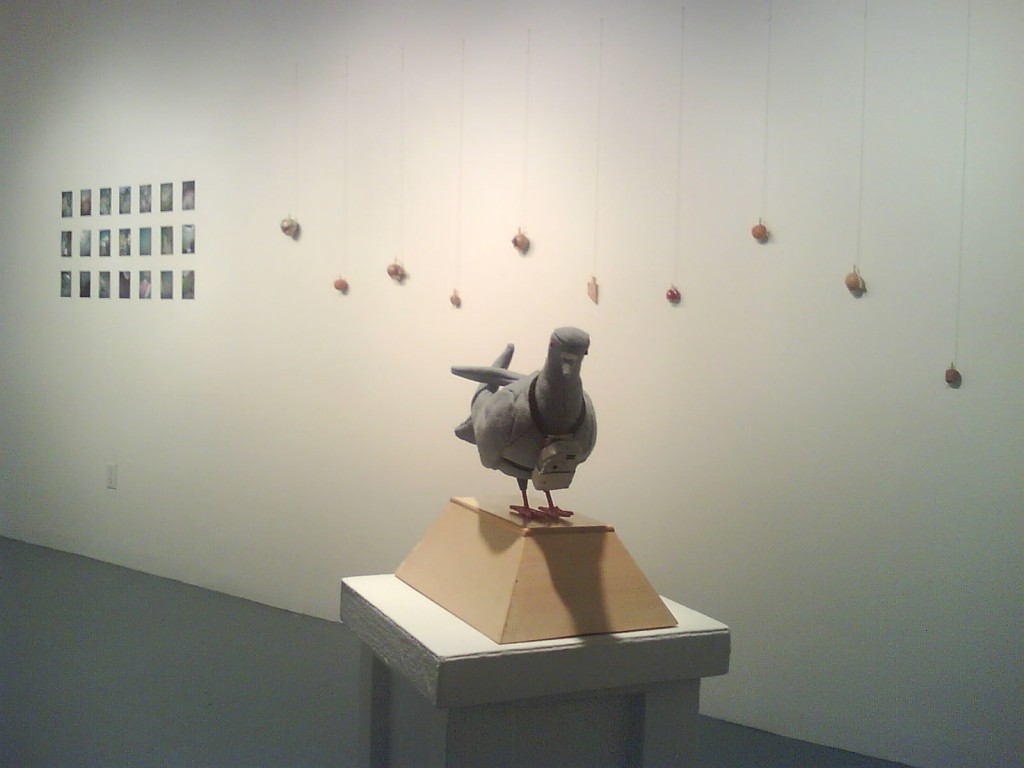
The Sound Symposium-related exhibit is Annie Dunning’s “Air Time.” Which, in her blurb she calls “a collaboration with pigeons.”
Pigeons?
Who in their right mind would want to collaborate with pigeons?
What? Were all the rats too busy spreading disease that day?
Pigeons?
Come to think about it, pigeons are way worse than rats. Rats have the decency to be disgusting in the privacy of their own little underworlds. Pigeons, on the other hand, strut and coo like their some kind of cool out in plain sight.
I’m from Alberta where there aren’t any rats (people never believe me when I tell them this, but it’s true, there is a Rat Patrol and everything) so I didn’t see my first wild rat until a few weeks ago. It scurried across the street down by the harbour while I was gawking at the big law office fire. Other than that my life has been mostly rat-free.
Pigeons, on the other hand…
There are many days that I am awakened to the sounds of pigeons humping on our window sill (they make loud, rambunctious love on our window sill, but have decided, for whatever reason, to build a nest and lay eggs on our downstairs neighbour’s window sill), and on a couple of unlucky occasions we’ve left the kitchen window open a bit too much and had to shoo one of the feathered vermin away. And that is just my personal displeasure with a few of them. In general there are flocks of them forever strutting, cooing, and pooing all over public property all over the world. It seems that their general rule of thumb (or talon) is the more ageless and wondrous the landmark, the thicker the pigeons. I hear you can’t see Venice anymore for all the pigeon poo.
Luckily Mary from the gallery was there to talk some sense into me. She reminded me that back before there was the internet, and fax machines, and cell phones with GPS and built in cameras and apps for this and that there were carrier pigeons. They even helped the good guys win The Great War by delivering messages to and from the trenches (I’m not about to go high-fiving any them quite yet, for all I know there could have been a Taube squadron flying intel for the other-side too, pigeons don’t strike me as particularly choosey about who they work for).
And now it turns out that they can make music too.
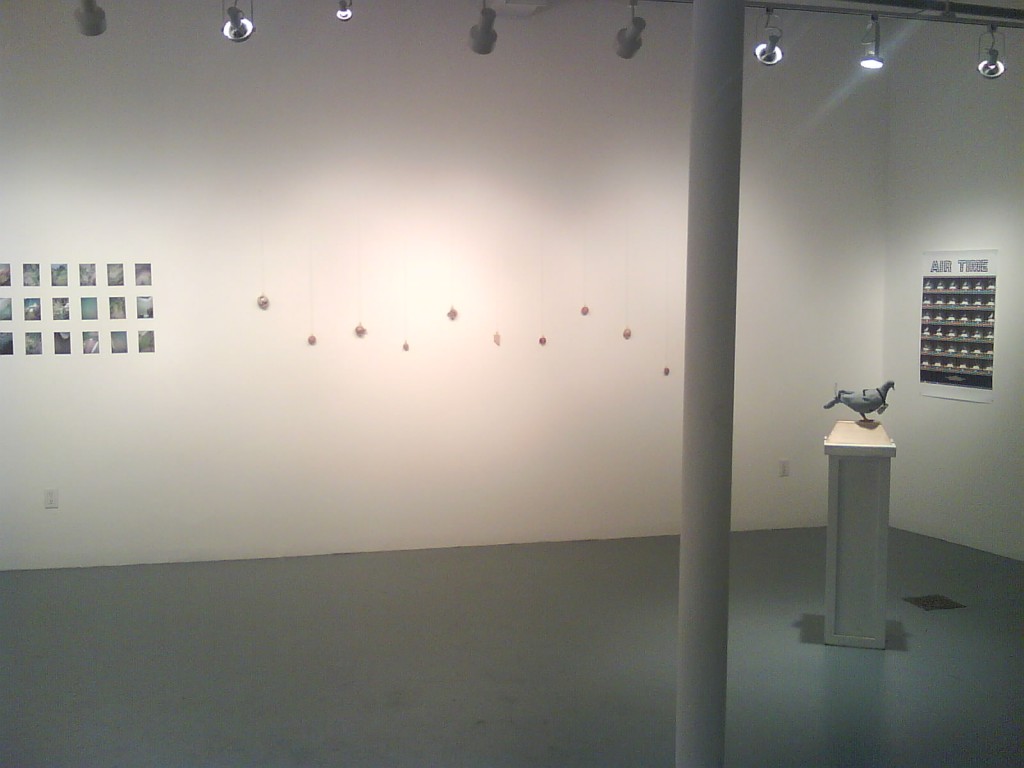
Dunning’s work features a set of handmade Chinese whistles being tied to the tail feathers of pigeons, producing a whistling sound as they fly.
I am sure there is some connection between how much sex that pigeon is having on my window sill and his joining the pigeon band. The correlation between the two has long been proven.
But I still can’t quite get my head around pigeons making music.
I wouldn’t call it great music. Dunning’s blurb, written by Sally McKay, calls it “haunting.” But that might be a bit generous to the pigeons, they are pigeons after all. However, the droning whistles aren’t entirely without their brainwormy charm. And, as Mary and the blurb explain further, apparently the pigeons don’t see having a wooden whistle tied to their behinds as punishment for their cousins and ancestors defiling sacred statues with their feces, but rather as a fun treat. “Some birds more than others are excited to make their whistles heard above the rest, and engage in dives, rolls, and mock evasive manoeuvres to make their whistles play loudly and dramatically,” says the birds’ handler Mr. Hume.
Great! Not only do these wretched creatures have a much more exciting love life than I do. They also are much more musically inclined than I am.
The absurdity of pigeons making music aside–which shouldn’t be shunted aside completely, I think that is part of the appeal of Dunning’s piece, it is the piece that makes me smile, at least after my blood stops boiling from horrible pigeon nookie sights and sounds burned into my memory–there is something thought provoking here as well. It might be the darned environmental ethics graduate course I am currently trying to get over, but Dunning’s collaboration with pigeons raises all sorts of questions about nature, wild animals, domestic animals, our relationship to them all, and their access to our arts and technology.
While bloggers with their inadequate press passes marvel at whales and campaign for whale symphonies being added to the Sound Symposium program for next time, Dunning goes one further and gives instruments to the birds and allows them to participate in the creation of art themselves (there was even one little pigeon, whose likeness is pictured above, who had a camera strapped to him to document the event with photographs, which are included in the exhibit). And perhaps in the apparent absurdity of pigeons making music with gusts of wind and whistles tied to their behinds we can see a similar absurdity in our making music with gusts of wind and knots of brass pipes attached to our mouths. And maybe when we see our own absurdity it won’t make those pigeons quite so absurd after all.
—
Dunning is not the only artist who has work on display at Eastern Edge. Saskatchewan artist Bruce Montcombroux has fascinating drawings and sculptures as part of his “Palaquin Park” show.
And then there is Toronto artist Jon Sasaki’s delightful “On Purpose.” Sasaki’s videos, installations, and sculptures simultaneously poke fun of the absurdity and often hopeless futility of everyday life–the bike ride that goes nowhere, the highway interchange without escape, the Y2K mascot sitting dejectedly in 2008, the unfilled dance card–and, as his bio states, “asserts a fervent, unabashed optimism lying just below” the surface–maybe the biker does go somewhere, maybe the road straightens out, maybe the world ends (?), maybe the card gets filled out.
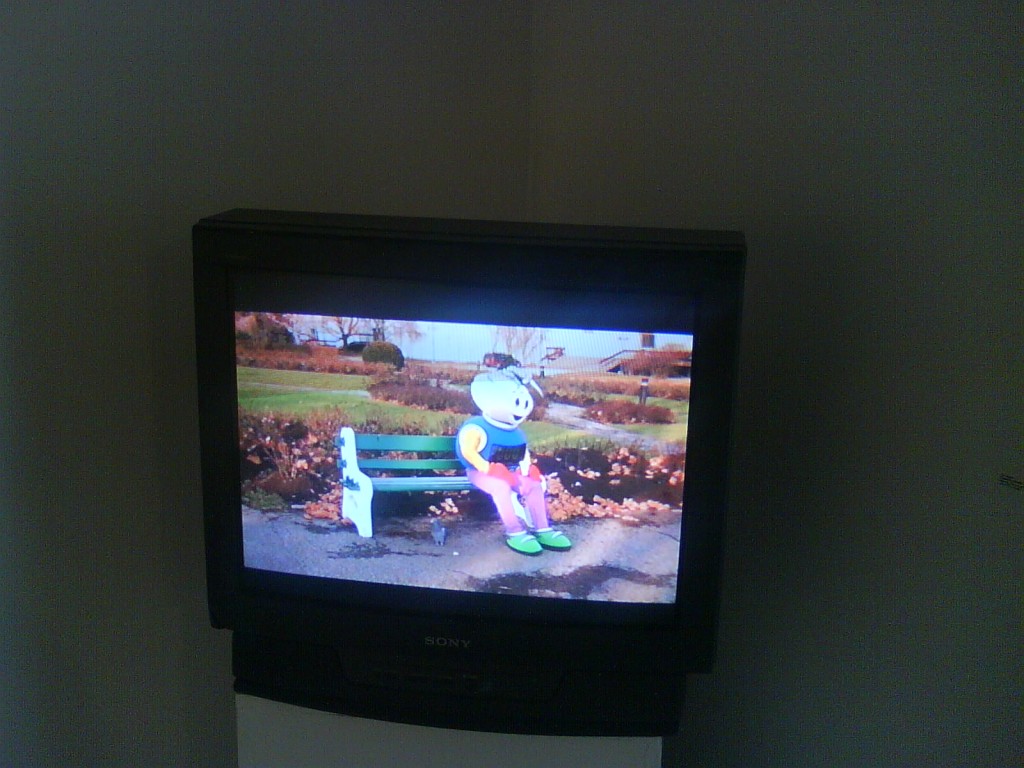
This mixed bag of great artworks, pigeons and all, is definitely worth seeing. Check them out at Eastern Edge until August 7.
—
Sound Symposium XV, an international festival of new music and performing arts, continues from July 2-12 in St. John’s. You can find more information at their website.
Sound Symposium XV: Day Five – Whales!
Wed, Jul 7, 2010
Prepare your ears! Morgan Murray will be blogging about the Sound Symposium XV for The Scope from July 2-12.
I had planned to go see and hear the Pat Boyle Quintet (with John Nugent, Jim Vivian, Mike Billard and Bill Brennan) and Yael Acher-Modiano perform at the LPSU Hall last night.
I got all gussied up, showed up to the hall with moments to spare, flashed my shiny press pass, and was told politely that for this particular show a press pass was no good. I am assuming that it was because of the high demand for tickets to see these local jazz heroes perform and not for the same reason that Adam Sandler doesn’t let the critics preview his movies. So I am not bitter.
But I am sure it would have been a great show.
There may have been a the few remaining tickets that I could have bought with real money, but I didn’t spend all of my parents’ hard-earned money on blogger school to have to spend my own hard-earned money when my press pass doesn’t work. So, rather than jazzing out at the LPSU I got myself a Townie Taco Salad from The Sprout and drove up to Signal Hill to watch the whales feasting on caplin and blow their own horns as the fog rolled in.
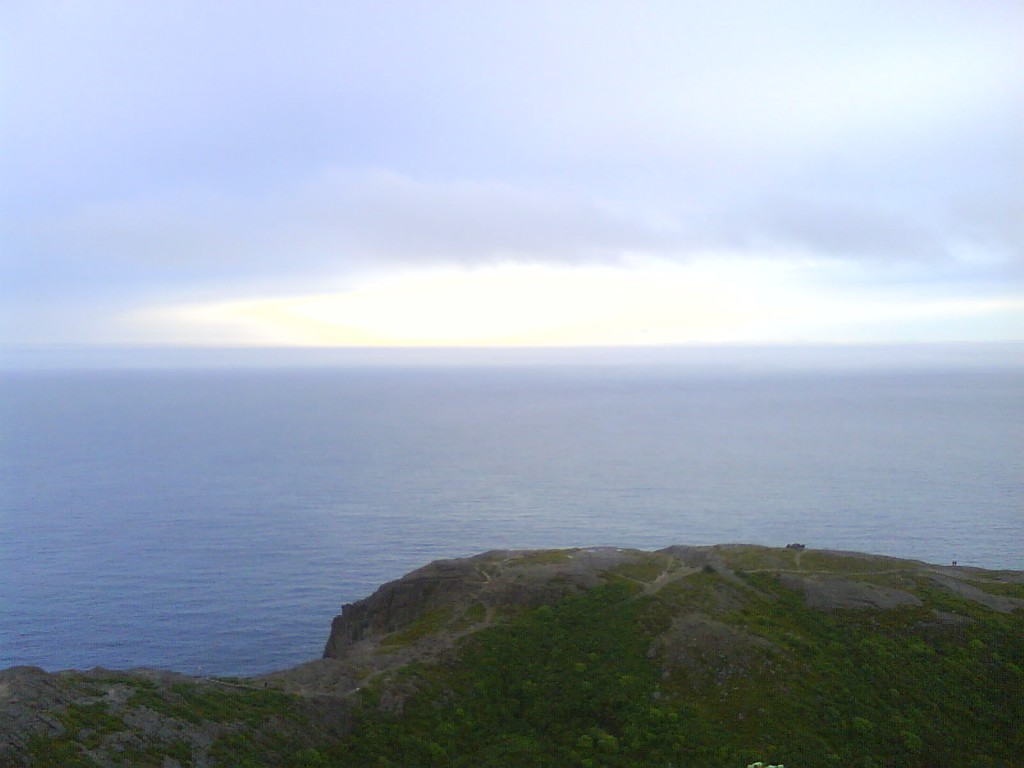
Yesterday I raved about how awesome ships are as far as humanmade things go and how badass the Harbour Symphony is. I stand behind all of that. But when you see a whale surface, and see and hear it spray, even from high atop Signal Hill, it blows any silly ship we might make out of the water (pun only somewhat intended).
So, while I sit this one jazz concert out, might I make a recommendation to the organizers of the Sound Symposium for making future Sound Symposia even more amazing: whale music. And not the strange Canadian Film Whale Music (you know? The one with Paul Gross), but take the idea behind the Harbour Symphony and make a whale symphony. Based on the stories I’ve heard about the two, it can’t be much more difficult to get whales to toot their horns in harmony than it is to get sailors to.
Sound Symposium XV, an international festival of new music and performing arts, continues from July 2-12 in St. John’s. You can find more information at their website.
Sound Symposium XV Blog: Day 3 – Ships!
Mon, Jul 5, 2010
Prepare your ears! Morgan Murray will be blogging about the Sound Symposium XV for The Scope from July 2-12.
Over the first few days of the Sound Symposium I have seen and heard some crazy and wonderful things. But perhaps the craziest and most wonderful has been the Harbour Symphony (everyday at 12:30 during the festival). THEY ARE MAKING MUSIC WITH FREAKING SHIP HORNS!
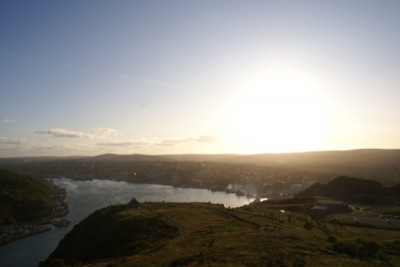
And not just any music, but surprisingly catchy music. Saturday’s piece composed by Frank Pahl (who also has a variety of other things going on at Sound Symposium), for instance, is still stuck in my head. Yes, a song made by ships blowing their horns in a harbour is stuck in my head (BWAAAAHHHH-bohmp-bohmp).
My girlfriend and I listened to the Pahl’s Saturday Harbour Symphony from Harbourside Park, which might be why it stands out so much. I could actually hear it clearly.
One of my projects for the this week is to listen to the Harbour Symphony from a variety of different places to try and find the best seats in the house. So far, Harbourside Park is better for pure acoustics than sticking my head out my apartment window on King’s Bridge Road because of all the car traffic. But the car traffic did add something to the experience. A sort of reminder that we aren’t listening to a concert in a concert hall, but ships in a harbour in a city. Not that you really need much of a reminder of that, sitting in Harbourside park, but it drives the point home that hearing ships making music in the harbour at all is just as important as hearing it well.
Which is why, if I had a say in the matter, there would Harbour Symphony happen everyday of the summer in St. John’s, not just for a week every two years during Sound Symposium. The city and the province do all sorts of things to make St. John’s the province’s tourist hub. There are the TV commercials that look like ads for some new eye-popping paint, there is the [HERE]SAY project (featured in The Scope last summer) where you call special numbers at special spots along Water Street and you’ll hear a special story about the special spot where you’re standing (like this one about a guy getting crabs from trying on sexy undies in the old Piper’s), there are the signs that go up in shopkeeper’s windows welcoming whatever cruise ship or conference might be in town this week (this week you might notice signs welcoming the Sound Symposium), and any number of other things. These are all fine. They all add to the richness of experiencing St. John’s.
But the Harbour Symphony is so much more badass than any other existing or potential tourist quirk I can think of.
Let me sell it to you, like the CFA that I am…
I’m from the prairies, and as far as impressive giant humanmade things we’ve got to look at, there are a few remaining grain elevators and tractors. The grain elevators used to be cool, but they are quickly disappearing. And while the blowing up of a grain elevator might be a spectacular sight, it leaves little more than bald prairie to stare at afterwards. The grain elevators are being replaced with behemoth concrete things that look like the behemoth things we’ll all be living in when we finally colonize Mars. It is like knocking down an beautiful old stone building and replacing it with a shiny shopping mall.
Then there are tractors. Which are cool until you either turn five or have to drive one, whichever comes first. Then they become slow moving hazards on the shoulders of roads or something you hardly ever think about because they aren’t really that giant or impressive after all.
I suppose a case could be made by city dwellers in any city anywhere that skyscrapers are something to be hold. Even the odd tower, like the Calgary Tower with its revolving restaurant at the top can be something pretty neat. But the problem with skyscrapers in any city anywhere is that they all look the same–glass, metal, concrete, yawn. And the problem with the Calgary Tower is that it has been surrounded by skyscrapers that are taller than it is. Now, when you are in the revolving restaurant you don’t look out over the city, instead you get to look out at the people on the 33rd floor in a board meeting across the street in any old anonymous skyscraper that looks like all the other ones.
I come from a part of the world with a dearth of anything humanmade that is awesome to look at (the prairie sky, on the other-hand, or the Rockies in the West, they are pretty damned impressive).
Then you get to St. John’s and see the ships.
The ships are some impressive for someone who has never seen them this close before. In spite of the never-ending construction, I purposely make a detour down to Harbour Drive whenever I am downtown just so I can check out the ships. Sometimes you even get lucky enough to get to go aboard, as was the case several weeks ago when there was a handful of NATO ships in the harbour.
My sister and her family recently came for a visit from back home, our first stop was to get her boys, two and four years-old, some pancakes after a marathon red-eye flight from Calgary. We went to Smitty’s in the Courtyard Marriot on Duckworth Street which overlooks the harbour, and tot that she’s particularly adverse to causing a scene in public, God love her, but when my sister saw the ships she yelled “HOLY COW! LOOK AT THE SHIPS!” Our pancakes went cold that morning while we watched the ships sit motionless in the harbour.
The harbour, raw sewage aside, is a magical place. Far more intimate than most other harbours, it’s a rare place where landlubbers like myself can go and get up close with these massive marvels that take people out to sea. It lets us get closer to the sea, without actually going to sea. Which is important because we aren’t all cut out for the sea. When I took my prairie family on a whale/puffin watching tour most of the scenery was missed while we held our progressively-getting-greening heads in our hands trying to keep from tossing our Ches’s overboard. And getting to know the sea and our relationship to it is something that needs to be done if you want to even so much as begin to understand Newfoundland.
So celebrate the hell out of the harbour. Fill it with amazing ships. With giant ships. With tiny ships. With red ships, blue ships, white ships, brown ships. And then make them make music!
I look forward to trekking up Signal Hill and listening from behind Dead Man’s Pond, as well as on top of the parking garage on Water Street, two of the best places to listen to it according to the Sound Symposium organizer who spoke prior to the opening night performance. I’ll see you there!
BWAAAAHHHH-bohmp-bohmp!
—
Thanks again to One With Knowledge for letting us know that Radio Wonderland will be performing another show, this time with a dance floor, on Wednesday night at CBTG’s on George Street.
—
Sound Symposium XV, an international festival of new music and performing arts, continues from July 2-12 in St. John’s. You can find more information at their website.
Sound Symposium XV Blog: Day Two – Trumpets!
Sun, Jul 4, 2010
Prepare your ears! Morgan Murray will be blogging about the Sound Symposium XV for The Scope from July 2-12.
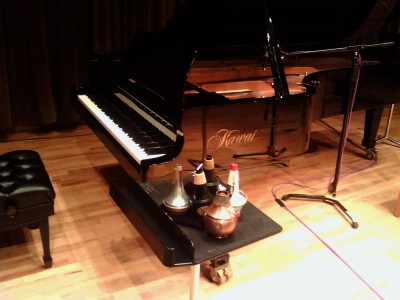
The Reveille Trumpet Collective’s show last night was dubbed “a concert devoted to pushing the boundaries of the trumpet” on the Sound Symposium website, which is why I went. On day one I was blown away by a guy with a steering wheel, some old shoes, and gizmos pushing the boundaries of FM radio, and earlier on in day two I was thoroughly impressed by the Harbour Symphony composed by Frank Pahl (who has an installation showing at the A1C Gallery throughout Sound Symposium) pushing the boundaries of ship horns in a harbour. After a day-and-a-half of Sound Symposium-ing I am beginning to realize that much of the point is pushing the boundaries of sounds and things that make them.
But the trumpet?
I thought that Miles Davis had already pushed that sucker as far as it could go. And if not him, then 70,000 soccer fans blowing on those damned vuvuzelas at the World Cup over this past month must have.
Or maybe I just hadn’t heard boundary-pushing trumpet yet. Maybe I still haven’t.
If it was boundaries that were being pushed by the Reveille Trumpet Collective’s show last night (featuring two of five members–Aaron Hodgson from St. John’s and Adam Zinatelli from Calgary–accompanied in part by pianist Kristina Szutor) I am having trouble deciding whether it was the trumpet’s boundaries, or mine.
My first problem is that I am no trumpet expert. I’ve never so much as held one. And musically, the spoons are about all I can play, with anything else I couldn’t carry a tune if my life depended on it. Don’t get me wrong. I love music. All sorts of it. And Miles Davis is one of my favourites of all time, and he plays the trumpet, or played the trumpet until he died nearly 20 years ago. But that’s as far as my connection with the trumpet goes. Going into last night’s show I wasn’t really sure what the current boundaries of trumpet were. So I couldn’t decide whether the “Fanfare for New Theatre” by Igor Stravinsky Hodgson and Zinatelli which opened the show was cutting-edge stuff, or an introduction to the trumpet’s boundaries.
The next three pieces sounded quite similar to things I’d heard before. They were all quite good. But either my uninitiated trumpet ears couldn’t pick up the nuances that made them boundary-pushing pieces, or they were merely just good performances of good pieces of music. In his video introduction to his piece (the composers who couldn’t make it in person introduced their pieces with videos) “Vanajakshiro Variations, for two trumpets,” composer Gabriel Dharmoo explained it was composed in, and inspired by, the din of auto rickshaws in India. At one point in the second movement it did sound like a traffic jam, which was a nice “a-ha” moment, but all three of the middle pieces lacked anything else that really grabbed me by the scruff of the neck and let me know that what I was hearing was something that pushed boundaries.
Perhaps those pieces were also introductions to the boundaries of the trumpet. Perhaps I was getting a trumpet-boundary education without realizing it, because the final two pieces diverged significantly from the path that was set by everything that came before. Up to this point, I wasn’t sure if what I was hearing was boundaries being pushed, boundaries being established, or some sort of esoteric nibbling around the edges that flew over my head.
The fifth piece, Clark Ross’s “Also sprach Sanford & Son, Alice Cooper, etc.” was a sort of trumpet mash-up featuring references to Richard Strauss’s “Also sprach Zarathustra,” which you would recognize as the theme from the film 2001: A Space Odyssey, or the 1972 hit song by Brazilian jazz musician Eumir Deodato, the theme from the 1972 TV show Stanford & Son, Deep Purple’s 1972 song “Smoke on the Water,” Alice Cooper’s 1972 song “School’s Out,” and, breaking away from 1972 momentarily, the theme from the 1976 TV show Barney Miller. A sort of homage to some of the finer bits of trumpet played in 1972 (Barney Miller notwithstanding), in his introduction to the piece Ross answered what was so special about 1972 by claiming that “these pieces were what’s special about 1972.” The recognizable tidbits remixed into something new was, well, something new. Sort of like a mirror of the night so far, as in “here is what can be done with the trumpet, particularly in 1972,” taken a step further with a “and here is what can be done with it.”
If nothing else it pointed to the possibility of hearing something that even a trumpet-bumpkin like me could recognize as something unique.
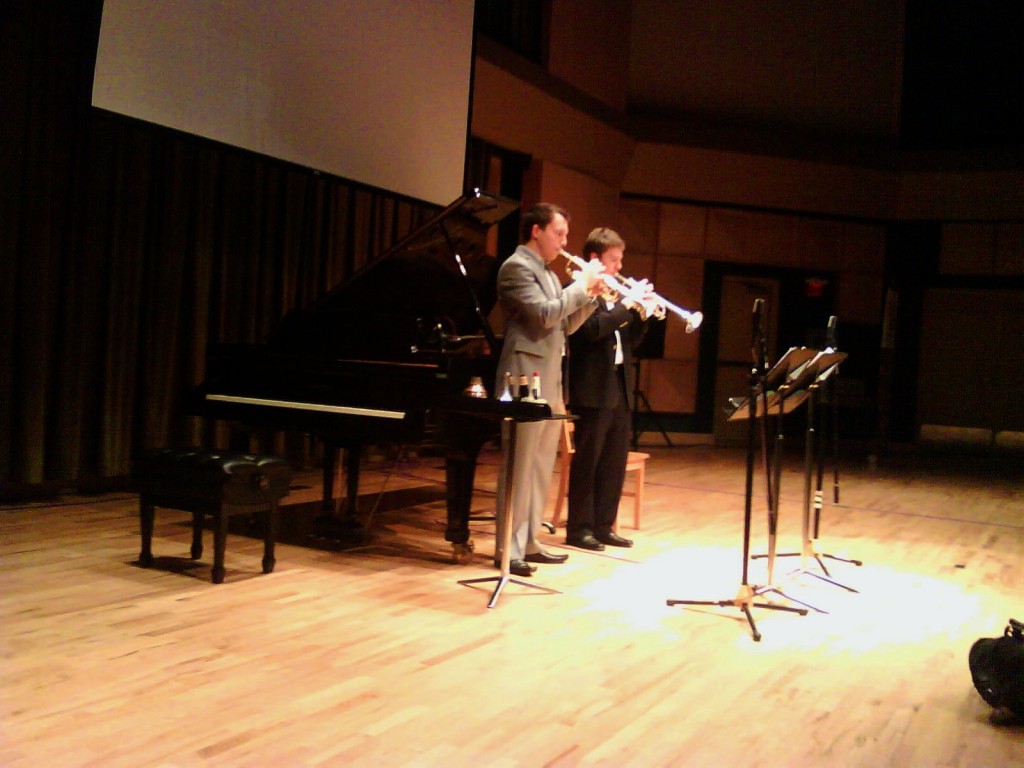
Which brought us to the final piece, and highlight of the night, Eric Nathan’s “Four Sculptures, for two trumpets,” inspired by four sculptures by artist Derek Parker. Aided by a fairly thorough description of what he was after and photos of the sculptures the pieces were based on, Nathan’s video introduction provided a guide for the uninitiated trumpet enthusiast to follow what they were hearing and seeing. When, in the second movement, based on the sculpture “Submarine Eggs” the trumpeters removed some spit-catching widget from their trumpets to allow sound to escape from two places, it created a sort of submarine sonar pinging sound. No longer were we in the elegant Petro Canada Hall at the MUN School of Music dressed in our Sunday best, we were on the hunt for Red October. We were no longer sitting and listening to trumpet being played, trumpet being played was making us experience something so much more.
Things were taken up another notch when, for the third movement called “In Memoriam” based on the sculpture “Precipice,” Hodgson took a seat on a chair and Zinatelli bolted for the exit. The lingering, contemplative piece was played by both trumpeters, one on in the hall and the other standing outside. If you had a hard time getting onto the bridge of the submarine with the previous piece there was no question now that we were experiencing something more than mere music. We were experiencing performance art. We were experiencing boundaries being pushed, but not the boundaries of the trumpet. The trumpet is a several-thousand year-old instrument, its wind and metal tubes twisted in knots to come out sounding nice. Instead the trumpet was used as an instrument for pushing the boundaries of what listening to music can be–a meaningful experience.
Sound Symposium is partially a crazy music festival for the public, but it is also a symposium for artists. Artists are partly technicians, so pushing the boundaries of the trumpet matters to trumpeters, like pushing the boundaries of fast cars matters to mechanics. It matters because it challenges what you can do with your instrument, and it allows you do do new things with it. But they are also performers, performing for the public, many of whom, such as myself, aren’t anywhere close to being trumpet technicians, and so the pushing the boundaries of the instruments doesn’t matter to me. I don’t really care what adjusting the carburettor does to the intake manifold to give the car an extra few miles-per-hour, but I do appreciate the speed it creates. I don’t really care what removing this spit-catching widget does to the knot of wind coming through the metal tubes that makes it sound like submarine sonar pings, but I do appreciate the experience it creates.
I am learning something here: art for art’s sake helps artists create new forms of boundary-pushing art that can resonate deeply with the audience. It’s just a matter of sitting patiently through the parts in-between.
—
Yesterday I told you I would tell you the other show that Radio Wonderland is playing as part of Sound Symposium as soon as I knew, thanks to One With Knowledge’s comment on my post, I now know, and so do you! (It’s also in the schedule online and in The Scope, I just didn’t notice it):
19:30 COOK RECITAL HALL, MUN School of Music, with
Joshua Fried’s RADIO WONDERLAND
Complaints Choir
Mark Fewer & Aiyun Huang (violin & percussion)
Kurai Mubaiwa & Curtis Andrews
Sound Symposium XV, an international festival of new music and performing arts, continues from July 2-12 in St. John’s. You can find more information at their website.
Sound Symposium XV Blog: Day One
Sat, Jul 3, 2010
Prepare your ears! Morgan Murray will be blogging about the Sound Symposium XV for The Scope from July 2-12.
I’m going to be completely honest with you. I didn’t know what the Sound Symposium was, or that it was for that matter, until a week or so ago. This is only my second proper summer in St. John’s, so I missed the last Sound Symposium in 2008 by a few months (If there are any more biennial festivals here that are this good, can someone please tell me?) Nevertheless, I know all about it now.
Correction, I know of it now. I wouldn’t say I know all about it. I still haven’t quite figured it out, but I don’t think you are supposed to. Case in point: the opening night show at the LSPU Hall.
It began with “Cross-Current” a video/sound piece by Reinhard Reizenstein, Gayle Young and Delf Hohmann (this piece was a last-minute replacement for dancer Louise Moyes who had fallen ill). It was video of a flowing stream by Reizenstein, a visual installation artist, accompanied by Young playing some crazy nine-stringed monochord (nine-strings on nine separate pieces of pipe) that, the program tells me, was “being played here for the second time,” and “is still looking for a decent name,” and Hohmann playing banjo stand-up with a bow, like it were a cello. To top it off both the still-looking-for-a-decent-name-achord and the banjo were tuned in the Bohlen-Pierce scale. I told you I was going to be completely honest with you, so I will be, I don’t know who or what a Bohlen-Pierce scale is. I also am not completely sure what it was I saw and heard either. The stand-up banjo was enough of a jolt to my hillbilly roots (you pick it, not play it!), let alone the still-looking-for-a-decent-name-achord being played for only the second time ever, all in Bohlen-Pierce scale (whatever that is), that the piece ended before my poor ears and limited musical vocabulary could catch up.
Mind you, if we were waiting for that, it would still be have to be going on, and I doubt there is that much music written for the still-looking-for-a-decent-name-achord.
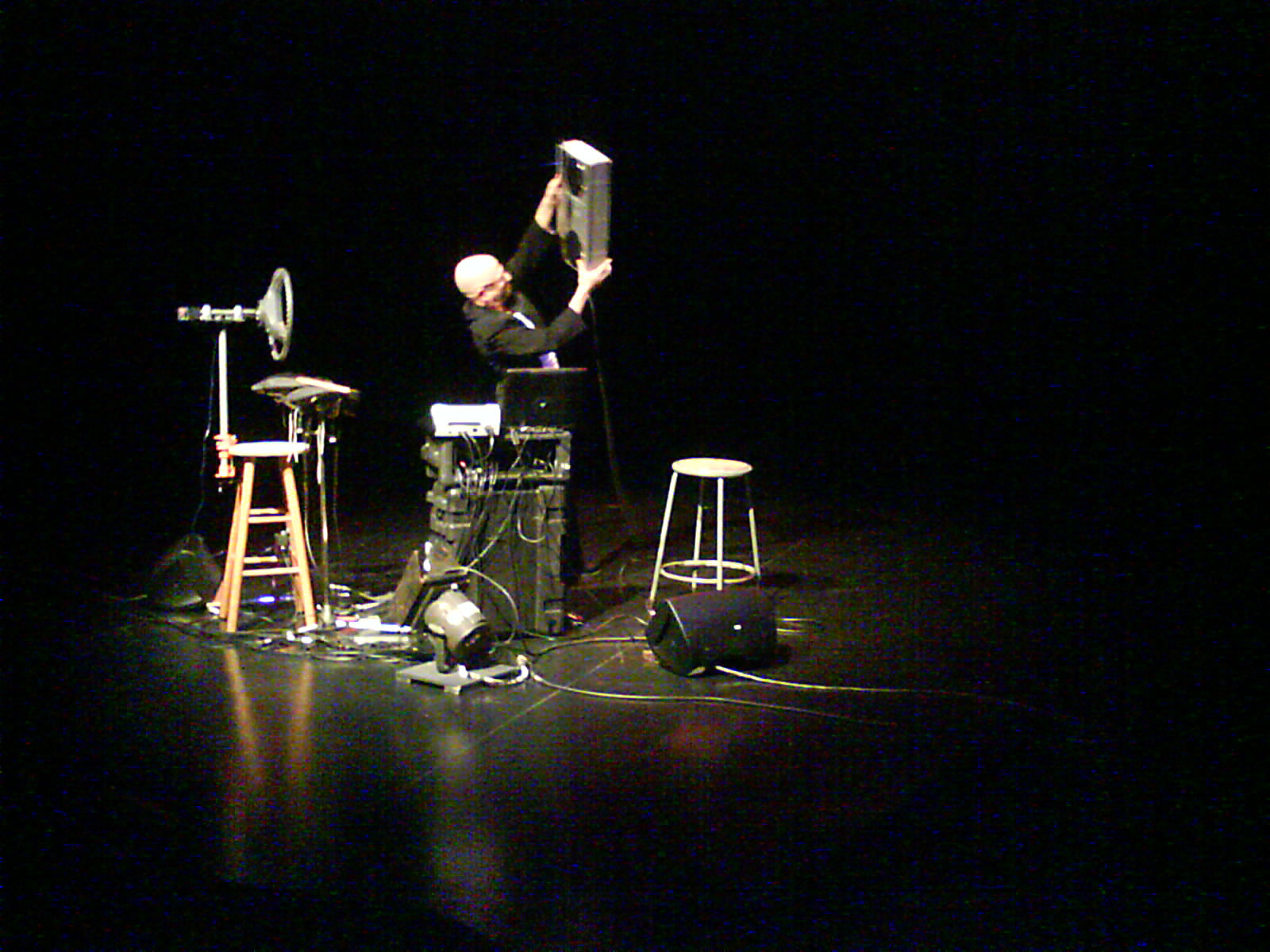
Then came the one-man electro-funk FM radio band, Radio Wonderland . Which, in the words of Joshua Fried, the man behind the magic, “turns commercial radio into recombinant funk [...] using a real steering wheel, old shoes and some gizmos. [...] Radio Wonderland interrogates the media so you can feel the truth: that deep in the crass sexuality of commercial pop is a frequency we can really move to.”
Why would anyone do this, you may ask? Because, he answers, “we’ve got to get down.”
Yes, you read that correctly, the guy takes live FM radio playing on a real live boom box (last night it was a smattering of French talk radio, classic rock, some blues rock, and a commercial for a Honda Civic) and using a steering wheel, a couple of pairs of old shoes and some gizmos (by gizmos he means a laptop and some shiny mystery box, and the steering wheel and the shoes are all wired up and on stands, and well… take a look at the picture) remixes it into funky dance music. The idea of it alone should be enough to make you want to get down, but it is as incredible in action as it seems on paper.
In the spirit of being completely honest with you, you should also know I am not really a fan of dance music, because I am not really a fan of dancing. I know, I know, that makes me a horribly lame person. My mom told me that if I wanted to ever find a woman I’d have to learn to dance, but I’d squirm away from any potential family wedding dance and go play in the dirt, and when it came time to learn to two-step and country line dance in my hillbilly elementary school gym class there weren’t enough girls in the class so I had to dance with my friend Cory, turning me completely off dancing entirely. In spite of these emotional scares, I did manage to find a wonderful woman without having to woo her with dance moves at all (I think it was the beard I was sporting at the time.) Take that mom!
Besides all of this, I have the grace and style of a baby moose sinking into quicksand. But as Radio Wonderland turned French talk radio into a funkadelic dance party, my toes started tapping and I couldn’t stop. The only downside was we were sitting in the comfy theatre seats of the LSPU Hall. Radio Wonderland needs a dance floor. He may have even got a creaky rusty barn door dancer like me out there, who knows. I overheard on my way out of the hall that Radio Wonderland may be performing again on the 9th. I know not where or when, but when I do, you will too, because we should all go, because “we’ve got to get down!”
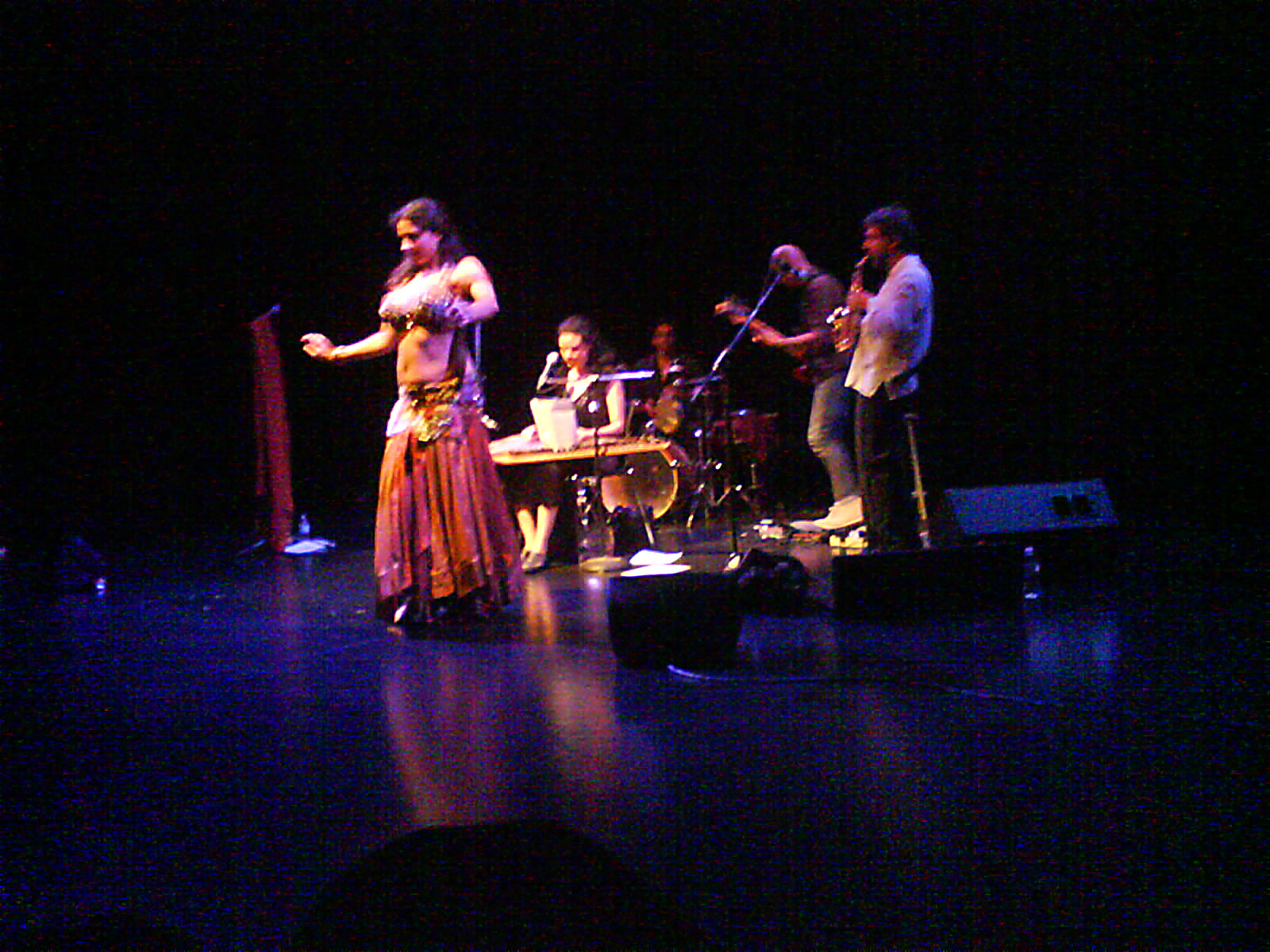
After an intermission spent asking strangers in the lobby “wasn’t that awesome?” the Maryem Tollar Ensemble took the stage, along with belly-dancer Roula Said. Following a guy remixing talk radio into awesome dance music is tough, but Maryem and her group did an admirable job, with their eclectic mix of stellar Egyptian-Arabic-Canadian folk music, highlighted by a several-minute long song to which Roula spun in a circle the entire time. I could barely watch towards the end for fear that she was going to spin out of control and take out the rhythm section, but she managed to keep it under control and finished the set off with a fantastic belly dance with the last song that was an exclamation point on a fantastic first night of the Sound Symposium.
So, if you ask me to sum up the Sound Symposium in five words or less after the first night, I would be at a loss. The best I can come up with is “The Sound Symposium is crazy!–in the best possible way” but that’s ten words. How do you sum up a babbling brook and Bohlen-Pierce banjo/still-looking-for-a-decent-name-achord, Radio Free Funk, and Egyptian-Arabic-Canadian folk spinning belly dancing? You can’t, and I don’t think you’re supposed to.
You’re just supposed to sit back, tap your toe, grin like an idiot when the guy cranks on the steering wheel and beats on the shoe and turns some annoying commercial for some annoying compact car funkalicious. And enjoy it.
What craziness will day two bring? I’m not sure, but any day that starts with a boat symphony in the harbour (12:30 everyday) is bound to be a good one.
Sound Symposium XV, an international festival of new music and performing arts, continues from July 2-12 in St. John’s. You can find more information at their website.


Mon, Jul 12, 2010
Morgan Murray