

Archive | Do/Don’t RSS feed for this section
Locally-Grown Food Vs. Chimerica Agrifoods

Illustration by Kelly Bastow.
Do
Locally-Grown Food
Many varieties of garlic are grown in Newfoundland and each reflects the site on which it is cultivated: the soil and the exposure. I’ve tasted fiery examples and others gentle as a leek, but none of it, because it is so fresh to market, has that sulphurous, devils’ breath character that marks shitty garlic. Garlic from the Bonavista Peninsula should have an AOC. Have you tried locally grown celery? It is a revelation. Its taste profile is herbal. Frost-teased Newfoundland brussels sprouts are almost minty, so powerfully green is their flavour. Our root vegetables are the most flavourful on the planet. Newfoundland lamb from the Cape Shore has no equal. Owing to the iodine in the sea sprayed on its diet of wild scrub and crabgrass it is delicately gamey and not in the least capric. The French brag about the lamb of Paulliac and Sisteron, and it is great meat but not a patch on ours. Fish from here is a no-brainer, but think past our glorious cod and halibut (skin on please!) and explore hake and flounder or the sweetest cold water shrimp. Space prohibits a full list of the foodstuffs grown and sourced right here which are among the best in the world. The arguments for eating it are many: food security, economic diversity, jobs and so on. The number one argument, though, is gastronomic position. It tastes far, far better. To sum up: crowd your table with friends and neighbours, and put locally-grown food on your plate.
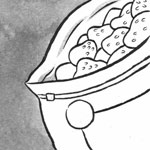
Illustration by Kelly Bastow.
Don’t
Chimerica Agrifoods
Ever notice that garlic from China sold in the supermarkets never sprouts? I speculate that it has been irradiated. No biggie, lots of globally-shipped food products are because if one didn’t kill off the life within they would have rotted before they got here. I saw “strawberries” being planted in the Salinas Valley in California once. A great winged machine was stamping hundreds of plants at a time into the scorched ground, turning it into a vast, drip-irrigated Chia Pet. It seemed entirely mechanized but for the one person I saw who was taking a dump in a ditch. You can drive to Clarenville to pick a perfectly delicious apple on the carbon blown into the atmosphere bringing one from Chile to St. John’s. The pale-shouldered strawberries and the peaches that morph from pool balls to mealy mush when removed from refrigeration are tasteless, they only look like fresh fruit. If you must eat them in February there are bags of fruit frozen soon after harvest in the freezers of the supermarkets; it likely has no less a carbon footprint but at least it has flavour. The same is not true of frozen seafood products from faraway lands. A lot of it is suspiciously “packed” in a place many degrees of longitude away from where it is reputedly a “product of”. Those large frozen shrimp—variously of China, India or Vietnam—could have been fed anything, and that frozen “Cocktail Shrimp Ring” has some merit as a sort of freakish pop art sculptural piece, but it’s not fit to eat.
Canadian Wine vs. Australian Wine
Thu, Nov 7, 2013

Illustration by Kelly Bastow
Do
Canadian Wine
Is there a tendency in Canada to aim low; to venerate the humdrum? The country`s drink of choice is the Double Double (offering adults the same pleasure as suckling does a five year old) and the national dish is surely Kraft Dinner. Maple flavouring has fewer applications than the evidence suggests. Thankfully, like its young chefs, Canada’s winemakers have formed up a resistance against the forces of northern gastromediocrity. Once a byword for ersatz plonk, the Baby Duck of Mount Pearl weddings and the Old Niagara “Canadian Sherry” of Water Street rubbies, wines made from grapes grown in Ontario, British Columbia and even Nova Scotia are now drinkable to delectable. The best are real vins de terroir: Wines that speak of the time and place the grapes were grown, wines that differ from year to year and change as they age, wines that tell a story. The Canadian climate, while warming, is still a challenge so don’t expect fruit bombs or Southern Rhone fire, instead relish the product of the best sort of cool climate viticulture (the hipster preference), chalky Chardonnay, crunchy Loire-like Gamay and Cabernet Franc and promising Pinot. The best is a little dear but the Malivoire Gamay and the Sumac Ridge Private Reserve Gewurztraminer at the NLC are priced right. I’ve heard tell of auspicious vines out Gambo way. Maybe someday.
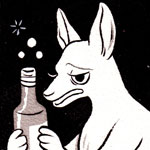
Illustration by Kelly Bastow
Don’t
Australian Wine
Has it simply become too hot and dry to make wine down under? Is it corporate concentration? The rapacious acquisition of good, small wineries by the soulless beverage multinationals? MBA’s are to blame for most contemporary ills, so maybe it was a management-mandated focus on marketing before meaning? Whatever the reason, Australian wine, once an economical alternative to Pepsi, has lost the plot. The overwhelming majority of the stuff on offer is too sweet, confected, over-extracted, rubber-scented cough syrup. There’s some acceptable Riesling grown in the coolest spots and Tasmania is a different case but most of the red from the scorched mainland is no better than barbecue sauce. Bottles that were supposed to have improved with age have not. Thank God Australia doesn’t have access to maple syrup, because they’d put it in the blends. The thinking seems to be people will just about bathe in this execrable booze if you put a novelty label and name on it. They’ve taken the critter concept from the Canucks and replaced the baby ducks with sharks and marsupials; Goofy labels for spoofy juice. Maybe it’ll be Box Jellyfish White and Funnel-Web Spider Sparkling next? Yellow Tail is a big seller taking advantage of people who can’t be bothered to taste things passing through their mouth. Just don’t.
Anchovies vs. Sodium
Wed, Oct 2, 2013
Do
Anchovies
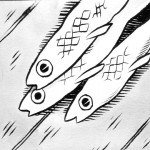
Some people say anchovies are bad. Those people are wrong. Anchovies make almost any savoury dish better. It’s because of the umami, that fifth taste. Anchovies deliver, by express, satisfying glutamates to your palate. Fish sauces nuoc mam, nam pla, and others do the same. Mushrooms, tamari, and marmite bring it in a blunter fashion. That delicious crust on grilled meat? Glutamates.
Anchovies, however, also contain nucleotides, which increase the perception of glutamates. Here we have umami, weaponized. A savory explosion.
Anchovies are also salty, and salt is the first and foremost flavour enhancer.
All of this makes the anchovy the most efficient and elegant taste delivery system known to man. Let them melt into a roasting joint of meat, dissolve them in the oil into which your tomatoes and garlic are headed—both will taste meatier. You want a Caesar salad “hold the anchovies”? There is no such thing. And a pizza parlour that doesn’t offer them on their pies is utterly without self-respect.
We don’t see the very best anchovies here in St. John’s, the ones you eat on their own dressed with a little good olive oil. So our choices are few: Fat Nanny’s carries a good make from Italy, as did the already missed Food For Thought. The small cans of Spanish origin found in the supermarkets are better than no anchovies at all.
Don’t
Sodium
May I propose the term “empty salt” to mean a savage, harsh and unpleasant salinity as opposed to a judicious brininess that brings out the essential flavour of food? Almost all processed food is too salty. They’ve made it easy to spot, just look at the side of the package and if a serving has more than 10% of your daily recommendation then put it back on the shelf. The low or no salt versions of products are better choices. Excessive salt is used to hide other shortcomings of flavour and increases the shelf-life on foodstuffs that don’t deserve it. You can’t buy a sausage at the supermarket than doesn’t have too much salt. And I’m only talking about good old sodium chloride. Most processed food also have more insidious sodium compounds in the mix.
Next time you order a pizza try asking them “extra anchovies, hold the sodium nitrate.”
By Ed Riche. Illustrations by Kelly Bastow.
Do/Don’t: Local Kimchi/Dill Pickle
Wed, Aug 28, 2013
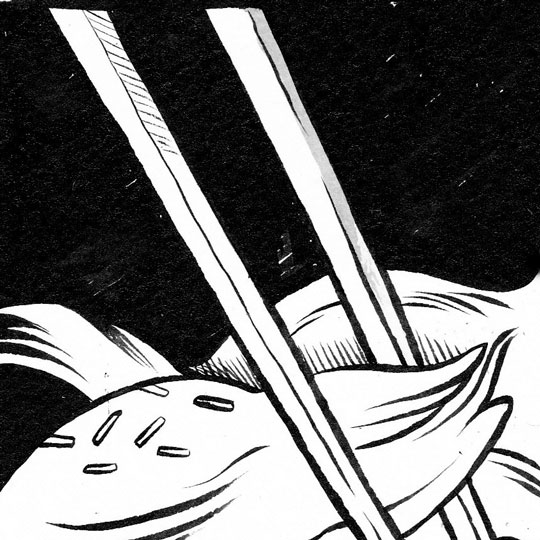
Do
Local Kimchi
Hipster gastronomes are currently in a ferment over ferments. The buzz really is a buzz, like licking a 9-volt battery, an effervescent prickle on your tongue from food that is alive with yummy bacteria. They say those tiny critters are good for you too, probiotics and all. Mostly, though, it’s scrumptious.
A staple of the Korean kitchen, kimchi is any of a variety of pickled vegetables (and rarely fish), most commonly cabbage. It’s essentially sauerkraut flavoured with fish sauce, scallion, garlic and hot chili. The process transforms and preserves—both the veg and you. It’s a main, a side dish and a condiment. The fermentation should be active so that when you open a jar the stuff inside climbs out and makes a run for it. Kimchi and Sushi at Atlantic Place make their own and it’s terrific, of the first water. You can also buy decent kimchi imported from Korea at the Magic Wok grocery on Duckworth Street. Deploy to jack ramen or make a savory pancake. Seoul food.
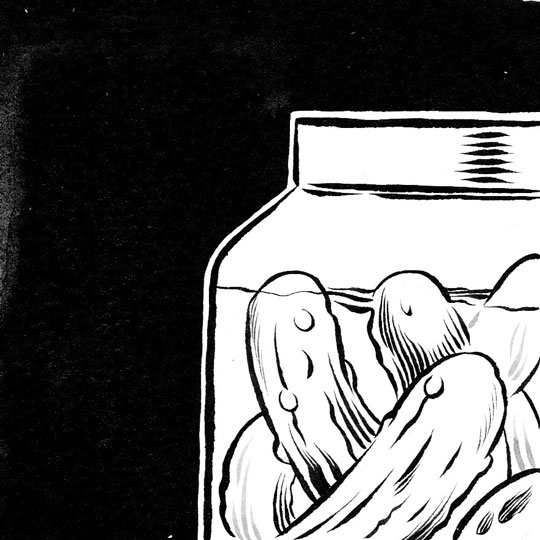
Don’t
“Dill Pickle”
These are little cucumbers in a salty vinegar with chemical added to provide an illusion of freshness. A real pickle is, of course, pickled. There are indeed great pickles—fermented briny things related to kimchi, and real dill pickles can be had in town: Mrs. Whyte’s are available at Costco, Strubbs in the refrigerated sections of the chain supermarkets and, to my taste the best, the Bubbies available at the unfortunately-named “Fat Nanny’s”. There is nothing offensive about a denatured, industrial dill pickle—maybe it can elevate a simple sandwich or burger—but it has no guts, no oomph. Not a big deal? You’re putting it in your mouth and ingesting it, so it’s prudent to care. When I lived in Montreal in the 80’s there was a shop bottom of The Main where “full sours” were sold out of a barrel, and they were brilliant. If only Philip Sprung could have tasted one of those babies.
By Ed Riche. Illustrations by Kelly Bastow.


Tue, Dec 10, 2013
Ed Riche