

Archive | Culture RSS feed for this section
I Saw Thee
By Reginald D. Abergavenny III, D.D., Ph.D., L.L.D.Hon., R.A., C.G.C.
As was the sonnet for Shakespeare and the ode for Shelley, the internet comment is the great literary form of our time. In an effort to elevate this art form, The Scope launched its own bastion of anonymous pornographic ravings and confessions of mild-stalking: I Saw You..
To celebrate this literary triumph, we have commissioned a famed literary critic to take a closer look at a few of the more popular I Saw Yous.

I saw you, table,
and I still managed to walk into you…
like I do every day.
I’m starting to think you’re sentient.
Please stop
tenderizing
my legs.
The question this work ultimately poses isn’t the overt query about the sentience of the table; rather, it is the question of what attracts two bodies, especially one mammalian, one inanimate? Sentience is a trivial matter in this equation, sentience indicates agency and in compulsion, there can be none. In compulsion, the will matters not.
Newton called this attraction gravity, from the Latin gravitas—weight, dignity, seriousness, solemnity of matter. The bending, the bowing of the spacetime continuum, and one of the four fundamental forces in the universe. The straight-faced sincerity of the universe. The drama to the comedic and epic nuclear strong and weak forces of the universe.
The grimace in earnestness, in pain.
This is the irresistible compulsion: the pull, the attractive force between objects, between both heavenly and earthly bodies; between masses, passing in the night. This compulsion, this straight-laced force is as old as time itself. Before Newton’s apple, before Einstein’s black hole, there was space and there was time and as Odin flexed the great Body By Jake® Crusher Flexbar™ of spacetime, pain was born. The following morning, as the diffuse masses of the universe became whole, became solid, came to bear on Odin’s shin, as he, too, bashed into a coffee table on the way to his morning constitutional.
But this force is yet more than that. It is more still than what constitutes the universe, than what furrows the brow and stiffens the upper lip. There is an animalism at its core, a compulsion that is almost fatalistic. The compulsion of wills bereft of freedom. The vector along the continuum that is marked for each of us, colliding, as we do, with other masses.
Some vectors are such that they veer from the solemnity of the drama to the interstellar gravitas of romance. The points where these vectors cross—where the arrow of Cupid pierces the heart, where the Lövbacken of IKEA strikes the tibia—is the transcendent moment of ecstatic synaptic explosion. This compulsion, it seems, is stronger than Newton or Einstein ever surmised. With these vectors crossing, these masses colliding, the Big O trumps the Big G.
The true hero here accepts their path. The mind that grasps this universal attraction is not a physicist, but a lover. Erika Eiffel—famously married to the Eiffel Tower—stands in solidarity alongside this anonymous author, both of them connected fundamentally, eternally, irresistably with their unspeaking, unmoving partners.
I saw you clicky pens,
driving me f**king nuts.
They should be outlawed.
CLICK…
CLICK…
CLICK…
CLICK…
CLICK…
The Industrial Revolution ended for good when man set foot on the moon. What seemed like humanity’s highest point had been made possible by one of our lowest: German V-2 rockets raining on London from, for the first time, long-range. This was part of industrialization’s parabolic trajectory. What began with Watt’s steam engine thrusting industry across the frontier reached its zenith with the Wehrmacht’s V-2 thrusting destruction over the English Channel during the war, and terminated in the moon landing—when man strapped himself to a big bullet, shot himself into space, stopped the bullet at the moon, got off, went for a walk, got back on the bullet and finally shot himself back to Earth.
Machines, which had begun—to borrow from McLuhan—as an extension of man, morphed into monsters during the war, then continued on to transcend man, and Earth altogether. To become extraterrestrial. Technology was now beyond human control, and it demanded total domination. With this, the true consequence of the Industrial Revolution—machine overthrowing man—everything changed. Including the way we write our grocery lists and pen pal correspondence.
The development of the pen—another phallic instrument of industry which began as an homage to the virility of man and morphed into an instrument of his domination—mirrors the parabolic trajectory of rocketry. But, in ways far more anatomically analogous, the development of the pen mirrors the demise of the Will of man. Far from the early rudiment that was the quill, the Revolution was set in motion with early strokes of the industrious fountain. Man then went ballistic during wartime with the ballpoint—commissioned early on by the RAF for its airmen.
But where then are we left following this trajectory of machine, of rocket, of pen? Where will the future lead us?
As this author laments, there is no more frontier, no more conquest, there remains only the impotent “CLICK…/CLICK…/CLICK…” of a gun that has been emptied of its bullets.
I saw you acquiring
an attractive
parasitic host.
In the pantheon of gastrointestinal dinner guests, the parasite is analogous to the uninvited party crasher. It shows up unannounced, hangs around, eats your chips, drinks your booze, and generally mooches off your life in an unpleasant manner for as long as it is able. This is the usual circumstance of the parasite-host relationship—the epitome of unidirectional beneficence. An overzealous parasite overstays its welcome, gorging itself on the hospitality of its host to a point where the host, parasite, and party are all three rendered null.
The protagonist of this work notes a distinct paradox. This anonymous author is apparently some sort of internet savant with a troglodytic grasp of basic grammar and/or parasitic science.
In the author’s apathetic accident, the parasite is seen attracting its host; a glorious vice-versa that gives the more keenly astute or fundamentally literate parasitologists pause for thought. It is a subversion of the norm—a norm not so much in a normative sense, but in a biological necessity sense. The host, a sadomasochist, has become its own parasite, clinging to its parasite.
And so, what this internet savant may have originally thought clever, but was actually an egregious display of ignorance, is clever once again—up and out the other side—leading the mind of the reader, ultimately, where all roads on the internet ultimately lead: to hardcore S&M pornography.
 Dr. Abergavenny is a professor is a professor emeritus of English Literature and Criticism at Apocryphal College, Oxford. He tweets sporadically @DrAbergavenny
The Best of #HolyroodMovieStars
Wed, Oct 24, 2012
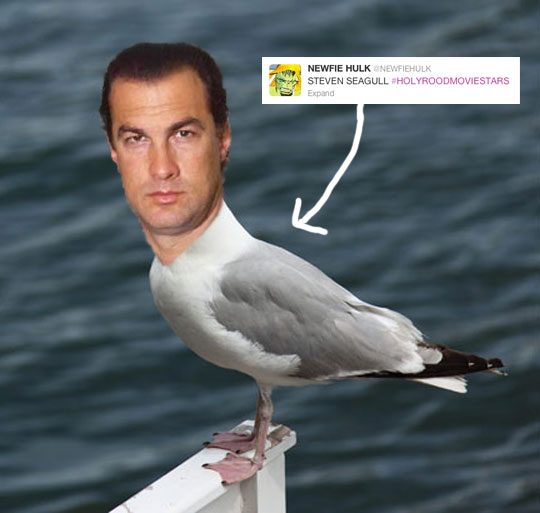
From the same procrastinating people who brought you #newfoundlandbands, here are some hits from this morning’s #HolyroodMovieStars hashtag on Twitter.
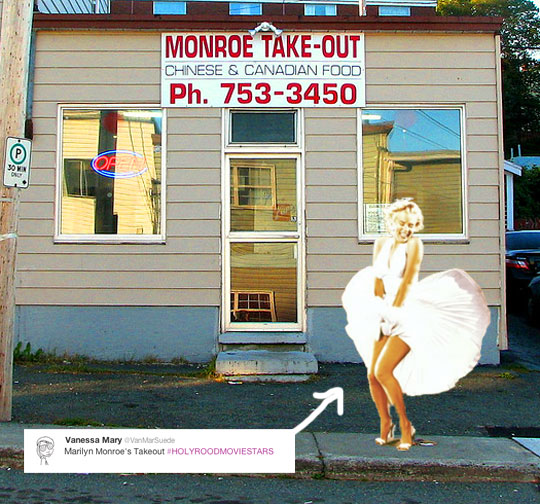
Original Monroe's photo from here.
I Saw Thee, II
Thu, Jul 5, 2012
By Reginald D. Abergavenny III, D.D., Ph.D., L.L.D.Hon., R.A., C.G.C. – Special to The Scope
In the 18th it was the poet, the 19th the novelist, the 20th the rapper; in ours, the 21st century, the great writer is the anonymous internet writer. Famed literary critic Dr. Reginald D. Abergavenny III turns his critical eye to two recent I Saw Yous.
I saw you
sour cream
and onion chips:
bring it.
Walter Benjamin’s Angel of History beholds all of history as a “catastrophe that keeps piling ruin upon ruin.”[1] Which is to say that all is an accident. While heroes, according to Joseph Campbell, are found in their station most often by accident.[2] Likewise, both potato chips and sour cream find their geneses in mishap: the former a failed act of vengeance, the later a refrigerator left ajar.
The narrator of this I Saw You, then, is an Angel of History himself, witness to an ever mounting pile of accidents. Unlike Benjamin’s Angel, however, who is powerless in the face of a storm blowing from Paradise, the narrator is an Angel-Hero standing at the threshold of a journey into the abyss. This moment of crisis is the moment of truth for our Angel-Hero. The moment that the tides of progress, in Benjamin’s Marxian sense, or the Fates, in Campbell’s mythological sense, are confronted courageously. Caution, and potato chips, are thrown to the wind. The General, leading his troops, plunges, like a dagger, into the enemy line with the brave cry: “bring it!”
1. Walter Benjamin, “Theses On the Philosophy of History,” 1942.
2. Joesph Campbell, The Hero with a Thousand Faces, 1949.
3. Benjamin, “Theses,” and Campbell, The Hero.
I saw you violently vomiting
on the side of the road
near Victoria park
after the Tom Petty concert on Saturday.
You clearly enjoyed the show!
Rock and Roll, man.
Rock and roll music, as James Osterberg, Jr. sings, is the “runaway son of the nuclear A-bomb.”[1] It is the hypersexualized illegitimate child of uncontrolled inter-breeding between pre-war American music—rhythm and blues, bluegrass, gospel, and jazz—and Cold War techno-corporatism. Driven by the impotent rage of youth violently torn from its nurse’s breast, rock and roll is the fury of reckless violence.
The author of this I Saw You—observing, with great alliterative ingenuity, a rock and roll victim-hero in the orgasmic state of rock and roll excess—gets to the heart of this dying beast: Ears ringing with the distorted electricity of “Free Fallin’” and after hours of sensual convulsions, the body has turned on itself.
The futility of attempting to escape the violence of our world via the violence of rock and roll is writ large in the biography of Petty himself. Compelled, like so many, by the gyrating sexuality of Elvis Presley—the post-War West made Übermensch[2]—Petty saw his fate in rock and roll. To the chagrin of his overbearing father, Petty traded his slingshot for Presley 45s,[3] seeking refuge from violence in violence, a futile protest that left him, all these years later, with little more than a handful of gold records and international stardom.
1. The Stooges, “Search and Destroy,” Raw Power, Columbia Records, 1973.
2.Friedrich Nietzsche, Thus Spoke Zarathustra, 1883.
3. Melinda Newman, “Tom Petty: Portrait of an Artist,” Billboard Magazine, November 28, 2005.
Dr. Abergavenny is a professor emeritus of English Literature and Criticism at Apocryphal College, Oxford. He Tweets sporadically at @DrAbergavenny
A Multitude of Multi-Purpose Arts Spaces
Wed, May 2, 2012
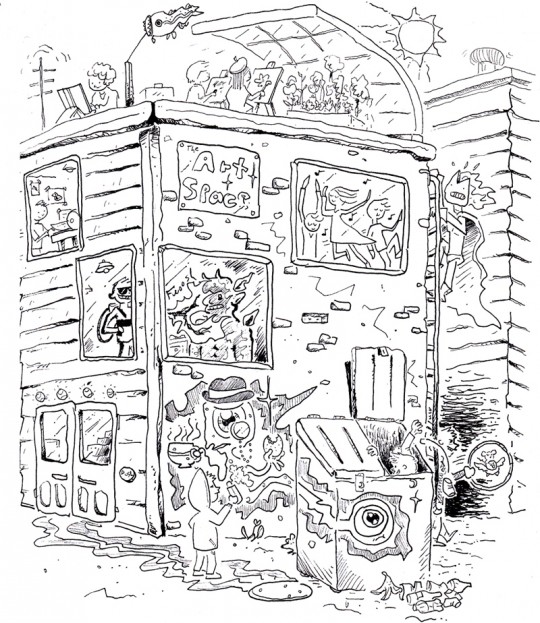
Illustration by Ricky King
Last May St. John’s city council approved their one-third share of $100,000—the rest coming from the provincial and the federal governments—to study the need and feasibility, and come up with a business plan for a new multi-purpose art space in the city. Based on the turn-out at a recent public ‘Supply & Demand Forum’ hosted by Sheppard Case Architects, the firm hired to do the study and planning, there’s a lot of demand.
A multi-purpose arts space could be any number of things. Is the skateboard park where kids rehearse and perform kickflips, share spoken word performances about one another’s mothers, and spray paint obscenities on the ramps a multi-purpose arts space? Well, kinda. But in terms of dedicated spaces for professional artists to create, rehearse, perform, and collate grant applications, what is there?
Morgan Murray did some digging and found a handful of national and local examples of a few kinds of multi-purpose arts spaces.
Banff Centre
Banff, Alberta
The Banff Centre is an arts mecca where artists of all disciplines flock to the picturesque Rocky Mountains to learn, create, and perform. It’s officially an Alberta non-degree granting post-secondary institution— it started as an off-shoot of the U of Alberta in the 1930s—and is funded (provincial government and fund-raising), and staffed (488 full-time equivalents last year) as such. Up to 5,000 people participate in their courses, programmes, and residencies each year, and over 75,000 people take in their events.
Art Central
Calgary, Alberta
Art Central is like an art mall located downtown Calgary. It is 50 galleries, studios, artist shops, and cafes under one roof. Like a mall, it is privately owned and renting a space is fairly pricey, nearly $16 per square foot per month (that’s like $1,600 per month for your puny bedroom). This limits it mostly to well-established, commercially successful artists and arts organizations. But the vibe of the building full of art and artists is a good one, it draws a heap of tourists, and the cafe has really good meat loaf.
Arts & Culture Centres
Across Newfoundland & Labrador
Can’t forget the Arts & Culture Centres… From coast-to-coast there are hundreds of publicly funded ACC-like centres. From small town community centres to big centres dedicated to performance and visual art, such as the Arts & Culture Centres across NL. The St. John’s ACC was, like a lot of similar centres across the country, built with provincial and federal funds to celebrate Canada’s 100th in 1967.
The Baird Building
Between Water Street & Harbour Drive on Clifts-Baird Cove, St. John’s
Formerly home to fish processors, sail makers, a department store, and almost everything else, this privately owned complex of ancient buildings, between Water Street and Harbour Drive on Clifts-Baird Cove, is now home to a pile of art galleries and studios, a jam space, formerly Wonderbolt Circus, and several businesses.
The Baird Building is definitely on the multipurpose arts centre radar. There have been a few attempts in the past to revamp the building, but nothing has gotten off the ground.
Most recently about three years ago, according to Michelle Bush, director of Baird Building tenant Eastern Edge Gallery (formerly a fish processing plant), “the Artist Infrastructure Committee was mandated by the Arts Advisory Committee to look into infrastructure needs for artists … we visited the whole Baird Building as a site to look at as a potential building to be renovated and turned into an awesome arts space with other types of tenants as well.”
Quidi Vidi Village Artisan Incubator
Quidi Vidi Village, St. John’s
The City of St. John’s, and their $1.1M, and the Atlantic Canada Opportunities Agency (ACOA, aka The Feds), and their $1.5M, have partnered with the Craft Council and the Anna Templeton Centre to turn an old dilapidated fishing premises on the Quidi Vidi Gut into a multipurpose artisan incubator, the centerpiece of the city’s Quidi Vidi Village Development Plan. Up-and-coming artisans/crafters can lease affordable studio space in the building, as well as have access to the services of a full-time business/facility manager, artisan mentoring, retail space, and shared resources like photocopiers and coffee makers.
I Saw Thee
Thu, Nov 3, 2011
By Reginald D. Abergavenny III, D.D., Ph.D., L.L.D.Hon., R.A., C.G.C. – Special to The Scope
As was the sonnet for Shakespeare and the ode for Shelley, the internet comment is the great literary form of our time. One year ago, in an effort to elevate this art form, The Scope launched its own bastion of anonymous pornographic ravings and confessions of mild-stalking: I Saw You.
To celebrate the anniversary of what has become the most popular section of our website, we have commissioned a famed literary critic to take a closer look at a few of the more popular I Saw Yous.
I saw you
drive up on the curb
and hit me
with your car.Even though you
sped off quickly,
I found your car
in the parking lot
and kicked off
your muffler.
“Revenge is a kind of wild justice,” wrote Francis Bacon.[1] And this Lex talionis—an eye for an eye, a muffler for a bruise—I Saw You is a classic example of revenge literature. A hero, wronged by a villain—be it a bad driver, the government, or the fates—-journeys—literally, or figuratively—to the ends of the earth, or a nearby parking lot, to find justice through retribution.
The Newtonian Laws of Revenge dictate that to every act of violation, there is an equal corresponding act of vengeance—an eye for an eye. The first act unbalances the violatee’s sense of fairness—“that so-and-so just hit me with their car and drove away”—which cannot be restored until vengeance is meted out—kicking off their muffler—and the violatee is vindicated.
The persistence of revenge, or what scholars call altruistic punishment—punishment meted out by me upon you for your own good—gives justice its substance and sense of balance.[2] As Old Testament God said unto Moses: “anyone who maims another shall suffer the same injury in return: fracture for fracture, eye for eye, tooth for tooth; the injury inflicted is the injury to be suffered.”[3] The pairing of violation and revenge is often treated as though it were a metaphysical law of the universe that constitutes justice, and thus civilization, in the first place.
However, unspoken in this insistence is what comes next. The violatee achieves vindication but the original violator is newly violated. This person who drove their car up on the curb, upon seeing their muffler detached from their vehicle and laying on the ground, will thirst for vengeance. Rather than constitutive of justice, this endless cycle creates a condition of escalating violence and mutually assured destruction.
As Ghandi said, “an eye for an eye can make the whole world blind.”[4] Or, a muffler for a bruise can make the whole world uncomfortably loud. To escape the cycle of violence that revenge perpetuates one must, at some point, forgive, let go, pass over, or turn the other cheek, as Jesus amended his Father’s eye-for-an-eye law. As Bacon put it, “certainly, in taking revenge, a man is but even with his enemy; but in passing it over, he is superior; for it is a prince’s part to pardon.”[5]
1. Not to be confused with the painter, or the popular breakfast meat. Sir Francis Bacon, “Of Revenge,” Essayes: Religious Meditations. Places of Perswasion and Disswasion. Seene and Allowed, (1597).
2. de Quervain, et al., “The Neural Basis of Altruistic Punishment,” Science 27 August 2004.
3. Leviticus 24:19-20
4. Eisikovits, Nir, “Transitional Justice”, The Stanford Encyclopedia of Philosophy (Spring 2009 Edition), Edward N. Zalta (ed.).
5. Bacon, “Of Revenge.”
I saw me lure you
to my bed
with a grilled cheese sandwich.I don’t know
what the f***
is going on between us,
but it’s pretty good.
This, in fact, it is not an I Saw You at all. The author turns the conventions of the medium on its ear, making it an “I Saw Me,” thrusting the reader into a metaphysical state of uncertainty and anxiety. The disembodied author, the “me,” is addressing the reader, the unknown “you,” directly. No longer the bystander, the voyeur, or the seen, the reader is thrust into the action, becoming the lured in this greasy scene.
The author’s subsequent admission, and glorification of luring the unknown “you” into their bed further unsettles the reader. This “me” did not seduce a lover, they lured a victim, like a mouse to a trap. But instead of cheese placed on a trap on its own, it is a grilled cheese sandwich, made on white bread, with processed cheese, and nutritionally-invalid, cheap margarine, no doubt. Empty calories, filling an empty bed, for an empty affair (“it’s pretty good” the narrator states).
The titillation—physical arousal devoid of emotional attachment—is increased by the harshness and vividness aroused by the use of the F-word. It is obvious to the reader that love is not being made in this bed, but greasy, perverted, cheese-stained pornography is. The sound overheard by roommates would not be moans of ecstasy, but clumsy Neanderthal slaps and grunts.
The author’s seemingly straightforward double entendre—“I don’t know/what the f***/is going on between us,/but it’s pretty good”—admits to some sort of relationship uncertainty, while pointing to some sort of sordid affair. However, the straightforwardness of this double entendre is upended—what could be called an “entendre double” perhaps—when juxtaposed with the talk of grilled cheese in the previous sentence. Leaving the reader not with a vivid image of two people making love, but rather an image of two people squishing a lump of melted cheese between them.
I saw you Jiffy Cab driver,
stop to let a pigeon
cross the road.
The set-up for a joke that isn’t funny (“Why did the pigeon cross the road?”), a social commentary on class and power dynamics in urban space shared between the human and non-human, a meditation on the city as a narrative phenomenon, this I Saw You plumbs complex depths.
Ubiquitous fixtures in the urban landscape, the cab driver and the pigeon are as indispensable as the office tower and the tree-lined boulevard in the concept of city-ness. Both are semiotic shorthands for urbanity. Yet this is not all they share.
Despite their mutual iconicisim, both taxi cab and pigeon have a tormented relationship with the cities they define and create.The taxi cab, while functional—couriering people from place to place through the labyrinth of city streets, is often taken for granted and viewed with suspicion and disdain by other city dwellers. There is never a cab nearby when you need one, when there is they don’t stop, when you finally get one they might take you the long way. As a pedestrian, or motorist, cabs can present a grave threat. Cab drivers, who live and breathe city streets, navigate according to a tacit connection to the arterial roadways, and not always the rule of the road. While the pigeons—one-time war heroes couriering secret plans to and fro the front lines—are today sneered at, dismissed as pests, as carriers of disease, as rats with wings.
Taxi cabs and pigeons are kindred urban spirits, indispensable vertebrae of a city’s backbone, but both sharing a low wrung in the social ladder. Both sit on the margins, waiting, on statues and stoops, on taxi stands, and airport parking lots, waiting for their scraps of whatever is left over, on whoever doesn’t have a ride, to scrabble together a hard won living.
Dr. Abergavenny is a professor emeritus of English Literature and Criticism at Apocryphal College, Oxford.
The A1C area code does not have the most artists per capita in Canada and that’s really okay.
Fri, May 27, 2011
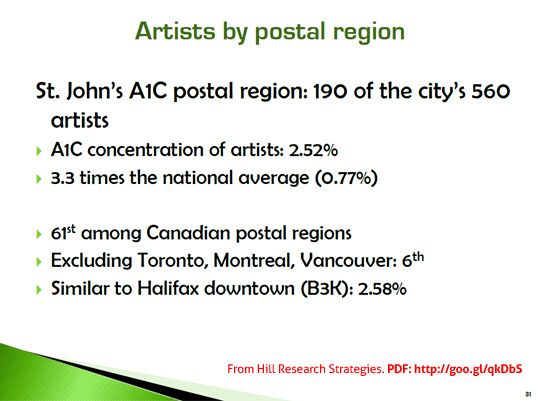
It still has 3.3 time the national average, and that’s still cool.
The big question is where did that rumour start?
2011 RPM Challenge listening party schedule
Sat, Apr 2, 2011
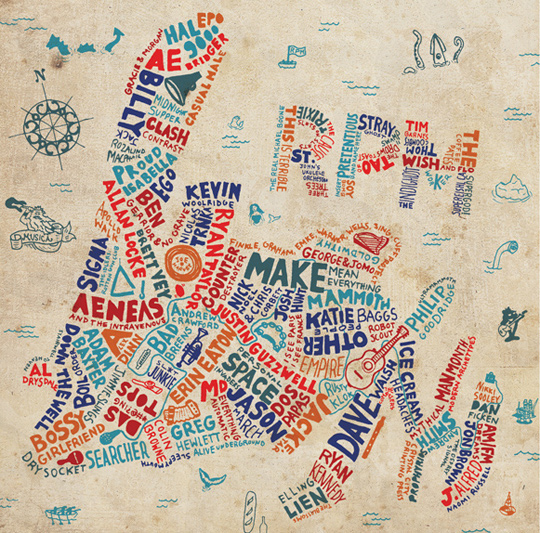
Illustration by Duncan Major and John Devereaux of Perfect Day Canada. www.pday.ca
This February The Scope challenged NL musicians to write and record an album (10 songs or 35 minutes) of original music in 28 days. The result? 103 albums of new, local music. Come join us as we listen to a track from each album.
Visit the RPM Challenge merch table for a chance to bring some of this music home with you.
LIVE FROM THE EVENT
We’ll attempt to do some live webcasts from the RPM Challenge listening party tonight at http://twitcasting.tv/thescopenl
THE SCHEDULE
We will be starting at 9pm sharp.
Saturday April 2 from 9pm-3am
No cover
19+
CBTGs only
9:00
Adam Baxter – If you don’t forget me
AE Bridger – The One Question
Aeneas & The Intravenous – Socially Awkward Penguin
Al Drysdale – Down to the Wine
Alex Dinn – Like to Know
Alive Underground – Pretty Cowgirl in the Sun
Allan Locke – I’ve Got A Lot Learn
am/fm dreams – Sheep
Andrew Crawford – Raining
9:30
Andrew Smith – Track 6
Apollo Walk – The Haunting
Bad Breens – Excitebike
Ben Gerrior & No Grave – No Grave
Billy Jack – Recycled
The Blossoms – Telephone
Boil Order – Say Uncle
Bossy Girlfriend – Ruuunnn
Brett Vey – Stories
Casual Male – Casual Male
10:00
The Cause – The Mall
Christian Corbett & Nick Noel – Shameless & Nameless
Clash Contrast – Winter Spree
The Coffee Dates – Washing Machine
Colin Browne – Going Down the Duty Road
The Composers – I’m Confused
Counter Destroyer – Track 8
Crystal City Printing Press – Don’t Go Away Mercury!!
Dan Ficken – Breaking Through
10:30
Däs Fucking Tops – Track 1
Dave Walsh – The Plow Drives By
Dos Papas – Ode to Rock
Down the Well – Original
The Drows – Little Kitty Cat
Dry Socket – Lotta Pressure
EGo – Never Too Young
Elling Lien – The Dance
Empire – They’re Closing In
epo – best laid plan
Erin Eaton – Crumble
Everything’s Automatic – Piano (Anywhere)
11:00
The Finkle, Warner, Graham, Sing, Wells, Emke, Cuff Project – Tired Game
Georgie & JoMo – What is Real?
Goldwithy – 120
Gracie & Morgan – In Between the Lines
Greg Hewlett – Alt – Ctrl – Del
Hal 9000 – physics
I See Paris, I See France – Cowan Ave
11:30
The Ice Cream Headaches – oxygen
The Idlers: Rotten Gun Club – The Big Splendas
The IndiGhost – And then it got dark for the second time that day
[Insert Pretentious Band Name Here] – Arsenic
J. Alfred – Winter
Jack E. Tar – Part 4
Jason March – Inside My Soul
Jimme Slings – Rover (Silly Wizard Ramblin Rover Sample)
Joe Harvey – A Pale Blue Jay
12:00
Josh Hunt Presents Drunky The Fuck Clown – Crazy
Justin Guzzwell – breavement and grief
Katie Baggs – O Light
Kevin Woolridge – transit saints
Make Mean Everything – Shot at Captain
Mammoth – Shoulders of the Road
MD – Light – Emitting Diodes, There
12:30
Midnight Supper – Made by Man
Modern Archetypes – Lukey
Monotone Jones w/ Matt Fudge – No Way Out
Mythical Man – Month – Transition 1: Bells
Naomi Russell – Song for Trinity
The New Cult of Toad – Swamp II
Nicolas Trnka – C’est La Vie
Nikki Sooley – Sing Mama
The Osprey Signal – Sunday Morning Sunrise
1:00
Other People – Infra – Red Spotlight
Personal Space Invaders – Story Of The Sub
Philip Goodridge – Two
Prophyrios – Brass Monkey
Proud Isabella – Someday Kid
The Real Michael Boone – Old School Japan
Robot Scout – Program 1. Bounceback
Music by Rozalind MacPhail, Directed by Roger Maunder – Dreams in Black and White
Rusty Klok – Shootin’ the Breeze
Ryan Kennedy – Age Nineteen
1:30
Ryan Taylor – Morning Breaks
Searcher – Love in the Checkout Lane
Sigma – Waiting, Wasting
Sleepymouth – Love Yawns
Slut Junkie – Sorry For Yourself
Sluts On Sluts – Active
¡Soybomb! – Anthem
St. John’s Ukulele Orchestra – Ukulele Vagabond
Stairwell to Heaven – Cold Roses
Stray Ghost – Runnin’
SuperFishLca – Doesn’t Look Good From Here
2:00
SUPERGOD! – A cage match with benefits
Tao of Toast – Everything Changes
This Is Terrible – Christmas Sucks (I Hate My Mom)
Thom Coombes – For Those Who’ve Come & Gone Away
Three Trees – Tea & Sympathy
Tim Barnes – Frozen Shore
Trixie – Last
Ultramammoth – Deathmachines
Wish & Flo – Brad Pitt Sexy
Worker – Grind (Runway Pt. II)
2:30
Shuffle until close
Friend benefits
Thu, Mar 17, 2011

Sarah Smellie looks at the growing phenomenon of crowdfunding.
So you’ve got a great idea for an arts project—a brilliant photography project, a novel, a short film, whatever. How do you find the money to put it together?
A few local filmmakers have turned to their social networks for the answer.
Traditionally, you’d pay for it yourself and/or you’d fill out multi-page applications to institutions like the Newfoundland and Labrador Arts Council (NLAC). Those applications would be vetted by a small group of authorities and, if your project suits their fancy or your reputation guarantees that it’d suit someone else’s fancy, you’d get a cheque.
But what if you didn’t get a cheque? Or what if it isn’t enough?
More and more these days, this is where crowdfunding comes in. It’s an old practice, relying on the idea that small contributions from large numbers of people add up. Think of a Salvation Army Santa collecting coins at Christmas. A modern incarnation is at the top of Wikipedia’s “Crowd funding” page, where founder Jimmy Wales appeals to readers for a donation of any amount. Got $20? He’ll take it, via PayPal. Your $20, along with tens of thousands of other readers’ dollar bills, keeps the site financed.
Charities do it, political campaigns do it, and now artists are doing it.
Allison White is looking for your twenty bucks to help support the making of her short film, Decoloured. She won the Michelle Jackson Emerging Filmmaker Award, which came with an appreciable sum of money, but she needed a bit more cash for the film. So she set up a page for Decoloured on Indiegogo.com, a popular crowdfunding site for arts projects, where people can donate anything from $10 to $1,000 to her project. Each amount netted a perk for the donor: Ten bucks got them a hug and a nod of thanks, a thousand made them a producer.
“With a feature film,” she says, “you could approach someone and say ‘hey, would you like to invest a bunch of money in my film and be an executive producer?’ It might make money, and there might be a return for the investor. But not with a short film.”
Instead, the Indiegogo approach let her solicit small contributions from a large group of people—her social network—and give them small returns, like their name in the credits.
“People could decide on their own if they wanted to give money,” she says, “and they didn’t feel pressure to give a large amount. Even $10 makes a difference.”
As an added bonus, each donor will probably check out the result, especially if their name is on it.
She applied for a grant, and considered a fundraising show with a few bands. “But if I did a show, I might make $1,000,” she says. And a show could only attract so many attendees. A website, on the other hand, can reach all her Facebook friends, and it won’t go offline after last call.
She emailed Decoloured’s Indiegogo page to her friends, and posted it on her Facebook page. It got reposted and reposted, and, eventually, she racked up $3,760 in donations. That’s more than a new artist can ask for from an NLAC Project Grant.
_________
George Murray has a lot to say about the phenomenon. He’s a poet and Executive Director of the Association for Cultural Industries—an organization which, in part, helps artists get access to funding.
“I think it’s a great idea,” says Murray. “It’s hard to get a certain level of funding that you need when you don’t have a certain track record. And you’re saving time on all the applications that you’re required to write, which can be onerous.”
A successful crowdfunding campaign might even help with securing grant money in the future.
“If a project has community support, then the government is justified in spending money on it,” says Murray. “200 people donating ten bucks shows that 200 members of the general public support the project. And a neat corollary is that it involves the community in the production, which might not be otherwise involved.”
Of course, peer review is a large part of securing any grant, and harvesting your social network for funds effectively deletes that component.
Chad Pelley is an author and a $25 donor to White’s film. He says he donated because he saw that White was passionate and thoughtful about her work. That, says Pelley, is a kind of peer review.
“Traditional peer review for, say, a government grant, has its merits,” he says. “Like quality control and ensuring a variety of projects are being funded. But things like Indiegogo will reduce the influence of bias and popularity. Instead of a jury of two or three people, thousands of individuals get to choose what they would like to see and hear. The collective taste might favour a certain kind of movie or novel, but there’s more hope for the obscure artists finding some funding this way.”
George Murray doesn’t think it’s much of a concern, either. “Good art,” he says, “will always find an audience. If good work is being held up by red tape around funding then this is a viable alternative.”
_________
Since White started her Indiegogo campaign, a number of others have cropped up: Jordan Canning set up a page for her short, “Oliver Bump’s Birthday”; Krissy Holmes and Joel Thomas Hynes are looking to you to support their film, Clipper Gold; Elsa Morena’s film, The Goblin Market, is pulling in donations; and Corner Brook artist Philip Robbins is using a similar site, www.rockethub.com, to help his photography project along.
Is this a revolution in arts funding?
Murray doesn’t think so. And he doesn’t think successful crowdfunding campaigns will dissuade governments from investing in the arts, either. “I doubt it’ll ever take off to that level,” he says.
In fact, the real problem for the crowdfunding approach might be the crowd itself. “We’re a small community,” says White. “The novelty will wear off. There are a number of other films doing this now, and there must be an overlap in the people they’re asking.”
But if the project is right, she’d do it again. “I think you have to carefully select the projects. It depends on how much money you need to raise, and if there are a lot of other people asking. It worked for me because I had this award.”
“I would have made the film, regardless,” she adds. “This will just make it a lot easier. I’ll be able to do it exactly the way I want.”
Andy Jones at Words in Edgewise
Wed, Feb 16, 2011
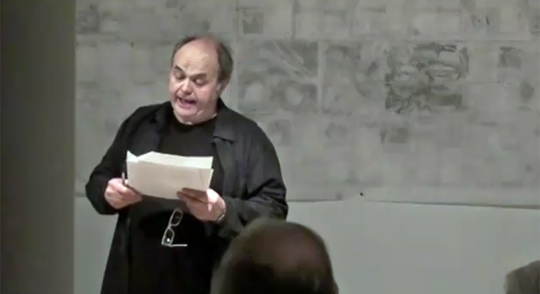
Artist-in-residence at Eastern Edge Gallery, Andy Jones presented “The Abbie Table: Reflections on Life in the Salt Fishery” to a packed house at Words in Edgewise on January 20th. Joining him were Mark Ferguson, a salt fishery buff from The Rooms, and Derek Pelley of Figgy Duff fame, who spent his boyhood summers in the house that is centre piece of Andy’s project (and Andy’s current summer house).
Roll the tape…
Cue the commentary…
We are here because of the cod. Have you been out to the spot near Bonavista where Cabot is supposed to have landed? I am sure it was not the jagged rocks that convinced him to set up camp, but you already know the story about how the sea so thick with fish that they could be plucked out by the basketful. For hundreds of years, thousands of people made a living fishing off Newfoundland. At first they sailed from Europe, spent the summers fishing off of Newfoundland coasts, and went back home before the snow got too deep. Gradually they began to settle in outports along the coast, fishing in the summer, shivering in the winter. It was a way of life that went on for centuries and came to define this place its people.
Then it ended.
Things began to change slowly with Confederation in 1949 and Resettlement in the 1950s and 60s. Then it ended with a bang with the moratorium in 1992. Almost over night more than 30,000 people lost their jobs and the way of life that had created and sustained this place for centuries was gone more-or-less for good.
But you’ve heard this all before. This is old news. The province picked itself up, dusted itself off, and carried on. Now there are tourists and shrimp and crab to catch, oil in Alberta, and oil offshore. According to Republic of Doyle, the sun always shines in St. John’s these days.
But no matter how much we say we have heard it all before. No matter how many facts we can rhyme off about what happened to the cod and the fishers. No matter any of this, the details of the way of life are being lost. Replaced with myth, or forgotten all together. But, as Andy Jones said at Words in Edgewise:
“Any story, any human story about adaptation, and innovation, and creativity in whatever surroundings we are presented in is very important for us to hear.”
Important for us to hear not mere to know or remember or revel in the quaintness of how Grandma managed to grow up without a computer, but important for us to hear as a reminder of the courage and creativity that sustained people in a very difficult place to live. And while things may have gotten easier since then, this courage and creativity remains an important example of how we might make things better for ourselves not just by tapping into the spirit of our hardy ancestors, but into the details of their lives as well.
As Andy Jones pointed out, life at the Ellis house in Capelin Cove is both the quintessential Newfoundland story of life in the salt fishery, and the model for self-sufficiency that has become the defining feature of contemporary environmental and food movements. And for an island that survived quite well for several hundred years without roads or power lines to be knocked down by hurricanes, we might be well advised to look back at the secrets that kept them going so well for so long.
The next Words in Edgewise takes place Thursday, February 17, at 8pm at Eastern Edge Gallery. It will feature a dramatic reading of Joan Sullivan’s new documentary play “People lose their way — and their belongings” starring Neil Butler, Andrew Loman, Nicole Rousseau, and Joan Sullivan; and a performance and discussion by Ginny Ryan accompanied by Pamela Morgan. Find out more about More on Words in Edgewise at www.wordsinedgewisestjohns.wordpress.com
You can Join Andy Jones and friends for a reading of “Growing Up, Up in Cove” by Abbie (Ellis) Whiffen along with a Fish and Brewis dinner at Eastern Edge Gallery on Saturday, February 19, at 2:00 pm.
Folk Fest Saturday Photos
Tue, Aug 10, 2010
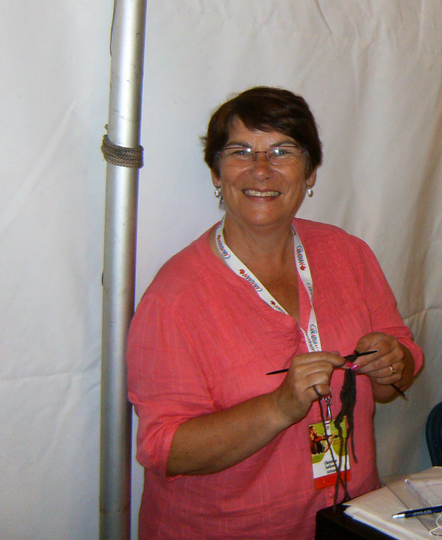
Christine LeGrow of Spindrift Hand Knits
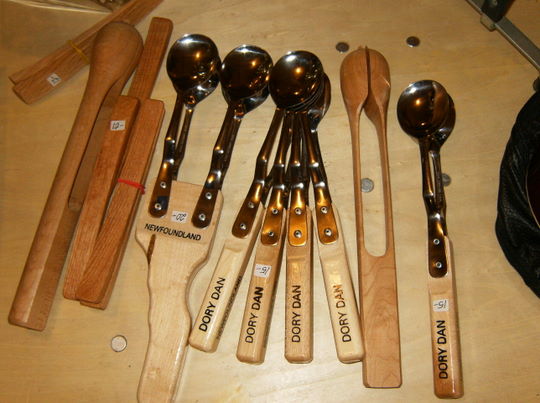
O’Briens has been selling and servicing musical spoons since 1939.
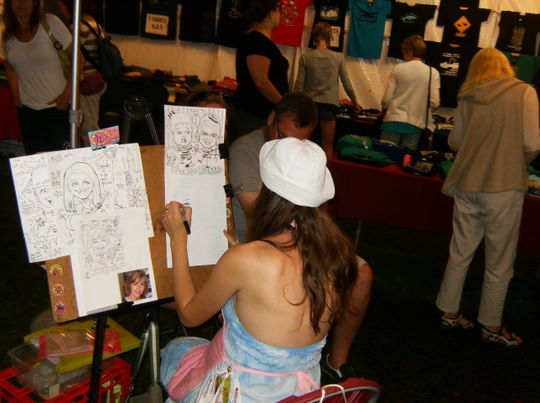
Portraiture (never got her name)
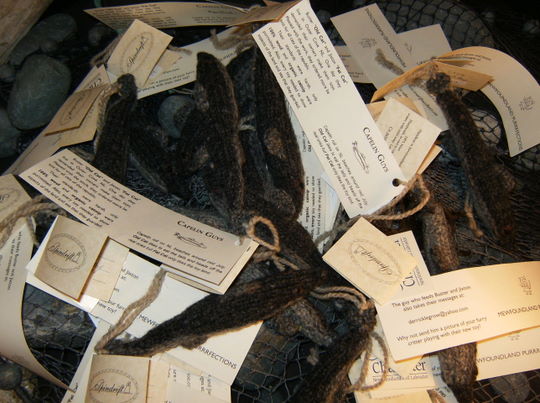
These capelin guys are filled with catnip. Yum b’y!
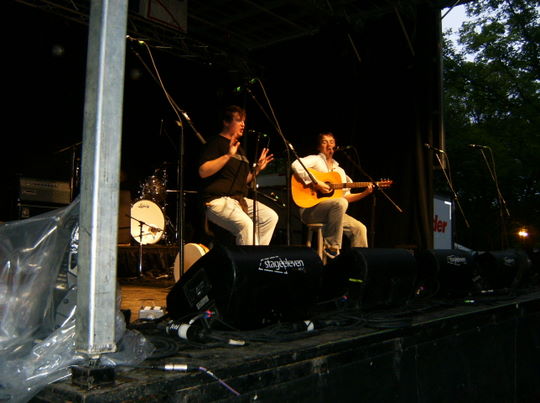
Comedy duo Size2Shoes from Limerick.
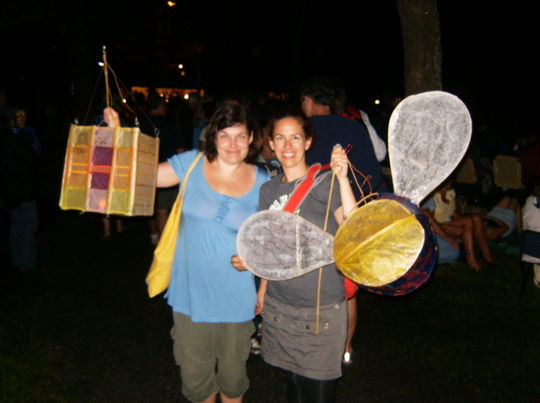
Lantern bearers Michelle and Leisha

Super funky pottery by Maaike Charron. Robbottery?
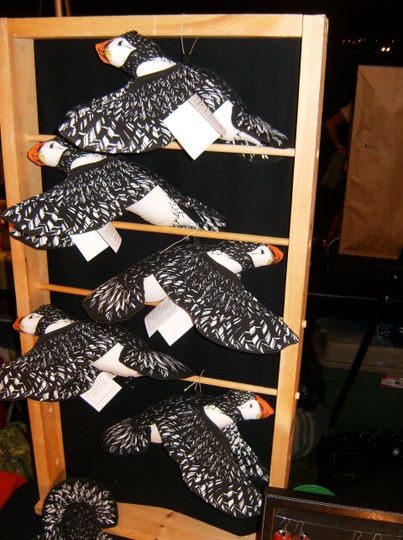
I’ve got one of these in my front window.
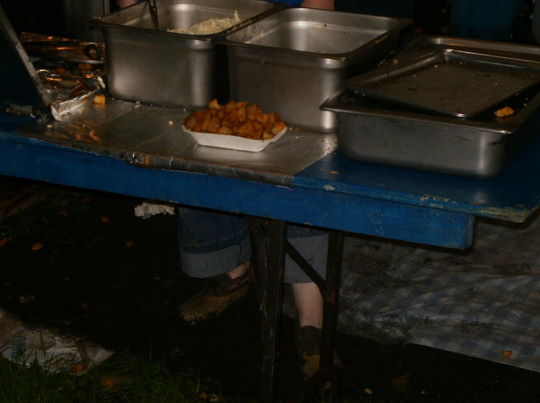
Traditional food
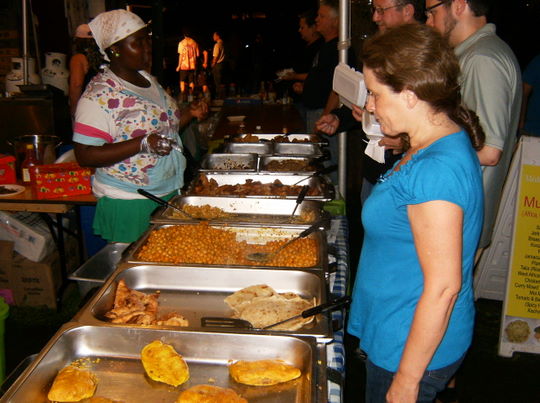
More traditional food
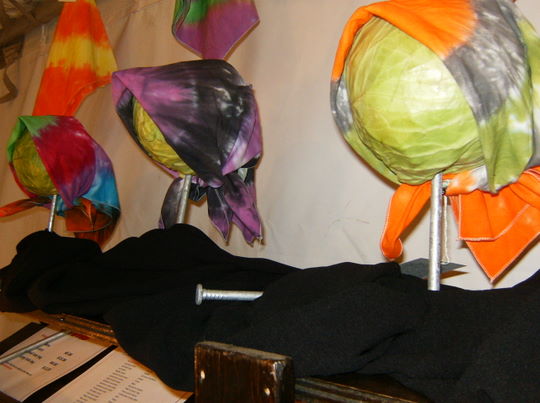
Cabbage roll headgear
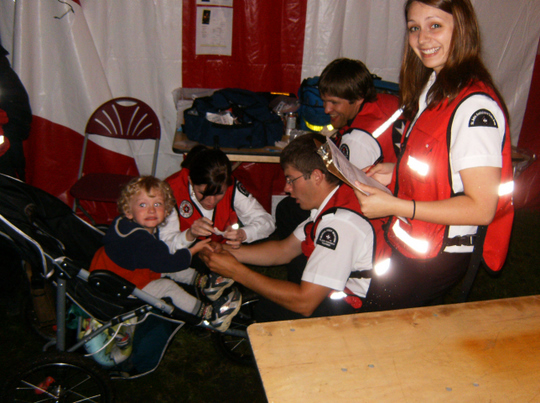
My son Wishy burnt his hand on a hot lamp in the artisan tent. The Emergency Response Unit had it all under control.
Happy 105th, Virgin Berg!
Thu, Jun 24, 2010
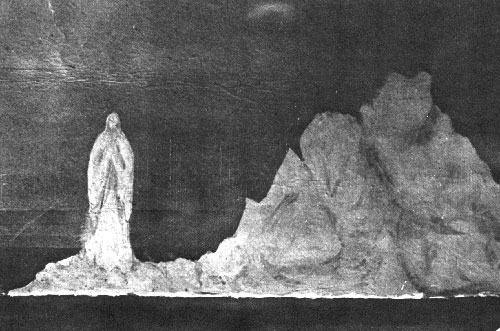
It was 105 years ago on this day that St. John’s photographer T.B. Hayward captured a snapshot of the legendary Virgin Mary iceberg — come to be known as “Our Lady of the Fjords” or “The Crystal Lady” or, my favourite, “The Virgin Berg.”
Kodak had just five years earlier produced the “Brownie,” the first mass marketed camera, and some say this photo is the oldest purported to be a depiction of a supernatural Christian apparition — definitely the beginning of a long tradition.
In a research paper called “Kodak Catholicism,” Jessy Pagliaroli called this “miraculous photography.” Pagliaroli says this kind of thing has popped up because of a “a desire to re-awaken what [the Roman Catholic Church] perceives is a lost sense of the sacred in the modern world.”
The photo has inspired a number of creative works…
Michael Francis Howley, the Catholic Archbishop at the time, wrote a sonnet which was published in the Newfoundland Quarterly in 1909:
Our Lady of the Fjords
Hail Crystal Virgin, from the frozen fjords
Where far-off Greenland’s gelid glaciers gleen
O’er Oceans bosom soaring, cool, serene
Not famed Carrara’s purest vein affords
Such sparkling brilliance, as mid countless hordes
Of spotless glistning bergs thou reignest Queen
In all the glory of thy opal sheen
A Shimmering Shrine; Our bright Atlantic Lourdes.
We hail thee, dual patront, with acclaim,
Thou standest guardian o er our Island home.
To-day, four cycles since, our rock-bound strand.
First Cabot saw: and gave the Baptist’s name:
To-day we clothe with Pallium from Rome.
The first Archbishop of our Newfoundland!
Contemporary author Wayne Johnson says his father grew up in a house blessed by water from this iceberg, which they called the “Virgin Berg.” Johnson wrote about the iceberg in his memoir, Baltimore’s Mansion:
In 1905, on June 24, the feast day of St. John the Baptist and the day in 1497 of John Cabot’s landfall at Cape Bonavista and “discovery” of Newfoundland, an iceberg hundreds of feet high and bearing an undeniable likeness to the Blessed Virgin Mary appeared off St. John’s harbour. As word of the apparition spread, thousands of people flocked to Signal Hill to get a glimpse of it. An ever-growing flotilla of fishing boats escorted it along the southern shore as it passed Petty Harbour, Bay Bulls, Tors Cove, Ferryland, where my father’s grandparents and his father, Charlie, who was twelve, saw it from a rise of land known as the Gaze. [...]
How relieved he was when the Virgin Berg and her attending fleet sailed out of sight and his parents and the other grownups stood up and blessed themselves. Soon the miracle became mere talk, less and less miraculous the more they tried to describe what they had seen, as if, now that it was out of sight, they doubted that its shape had been quite as perfect as it seemed when it was looming there in front of them.
They heard later of things they could not see from shore, of the water that ran in rivers from the Virgin, from her head and from her shoulders, and that spouted from wound-like punctures in her body, cascading down upon the boats below, onto the fishermen and into the barrels and buckets they manoeuvred into place as best they could. Some fishermen stood, eyes closed and mouths wide open, beneath the little waterfalls, gulping and gagging on the ice-cold water, their hats removed, their hair and clothing drenched, hands uplifted.
You can read more of this excerpt here.
I’d say, though, that if a similar iceberg were to float by these days, people might interpret it slightly differently.
Soccer as Esperanto: An interview with author John Doyle
Thu, Jun 10, 2010
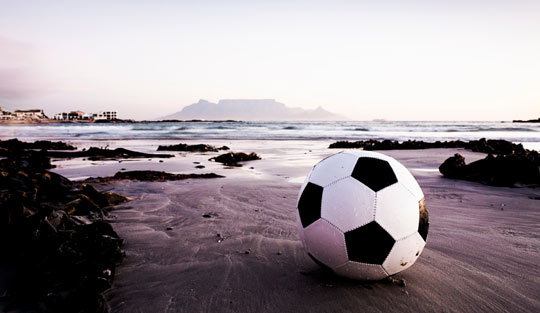
Soccer ball in front of Cape Town’s Table Mountain. Photo by Don Bayley.
From June 11th to July 11th, the entire world will be watching soccer.
St. John’s is slowly, slowly becoming more of an international city. Yes, people are moving here. Yes, you might hear someone speaking another language as they walk by. Yes, there are black people (OMG!) More and more people are coming and giving it a go here in St. John’s, as Newfoundlanders.
But what about integration? What about points of contact between ‘new’ Newfoundlanders and ‘old’ Newfoundlanders? For such a small city, they seem far and few between.
Could the World Cup provide some of those points of contact? Absolutely. Over the next month, soccer fans and non-soccer fans alike will be swept up in World Cup fever, to be a part of this truly international event.
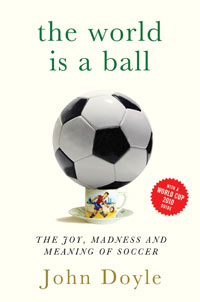
The World is a Ball is the new book from Globe and Mail columnist John Boyle. Part travelogue, part social history, the book is not just about the sport. I got a chance to sit down with him recently to talk about the book and a few of these ideas.
Multicultural snapshot
In the introduction to your book you talk about your experience watching Iran versus…
Oh, the Ireland/Iran game. Watching that on TV…
Yeah. The experience of watching them on television in a public place, it seemed like a really interesting multicultural event…
In international soccer it can be like that. I wrote about that particular game and those few hours in an Irish bar in downtown Toronto, early on a Saturday morning because it was a vignette. It was a snapshot of multi-cultural Toronto. It was just a – it underlined so much about the complexity of big multi-cultural cities like Toronto.
What happened was that television brought these two very different groups of people together.
…To an Irish bar.
To an Irish bar at an unholy hour of a Saturday morning, and everybody intermingled and got along. Everybody was there because of the game. There was this acknowledgement that the other side is entitled to support their team as well, but we’re all here together because of the game. That’s okay. It was very peaceable.
So it was okay to be rooting against the other country’s team.
Yes. That’s all right, because really it’s only a game. That tends to be emphatic in international soccer tournaments these days. There’s often someone with a giant banner in the stadium that says “It’s only a game.”
That’s a reminder of what it is. It matters enormously, but there’s that truth.
The experience of watching it in a stadium versus watching it on television — what’s the difference?
From the first time I went to a World Cup, I began to see that as much a part of the theater and drama of a tournament as the two sets of players on the field. I find it fascinating the way the whole culture that surrounds the game, the traveling army of fans, how they behave and what they sing. As much of the drama takes place, the interesting drama, takes place outside of the stadium as on the field. On the train to the stadium and in the city afterwards where you have tens of thousands of people.
There are places in every city and every country in the world where the World Cup is celebrated even if soccer is not the number one sport in that country. People are drawn together by the occasion of the World Cup to go and celebrate their country, their community and to join with others in doing that.

John Doyle. Photo by Taffi Rosen.
The first African World Cup
How will this World Cup be different, do you think?
Interviewee: I think the fact that it is being held on the African continent is monumental in a symbolic way. It’s important that it happen and it had to happen. I think that will make it a very interesting World Cup and perhaps a great World Cup. If we were to go use the example of the first World Cup held in Asia which was so distant from the normal base of soccer powers in Europe and South America – that distance from home did tend to create this sort of psychological disconnect for some of the teams. It was sort of alienating to be in a place where they weren’t used to being and where they thought of soccer as being a secondary game.
You were there when the Cup was in Japan and Korea – could you feel that psychological disconnect?
Yes. Yes, you could. Certainly there was – I remember anyone who played South Korea during that World Cup I think was astonished by the level of support by the atmosphere in the stadiums.
European teams would be used to fanatical support at home. That took the fanaticism to a new level. It was astonishing to see and feel. It wasn’t just a visual or the sound of the fans. It was the fervor of it – how much it mattered. That can be intimidating to a team from another country and from another culture. It’s true that in Asia France, Portugal and Italy did not do as well as expected. South Korea and Turkey did very well. That was unexpected. There were many upsets. USA did well. My suspicion is that this World Cup could be like that. Some of the African countries will do well. The consensus was when the draw was made that they had very tough draws, which they did. But it’s one of the things I write about in the book is that sort of unearthly power, that other world thing that can take over in a key game, that motivates a team and a group of players to play above their level. They are underdogs but there’s a different narrative that’s being written that they can intuit and they can intuit victory when logically they should know they’re playing a vastly superior team.
I suspect Africa and South Africa could have those kinds of results. Smaller countries, African countries, will do well at this I think.
Soccer: An alternative to war?
You mentioned soccer can even serve as an alternative to war…? But do you really believe that?
Well, it’s stretching a bit to take that seriously, but it’s still fair to say. I think somebody has said we don’t have world wars anymore. We have the World Cup.
The fascinating thing about international soccer for me is that there are so many layers of meaning to it all. On the one hand you can say that soccer is an extension of the tribal impulse to compete. Soccer, international soccer, is sort of war by proxy.
Simultaneously, it’s something that unites because the game is the same all over the world. The rules are the same and it’s the sort of game…
You call it an Esperanto.
Yes. It is. Yeah, an Esperanto, a lingua franca. Whatever phrase you want to use. But there are very few things in the world these days that actually link so many countries and so many cultures. We live in a time when it used to a Cold War, not it’s really the West and Islam especially fundamentalist Islam; the two sides in this world of tension.
Iran and Iraq, they play soccer by the same rules as they play in England or France or in the U.S. or Canada. So there are very few things in the world today that you can say has linked a Jewish person in North America, a Christian in Europe to someone in a Muslim country. Soccer is it. Everybody knows the rules are the same. Everybody knows the best players in the world. Everybody has seen the best teams in the world. I think that’s something for which soccer should be acknowledged and celebrated in that there’s so few. Hollywood entertainment doesn’t do that – it just alienates in some countries. Soccer manages to achieve that.
The ref as fallible God
In your book you talk about soccer being a place where dreams are possible, and where you can overcome insurmountable obstacles. You also talk about dreams being shattered in the game as well. That happens in other sports, but why in particular does it make soccer so appealing to you?
It’s a great part of the pleasure because it means that there’s a rawness to the drama of international soccer which is unlike other professional sports. For a start, outside of a handful of Olympic sports, there are very few occasions where a vast number of countries play each other. I think that one of the reasons why we’re probably not going to see video replay technology, goal-line technology and all of that in international soccer is that the purity of the game is in the upsets that happen. It’s in the raw, brutal reality of it. International soccer as drama is much truer to life than most professional sporting events are because as in life, cheaters can prosper. The underdog, the valiant underdog doesn’t always win. It’s not like in movies.
So the ref makes mistakes?
Oh, absolutely. But that referee makes the decision. That means that if you’re watching the game on television, the referee makes a decision and the cameras can replay what just happened and you can see the referee was wrong. But that’s the way it is. It’s closer to the brutality of life. It’s also kind of symbolic in a way because the referee is a God on the field.
But he’s a fallible God. To the players he’s infallible. What he says he saw is what happened, not what actually happened. That’s part of the attraction of it. That you know that there is an uncertainty involved in it. Someone can fall over, the referee can see that it was a penalty and a lot of people can see it and say that it wasn’t. The referee makes that decision, that’s the way it goes. That’s part of the attraction to it, but it’s a dangerous kind of attraction. There’s no objective truth in soccer.
Why is it like that?
There was a qualifying game for a playoff qualifying game for this World Cup between Egypt and Nigeria. Bitter rivals. Very bitter rivals. The two games were played, both in front of 75,000-80,000 people who were on tenterhooks. If a goal had been scored, the referee was unsure and in hockey it goes upstairs to someone who looks at the video replay. You’re stopping the game for 2-3 minutes and then you decide “No, actually Nigeria didn’t score.” You would have 60,000 people whose passions would simply overflow — it would be unacceptable.
So that tends to inform and improve the extraordinary drama of international soccer.
That’s a lot of trust in a ref, for sure.
Interviewee: There are people who have legitimate complaints about bad refereeing decisions and so on. The only way it can improve is to have better referees who are better trained and the second thing that has happened is FIFA, the governing body of world soccer, it will get rid of a referee who has a poor game. He’s gone from the World Cup. He’s not going to be handling another game. That sort of thing does happen.
•••
Looking for a place to watch the FIFA World Cup here in town? Check our handy guide-y guide.
The World is a Ball, by John Doyle, is published by Doubleday Canada.
Where to watch the FIFA 2010 World Cup in St. John’s
Thu, Jun 10, 2010
What you see a fraction of a second before a diving header.
Forget the Olympics, the FIFA World Cup is the most widely viewed sporting event on the planet, and it’s happening from June 11 to July 11. Though the games are happening in South Africa, you can still get in on the madness. Here are the choice spots to catch the games, even the early ones, around town.
Refugee and Immigrant Advisory Council
204 Water Street
The Refugee and Immigrant Advisory Council will be showing all the games for free at the Centre For Social Justice, just above Coffee and Company. The first game, South Africa vs. Mexico, is on June 11th at 11am.
The Duke of Duckworth
325 Duckworth
The Duke will definitely be a key spot. They’re not sure yet if they’ll be officially opening early for all of those late morning games, but if it’s an important one, they’ll be there waiting for you. They’re also there in the mornings anyways, so if you bring a bunch of your friends down to knock on the door, there’s a good chance that they’ll throw the game on for you.
Bitter’s Pub
MUN Campus (Map)
“Newfoundland’s premier gathering spot for students from around the world… Featuring World Cup extended hours, Bitters will offer the venue to cheer on your team and get caught up in World Cup excitement with other football fans! Come join us for great specials, prizes and of course atmosphere!” – From their Facebook event page.
O’Reilly’s Pub
13 George Street
O’Reilly’s will have their TVs blazing, too. They’re not sure yet whether they’ll be opening early for the 10am matches, but they are sure that if enough people ask them to, they will.
At home
It’s where you live
There’s no harm in throwing 10am soccer parties, either. If you prefer to drink in your pyjamas with a mob of your closest friends, the CBC will be streaming all the games online at www.cbc.ca/sports/soccer/fifaworldcup/
The Pedestrian’s Manifesto
Thu, Mar 11, 2010
A spectre is haunting St. John’s—the spectre of pedestrianism. Powers have entered into a holy alliance to exorcise this spectre: poor city planning, snow-covered sidewalks and aggressive, careless driving practices.
It is high time that Pedestrians should openly, in the face of the whole City of St. John’s, publish their views, their aims, their tendancies and meet this nursery tale of the Spectre of Pedestrianism with a manifesto.
{Thanks to
Kevin Hehir
Pablo Navarro
Malin Enström
Costa Kasimos
John McConnell
Joan Scott
Michelle Butler Hallett
Compiled and edited by Sarah Smellie and Elling Lien}

It could have been the car that struck an eight-year-old boy on February 3rd and then promptly drove away…
Or it could have been the car that smacked a 20-year-old woman and then fled on March 8th…
There are hundreds of reasons to assemble a group of concerned citizens—from wheelchair users to marathon runners—and assemble this Pedestrian’s Manifesto.
Here we are.
Why we are angry.
Because we have been nearly hit, and because we have been hit.
Because we are required to walk where it is not safe.
Take, for example, the winter’s snow-covered, icy sidewalks, which confine any of us with mobility issues to our houses for the winter and push vulnerable pedestrians out onto the road.
Then there are the mounds of street snow piled at intersections, blocking the button for the walk signal, and forcing those crossing on foot to dart out into traffic during what small breaks can be found in the lines of fast-moving vehicles navigating slippery roads.
We are the children on their way to school, forced onto Thorburn Road by the icy snowdrfits on the sidewalks.
We are the woman with a baby strapped to her chest dancing over icy walkways with two hands full of groceries.
We are the person with forearm crutches trying to get to the bank machine on an unshoveled sidewalk downtown.
Have you ever tried to push a stroller or steer a wheelchair outside in winter? There’s only one street from Duckworth to Water that doesn’t have a flight of stairs, and its sidewalk is steep and narrow, and covered in snow for half the year. That means that any of us using a wheelchair or scooter has to book a ride with Wheelway just to go have a coffee at Atlantic Place—downtown’s only accessible retail spot.
We can even forget about a casual, summer trip to the mall or even down Monkstown Road. Those sidewalks are far too slanted, crooked and potholed to support a wheelchair.
If we had a dime for every time we heard a newcomer say that the drivers were “really crazy here,” we’d have a lot of dimes. Take the intersection at Empire and King’s Bridge Road, by Memorial Market Dominion, for example, where drivers whip blindly around onto Lake Avenue as if there’s a food shortage.
Coffee-sucking zombies nearly mowing down entire families as they careen into one of the city’s drive-thrus get special mention.
As do all those asleep, or texting, or phoning, at the wheel anywhere across the North-East Avalon Peninsula.
Yes, we acknowledge that sidewalk snow-clearing efforts have been steadily improving. We are grateful that funds for the Traffic Calming Study were found.
But as city council repeatedly congratulated themselves for being at the helm of a city that was selected by the Conference Board of Canada as one of the best six Canadian cities for migrants to settle in, we couldn’t help but shake our heads.
Most of the newcomers we spoke with were apalled by the snowy, dangerous sidewalks and the crappy public transit system.
And most of them had plans to move to another city.
Who we are.
This document and this movement takes “Pedestrian” to include everyone who, theoretically, would be using the sidewalks. We Pedestrians are people on foot, people using walkers, people using wheel-chairs, people using crutches, people using scooters, people pushing strollers, people carrying babies, people pushing strollers and carrying babies. Many Pedestrians are also drivers, so Pedestrians are not all anti-car. But we are all pro-Pedestrian.
Whether you like it or not, you are a Pedestrian. Even if you drive everywhere, in that place between stepping out of your car and stepping into the place you’ve driven to, you’re a Pedestrian.
Pedestrians are not too poor to afford a car, nor are we stupid or useless.
We are not obligated to walk on slippery, treacherous sidewalks when the road is much safer.
We do not relinquish our rights to not be struck by a car if we cross where there isn’t a crosswalk.
We are not blocking your road.
Like drivers, Pedestrians are people going to work or school or the grocery store, or we’re going to pick up our kids or our paycheques or a package. Or maybe we’re simply enjoying a nice day. We’re bringing life to the streets, and we’re initiating conversations and connections between one another that wouldn’t be initiated if we were all tucked away in our own individual cars.
According to urban philosophers like Jane Jacobs, we are essential to healthy cities.
Pedestrians are voters. We may even have elected you, and we probably expected more of you. We may not elect you again.
Most importantly, Pedestrians, like drivers, are commuters. Our destinations and our right to arrive at them in a timely fashion, and in one piece, are just as important as those of the drivers.
Our demands are as follows.
Better snow clearing and winter city planning. Expand the streets that the city’s snow clearing bylaw covers and enforce it. Expand the city’s sidewalk snow clearing routes. Clear the snow sooner after storms, and on weekends. Stop piling street snow on sidewalks and at corners. Learn from cities like Helsinki, or organizations like the Winter Cities Institute, and embrace the fact that St. John’s is a winter city. Imagine it as if the tourist season occured from November to March.
Put as much effort into sidewalks and walkways as you do the roads. Fix and/or replace old, potholed, slanted sidewalks; put ramps at either ends of crosswalks instead of blunt curbs; repaint the crosswalk lines on the road each year so that cars can see where to stop; cut back the trees than hang in front of crosswalk signs so that motorists can see them clearly.
We intend to make our plight known. To this end, and with this document, we officially challenge every member of city council to leave their cars at home for one full week. In the meantime, we will write letters and plan demonstrations. We will stop shrugging our shoulders and sighing. We will demand more from city council, and we will make Pedestrian issues election issues.
Invest in clear, visible signs at confusing intersections. Rawlin’s Cross, for example, is a nightmare when it’s full of tourists in rental cars.
Require accessibility. Demand that all new buildings be accessible. Demand that all public spaces and buildings, no matter how historic, be accessible. Have a wheelchair user determine whether or not that demand was met. Create more accessible roads and sidewalks to the downtown area, even if it means getting rid of stairs or building extra ramps. Show that you consider wheelchair and scooter users, and all persons with mobility issues, to be equal citizens.
Stop the ongoing sprawl in the city. Put a moratorium on further box-store development and promote the establishment of more resident-friendly stores in the city centre. Promote a walkable city so that there are more of us walking and talking and bringing life to the city.
What we will do.
We will be more aggressive towards careless drivers.
We will take note of license plate numbers and report them to the police.
We will start a a web forum where we post your plate numbers.
We will scream and cause a scene in the middle of intersections.
Rocks?
We will hang up on people who call us while driving.
We will take our space and cross the street and expect drivers to stop, instead of huddling at the corners, waiting for someone to let us cross.
And we will stop waving in thanks to those who do. As Pedestrians, we have the right of way at all times.
You are required to stop.
To drivers.
Make room for us. Expect us to be on the roads in the winter. After all, the city only plows about 100 kilometers of sidewalk. Drive slower. If you don’t like us on the roads, phone your city councillor and ask them to do a better job at making the sidewalks safe for Pedestrians. Or leave your car at home for a day and join us.
Look for crosswalks and slow down before them, whether there is a Pedestrian there or not. Stop, every time, if a Pedestrian is there.
Put down your cell phones, your iPods, your handheld whatevers. Gaze up from your GPS screens. Pay attention.
Be better drivers. Get out of your climate-controlled space bubble and take stock of reality: All of us are stupid human beings. Drivers are in control of a multi-ton hunk of steel, travelling faster than your brain. Drive with Pedestrians in mind,
And if you do kill one of us, you will have that on your conscience.
The Scope’s Comic Contest – 2010
Thu, Mar 11, 2010
Yes Ma’am, it’s time for our annual Comic Contest, which means this year might just be your chance at (regional) fame and (minuscule) fortune! Think you can do it? do you have what it takes? Then the Scope’s Third Annual Comic Contest is for you. Submit five installments of your single-panel or multi-panel comic to us at:
Comic Contest
c/o The Scope
P.O. Box 1044
St. John’s, NL
A1C 5M3
Entries must be post-marked on or before Friday, April 16, 2010. A judging panel made up of local cultural icons and assorted miscreants will have a nomination round, and then the top comics will then be presented to Scope readers for a public vote.
The winners will earn a paid, one-year run with The Scope (online and in print). First runner-up will win $100, and second runner-up will win $50. The winners and select submissions will get some exposure in our annual Comics Issue, slated for May 20.
The contest is open only to residents of Newfoundland and Labrador. The comics should be black and white only, and can be any shape (please stay consistent), so long as they fit on an 8.5 x 11 page.
Please don’t send originals because we can’t return them to you; good photocopies or files on CD are fine.
Questions? E-mail elling@thescope.ca. No phone calls please.
***
Autobiographical!
Political!
Well Drawn!
Poorly Drawn!
Photo Comics!
Arty!
Poetic!
Absurd!
Mysterious!
Historical!
Animal Related!
Non Animal Related!
Serial Adventure!
Cereal Adventure!
Single Panel!
Multi Panel!
Super Hero!
Romance!
Journalism!
Girl Comics!
Boy Comics!
Weird Comics!
Not-Weird Comics!
Gag Strips!
Not Quite Comics!
Etc!


Wed, Dec 4, 2013
The Scope